How to Clean and Maintain Handmade Wire Wrap Earrings
Learn expert techniques to clean, polish, and maintain wire wrap earrings. Protect delicate weaves, porous stones, and structural integrity safely.

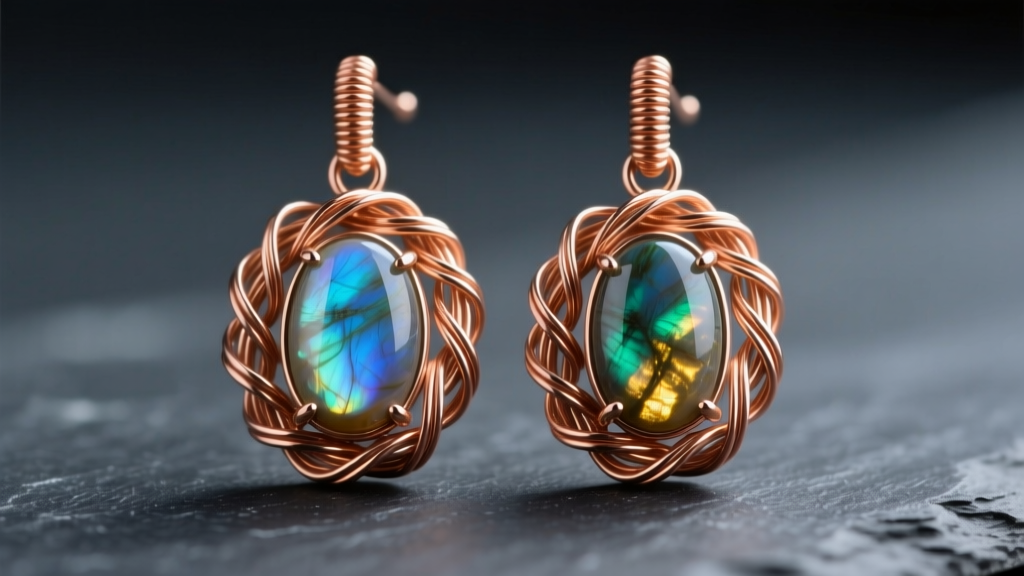
Wire wrap earrings represent a unique intersection of metallurgy and lapidary art. Unlike cast or soldered jewelry, wire-wrapped pieces rely entirely on mechanical tension, work-hardening, and precise geometry to hold their shape and secure their gemstones. Because there is no solder to fuse the joints, standard jewelry cleaning methods—such as ultrasonic baths or harsh chemical dips—can easily unravel the delicate weaves, loosen the stone settings, or strip intentional patinas.
If you own or create handmade wire wrap earrings, maintaining them requires a specialized approach. This comprehensive guide will walk you through the exact protocols for cleaning, structural maintenance, and long-term preservation of your wire-wrapped ear adornments.
Understanding Your Materials: Wire Gauges and Hardness
Before applying any cleaning solution, you must understand the structural limits of the wire used in your earrings. Wire wrapping typically utilizes gauges ranging from 20-gauge (thick, used for base frames and ear wires) down to 28-gauge (ultra-fine, used for intricate weaving and coiling). According to Rio Grande, a leading jewelry supply authority, wire hardness dictates how it will react to physical manipulation during cleaning:
- Dead Soft: Highly malleable and prone to bending. Requires extreme care during polishing to avoid warping the frame.
- Half-Hard: Offers a balance of malleability and stiffness. Often used for ear wires and structural wraps that need to hold their shape against tension.
- Full-Hard: Very stiff and brittle. Rarely used for wrapping, but if present, aggressive scrubbing can cause micro-fractures at the bend points.
Stone Porosity and the Mohs Scale
Wire wrap earrings frequently feature raw, uncalibrated, or porous gemstones (like turquoise, opal, moonstone, or raw emerald) that are secured via tension rather than prongs. The Gemological Institute of America (GIA) warns that porous stones can absorb liquids, leading to internal fracturing or color alteration. Always identify your stone before introducing water or soap to the piece.
| Wire Material | Common Gauge | Cleaning Risk Level | Patina / Tarnish Care |
|---|---|---|---|
| Sterling Silver | 20ga - 26ga | Low (Tarnishes easily) | Use anti-tarnish cloths; avoid dips if liver of sulfur patina is applied. |
| Copper | 20ga - 28ga | Medium (Oxidizes rapidly) | Lemon juice/salt bath for bright finish; keep dry to preserve dark antique patina. |
| Gold-Filled | 20ga - 24ga | Low (Highly durable) | Mild soap and water; polish gently to avoid wearing through the gold layer. |
| Brass | 18ga - 24ga | Medium (Can cause skin discoloration) | Brass polish for bright finish; seal with microcrystalline wax if worn daily. |
The Step-by-Step Cleaning Protocol for Wire Wrap Earrings
When your wire wrap earrings accumulate skin oils, makeup, or environmental dust, follow this safe, non-destructive cleaning sequence.
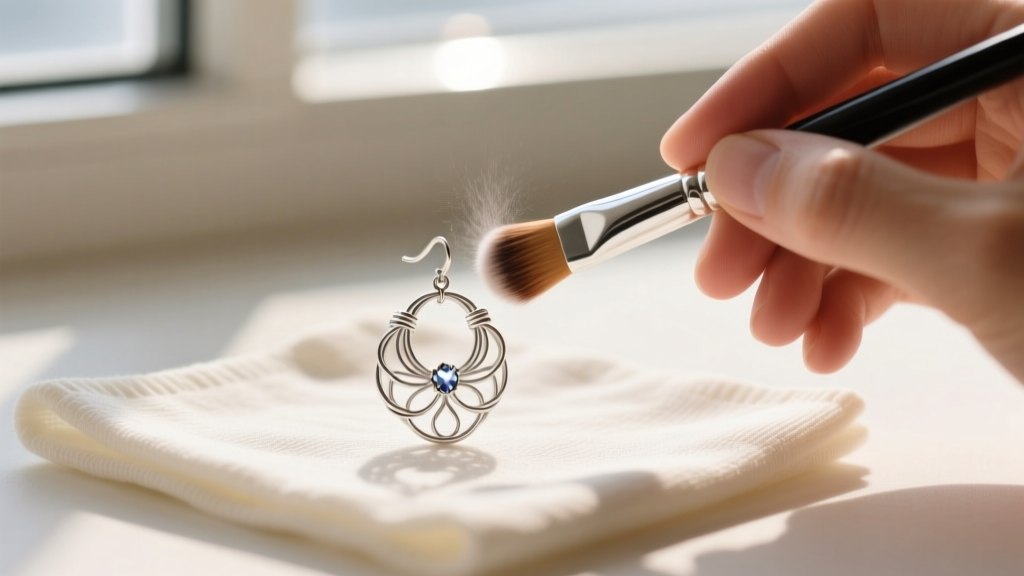
Step 1: Dry Dusting (The First Line of Defense)
Never immediately reach for a wet cloth. The intricate weaves of 24-gauge or 26-gauge wire act as traps for dead skin cells and cosmetic powders. Use a clean, soft-bristled makeup brush (like a fluffy eyeshadow blending brush) to gently sweep out the crevices of the wire weave. Hold the earring securely by its thickest structural wire (usually the 20-gauge frame) to avoid putting pressure on the delicate coiled sections.
Step 2: The Mild Soap Bath (For Non-Porous Stones Only)
If your earrings feature non-porous stones like quartz, amethyst, or glass, and are made of sterling silver or gold-filled wire, a gentle bath is appropriate.
- Mix a few drops of phosphate-free, mild dish soap (like Dawn) into a bowl of lukewarm distilled water. Avoid hot water, which can cause thermal shock to certain crystals.
- Submerge the earrings for no more than 3 to 5 minutes.
- Use a baby toothbrush with ultra-soft bristles to lightly agitate the wire weaves. Crucial: Brush in the direction of the wire wrap, never against it, to prevent catching and lifting the wire ends.
- Rinse thoroughly under a gentle stream of distilled water.
Step 3: Immediate and Thorough Drying
Water spots are the enemy of wire jewelry, especially copper and brass. Immediately pat the earrings dry with a lint-free microfiber cloth. To remove trapped moisture from deep within the wire coils, use a hairdryer on the cool, low-air setting from a distance of six inches. Trapped moisture against the skin-facing side of the ear wire can accelerate oxidation and cause skin irritation.
Structural Maintenance: Preventing Wire Fatigue
Because wire wrap earrings lack soldered joints, their structural integrity relies on the tension of the wrap and the work-hardening of the metal. Over time, the natural flexing of putting on and taking off earrings can cause 'wire fatigue' or loosening.
Pro Tip: Never pull wire wrap earrings off by the gemstone. Always grip the ear wire or the thickest part of the structural frame to remove them from your ear. Pulling by the stone will stretch the tension wraps and eventually cause the cabochon to rattle or fall out.
Tightening Loose Wraps
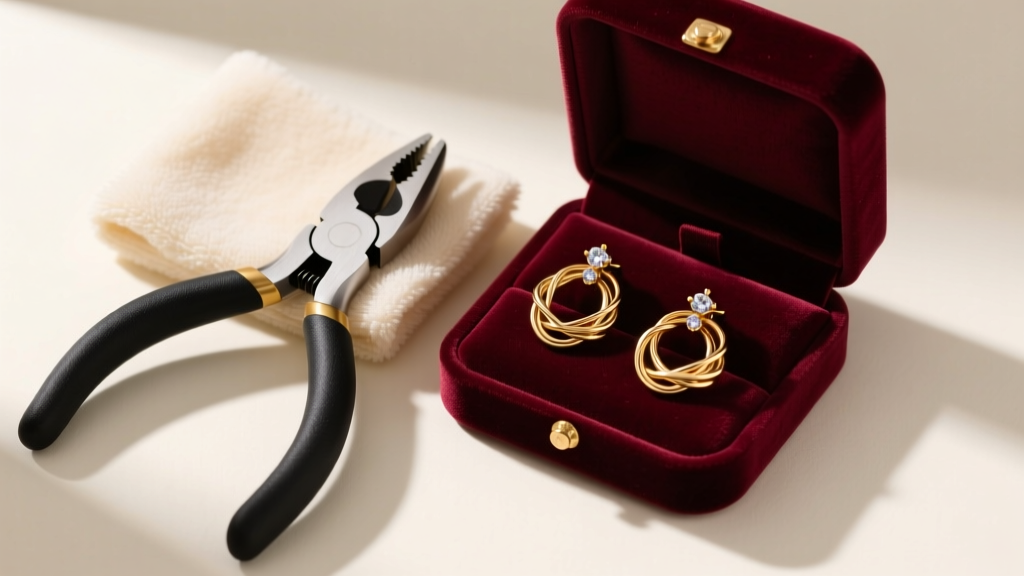
If you notice a decorative coil becoming loose, or a stone beginning to shift, you will need to perform minor structural maintenance. Standard metal jewelry pliers will mar, scratch, and dent the wire. Instead, invest in a pair of nylon-jaw pliers. The soft nylon pads allow you to gently squeeze and compress the wire wraps back into place, tightening the tension against the stone without leaving tool marks on the metal.
Tucking and Filing Snags
A common issue with handmade wire jewelry is sharp wire ends that catch on hair or sweaters. If a tucked wire end works its way loose, use your nylon-jaw pliers to push it firmly back into the weave. If the end is frayed or sharp, carefully use a fine-grit jeweler's file or a ceramic cup bur to smooth the tip, then re-tuck it securely under the adjacent wrap.
Polishing and Patina Preservation
Many wire artists use liver of sulfur to apply a dark, antique patina to their wire wrap earrings, highlighting the contrast between the deep crevices of the weave and the high-polished outer edges. Standard silver polishing dips will strip this intentional oxidation in seconds, leaving the piece looking flat and washed out.
To clean patinated wire wrap earrings:
- Use a treated polishing cloth (like a Sunshine cloth) only on the high points of the wire. Fold the cloth so you can pinch the outer edges of the frame without rubbing the dark recesses.
- Avoid abrasive pastes. Polishing compounds can get trapped in the tight 28-gauge weaves and dry into a chalky, white residue that is nearly impossible to remove.
- Seal the metal. If you are wearing copper or brass wire wrap earrings daily and want to prevent the metal from oxidizing further or turning your skin green, apply a micro-thin layer of microcrystalline wax (such as Renaissance Wax) using a soft cotton swab. Buff it gently after it dries to create an invisible, protective barrier against skin acids.
Troubleshooting Common Wire Wrap Failures
Even with meticulous care, wire wrap earrings are subject to specific failure modes. Here is how to diagnose and address them:
The Stone is Rattling
This indicates that the tension holding the cabochon has relaxed. Do not attempt to bend the main frame. Instead, use a wooden or plastic toothpick to gently press the inner tension wires (the wires wrapping directly over the girdle of the stone) downward, increasing the pressure against the stone. If the wire has stretched beyond its elastic limit, the piece may require a professional re-wrap.
The Ear Wire is Losing its Shape
French hook ear wires made from 20-gauge half-hard wire can stretch open over time. To fix this, grip the loop of the ear wire with round-nose pliers and gently squeeze the hook closed. To re-harden the wire and help it retain its new shape, rub the ear wire vigorously with a burnishing tool or the smooth steel shaft of a jeweler's file; this friction induces work-hardening.
Green Discoloration on the Earlobe
This is not an allergic reaction, but a chemical reaction between the copper content in sterling silver, brass, or copper wire and the natural acidity of your skin. To prevent this, ensure the ear wire is thoroughly dried after cleaning, and occasionally wipe the ear wire with a cotton pad dampened with rubbing alcohol to remove built-up skin acids before wearing.
By treating your wire wrap earrings as delicate, tension-based mechanisms rather than solid cast jewelry, you can preserve their intricate artistry and structural integrity for decades. Proper storage in individual velvet pouches to prevent crushing, combined with gentle, targeted cleaning, ensures that every weave and wrap remains as stunning as the day it was crafted.


