How to Clean, Repair, and Maintain Fake Leather Earrings
Learn how to clean, repair, and store fake leather earrings. Expert steps to prevent peeling, fix delamination, and extend the life of PU jewelry.

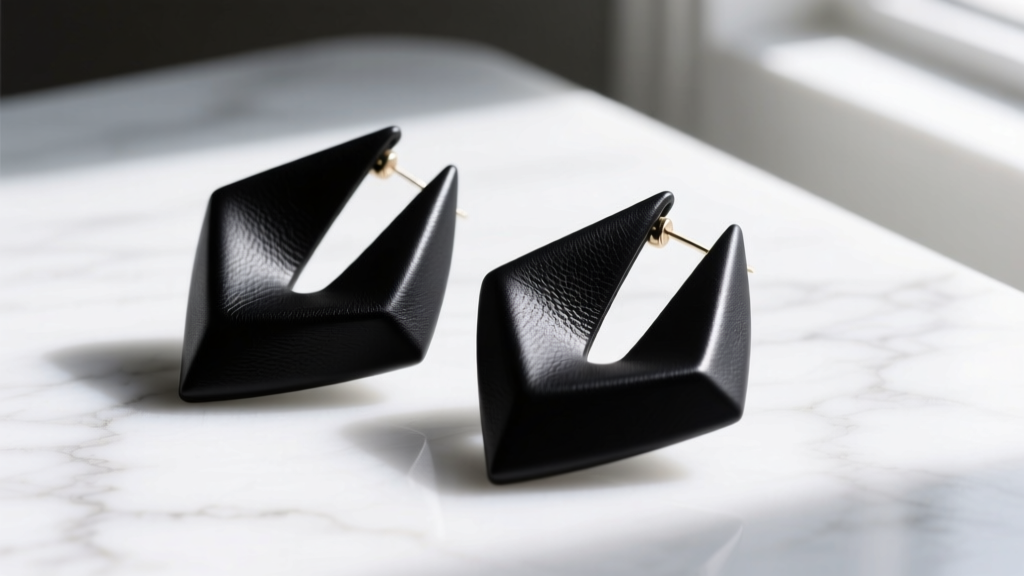
Fake leather earrings—typically crafted from polyurethane (PU) or polyvinyl chloride (PVC)—offer a lightweight, cruelty-free alternative to genuine hide. They are the go-to material for oversized statement hoops, architectural dangles, and bold ear cuffs. However, synthetic leathers are highly susceptible to environmental degradation. Without proper care, plasticizers migrate to the surface, and polymer chains break down, leading to the dreaded peeling effect. This comprehensive guide provides actionable, step-by-step instructions on how to clean, repair, and maintain your fake leather earrings to maximize their lifespan and keep your ear styling flawless.
The Science of Faux Leather Degradation
To properly care for fake leather earrings, you must first understand why they fail. Most faux leather consists of a fabric backing coated with a PU or PVC layer. The two primary failure modes are:
- Hydrolysis: Moisture in the air or from your skin breaks down the chemical bonds in polyurethane, causing the top layer to become brittle and flake off.
- Plasticizer Migration: PVC-based fake leather relies on chemical plasticizers to remain flexible. Over time, or when exposed to heat, these plasticizers leach to the surface, leaving the earring feeling sticky and the underlying material stiff and prone to cracking.
Understanding these chemical vulnerabilities dictates the strict "no-alcohol" and "low-heat" rules for faux leather jewelry care.
Step-by-Step Guide: Cleaning Fake Leather Earrings Safely
Standard jewelry cleaners, ultrasonic baths, and alcohol wipes will instantly strip the protective topcoat off PU leather. Here is the only safe method for cleaning synthetic leather earrings.
What You Need
- Distilled water (tap water contains minerals that can leave micro-abrasive deposits)
- pH-neutral liquid dish soap (avoid heavy degreasers or moisturizing soaps)
- Ultra-fine microfiber cloths
- Soft-bristled makeup brush (for textured or embossed faux leather)
The Cleaning Process
- Dry Dusting: Use the soft makeup brush to gently sweep away dead skin cells, makeup powder, and environmental dust from the crevices of the earring.
- Prepare the Solution: Mix one drop of pH-neutral soap into a small bowl of distilled water. Agitate until sudsy.
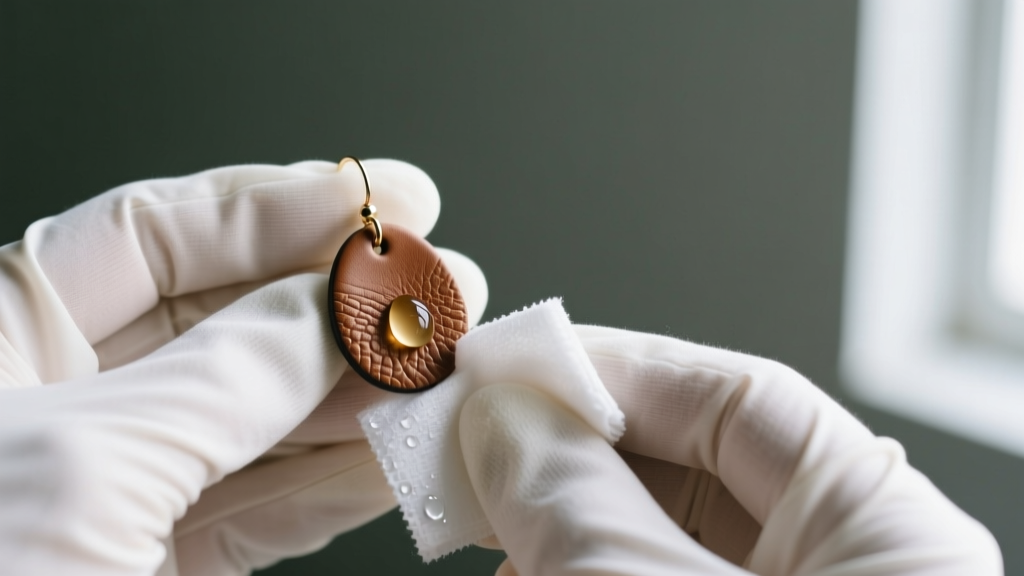
- Damp Wipe: Dampen a corner of the microfiber cloth in the solution and wring it out until it is barely moist. Never submerge fake leather earrings.
- Gentle Buffing: Wipe the surface of the earring in small, circular motions. Pay special attention to the post backing area where sebum and hair products accumulate.
- Immediate Drying: Use the dry side of the microfiber cloth to immediately absorb any residual moisture. Allow the earrings to air-dry completely in a cool, shaded area before storing.
How to Repair Delaminating or Peeling Earrings
If your favorite faux leather dangles have begun to peel at the edges or separate from the metal base, you can often salvage them using the right adhesives. Standard super glue (rigid cyanoacrylate) will crack when the earring flexes. Instead, opt for a flexible, industrial-strength adhesive like E6000 or a specialized polyurethane-based fabric glue.
Repairing Edge Delamination
If the top PU layer is lifting from the fabric backing, apply a micro-drop of flexible glue using a toothpick. Press the layer down firmly and secure it with a small piece of painter's tape for 24 hours. Wipe away any extruded glue immediately with a dry cotton swab.
Reattaching the Hardware Base
When the metal post plate detaches from the faux leather body, lightly sand the metal plate with 400-grit sandpaper to create a mechanical bond. Clean both the metal and the faux leather backing with a dry cloth. Apply a thin, even layer of E6000 to the metal plate, press it into the leather, and clamp it lightly using a silicone-tipped jewelry clamp. Allow a full 72-hour cure time before wearing.
Hardware Selection and Adhesive Integrity
The metal hardware used in fake leather earrings plays a massive role in their longevity. Cheap, nickel-plated brass posts react with human sweat, creating an alkaline environment that rapidly dissolves the adhesives bonding the post to the faux leather. Furthermore, nickel is a leading cause of contact dermatitis. According to the American Academy of Dermatology, prolonged exposure to nickel can cause severe, blistering rashes on the earlobe.
When purchasing or replacing hardware on fake leather earrings, always look for:
- Material: 316L surgical stainless steel or implant-grade titanium (ASTM F-136).
- Gauge Size: Standard lobe piercings require 20-gauge (0.8mm) or 18-gauge (1.0mm) posts. Thicker posts provide a wider base plate, distributing the weight of heavy faux leather statement pieces more evenly and reducing adhesive stress.
Troubleshooting Common Faux Leather Issues
Use this diagnostic table to identify and resolve the most frequent problems associated with synthetic leather jewelry.
| Issue | Root Cause | Actionable Solution |
|---|---|---|
| Surface Peeling / Flaking | Hydrolysis or UV degradation breaking down the PU topcoat. | Unfortunately irreversible. Prevent future damage by storing away from sunlight and using silica gel packets. |
| Sticky / Tacky Surface | Plasticizer migration in PVC leather due to heat exposure. | Wipe gently with a cloth dampened with a 50/50 mix of distilled water and white vinegar, then dry thoroughly. |
| Post Detachment | Adhesive failure caused by sweat acidity or poor factory gluing. | Clean the metal base, scuff with sandpaper, and reattach using flexible E6000 jewelry adhesive. |
| Color Transfer to Skin | Low-quality dyes lacking a proper sealing topcoat. | Apply a micro-thin layer of clear, flexible nail polish or a specialized leather sealer to the back of the earring. |
Upgrading to Next-Gen Bio-Based Vegan Leathers
If you are tired of the inevitable degradation of traditional PU and PVC, the jewelry industry has shifted toward innovative, plant-based vegan leathers. When shopping for high-end fake leather earrings, look for these premium materials:
- Desserto (Cactus Leather): Made from the Nopal cactus, this material is highly resistant to humidity and does not suffer from the same hydrolysis issues as PU. It is exceptionally durable for heavy drop earrings.
- Piñatex (Pineapple Leather): Crafted from pineapple leaf fibers, it offers a highly textured, organic look that mimics genuine hide beautifully, perfect for rustic or bohemian huggie hoops.
- Mirum: A 100% plastic-free, plant-based leather alternative that is fully recyclable and highly resistant to water, making it the gold standard for luxury vegan ear cuffs and studs.
While these materials command a higher price point (typically $40–$90 for a pair of statement earrings compared to $12–$25 for standard PU), their lifespan and biocompatibility far outweigh the initial investment.
Storage Best Practices to Prevent Hydrolysis
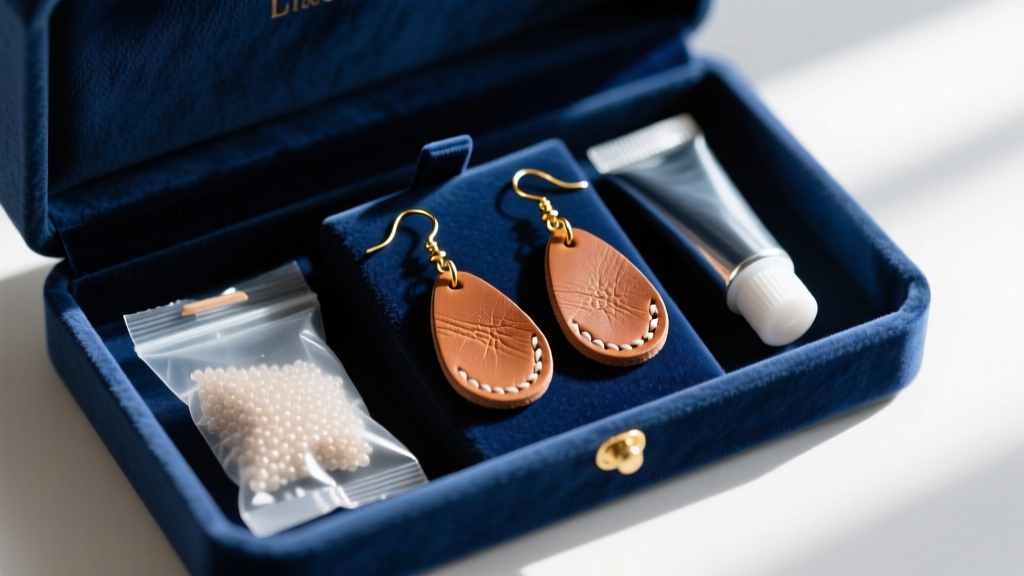
How you store your fake leather earrings when they are not on your ears is just as critical as how you clean them. The Jewelers of America emphasizes that environmental control is the cornerstone of jewelry preservation. For faux leather, this means strict moisture and temperature management.
- Use Silica Gel Packets: Always store faux leather earrings in a sealed container or jewelry box that includes a rechargeable silica gel desiccant. This pulls ambient moisture from the air, halting the hydrolysis process.
- Avoid Plastic Bags: Never store fake leather in sealed PVC or Ziploc bags without a desiccant. Trapped humidity will accelerate peeling. Use breathable cotton or linen jewelry pouches instead.
- Temperature Control: Keep your jewelry away from radiators, direct sunlight, and hot cars. Heat accelerates plasticizer migration and warps the structural integrity of the earring.
- Lay Flat or Hang: For large faux leather hoops or long dangles, hang them on a jewelry tree to prevent permanent creasing. Creases in PU leather will eventually crack and split.
Conclusion
Fake leather earrings are a versatile, lightweight, and ethical staple in modern jewelry styling. By understanding the chemical nature of polyurethane and PVC, avoiding harsh solvents, utilizing flexible adhesives for repairs, and controlling storage humidity, you can extend the life of your favorite pieces from a single season to several years. Treat your synthetic leather with the same respect you would give to fine metals, and your earrings will remain a bold, intact part of your wardrobe for years to come.