How Do You Know If Earrings Are Real Gold? The Ultimate Testing Guide
Learn how do you know if earrings are real gold via hallmark checks, acid tests, and magnet tricks for 14k and 18k studs and hoops.

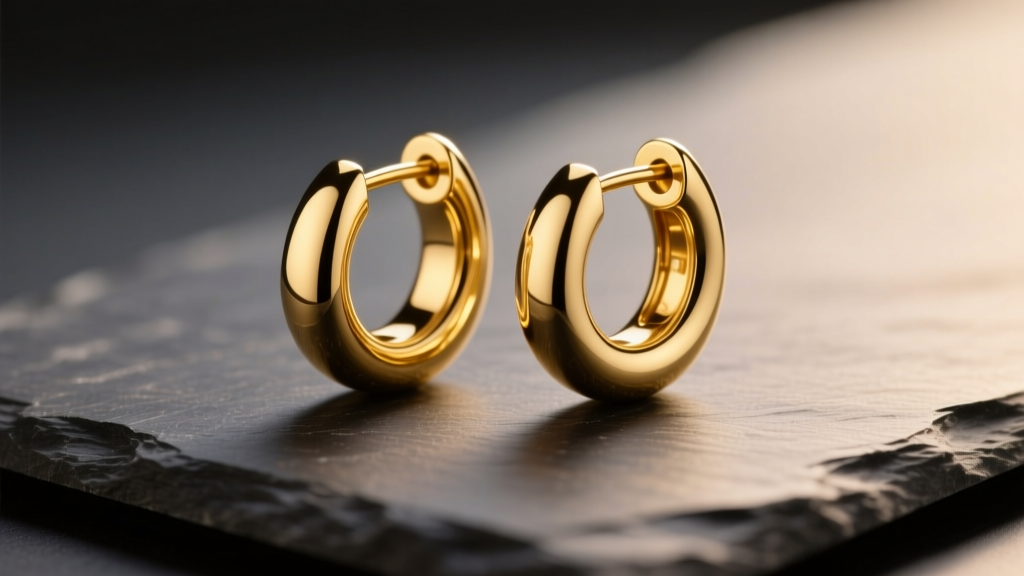
Whether you are inheriting a pair of vintage diamond studs, shopping for everyday 14k gold hoops, or evaluating a flea market find, verifying the authenticity of your jewelry is critical. The secondary jewelry market is currently saturated with high-quality gold-plated and gold-filled pieces that can easily deceive the untrained eye. If you have ever asked yourself, how do you know if earrings are real gold, the answer requires moving beyond simple visual inspections and understanding the metallurgical properties of precious metals.
In this comprehensive guide, we break down the exact methodologies used by gemologists and metallurgists to authenticate gold earrings, from non-destructive at-home checks to professional chemical assays.
The Metallurgy of Gold Earrings: Why Karats Matter
Before testing, you must understand what you are looking for. Pure gold (24 karat) is exceptionally dense and malleable, but it is far too soft for functional earring components. A 24k gold earring post would bend under the slight pressure of a butterfly backing, and a 24k hoop would easily warp out of its circular shape. Therefore, gold used in fine jewelry is alloyed with metals like copper, silver, zinc, and nickel to increase tensile strength and alter color.
- 22k Gold (91.6% pure): Rarely used for earrings except in specific cultural or traditional jewelry. Very soft and prone to scratching.
- 18k Gold (75% pure): The standard for high-end diamond and gemstone studs. It offers a rich, warm yellow hue and excellent hypoallergenic properties, though it can still scratch relatively easily.
- 14k Gold (58.3% pure): The most popular choice for everyday hoops, huggies, and cartilage earrings. It provides the ideal balance of durability, affordability, and gold content.
- 10k Gold (41.7% pure): The minimum karatage that can legally be sold as "gold" in the United States. It is highly durable but contains more alloy metals, increasing the risk of skin irritation for sensitive ears.
Step 1: Inspecting Hallmarks and Maker's Marks
The first step in authentication is locating the hallmark. According to the Federal Trade Commission (FTC) Jewelry Guides, any piece of jewelry sold in the U.S. with a karat stamp must also bear a registered trademark or maker's mark. This holds the manufacturer accountable for the accuracy of the karat claim.
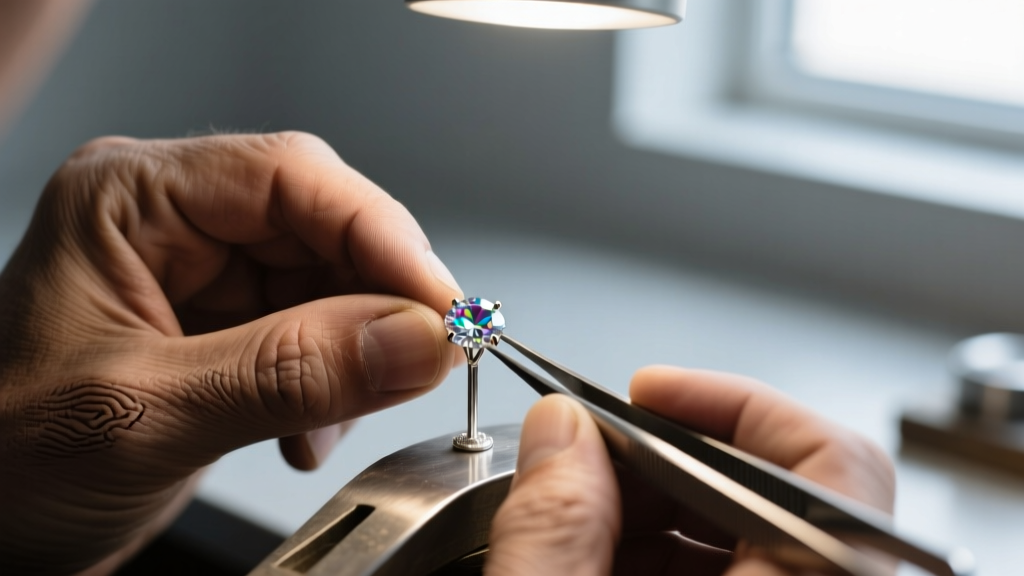
To inspect your earrings, use a 10x jeweler's loupe and a bright LED light. Look at the earring post, the inside of the hoop, or the clasp mechanism. Here is a quick reference table for common international gold hallmarks:
| Karat Mark | Miltesimal Mark | Gold Purity | Common Earring Types |
|---|---|---|---|
| 10K | 417 | 41.7% | Durable cartilage studs, clickers |
| 14K | 585 | 58.3% | Everyday hoops, huggies, drops |
| 18K | 750 | 75.0% | Diamond studs, luxury dangles |
| 22K | 916 | 91.6% | Traditional cultural jewelry |
Expert Warning: A hallmark alone is not definitive proof of authenticity. Counterfeiters frequently stamp "14K" or "585" on brass or copper-plated base metals. Hallmarks should be treated as a starting point, not a final verdict.
Step 2: The Neodymium Magnet Test
Gold is a diamagnetic metal, meaning it is slightly repelled by magnetic fields rather than attracted to them. To perform this test, you need a strong neodymium magnet (standard refrigerator magnets are too weak). Hold the magnet near the earring. If the earring snaps to the magnet or shows strong attraction, it has a ferromagnetic base metal core, such as iron, steel, or nickel.
The Clasp Caveat: When testing hoop earrings or drop earrings with complex closures, be aware that the internal tension springs inside latch-backs or the wire inside butterfly friction backs are often made of steel. A slight magnetic pull at the clasp is normal, but the main body, post, or hoop wire must remain completely non-magnetic.
Step 3: The Skin Discoloration and Density Checks
Have you ever taken off a pair of earrings to find green or black smudges on your earlobes? This is a primary indicator of fake gold. Base metals like copper and brass react with the chlorides, salts, and acids in human sweat. When the thin gold plating wears off, the exposed copper alloys oxidize and leave a dark residue on the skin. Real 14k or 18k gold will never cause green discoloration.
Additionally, gold is incredibly dense (19.32 g/cm³). While difficult to measure without precise scales and water displacement tools, real gold earrings will feel noticeably heavier than identically sized pieces made of brass (8.5 g/cm³) or aluminum. If a pair of oversized 18k gold hoop earrings feels suspiciously light and airy, they are likely hollow-core plated brass or aluminum.
Step 4: Advanced Verification (Acid and Scratch Tests)
For definitive at-home results, jewelers use the touchstone and acid test method. This involves rubbing the earring against a black basalt testing stone to leave a visible streak of metal, then applying a drop of nitric acid formulated for specific karats.
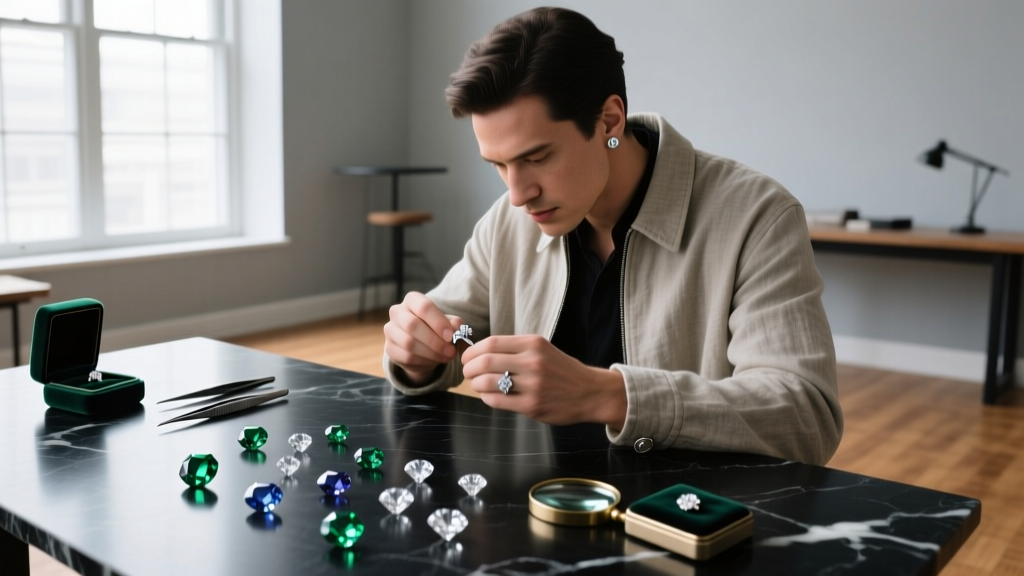
- 14k Acid Test: If the streak remains bright and unchanged, the metal is at least 14k. If it dissolves or turns milky, it is a lower karat or plated base metal.
- 18k Acid Test: If the streak holds up to 18k acid but dissolves under 22k acid, you have verified 18k gold.
Note: The acid test is mildly destructive. It requires filing a tiny, hidden notch into the earring post to bypass any surface plating and test the core metal. We recommend leaving acid testing to professionals to avoid ruining the finish of your jewelry.
Solid Gold vs. Plated vs. Filled: The Buyer's Matrix
Understanding the terminology of gold layering is crucial when evaluating vintage or secondhand earrings. The Gemological Institute of America (GIA) emphasizes that the thickness of the gold layer dictates both the value and the lifespan of the piece.
| Material Type | Gold Content | Base Metal Core | Longevity & Wearability |
|---|---|---|---|
| Solid Gold | 100% Gold Alloy (10k-24k) | None | Lifetime durability; can be polished and re-tipped. |
| Gold Filled (GF) | Min. 5% gold by weight | Brass or Copper | Lasts 10-30 years; thick mechanical bond resists flaking. |
| Gold Vermeil | Min. 2.5 microns thick | Sterling Silver (.925) | 2-5 years; excellent for sensitive ears due to silver core. |
| Gold Plated (GP) | Less than 0.5 microns | Brass, Copper, or Steel | Months to 1 year; high risk of flaking and skin irritation. |
When to Seek Professional XRF Appraisal
If you are dealing with high-value estate earrings, antique Art Deco pieces, or earrings with integrated gemstones where acid testing is too risky, it is time to visit a professional jeweler. Modern gemological labs and high-end pawn shops utilize X-Ray Fluorescence (XRF) spectrometers. These non-destructive machines shoot X-rays into the metal and measure the fluorescent energy that bounces back, providing an exact elemental breakdown (e.g., 58.4% Gold, 24% Silver, 17.6% Copper) in seconds without leaving a single scratch on your earrings.
Ultimately, knowing how to verify your gold earrings protects your investment and ensures that the metals resting against your skin are safe, hypoallergenic, and built to last a lifetime.


