Master This Crochet Earring Pattern Free: Step-by-Step Dangle Guide
Learn to craft lightweight dangles with our crochet earring pattern free guide. Includes thread weights, wire gauges, and hypoallergenic assembly tips.

The Renaissance of Handcrafted Ear Art
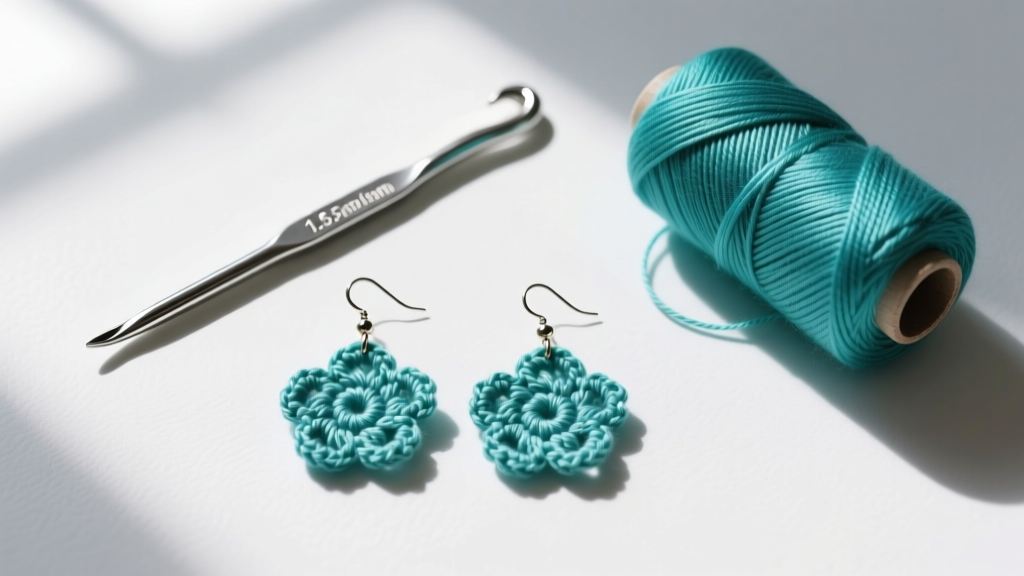
In the landscape of 2026 jewelry trends, hyper-lightweight, sustainable, and artisan-crafted accessories have completely overtaken heavy, mass-produced metals. For crafters and jewelry designers alike, mastering textile-based jewelry is no longer just a hobby; it is a highly sought-after skill. If you have been searching for a reliable crochet earring pattern free of confusing abbreviations and structural flaws, you have found your definitive guide. Crochet dangle earrings offer an unparalleled strength-to-weight ratio, allowing for dramatic, shoulder-grazing silhouettes that weigh less than a standard metal hoop. However, the difference between a floppy, amateurish craft project and a premium, boutique-quality accessory lies entirely in material science, tension control, and hardware integration.
Precise Material Specifications for Jewelry-Grade Crochet
The most common failure mode in handmade textile jewelry is improper material pairing. Using standard yarn or acrylic thread will result in pilling, stretching, and a dull finish that immediately degrades the perceived value of the piece. To achieve a professional drape and crisp stitch definition, you must adhere to strict material specifications.
| Component | Specification | Purpose & E-E-A-T Insight |
|---|---|---|
| Thread | 100% Mercerized Cotton, Size 10 | Mercerization treats the cotton with sodium hydroxide, increasing luster, strength, and dye affinity. Size 10 (approx. 0.6mm) provides the ideal structural core. |
| Hook | 1.5mm or 1.75mm Steel | Steel hooks feature a sharper, more precise throat than aluminum, preventing the splitting of fine cotton fibers during complex stitches. |
| Ear Wires | 20-Gauge Niobium or Surgical Steel | 20-gauge is the universal standard for healed lobe piercings. Niobium is highly recommended for its 100% nickel-free, hypoallergenic properties. |
| Jump Rings | 4mm OD, 20-Gauge Gold-Filled | Gold-filled (not plated) ensures the hardware will not tarnish or flake when exposed to skin oils and humidity over time. |
According to the Craft Yarn Council standard thread weight system, Size 10 thread is classified as a 'bedspread' weight, but in the micro-crochet jewelry community, it is the undisputed gold standard for structural dangles. For a comprehensive understanding of how wire hardness and gauge affect your final assembly, referencing the Fire Mountain Gems wire gauge chart is highly recommended before purchasing your findings.
The Core Crochet Earring Pattern Free Step-by-Step
This specific floral mandala dangle pattern is designed to lay perfectly flat once blocked, creating a geometric yet organic aesthetic. We will use standard US crochet terminology. Ensure your resting tension is slightly tighter than your standard garment crochet to prevent gaps in the lacework.
Round 1: The Foundation and Base Mesh
Begin with a magic ring (also known as an adjustable loop). This technique is non-negotiable for jewelry, as a standard chain-loop foundation will leave a permanent, unsightly hole in the center of your motif.
- Step 1: Chain 3 (this counts as your first double crochet).
- Step 2: Work 11 double crochet (dc) stitches into the magic ring.
- Step 3: Pull the tail end tightly to close the center hole completely.
- Step 4: Slip stitch (sl st) into the top of the beginning chain 3. (Total: 12 dc)
Round 2: Creating the Petal Dangles
This round introduces the treble crochet (tr) to create elongated, dramatic petals that catch the light and move fluidly with the wearer.
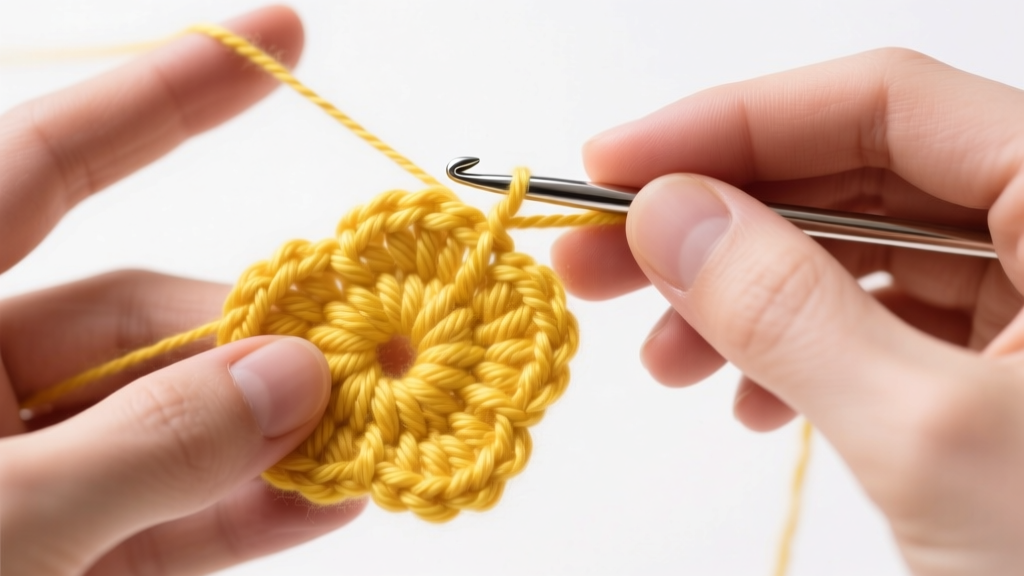
- Step 1: Chain 1, single crochet (sc) in the same stitch as the join.
- Step 2: *Chain 4, skip 1 dc, sc in the next dc.* Repeat from * to * around the entire circle. You should have 6 chain-4 spaces.
- Step 3: Slip stitch into the first chain-4 space to position your hook for the petals.
- Step 4: In each chain-4 space, work the following sequence: (sc, half-double crochet, 3 dc, 1 treble crochet, 3 dc, half-double crochet, sc).
- Step 5: Slip stitch into the first sc of the round to close. Fasten off, leaving a 4-inch tail for weaving.
Structural Engineering: Blocking and Stiffening
A crochet earring pattern free of structural reinforcement will inevitably curl, warp, and lose its shape when exposed to ambient humidity. To achieve a boutique-grade finish, you must chemically set the fibers and mechanically block the piece.
The PVA Blocking Formula
While commercial fabric stiffeners exist, a custom polyvinyl acetate (PVA) mixture offers superior control and a matte-to-satin finish that does not look like plastic. Mix 1 part high-quality PVA craft glue with 2 parts distilled water in a small glass dish. Submerge your finished crochet motifs entirely, massaging the solution into the fibers. Gently squeeze out the excess liquid between two paper towels—never wring or twist the cotton, as this will permanently distort the stitch alignment.
Pinning and Curing
Place the damp motifs on a high-density EVA foam blocking mat. Using rust-proof stainless steel T-pins, pin the tips of each petal outward, ensuring perfect radial symmetry. Allow the pieces to cure in a low-humidity environment for a minimum of 12 hours. The distilled water evaporates, leaving a microscopic polymer film coating each cotton fiber, locking the dangle into its intended geometry.
Hypoallergenic Assembly and Hardware Integration
The transition from a textile craft to a wearable accessory hinges on how the crochet piece interfaces with the metal findings. Improper attachment leads to fraying thread and lost earrings.
The Jump Ring Technique
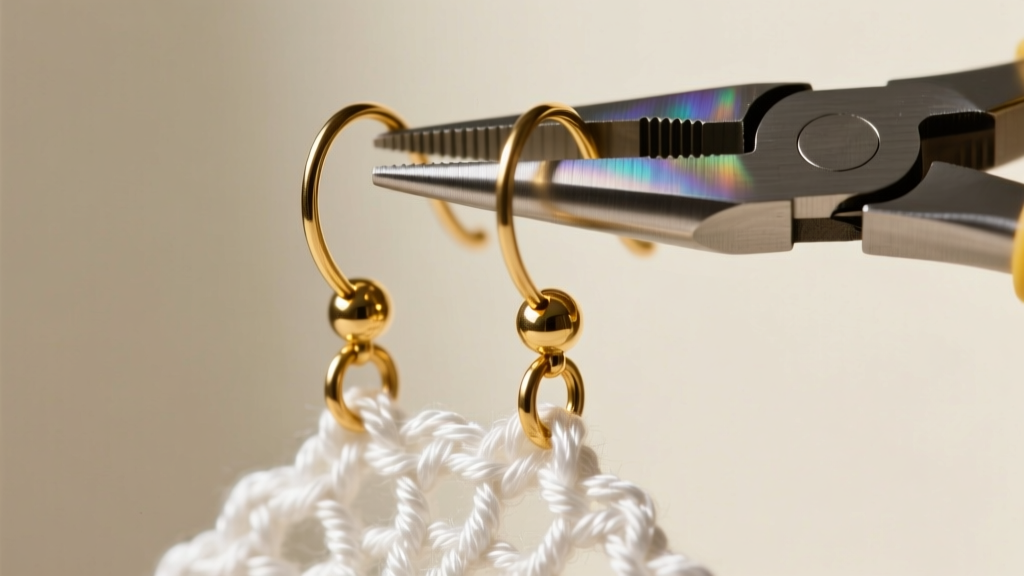
Never use a single pair of pliers to pull a jump ring apart like a hinge; this permanently weakens the metal's temper and creates an oval shape that will never close flush. Instead, use two pairs of flat-nose jewelry pliers. Grip the 4mm gold-filled jump ring on either side of the split, and twist one hand toward you and the other away from you to open it laterally. Slide the top center stitch of your crochet petal onto the ring, followed by the loop of your 20-gauge niobium ear wire. Twist the ring closed until you hear and feel a distinct 'click' as the two ends meet perfectly flush.
Securing the Thread Tail
Thread a fine, sharp tapestry needle with the 4-inch tail left from Round 2. Weave the tail back through the bases of the double crochet stitches in Round 1, changing direction at least twice to create a mechanical lock. Apply a microscopic drop of flexible jewelry adhesive (such as E6000 Fabri-Fuse) to the final weave point, and snip the thread flush with sharp embroidery scissors.
Troubleshooting Tension and Hardware Failures
Even experienced crocheters encounter issues when scaling down to micro-jewelry. Here is a diagnostic framework for common flaws:
- Flaw: The motif curls like a bowl. Diagnosis: Your tension is too tight on the outer rounds, or you accidentally skipped a stitch in Round 1, creating an uneven stitch count. Fix: Frog (unravel) the piece and use a 1.75mm hook instead of a 1.5mm to relax the outer gauge.
- Flaw: The ear wire sits at a crooked angle. Diagnosis: The jump ring was attached to a side stitch rather than the absolute top-center apex stitch of the petal. Fix: Open the ring laterally and reposition it to the highest vertical point of the treble crochet stitch.
- Flaw: The cotton thread looks fuzzy after stiffening. Diagnosis: You used a non-mercerized cotton or a cotton-blend thread. The PVA solution causes staple fibers to bloom. Fix: Always verify the yarn label specifies 100% mercerized or gassed cotton, which has been singed to remove surface fuzz.
Care and Maintenance for the End Wearer
When gifting or selling these pieces, providing care instructions elevates the professional perception of your brand. Advise wearers to store the earrings in a rigid box to prevent the petals from being crushed by heavier metal jewelry. If the cotton becomes soiled from cosmetics or skin oils, the earrings can be gently spot-cleaned with a soft toothbrush dipped in mild baby shampoo and warm water, then left to air-dry flat. Avoid submerging the gold-filled jump rings in harsh chemical cleaners, as this can degrade the mechanical bond of the gold layer over time.
By respecting the intersection of textile arts and metallurgy, you transform a simple crochet earring pattern free tutorial into a masterclass of wearable engineering. The resulting dangles are not just accessories; they are lightweight, hypoallergenic works of art designed to endure the rigors of daily wear while maintaining their structural poetry.


