Metallurgy & Mechanics: Gold Earrings Designs For Daily Use
Discover the metallurgy, gauge specs, and backing mechanics behind the best gold earrings designs for daily use. Expert guide to 14k vs 18k durability.

The Engineering of Everyday Gold
When evaluating gold earrings designs for daily use, master jewelers and metallurgists look far beyond aesthetic appeal. An earring intended for 24/7 wear is essentially a micro-mechanical device subjected to constant kinetic impact, thermal fluctuations, and exposure to corrosive biological and environmental acids. In 2026, the intersection of advanced CAD/CAM manufacturing and traditional metallurgy has redefined what constitutes a truly durable everyday earring. This guide deconstructs the material science, structural mechanics, and ergonomic geometries that separate fragile fashion jewelry from heirloom-grade daily wear staples.
Karat Metallurgy: Alloy Compositions and Hardness
Gold in its pure state (24k) is a noble metal, meaning it resists oxidation and tarnish. However, its Vickers Hardness (HV) sits at a mere 25 HV, making it entirely unsuitable for the mechanical stress of daily earring wear. Pure gold posts will bend under the weight of a heavy gemstone, and pure gold prongs will inevitably release their stones. To engineer gold earrings designs for daily use, metallurgists introduce specific alloying metals to increase tensile strength and alter the crystalline grain structure.
| Karat | Gold Purity | Primary Alloys | Vickers Hardness (HV) | Daily Wear Rating |
|---|---|---|---|---|
| 24k | 99.9% | None (Pure) | ~25 HV | Poor (Bends & Scratches) |
| 18k | 75.0% | Copper, Silver, Zinc | ~120 HV | Good (Requires Moderate Care) |
| 14k | 58.3% | Copper, Silver, Zinc | ~145 HV | Excellent (Highly Durable) |
According to the Gemological Institute of America (GIA), 14k gold offers the optimal balance of gold content and structural integrity for everyday studs and hoops. The higher copper and silver content in 14k gold creates a tighter interstitial alloy matrix, raising the yield strength and preventing the post from warping when pressure is applied during sleep or physical activity.
The White Gold and Nickel Dilemma
White gold requires bleaching agents to strip the natural yellow hue of pure gold. Historically, nickel was used for this purpose. However, nickel is a primary contact allergen. Modern, high-quality daily wear earrings must comply with strict biocompatibility standards, such as the EU Nickel Directive (EN 1811:2011), which limits nickel release to 0.2 µg/cm²/week. For daily wear, experts recommend palladium-alloyed white gold or platinum settings, as palladium provides a hypoallergenic, naturally white alloy that does not require frequent rhodium re-plating to maintain its color.
Structural Mechanics: Posts, Gauges, and Backings
The failure point of most daily wear earrings is not the gold itself, but the mechanical findings—the posts and the backings. Understanding gauge thickness and locking mechanisms is critical for long-term lobe health and security.
Gauge Thickness and the Cheese-Cutter Effect
The standard earring post manufactured globally is 20-gauge (0.81mm). While sufficient for lightweight studs, 20G posts are highly problematic for heavier daily wear designs. When a heavy gold hoop or diamond cluster rests on a thin 20G post, the downward force creates a shear stress against the earlobe tissue. Over months of daily wear, this mimics a 'cheese-cutter' effect, slowly migrating the piercing downward and thinning the earlobe. For any gold earring design weighing over 3 grams, an 18-gauge (1.02mm) or 19-gauge (0.91mm) post is mandatory to distribute the kinetic load safely across the fistula.
Backing Security: Friction vs. Mechanical Locks
Standard butterfly friction backs rely on the spring tension of the metal scroll. Over time, repeated removal and exposure to skin oils cause metal fatigue, reducing the clamping force and leading to lost earrings. For secure daily wear, two mechanical alternatives dominate the expert market:
- Screw-Backs: Featuring a precision-machined 0.8mm thread pitch on the post, screw-backs physically thread into the backing. They are highly secure but can suffer from thread-stripping if cross-threaded by the user.
- La Pousette (Locking) Backs: Utilizing a dual-spring mechanical clutch, La Pousette backs click securely into a grooved notch on the post. They offer the highest security-to-ease-of-use ratio and are the gold standard for high-value daily studs.
Design Geometries: Minimizing Snag and Tear Risks
The physical geometry of the earring dictates how it interacts with textiles, hair, and sleep environments. In 2026, advanced 3D wax printing and CNC milling allow for micro-architectures that eliminate traditional snag vectors.
Bezel and Micro-Flush Settings
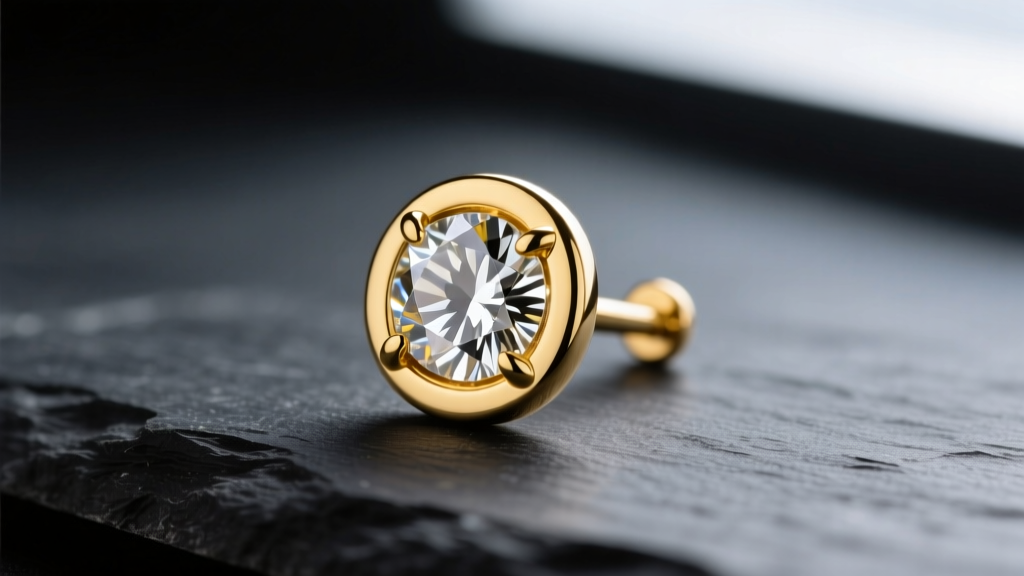
Traditional prong settings elevate the gemstone, creating a cantilevered profile that catches on sweaters, towels, and hair. For daily use, bezel settings—where a continuous rim of gold encircles the stone's girdle—lower the center of gravity and eliminate lateral snag points. Modern micro-flush settings, where the stone is set directly into the drilled gold shank of a hoop or huggie, offer an entirely continuous surface profile, rendering the earring virtually immune to textile snagging.
Hoop Hinges and Continuous Wire
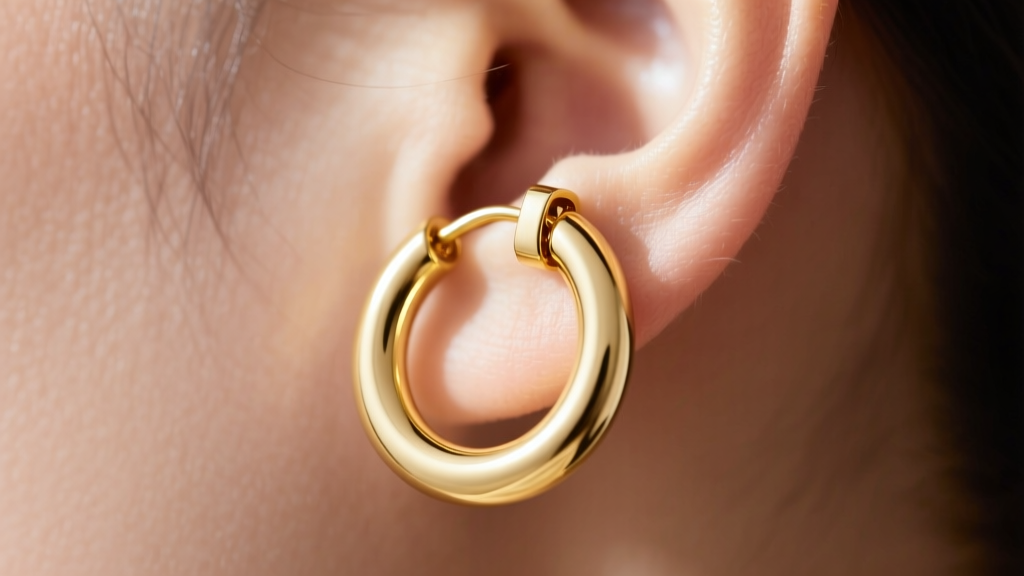
Hinged hoop earrings introduce a mechanical weak point: the hinge pin. In lower-quality designs, the hollow tubing of the hoop can crush near the hinge, or the pin can shear under lateral torque. 'Continuous' or 'endless' hoops, which utilize a seamless wire that clicks into a hidden tension tube, remove the hinge entirely. Alternatively, huggie-style hoops with integrated, spring-loaded 'clicker' clasps provide a rigid, continuous geometry that maintains its structural integrity even when compressed during sleep.
Maintenance and Failure Modes in Daily Wear
Even the most expertly engineered gold earrings designs for daily use require an understanding of material fatigue and environmental degradation. Jewelers frequently encounter specific failure modes in everyday pieces:
- Stress Corrosion Cracking (SCC): When residual stress from the manufacturing process (like drawing a wire for a post) combines with exposure to chlorides (found in tap water and sweat), microscopic cracks can form at the base of the post. Proper annealing during manufacturing prevents this.
- Prong Fatigue: In designs that must use prongs, the repeated micro-flexing of the gold prongs against bedding can cause work-hardening, eventually leading to a brittle snap. Regular ultrasonic cleaning and microscopic inspection every 12 months is required.
- Alloy Tarnish: While gold does not tarnish, the copper and silver alloys in 14k and 18k gold can oxidize when exposed to sulfur compounds in the air or certain cosmetics. A simple polish with a jeweler's cloth restores the surface luster without removing significant metal mass.
Conclusion: Specifying Your Daily Drivers
Selecting the ideal everyday earring requires a shift in perspective from pure ornamentation to material engineering. By prioritizing 14k or palladium-alloyed 18k gold, insisting on 18-gauge posts for heavier pieces, upgrading to La Pousette locking backings, and choosing bezel or continuous geometries, you ensure that your jewelry withstands the rigors of daily life. As noted by the technical experts at Rio Grande, the longevity of a piece of jewelry is determined long before it reaches the display case—it is forged in the precise calculations of its metallurgy and mechanics. For further reading on global karat standards and hallmarking, the World Gold Council provides extensive documentation on alloy regulations and market standards.


