How to Buy Authentic Vintage Garnet Earrings: A Guide
Learn how to identify, evaluate, and care for vintage garnet earrings. Discover era-specific styles, metal hallmarks, and pricing in our beginner guide.

The Allure of Vintage Garnet: Why Beginners Love Them
For novice collectors and jewelry enthusiasts alike, vintage garnet earrings offer a masterclass in history, gemology, and style. While garnet is widely known as the January birthstone, its presence in antique jewelry extends far beyond simple birthday gifts. From the romantic, mourning-era pieces of the Victorian period to the bold, geometric statements of the Art Deco movement, garnets have been a staple in fine jewelry for centuries. Unlike modern mass-produced studs, vintage garnet earrings carry the weight of historical craftsmanship, featuring hand-cut stones, intricate metalwork, and unique patinas that cannot be replicated in a modern factory. This guide will walk you through the essential knowledge needed to confidently identify, purchase, and care for authentic vintage garnet earrings.
Decoding the Eras: Victorian vs. Art Deco vs. Retro
Understanding the historical context of your earrings is the first step in authentication. The design, metal choice, and stone cutting style will immediately point to a specific era.
Victorian (1837-1901): Romance and Mourning
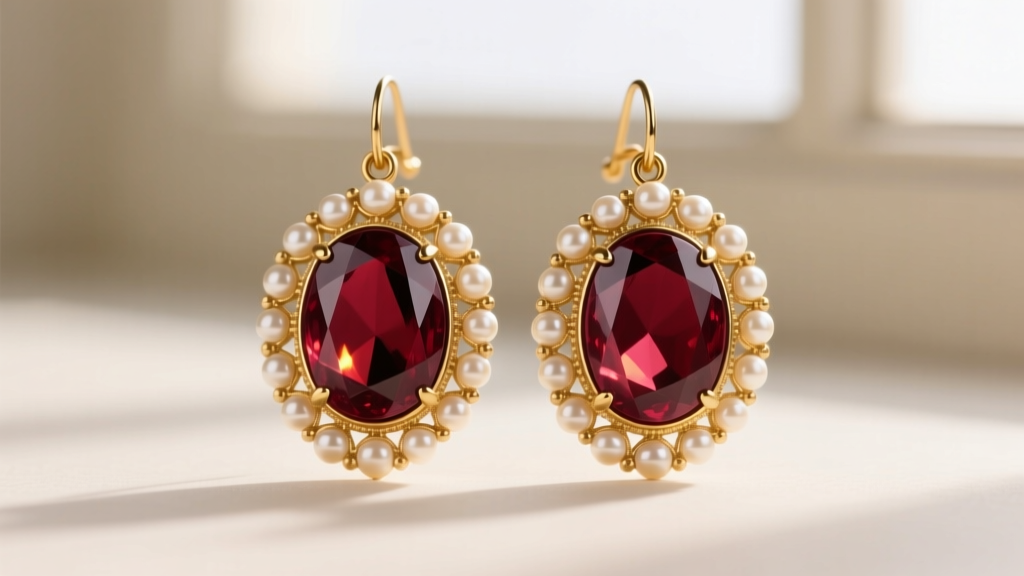
Victorian vintage garnet earrings are heavily characterized by their sentimental motifs and rich, dark red almandine garnets. During the mid-to-late Victorian era, garnets were frequently set in 15k yellow gold (a standard unique to British jewelry of the time) or low-karat gold like 9k. You will often find these earrings featuring cabochon cuts or rose-cut stones surrounded by seed pearls or enamel work. Because ear piercing was somewhat inconsistent during this era, many original Victorian pieces were actually screw-backs or clip-ons, later converted to modern posts.
Art Deco (1920-1935): Geometric Glamour
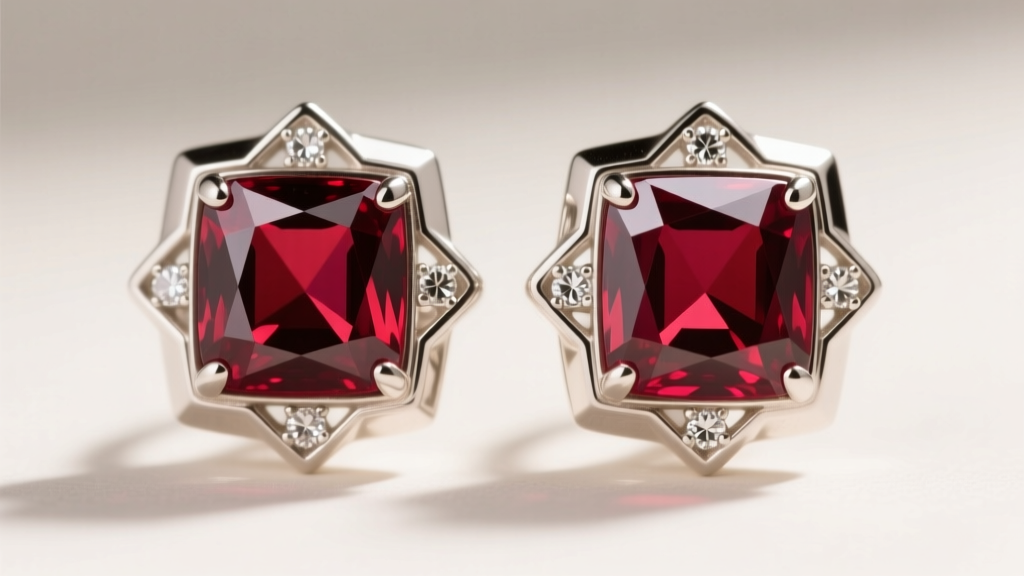 The Art Deco era introduced sharp angles, symmetry, and high-contrast metalwork. Vintage garnet earrings from this period often feature pyrope garnets—known for their intense, blood-red hue and lack of brown undertones. Platinum and white gold became the metals of choice, providing a stark, icy contrast to the deep red stones. Look for step-cuts, baguettes, and calibré-cut garnets set in milgrain-edged bezels, often accented with tiny single-cut diamonds.
Retro (1935-1950): Bold and Chunky
Due to metal rationing during World War II, Retro-era jewelry shifted back to yellow and rose gold, but with a much bolder, three-dimensional aesthetic. Vintage garnet earrings from the Retro period are noticeably chunkier, featuring large, faceted oval or cushion-cut garnets set in sweeping, scroll-like gold motifs. These pieces are highly durable and often feature sturdy, modern-looking clip-backs or thick screw-backs.
The Anatomy of a Vintage Garnet Earring
Not all garnets are created equal. The term 'garnet' actually refers to a complex group of silicate minerals. According to the Gemological Institute of America (GIA), identifying the specific species of garnet can drastically alter the value and historical context of your earrings.
| Garnet Variety | Color Profile | Era Prevalence | Value Indicator |
|---|---|---|---|
| Almandine | Deep red with brown undertones | Victorian, Georgian | Most common; affordable |
| Pyrope | Vivid blood red, no brown | Art Deco, Retro | Moderate to High |
| Demantoid | Vivid green (with horsetail inclusions) | Late Victorian, Edwardian | Extremely Rare; Premium |
| Hessonite | Orange-brown to cinnamon | Victorian, Retro | Niche collector appeal |
How to Authenticate Vintage Garnet Earrings
Distinguishing true vintage garnet earrings from modern reproductions requires a keen eye for structural details. Here is a practical checklist for beginners:
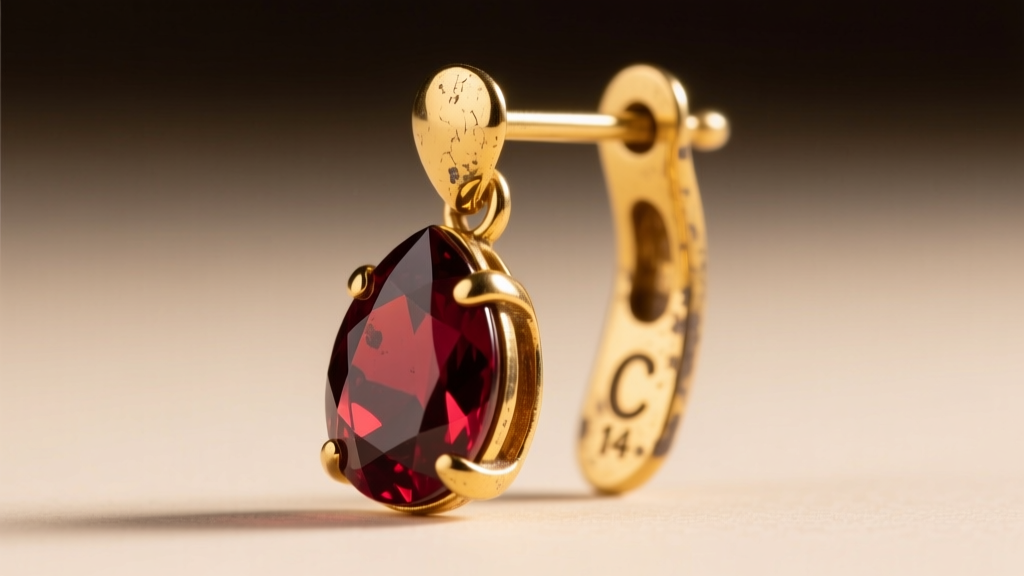
- Examine the Clasps and Findings: Modern earrings use friction posts and butterfly backs. True vintage pieces will feature C-clasps (common in the 1890s), trombone clasps (early 1900s), or screw-backs (popular from 1900 to the 1950s). If a piece claims to be Victorian but has a modern friction post without any signs of soldering or conversion, be highly suspicious.
- Check for Hallmarks: Use a jeweler's loupe (10x magnification) to inspect the posts and backs. British pieces may feature a crown and number (e.g., 375 for 9k, 625 for 15k), while American pieces might simply be stamped '14K' or lack a stamp entirely if made before the 1906 National Stamping Act.
- Look for Wear Patterns: Authentic vintage garnet earrings will show microscopic wear. The gold around the stone setting should show slight softening, and the clasp mechanism will have a natural patina. Modern reproductions often use chemical treatments to fake patina, which looks uniformly dark rather than naturally worn in high-friction areas.
- Inspect the Stone Setting: According to Lang Antiques University, antique cut stones rarely fit perfectly into modern, machine-made bezels. Look for hand-filed prongs and slight asymmetries in the stone facets, which indicate hand-cutting.
Pro-Tip: Bring a UV flashlight when shopping for vintage garnets. Some antique glass or synthetic spinel imitations will fluoresce brightly under UV light, whereas natural almandine and pyrope garnets are generally inert and will not glow.
Pricing Guide: What Should You Expect to Pay?
Pricing for vintage garnet earrings varies wildly based on the era, metal purity, and garnet species. Below is a realistic market breakdown for 2026:
- Victorian 9k/15k Gold Almandine Studs or Drops: $250 – $600
- Art Deco Platinum & Pyrope Garnet Dangles: $800 – $2,500
- Retro 14k Gold Large Oval Garnet Clip-Ons: $400 – $900
- Edwardian Demantoid Garnet & Diamond Drops: $3,500 – $10,000+
Be wary of prices that seem too good to be true. A pair of heavy 18k gold Art Deco drops selling for under $300 is almost certainly a modern reproduction or features synthetic stones.
Care and Maintenance for Antique Garnets
 Garnets rank between 6.5 and 7.5 on the Mohs scale of hardness, making them reasonably durable for regular wear. However, vintage settings require specialized care. Never place vintage garnet earrings in an ultrasonic cleaner. Many Victorian and Georgian pieces feature 'foil-backed' stones—a technique where a thin piece of colored metallic foil was placed behind the garnet to enhance its color and brilliance. Ultrasonic vibrations and liquid immersion will destroy this foil, leaving the stone looking dull and lifeless. Instead, clean your vintage garnets using a soft, dry microfiber cloth and a gentle brush with warm, soapy water, ensuring you dry them immediately and thoroughly. Store them in individual soft pouches to prevent the metal settings from scratching the stones or vice versa.
Conclusion
Investing in vintage garnet earrings is a rewarding journey into the artistry of the past. By understanding the distinct characteristics of the Victorian, Art Deco, and Retro eras, and by meticulously examining clasps, hallmarks, and stone cuts, beginners can build a collection that is both historically significant and visually stunning. Take your time, use your loupe, and appreciate the enduring legacy of the garnet.


