Troubleshooting Roman Glass Earrings: Care and Authenticity
Discover how to troubleshoot roman glass earrings. Learn to verify authenticity, stop iridescence flaking, and safely clean ancient glass settings.

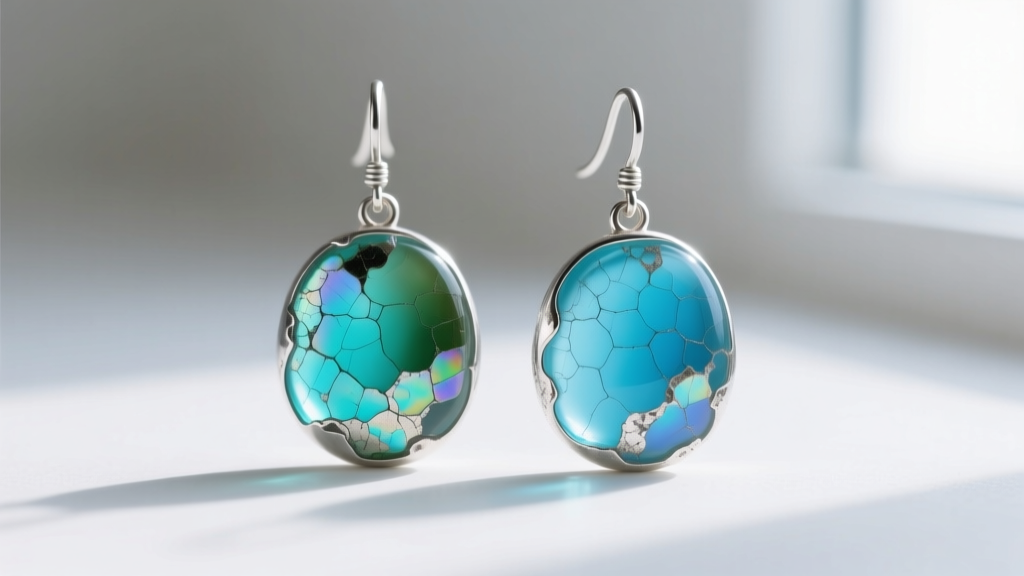
Owning a pair of Roman glass earrings means wearing a piece of history that dates back over two millennia. Excavated from ancient Mediterranean sites, these artifacts are prized for their stunning, iridescent patina. However, from a gemological and conservation perspective, that beautiful rainbow sheen is actually a sign of active decomposition. As we navigate the vintage and antique jewelry market in 2026, the influx of high-quality replicas and the inherent fragility of ancient artifacts require buyers and collectors to be vigilant.
Whether you are dealing with flaking glass, tarnished bezels, or earlobe strain from heavy artifact settings, this troubleshooting guide provides expert-level solutions to preserve and protect your Roman glass earrings.
The Chemistry of Iridescence and Active Decay
The mesmerizing rainbow effect on authentic Roman glass is not a manufactured glaze; it is the result of chemical weathering. According to the Metropolitan Museum of Art, ancient glass was made with high levels of alkali fluxes (like natron) and relatively low stabilizers. When buried in moist, slightly acidic soil for centuries, the alkali leaches out, leaving behind microscopic layers of silica. Light refracting through these paper-thin layers creates the iridescent effect.
Because this patina is essentially a delicate, flaking crust of degraded silica, it is highly susceptible to environmental changes. The most common problem collectors face is the accidental destruction of this patina through improper cleaning or exposure to modern cosmetics.
Troubleshooting 'Glass Disease' and Crizzling
'Glass disease' (or crizzling) is a conservation term for the network of fine cracks that appear on unstable glass. In Roman glass earrings, this manifests as a cloudy, weeping surface in high humidity, or microscopic flaking in dry environments.
How to Halt Degradation
If your Roman glass earrings are shedding iridescent flakes onto your skin or clothing, the ambient humidity is likely the culprit. The Corning Museum of Glass notes that crizzling accelerates when relative humidity (RH) fluctuates wildly.
- Optimal Storage: Store your earrings in a sealed archival plastic box with a conditioned silica gel packet to maintain a strict 40% to 45% RH.
- The Moisture Rule: Never wash Roman glass with water, ultrasonic cleaners, or steam. Water dissolves the leached alkali salts, causing the glass to 'weep' and permanently clouding the artifact.
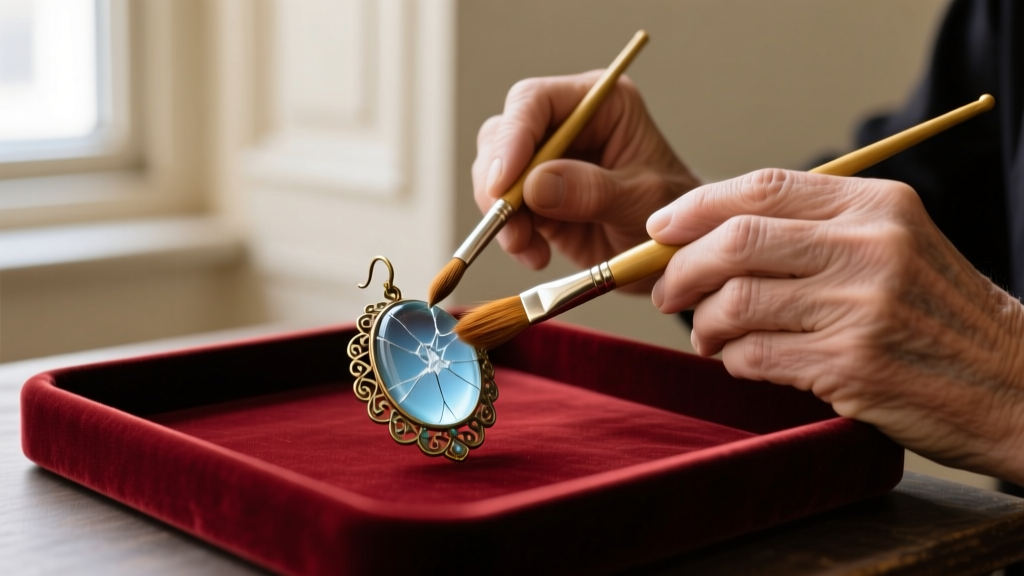
- Surface Dusting: Use a dry, ultra-soft sable makeup brush to gently sweep away dust. Never rub the surface with a microfiber cloth, as the friction will pull the delicate silica layers right off the core.
Authenticity Verification: Real Artifact vs. Modern Replica
The market is currently saturated with 'Roman-style' glass earrings. Some are modern glass tumbled with acid to mimic the pitted texture, while others use resin infused with mica powder to fake the iridescence. Use this diagnostic framework to verify your pieces.
| Diagnostic Feature | Authentic Roman Glass (1st-4th Century AD) | Modern Replica / Tumbled Glass |
|---|---|---|
| Bubble Structure | Asymmetrical, elongated, or irregularly trapped air bubbles. | Perfectly round, uniform, or entirely absent. |
| Patina Depth | Layered, flaky, and chalky white underneath the iridescent crust. | Surface-level sheen; chips reveal solid, uniform color underneath. |
| UV Fluorescence | Generally inert; may show dull, patchy fluorescence from soil minerals. | Often glows brightly due to modern chemical polishing agents or resins. |
| Weight & Thickness | Often uneven, with thick, chunky cores where the glass was originally blown. | Uniformly thin, perfectly symmetrical, and lightweight. |
| 2026 Market Price | $60 - $150 (Studs) / $180 - $450+ (Dangles) | $12 - $35 (Mass-produced fashion jewelry) |
Metal Setting Tarnish: The Hidden Danger
Most genuine Roman glass earrings on the market today are set in 925 sterling silver or 14k gold bezels by modern artisans. Silver naturally oxidizes, forming black silver sulfide. The problem arises when owners attempt to clean the tarnished silver and accidentally destroy the glass in the process.
Safe Cleaning Protocols
Never use liquid silver dips (which contain thiourea) or abrasive polishing pastes. These chemicals will seep into the microscopic fissures of the crizzled glass, causing irreversible staining and accelerating the breakdown of the artifact.
"When cleaning Roman glass settings, treat the metal and the glass as two entirely separate entities. What heals the silver will almost certainly kill the ancient glass." — Archival Jewelry Conservation Guidelines
The Fix: Use a treated, anti-tarnish polishing cloth (like a Sunshine cloth) strictly on the metal bezel and ear wire. Fold the cloth to a fine point to navigate the crevices where the metal meets the glass, ensuring zero chemical transfer to the artifact. If the tarnish is severe, take the piece to a jeweler who specializes in antiquities for mechanical polishing under a microscope.
Solving Earlobe Strain and Wire Breakage
Because authentic Roman glass fragments are often thick, irregular, and encased in heavy metal bezels, these earrings can be surprisingly heavy. Standard 20-gauge or 22-gauge ear wires will easily bend under the weight, causing the earring to droop, stretch the piercing, or fall out entirely.
Structural Upgrades for Heavy Artifacts
If your Roman glass dangles are pulling on your lobes or the wires are warping, you need to upgrade the structural support.
- Upgrade the Wire Gauge: Have a jeweler replace standard ear wires with 18-gauge or 16-gauge hardened sterling silver or niobium wires. This provides the rigidity needed to hold a 10-gram artifact upright without bending.
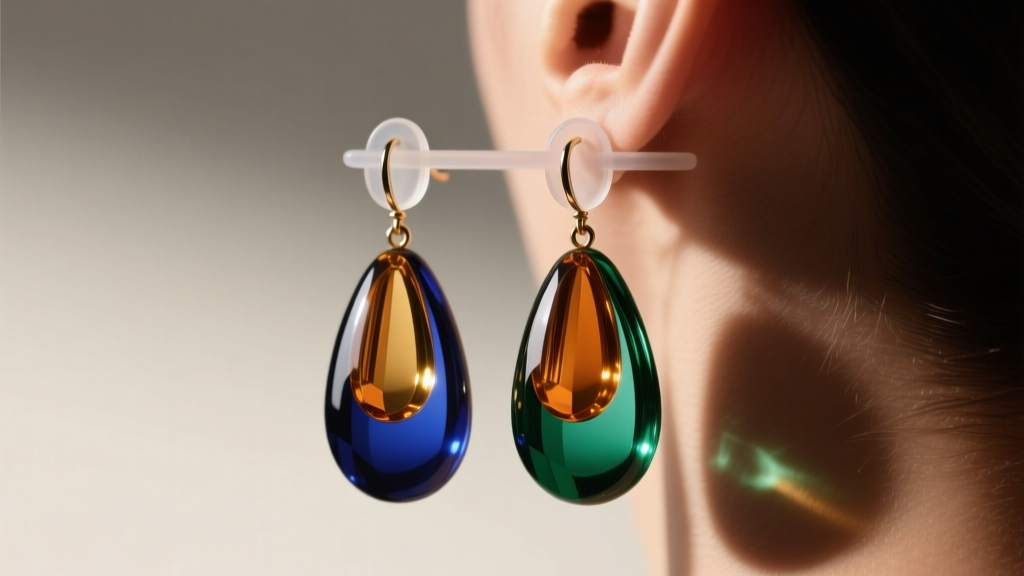
- Use Earlobe Support Patches: For drops exceeding 8 grams, apply clear silicone earlobe support patches (like BlingDots) to the back of your earlobe. These patches distribute the weight across a wider surface area, preventing the 'cheese-cutter' effect that permanently stretches piercings.
- Friction Backs for Studs: If you have Roman glass studs, discard standard butterfly backs. Use heavy-duty silicone friction backs or locking disc backs to ensure the heavy bezel doesn't slowly slide off the post throughout the day.
Expert Maintenance Checklist
To ensure your Roman glass earrings survive for another generation, adhere to this strict maintenance protocol:
- Apply Cosmetics First: Always apply hairspray, perfume, and lotions at least 15 minutes before putting on your earrings. The alcohol and oils in modern cosmetics will strip the delicate silica layers.
- Climate Control: Never leave them in a bathroom where shower steam causes rapid humidity spikes.
- Annual Inspection: Check the bezel prongs or epoxy adhesive once a year. The ancient glass is brittle; if the metal setting warps even a millimeter, the pressure can snap the artifact in half.
By understanding the fragile chemistry of ancient glass and treating your Roman glass earrings as wearable museum pieces rather than standard fashion accessories, you can safely enjoy their iridescent beauty without contributing to their deterioration.


