Decoding 925 JTW Earrings: Silver Hallmarks & Purity Guide
Uncover the truth behind 925 JTW earrings. Our expert guide decodes silver hallmarks, maker's marks, gauge sizes, and metallurgy.

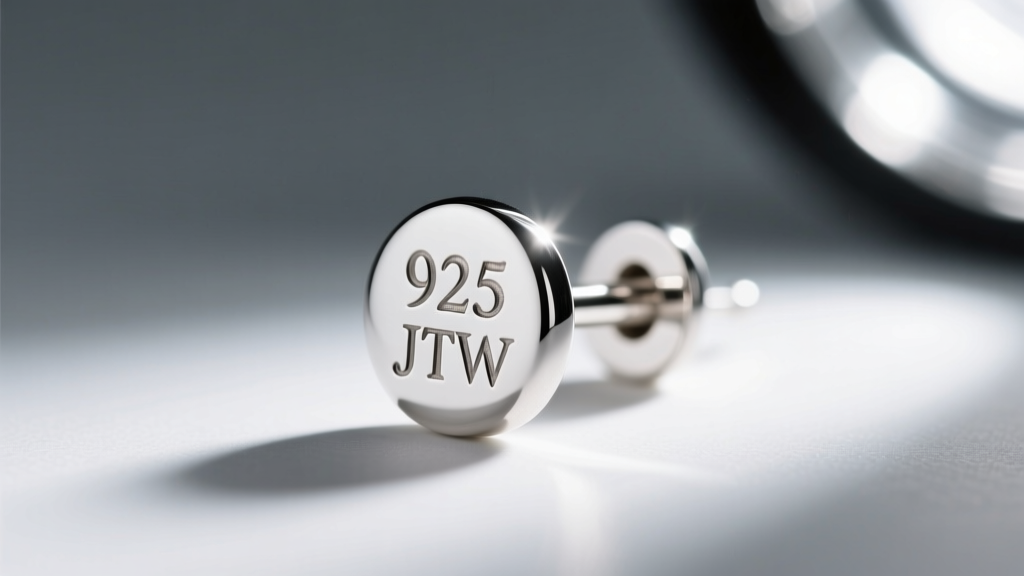
The Anatomy of a Hallmark: What '925 JTW' Actually Means
When evaluating fine jewelry, particularly everyday staples like studs and hoops, understanding hallmarks is the first line of defense against misrepresentation. If you have ever examined the post of a silver earring under a loupe and spotted the stamp '925 JTW', you are looking at a combination of a fineness mark and a sponsor's mark. The '925' denotes millesimal fineness, confirming the alloy is composed of 92.5% pure silver and 7.5% base metals (usually copper). But what does 'JTW' signify?
Contrary to a pervasive consumer myth, 'JTW' does not stand for 'Jewelry Total Weight' or 'Jewel Total Weight.' In the context of precious metal stamping, JTW is a registered maker's mark (or sponsor's mark) identifying the specific manufacturing house, silversmith, or brand responsible for the piece. According to the Federal Trade Commission (FTC) Guides for the Jewelry Industry, any piece of jewelry sold in the United States that bears a quality mark (like 925) must also be stamped with a registered trademark or maker's mark. This ensures legal accountability for the metal's purity. Therefore, 925 JTW earrings simply indicate sterling silver earrings manufactured by a specific entity holding the JTW trademark, ensuring the metal meets the legal threshold for sterling.
The Metallurgy of Sterling Silver in Earring Posts
To understand how 925 silver behaves in earring applications, we must look at its metallurgical profile. Pure silver (999 fine) is exceptionally ductile and soft, possessing a Vickers hardness (HV) of roughly 25. This makes it entirely unsuitable for earring posts, which require structural rigidity to pass through the earlobe without bending. By alloying 92.5% silver with 7.5% copper, the resulting sterling silver achieves a Vickers hardness of approximately 65 HV in its annealed state, and up to 140 HV when heavily work-hardened.
Work Hardening and Post Fatigue
Sterling silver is highly susceptible to work hardening. Every time you insert a silver earring post into a piercing, or accidentally bend it while taking it out, the crystalline structure of the metal compresses and hardens. Over time, this repeated stress without professional annealing (heating the metal to relieve internal stress) leads to metal fatigue. This is the primary reason why older 925 silver earring posts eventually snap at the base or the solder joint. For daily wear, experts recommend removing sterling silver studs before sleeping to prevent lateral pressure that accelerates this fatigue cycle.
Common Misconceptions: JTW vs. CTW
Because 'JTW' visually resembles 'CTW' (Carat Total Weight), many buyers mistakenly assume that a '925 JTW' stamp indicates the weight of diamonds or gemstones set in the earrings. This is categorically false. Gemstone weight is measured in carats (CTW or DTW for Diamond Total Weight) and is virtually never stamped directly onto the metal shank of an earring due to space constraints and the fact that stone weights are verified via grading reports or point-of-sale documentation, not metal hallmarks. If your earrings feature pavé diamonds and bear a 'JTW' stamp, the stamp refers exclusively to the metal manufacturer, not the diamond weight.
Technical Construction and Failure Points
Beyond the alloy itself, the mechanical construction of 925 silver earrings dictates their longevity. When inspecting high-quality sterling earrings, jewelers look for specific structural integrity markers:
- Solder Joints: The connection point between the earring post and the backplate is a critical failure point. High-end manufacturers use lead-free silver solder and increasingly rely on laser welding, which creates a localized, high-strength bond without overheating the surrounding silver (which can cause fire scale and brittleness).
- Friction Backs (Clutches): Standard 'butterfly' friction backs rely on the tension of the metal loops. Because sterling silver lacks the natural 'spring' memory of gold alloys or platinum, silver clutches tend to loosen over time. Upgrading to silicone O-rings or screw-backs is highly recommended for valuable 925 silver earrings to prevent loss.
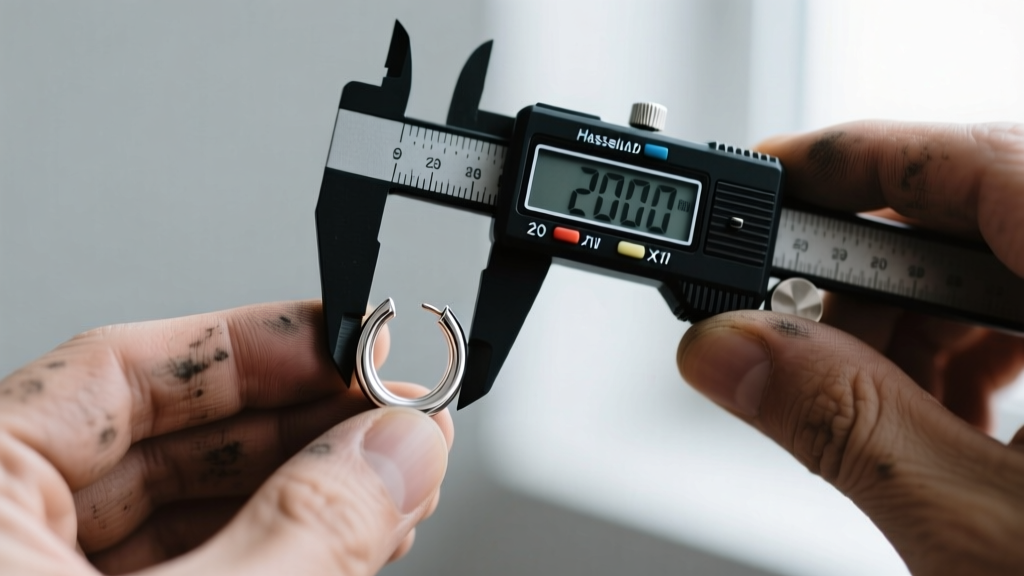
- Gauge Sizing: Standard earlobe piercings are typically 20-gauge (0.81mm) or 18-gauge (1.02mm). While 18k gold and platinum are strong enough at 20G, a 20-gauge sterling silver post is quite fragile. For heavy drop earrings or large hoops, an 18G or even 16G (1.29mm) silver post is technically superior to prevent bending under the pendant's weight.
Material Comparison: 925 Silver vs. Precious Alternatives
When deciding if 925 JTW earrings are the right investment for your lifestyle, it is helpful to compare sterling silver against other common white metals used in fine earrings. The data below highlights the trade-offs between cost, durability, and maintenance.
| Metal Type | Alloy Composition | Vickers Hardness (Approx) | Tarnish Resistance | Avg. Price (Studs) |
|---|---|---|---|---|
| 925 Sterling Silver | 92.5% Ag, 7.5% Cu | 65 - 140 HV | Low (Prone to Sulfide Tarnish) | $30 - $150 |
| Argentium 935 | 93.5% Ag, Copper, Germanium | 75 - 150 HV | High (Germanium inhibits tarnish) | $60 - $250 |
| 14k White Gold | 58.5% Au, Ni/Pd, Cu, Zn | 130 - 160 HV | High (Rhodium plated) | $150 - $600+ |
| Platinum 950 | 95% Pt, 5% Ru or Ir | 130 - 150 HV | Extreme (Develops patina, no tarnish) | $400 - $1500+ |
Advanced Authentication and Tarnish Mitigation
While the 925 and JTW stamps are strong indicators of authenticity, sophisticated counterfeits often replicate hallmarks on silver-plated brass or nickel bases. To definitively authenticate your earrings, professionals rely on X-ray Fluorescence (XRF) spectrometry, which provides a non-destructive elemental breakdown of the metal. For at-home testing, a silver acid test (using nitric acid) can be performed on an inconspicuous area, like the tip of the earring post; a creamy white reaction confirms sterling, while green indicates base metal.
The Chemistry of Silver Tarnish
Tarnish on 925 silver is not a sign of impurity; rather, it is a chemical certainty. The 7.5% copper in the alloy reacts with hydrogen sulfide (H2S) present in ambient air, sweat, and certain cosmetics to form silver sulfide (Ag2S), which appears as a yellow, brown, or black film. According to the Silver Institute, proper storage is the most effective mitigation strategy. Storing your 925 JTW earrings in airtight polyethylene bags with activated charcoal or silver-specific anti-tarnish strips (which absorb ambient sulfur compounds) will virtually halt the oxidation process.
Maintenance Protocols for Longevity
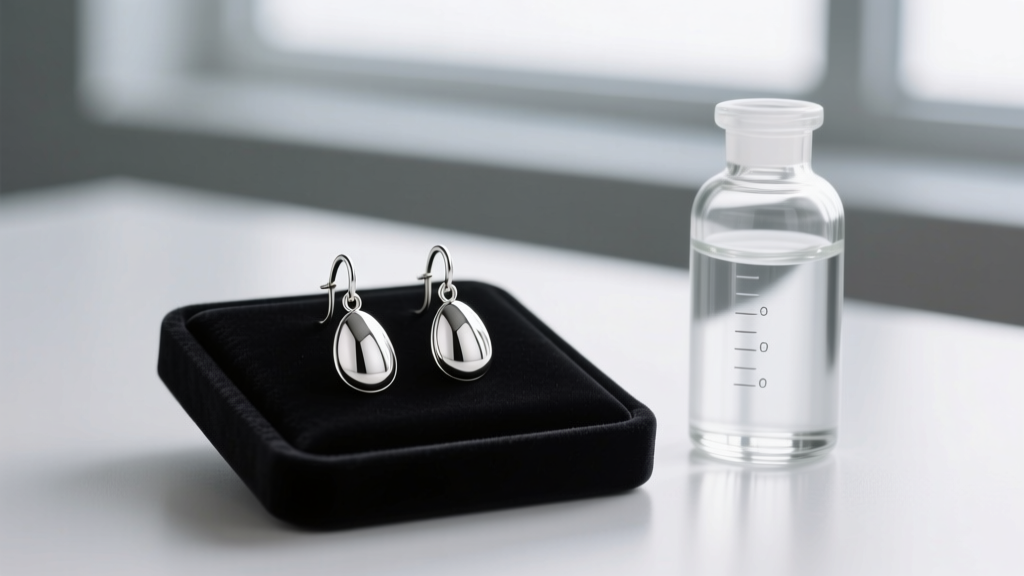
Cleaning sterling silver requires a nuanced approach to avoid stripping the metal or damaging any set gemstones. Avoid ultrasonic cleaners if your earrings feature porous stones like turquoise, opals, or pearls, as the high-frequency vibrations and chemical baths can fracture or dull these gems. For plain silver or diamond-set 925 JTW earrings, a mild bath in warm water with a few drops of phosphate-free dish soap, followed by gentle agitation with a baby-hair toothbrush, is the safest method. Polish only with a microfiber cloth or a specialized jeweler's rouge cloth; avoid abrasive paper towels, which contain wood fibers that can inflict micro-scratches on the silver's surface, creating grooves where future tarnish will rapidly accumulate.
Final Verdict for Collectors and Daily Wearers
Earrings stamped with '925 JTW' represent a transparent, legally compliant standard of sterling silver manufacturing. The presence of the maker's mark elevates the piece above unbranded, mass-produced imports, offering a traceable origin that is essential for both consumer protection and potential resale value. While sterling silver demands more maintenance than platinum or white gold, its unparalleled luster, hypoallergenic properties (when nickel-free), and accessible price point make it a cornerstone of any curated jewelry collection. By understanding the metallurgy, respecting the gauge limitations, and implementing proper sulfur-free storage, your 925 silver earrings will remain a staple of your wardrobe for decades. For further reading on international hallmarking standards and assay regulations, consult the UK Assay Office's comprehensive guide to hallmarking, which sets the global benchmark for precious metal verification.


