A Complete Style Guide for Men Wearing Hoop Earrings
Master the art of men wearing hoop earrings. Learn exact gauge sizes, diameter rules, premium metals, and step-by-step styling for any face shape.

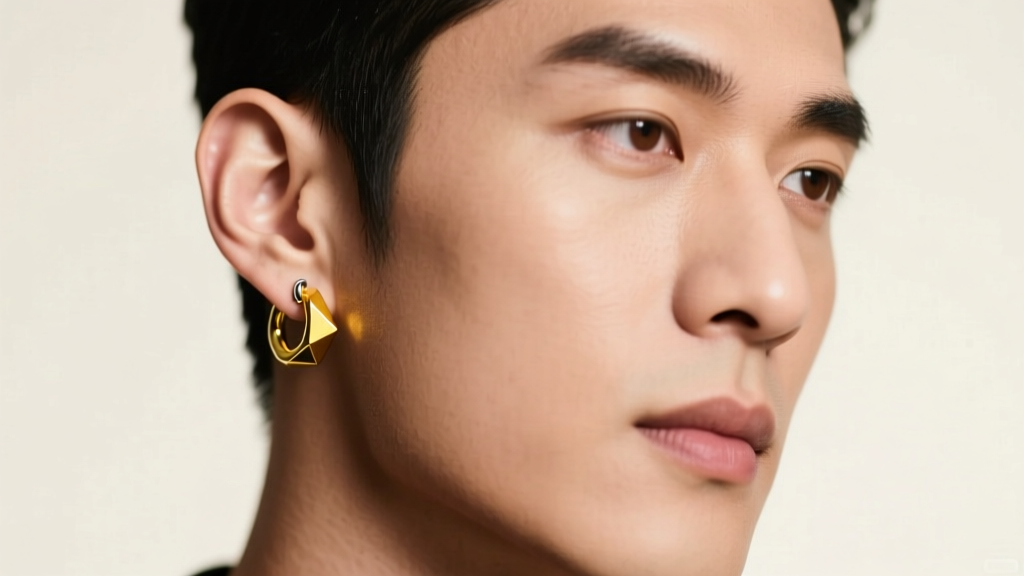
The landscape of masculine jewelry has undergone a radical transformation. As we navigate the styling landscape of 2026, the rigid rules of the past have dissolved, making way for nuanced, expressive accessorizing. Among the most prominent shifts is the mainstream adoption of men wearing hoop earrings. No longer confined to subcultures or specific music scenes, the hoop earring is now a staple of modern menswear, offering a perfect blend of edge and sophistication. However, pulling off this look requires more than just picking up a random ring from a display case. It demands a precise understanding of anatomy, metallurgy, and facial geometry. This step-by-step guide will walk you through the exact specifications needed to curate a flawless, comfortable, and stylish hoop earring setup.
Step 1: Decoding Gauge and Diameter Specifications
The most common mistake men make when transitioning from studs to hoops is ignoring the precise measurements of the jewelry. In body piercing, thickness is measured in "gauge" (g), while the size of the hoop is measured by its inner diameter in millimeters (mm).
Understanding Gauge (Thickness)
- 20-Gauge (0.81mm): The standard for basic, mass-market fashion earrings. For men, this often looks too delicate and wire-like, lacking the visual weight needed to balance masculine features.
- 18-Gauge (1.0mm): A versatile middle ground. Ideal for smaller, subtle huggies or cartilage hoops where a thicker gauge might cause discomfort.
- 16-Gauge (1.2mm): The gold standard for men's lobe and cartilage hoops. It provides a substantial, intentional look without requiring you to stretch your piercing.
- 14-Gauge (1.6mm): A bold, statement-making thickness. If your lobes were pierced with a standard needle, you may need a professional to taper them to accommodate a 14g hoop comfortably.
Dialing in the Diameter
The diameter dictates how the earring interacts with your jawline and neck. For a standard lobe piercing, an 8mm to 10mm inner diameter will sit flush against the earlobe, creating a "huggie" effect. A 12mm to 15mm diameter offers a classic, visible drop that frames the face without catching on shirt collars. Anything exceeding 20mm enters statement territory and requires careful styling to avoid looking costumey in professional environments.
Step 2: Selecting Hypoallergenic, Premium Metals
Because hoops move constantly, creating friction against the fistula (the piercing channel), material purity is non-negotiable. Cheap alloys will cause contact dermatitis, leading to swelling, crusting, and eventual rejection of the jewelry.
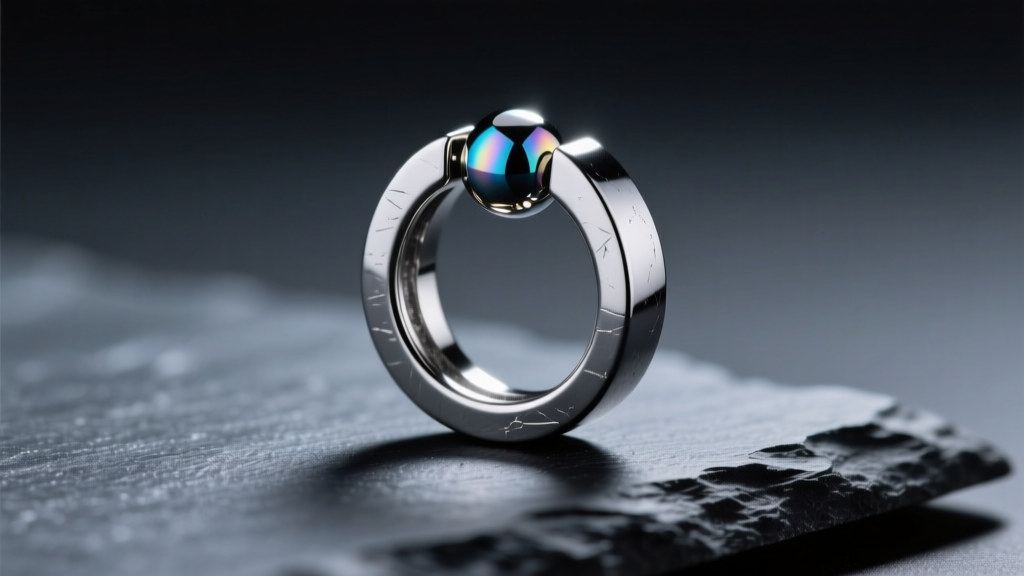
According to the Association of Professional Piercers (APP), the safest metals for long-term wear in healed piercings include:
- Implant-Grade Titanium (ASTM F136): The undisputed champion of body jewelry. It is entirely nickel-free, highly polished, and lightweight. If you have sensitive skin, this is your baseline.
- Niobium: A highly reactive metal that can be anodized into vibrant colors without the use of toxic dyes or plating. It is slightly heavier than titanium but equally biocompatible.
- 14k or 18k Solid Gold: Must be alloyed for body jewelry (avoid 24k, which is too soft and scratches easily, trapping bacteria). Ensure it is nickel-free and palladium-based if you have white gold preferences.
What to Avoid: Steer clear of anything labeled merely as "surgical steel" or "stainless steel." These are broad marketing terms that often contain nickel. The American Academy of Dermatology (AAD) frequently cites nickel exposure from low-grade jewelry as a primary trigger for allergic contact dermatitis, which can permanently damage the piercing channel.
Step 3: Matching Hoop Styles to Face Shapes
The geometry of your face should dictate the silhouette of your hoop. The goal is to create visual balance, either by softening harsh angles or adding structure to soft curves.
| Face Shape | Recommended Hoop Style | Ideal Diameter | Styling Rationale |
|---|---|---|---|
| Square | Classic Round Hoops | 12mm - 15mm | The circular geometry softens a strong, angular jawline and adds necessary curvature to the lower face. |
| Round | Angular or Elongated Drops | 8mm - 10mm (Huggies) | Tight huggies prevent adding unwanted width to the face, while elongated shapes (if exploring beyond standard hoops) create a slimming vertical line. |
| Oval | Versatile / Any Shape | 10mm - 20mm | Oval faces are naturally balanced. You can experiment with oversized statement hoops or tight, textured huggies with equal success. |
| Diamond | Medium Round Hoops | 10mm - 12mm | Mid-sized hoops help add subtle visual weight to the lower half of the face, balancing out prominent cheekbones. |
Step 4: Navigating Closure Mechanisms and Failure Modes
The closure type determines not only how easy the earring is to put in but also its structural longevity. Men often prioritize durability, making the choice of mechanism critical.
The Hinged Clicker
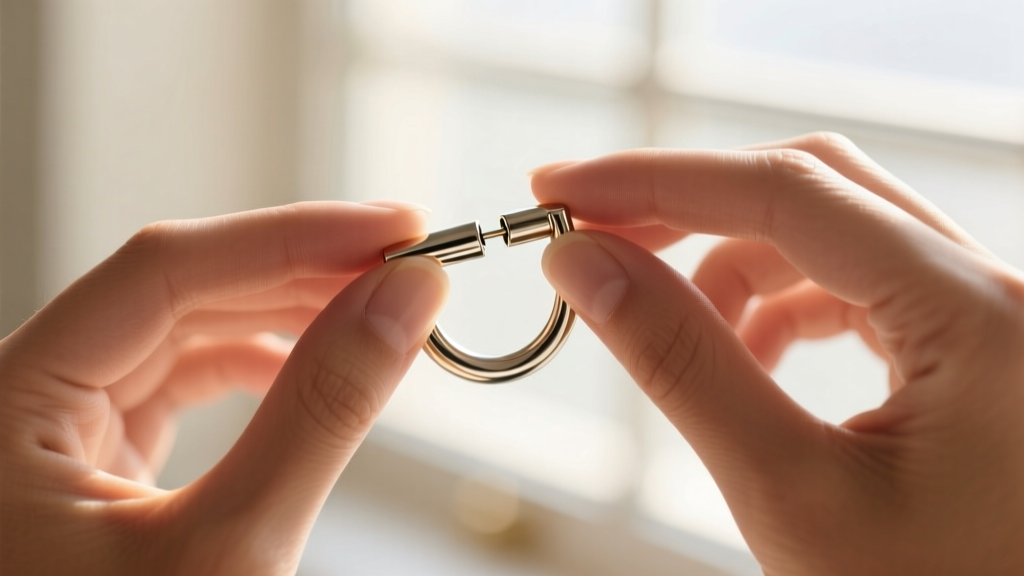
The clicker features a hidden hinge and a snap-shut closure that emits a satisfying "click." Pros: Incredibly easy to insert and remove; offers a seamless, continuous look. Cons/Failure Modes: If forced open improperly (bending instead of unhinging), the hinge pin can snap. Always use two hands and pull from the designated groove.
The Captive Bead Ring (CBR)
A classic hoop that holds a small bead in place using the natural tension of the metal ring. Pros: Extremely secure; very little risk of the earring falling out during sports or sleep. Cons/Failure Modes: Notoriously difficult to open without specialized ring-opening pliers. The bead can easily pop out and get lost in carpets or car seats, rendering the earring useless until a replacement bead is sourced.
The Continuous (Endless) Hoop
A thin wire that loops through the piercing, with a hollow tube on one end that receives the wire on the other. Pros: The most minimalist, invisible closure available. Cons/Failure Modes: Highly prone to warping. If you sleep on a continuous hoop, the metal will bend, destroying the tension required to keep the wire inside the tube. Best reserved for occasional wear.
Step 5: Maintenance, Aftercare, and Daily Wear
Even fully healed piercings require maintenance, especially when wearing hoops, which act as levers that can tug and irritate the fistula if snagged.
The Cleaning Protocol
Forget rubbing alcohol, hydrogen peroxide, or harsh antibacterial soaps. These strip the earlobe of natural oils and cause micro-fissures in the skin. The only solution recommended by dermatologists and professional piercers is sterile 0.9% sodium chloride wound wash. Spray the saline directly onto the front and back of the lobe twice a day, and gently dry with a non-woven gauze pad to prevent cotton fibers from wrapping around the hoop.
The Side-Sleeper Dilemma
Sleeping on hoop earrings is the leading cause of migration and irritation bumps (hypertrophic scarring). The pressure forces the jewelry at an angle, creating uneven pressure inside the piercing channel. If you are a side sleeper, invest in a U-shaped travel neck pillow. Position your ear in the hollow center of the pillow; this allows you to sleep on your side while keeping the ear completely suspended in the air, eliminating all friction and pressure on your hoops.
Snag Prevention
When wearing hoodies, scarves, or over-the-ear headphones, be hyper-aware of your hoops. The "lever effect" of a 15mm hoop means that a snag on a headphone cup can apply massive, tearing force to the lobe. Switch to smaller 8mm huggies during gym sessions or commutes to eliminate this risk entirely. By respecting the mechanics of your jewelry and the biology of your skin, you ensure that your style remains sharp, comfortable, and effortlessly executed.


