Earrings Plaza NY Buying Guide: Expert Tips for 2026
Master your visit to Earrings Plaza NY with our 2026 buying guide. Learn to verify metal hallmarks, diamond grades, and earring mechanics on the spot.

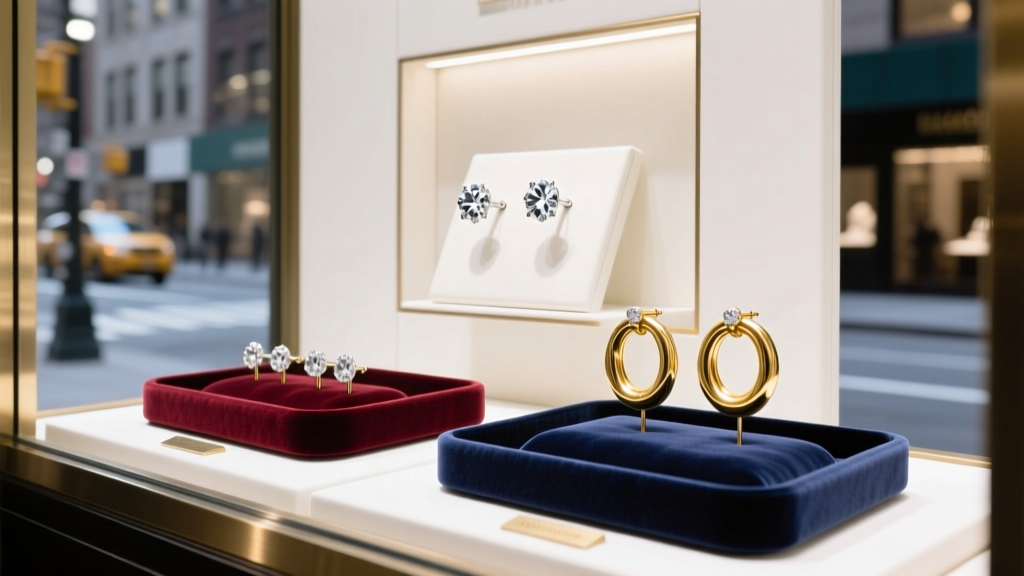
Walking into the bustling corridors of Earrings Plaza NY is an experience unlike any other in the American jewelry market. As a high-density hub for both legacy jewelers and emerging bespoke designers, this destination offers an unparalleled selection of fine, fashion, and custom earrings. However, the sheer volume of inventory and the fast-paced New York sales environment can easily overwhelm even seasoned collectors. Whether you are hunting for flawless diamond studs, hypoallergenic titanium cartilage pieces, or vintage-inspired gold hoops, knowing exactly what to inspect before you swipe your card is critical.
This 2026 buying guide strips away the sales pitches and focuses on the metallurgical, gemological, and structural realities of shopping for earrings in a premier New York jewelry plaza. We will cover how to verify precious metal hallmarks on the fly, optimize your diamond budget for ear wear, and identify structural failure points in earring mechanics.
The Metal Matrix: Decoding Hallmarks in Real-Time
When browsing the glass counters at Earrings Plaza NY, the first point of verification is the metal. The Federal Trade Commission (FTC) Jewelry Guides mandate strict accuracy in precious metal stamping, but in a high-volume plaza, it is up to the buyer to verify these marks. Always ask for a 10x loupe and inspect the post or the interior of the hoop for the hallmark.
| Metal Grade | Legal Hallmarks | Purity % | Wear & Tear Profile |
|---|---|---|---|
| 14K Gold | 14K, 585 | 58.5% | Highly durable, resistant to bending. Ideal for heavy hoops and active lifestyles. |
| 18K Gold | 18K, 750 | 75.0% | Soother, richer color. Prone to micro-scratches. Best for low-impact studs and huggies. |
| Platinum | PT950, Plat | 95.0% | Hypoallergenic, extremely dense. Develops a patina over time rather than losing metal. |
| Implant Titanium | ASTM F136, Ti6Al4V | N/A | The gold standard for fresh piercings and sensitive cartilage. Must be mirror-polished. |
Expert Tip: If you are buying white gold earrings, ask the jeweler about the rhodium plating thickness. Standard commercial plating is around 0.25 microns, which will wear off the earring post and clutch within months, revealing the yellowish alloy beneath. High-end plaza jewelers should offer a heavy flash of at least 0.75 to 1.0 microns for longevity.
Gemstone & Diamond Verification on the Fly
Diamond earrings represent a unique purchasing scenario compared to engagement rings. Because earrings are viewed from a distance and in constant motion, you can strategically compromise on certain grades to maximize carat weight and visual impact. According to the Gemological Institute of America (GIA), the 4Cs apply universally, but ear-specific optimization is key.
The Loupe Test: What to Look For
When a jeweler hands you a pair of diamond studs, do not just look at the sparkle. Use the loupe to check for symmetry in the cut and verify the girdle inscription if the stones are GIA-certified. For earrings, a clarity grade of SI1 (Slightly Included) is often completely eye-clean and saves you up to 20% compared to VS2. However, ensure the inclusions are not located near the girdle edge, where the prong pressure could cause the stone to fracture during setting.
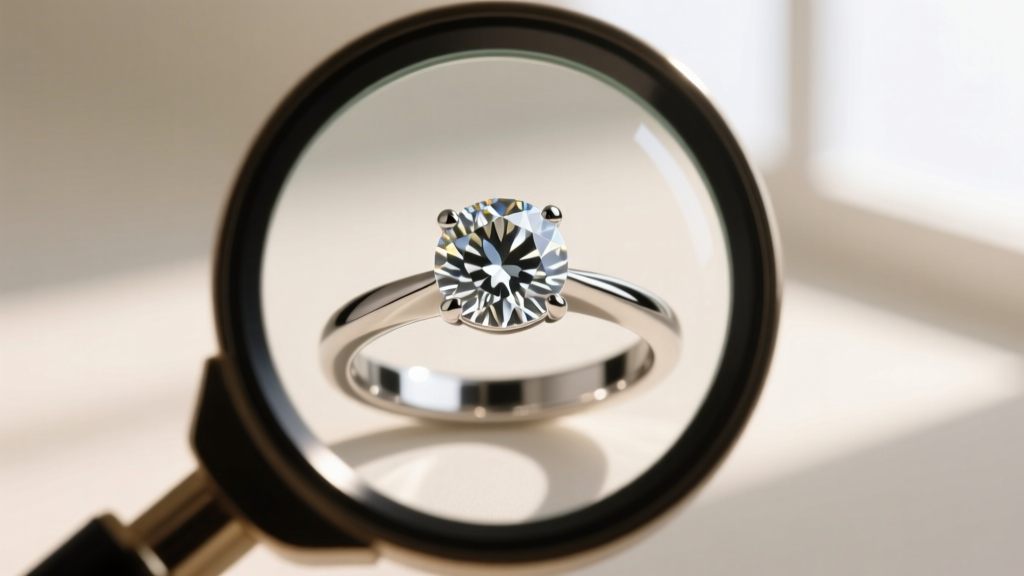
Color Matching: The most critical factor for diamond earrings is color matching between the two stones. A mismatch of even one color grade (e.g., an F color next to an H color) becomes glaringly obvious when worn side-by-side against the skin. Always insist on viewing the pair loose on a white grading tray before they are set, or examine them in natural daylight near the plaza's windows, as halogen showcase lighting masks subtle yellow tints.
Structural Integrity: Posts, Clutches, and Hinges
A $5,000 pair of diamond earrings is only as secure as its $5 backing mechanism. In a bustling environment like New York, losing an earring to a faulty clutch is a common tragedy. Here is what you must inspect regarding earring mechanics:
- Post Gauge and Thickness: Standard lobe earrings are typically 20-gauge (0.81mm) or 18-gauge (1.02mm). If the post feels flimsy or bends under light pressure from your fingernail, it is under-carat weight or poorly alloyed. Refuse to buy.
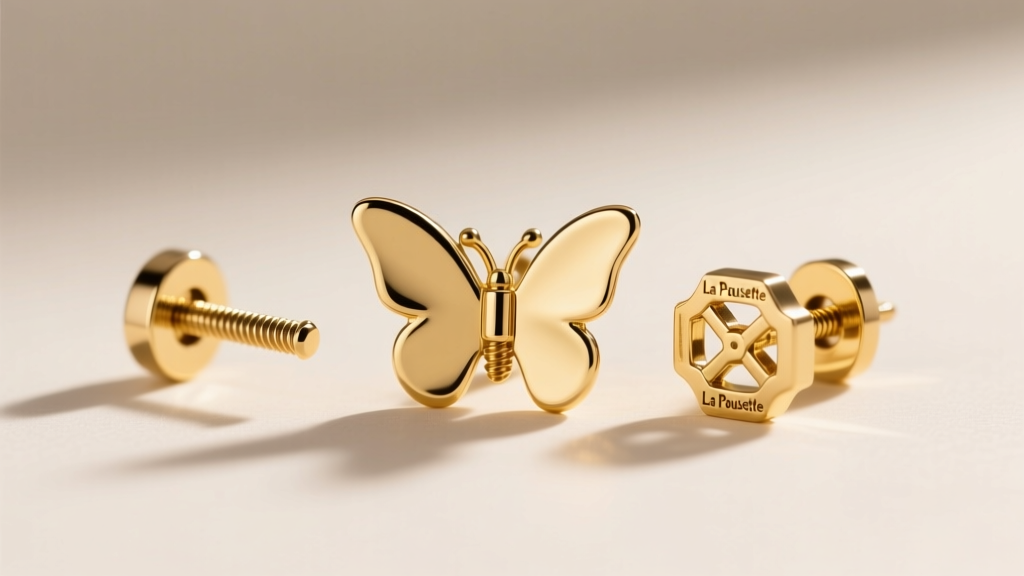
- Friction Backs (Butterfly Clutches): Check the tension of the metal scrolls. They should require a firm push to secure. If they slide on effortlessly, they will slide off just as easily.
- Screw-Backs: Ensure the threading on the post is clean and does not cross-thread. The threads should start smoothly without requiring force.
- La Pousette Backs: For high-value drops and heavy chandelier earrings, demand La Pousette (locking) backs. These feature a spring-loaded dual-trigger mechanism that clicks securely into a grooved post. Test the triggers to ensure they snap back with high tension.
Cartilage vs. Lobe: Navigating Specialty Counters
Earrings Plaza NY is not just for traditional lobe piercings; it houses several boutique counters specializing in curated ear projects and cartilage adornments. When shopping for helix, flat, or conch jewelry, the rules of engagement change entirely.
Never accept externally threaded jewelry for cartilage. The threads on the outside of the post will tear the delicate fistula (piercing channel) upon insertion. Insist on internally threaded or threadless (push-pin) ends. Furthermore, cartilage jewelry is typically 16-gauge (1.2mm) or 14-gauge (1.6mm). Verify that the jeweler is selling body-safe, implant-grade titanium (ASTM F136) or solid 14k/18k nickel-free gold. Fashion alloys and silver are strictly prohibited for cartilage due to the high risk of irritation bumps and allergic contact dermatitis.
Pricing Realities and Negotiation Tactics for 2026
Shopping in a New York jewelry plaza offers a distinct advantage over suburban mall jewelers: the ability to negotiate. However, you must approach this with data, not aggression.
- Know the Spot Price: Check the daily spot price of gold and platinum before your visit. If a jeweler is quoting a massive premium over the melt weight plus a standard 15-20% markup for craftsmanship, walk away.
- The Cash/ACH Discount: Credit card processing fees eat into tight jewelry margins. Offering to pay via wire transfer, ACH, or physical cash can often yield a 3% to 7% discount on the final ticket price.
- Bundling: If you are buying diamond studs and a pair of gold huggies, negotiate the total package. Jewelers in high-rent plazas prefer moving multiple units of inventory over maximizing the margin on a single piece.
The Final Inspection Checklist
Before finalizing your purchase at Earrings Plaza NY, run through this rapid physical inspection:
- Run your fingernail over the prongs. They should be smooth, flush against the stone, and show no signs of snagging.
- Check the hinge on hoop earrings. It should snap shut with an audible click and show no lateral wiggle.
- Verify the hallmark with your loupe one last time.
- Ensure the receipt explicitly states the metal weight, diamond total carat weight (TCW), and the specific return or resizing policy.
By combining gemological knowledge with an understanding of structural mechanics, you can navigate the vibrant, high-stakes environment of Earrings Plaza NY with absolute confidence, securing heirloom-quality pieces that will last a lifetime.


