How to Clean Enameled Earrings Without Damaging the Glaze
Learn how to safely clean enameled earrings without chipping the glaze. Expert tips on vitreous vs. resin enamel care, storage, and maintenance.

Understanding Your Enamel: Vitreous Glass vs. Epoxy Resin
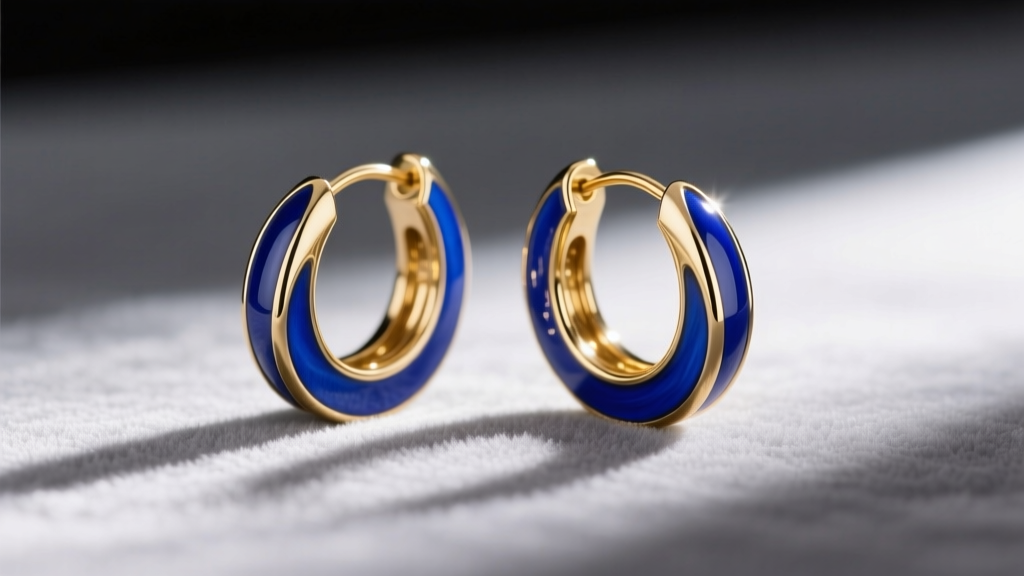
Before you apply any cleaning solution to your enameled earrings, you must identify the type of enamel used. Enamel is not a single material; it is a broad term for a decorative coating fused to a metal substrate. In fine jewelry, the two primary categories are vitreous (glass) enamel and cold (epoxy resin) enamel. Misidentifying these materials is the leading cause of irreversible damage during at-home cleaning.
Vitreous enamel is created by fusing powdered glass to metal (usually gold, silver, or copper) at extreme temperatures, often exceeding 1,400°F. The result is a durable, glass-like surface with a Mohs hardness rating of 5 to 6. While highly resistant to scratching, it is inherently brittle and susceptible to thermal shock and hard impacts. Cold enamel, conversely, is a two-part epoxy resin poured into metal recesses and cured at room temperature or with low heat. It has a much lower Mohs hardness (around 2 to 3), making it prone to scratching, and it is highly vulnerable to chemical degradation from alcohols and solvents.
| Feature | Vitreous (Glass) Enamel | Cold (Epoxy Resin) Enamel |
|---|---|---|
| Composition | Fused silica/glass powder | Synthetic polymer resin |
| Mohs Hardness | 5.0 - 6.0 | 2.0 - 3.0 |
| Chemical Tolerance | High (resists most mild acids) | Low (degrades with alcohol/acetone) |
| Primary Vulnerability | Thermal shock, blunt impact | UV yellowing, chemical clouding |
| Common Styles | Guilloché, Plique-à-jour, Cloisonné | Fashion drops, opaque color blocks |
The Step-by-Step Cleaning Protocol for Enameled Earrings
Cleaning enameled earrings requires a gentle, methodical approach. According to the Victoria and Albert Museum's jewelry conservation guidelines, the safest method for removing sebum, cosmetic buildup, and environmental dust from delicate enamel surfaces involves lukewarm water, a pH-neutral surfactant, and manual agitation with ultra-soft bristles.
What You Will Need
- Distilled Water: Tap water contains dissolved minerals (calcium, magnesium) that can leave microscopic hard water spots on the glass finish, dulling the luster over time.
- pH-Neutral Dish Soap: A basic, lotion-free dish detergent (like original Dawn) or a dedicated jewelry cleaner with a pH of exactly 7.0. Avoid soaps with moisturizers or citrus degreasers.
- Baby Toothbrush: You must use an "extra soft" or "baby" bristle brush. Standard adult soft-bristle brushes are too rigid and can trap microscopic grit, dragging it across the enamel and creating micro-abrasions.
- Lint-Free Microfiber Cloth: For final drying and buffing.
The 4-Step Gentle Wash Method
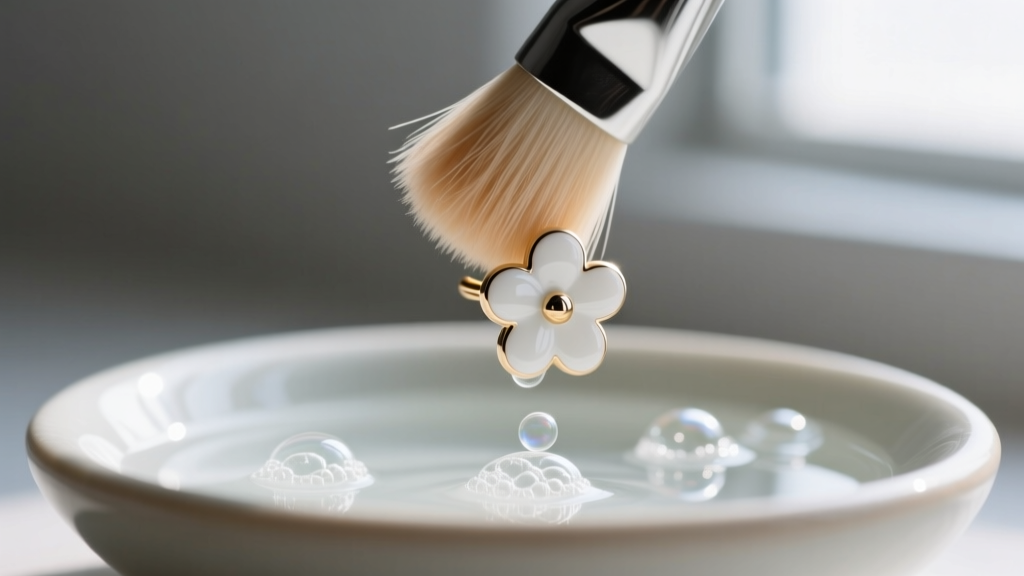
- Prepare the Bath: Fill a shallow glass or ceramic bowl with lukewarm distilled water. Add a single drop of pH-neutral soap. The water should be room temperature to slightly warm (around 85°F). Never use hot water, as thermal expansion can cause vitreous enamel to crack away from the metal substrate.
- Soak Briefly: Submerge the enameled earrings for no more than 3 to 5 minutes. This loosens hardened lotions and skin oils. If your earrings feature plique-à-jour enamel (which resembles stained glass with no metal backing), skip soaking entirely and move to spot cleaning to prevent water from pooling in the delicate metal framework.
- Agitate Gently: Using the baby toothbrush, lightly sweep over the enamel surface in one direction. Do not scrub in circles. Pay special attention to the metal bezels or cloisonné wires where grime accumulates. Apply zero downward pressure; let the bristle tips do the work.
- Rinse and Dry: Rinse the earrings under a slow stream of lukewarm distilled water. Immediately pat them dry with a microfiber cloth. Ensure no moisture is trapped behind the earring post or in the clutch, as lingering water can cause the underlying metal to oxidize, which will eventually push up against the enamel and cause it to flake.
Critical Mistakes That Destroy Enamel Finishes
Many jewelry owners unknowingly destroy their enameled pieces by applying cleaning methods meant for solid gemstones. The GIA Gem Encyclopedia notes that materials like glass and synthetic resins require vastly different care protocols than crystalline gems like diamonds or sapphires.
- Ultrasonic Cleaners: Never place enameled earrings in an ultrasonic cleaner. The high-frequency acoustic cavitation creates microscopic shockwaves in the liquid. While this blasts dirt off diamonds, it will shatter vitreous enamel and literally shake the resin out of cold enamel settings.
- Steam Cleaners: The sudden blast of high-temperature steam causes immediate thermal shock. The metal expands faster than the glass enamel, resulting in "crazing" (a spiderweb network of internal fractures) or total delamination.
- Baking Soda Pastes: Baking soda is a crystalline abrasive. Rubbing it on enamel acts like sandpaper, permanently scratching the glossy glass finish and leaving a dull, matte patch that cannot be polished out at home.
- Alcohol and Acetone: Swabbing cold enamel with rubbing alcohol or nail polish remover will break down the polymer chains in the epoxy, causing it to cloud, soften, and peel.
Storage and Daily Wear Frameworks to Prevent Chipping
Preventative care is just as vital as cleaning. Enamel damage rarely happens during wear; it happens during storage and handling. The fundamental rule of enamel storage is to isolate it from materials with higher Mohs hardness ratings.
"Enamel is essentially glass bonded to metal. When stored in a communal jewelry box, the diamond from another earring (Mohs 10) or even the hardened steel of a jewelry clasp (Mohs 4-4.5) can easily scratch, chip, or gouge the enamel surface upon contact."
Always store enameled earrings in individual, soft-lined compartments or separate anti-tarnish flannel pouches. If you wear guilloché enamel (transparent enamel over engine-turned metal patterns), be aware that these pieces are highly sensitive to prolonged UV exposure and heavy perspiration, which can degrade the reflective metal layer beneath the glass over decades. Remove enameled earrings before swimming in chlorinated pools, applying hairspray, or engaging in activities where a hard impact to the earlobe is possible.
How to Handle Chipped or Cracked Enamel
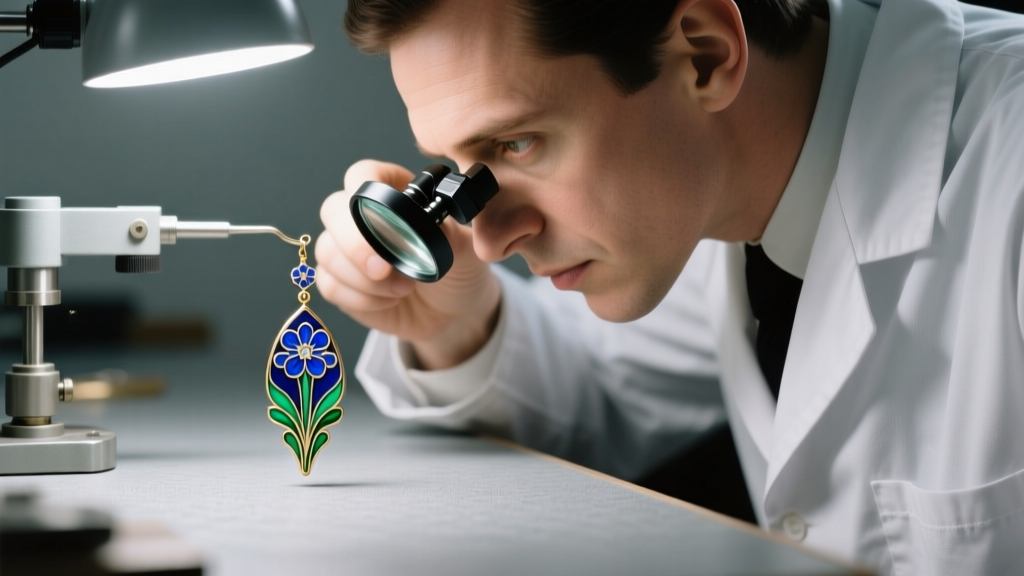
If you drop an earring and notice a chip, hairline crack, or a missing flake of enamel, stop wearing it immediately. Moisture and skin oils will seep into the fissure, oxidizing the metal base and causing the surrounding enamel to lift and flake off further—a process known as spalling.
Do not attempt to fill the chip with clear nail polish, superglue, or household epoxies. These adhesives contain solvents that can chemically react with the original enamel and the metal substrate, complicating future professional restoration. Instead, place the damaged earring in a soft pouch and consult a master jeweler who specializes in lapidary arts or a dedicated enamelist. Depending on the technique used (such as cloisonné or champlevé), a professional can sometimes carefully remove the damaged section, clean the metal cell, and fire a new layer of matching glass powder to seamlessly repair the piece. For vintage or antique enameled earrings, seek out a certified antique jewelry conservator to ensure the historical integrity and value of the piece are maintained.