Troubleshooting Dull and Snagging Diamond Cut Hoop Earrings
Learn how to clean, fix snagging, and prevent earlobe stretching with our expert troubleshooting guide for diamond cut hoop earrings.

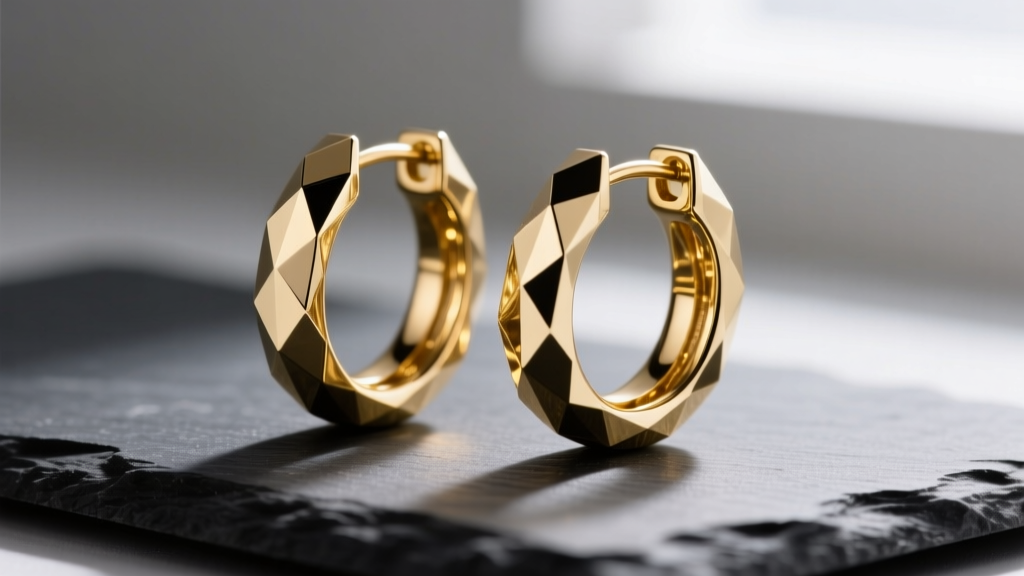
Diamond cut hoop earrings are a stunning staple in any jewelry collection, offering the brilliance of gemstones without the associated cost or fragility. However, the very manufacturing process that gives these hoops their signature sparkle also creates unique structural vulnerabilities. If your favorite pair has lost its luster, constantly catches on your hair, or is beginning to stretch your earlobes, you are experiencing the common failure modes of faceted metal jewelry.
As of 2026, advancements in jewelry care and metallurgy have provided better solutions for these issues, but many wearers still rely on outdated maintenance habits. This comprehensive troubleshooting guide will walk you through the exact physics, chemistry, and jeweler techniques required to restore and protect your diamond cut hoop earrings.
The Anatomy of Diamond Cut Hoops: Why They Snag and Dull
To troubleshoot effectively, you must first understand what 'diamond cut' actually means. The term does not refer to the inclusion of real diamonds. Instead, it describes a subtractive metalworking technique. According to metalworking experts at Rio Grande, a specialized lathe equipped with a diamond-tipped cutting bit shaves microscopic layers of gold, silver, or platinum to create flat, angled planes (facets) on the surface of the wire.
These facets act like tiny mirrors, reflecting light to create a sparkling effect. However, this process introduces two major problems:
- Micro-grooves: The cutting tool leaves behind microscopic valleys between the facets. These grooves are the perfect traps for sebum (skin oils), dead skin cells, and cosmetic residues.
- Micro-burrs: If the cutting tool is even slightly dull, or if the metal is relatively soft (like 18k or 22k gold), the edges of the facets can develop tiny, jagged metal burrs that act like microscopic hooks.
Troubleshooting Guide: Restoring the Faceted Shine
When diamond cut hoop earrings look dull, the metal itself hasn't tarnished; the facets are simply suffocating under a layer of hardened lipids and cosmetics. Standard jewelry polishing cloths are entirely ineffective here because they only glide over the peaks of the facets, leaving the dirt packed tightly into the microscopic valleys.
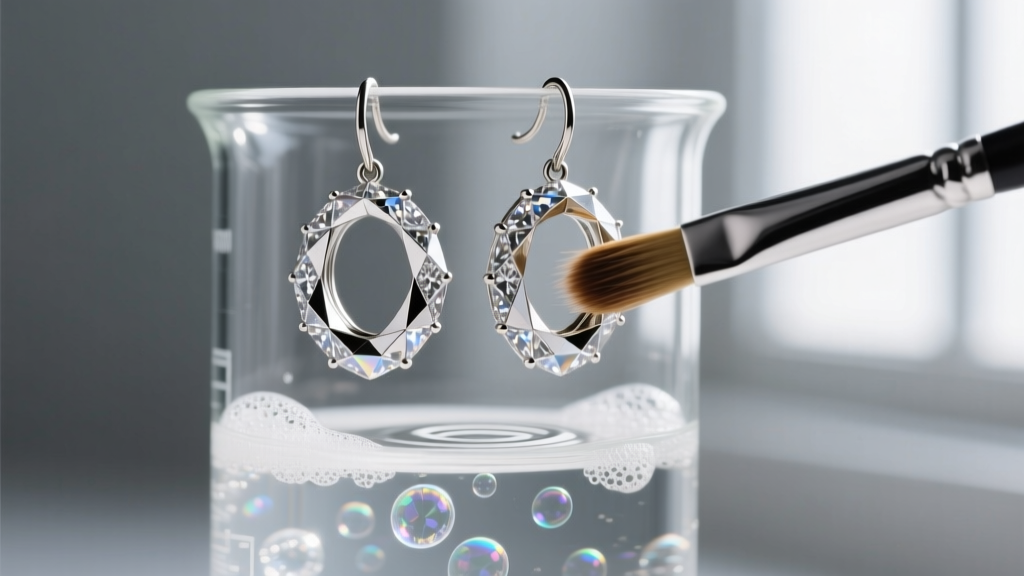
The Chemistry of Deep Cleaning
Human sebum has a melting point of roughly 30°C (86°F). When it cools on your earrings, it solidifies into a waxy barrier. To break this down, you need an alkaline degreaser, not just plain soap.
- The Solution: Mix warm water (around 40°C) with a few drops of ammonia-free dish soap and a teaspoon of baking soda. The mild alkalinity of the baking soda helps saponify the fats in the sebum.
- The Agitation: Submerge the hoops for 10 minutes. Then, use a baby toothbrush (which has ultra-soft bristles that won't scratch 14k gold) to brush along the direction of the facets, not against them.
- Ultrasonic Option: For stubborn buildup, an ultrasonic cleaner operating at 42kHz is highly effective. The cavitation bubbles will implode inside the micro-grooves, blasting out debris. However, avoid ultrasonics if your hoops feature any glued-in accent stones, as the vibrations can weaken the adhesive.
For more official care guidelines, the Jewelers of America recommends avoiding harsh chemicals like bleach or chlorine, which can cause stress corrosion cracking in karat gold alloys.
Fixing the Snag: Filing, Polishing, and Edge Management
If your diamond cut hoops are snagging on knitwear, silk blouses, or your own hair, you are dealing with micro-burrs. Over time, normal wear and tear can also cause the sharp peaks of the facets to fold over slightly, creating a hook.
The Nylon Stocking Test
To locate the exact point of the snag, stretch a pair of sheer nylon pantyhose tightly over your hand. Gently run the hoop earring across the nylon. The fabric will catch and pull exactly where the micro-burr is located, allowing you to isolate the problem area without damaging your clothes or hair.
DIY Edge Smoothing
If the snag is minor, you can sometimes resolve it at home using a jeweler's polishing cloth impregnated with rouge (iron oxide). Rub the polishing cloth firmly along the edge of the facet in one direction. The mild abrasive will wear down the microscopic hook without dulling the overall reflectivity of the facet. Never use a standard metal file or sandpaper, as this will permanently destroy the diamond-cut pattern and leave deep, visible scratches.
Preventing Earlobe Stretching from Heavy Faceted Hoops
Because diamond cutting requires removing material from a solid wire or tube, these hoops are often manufactured with thicker walls to maintain structural integrity. This results in a heavier earring. When a heavy hoop swings, it creates a pendulum effect that places immense shear stress on the earlobe piercing.
If the wire gauge is too thin for the weight of the hoop, the metal will act like a cheese wire, slowly slicing through the collagen fibers of your earlobe. This leads to irreversible lobe stretching and eventual tearing.
Weight-to-Gauge Matching Chart
Use the following table to determine if your current diamond cut hoop earrings are safe for your lobes, or if they require modification.
| Hoop Weight | Minimum Wire Gauge | Post Thickness (mm) | Recommended Support |
|---|---|---|---|
| Under 4g | 20g or 18g | 0.8mm - 1.0mm | None required |
| 4g - 8g | 16g | 1.2mm | Silicone O-rings / Ear nuts |
| 8g - 15g | 14g | 1.6mm | Adhesive Earlobe Support Patches |
| Over 15g | 12g or custom | 2.0mm+ | Professional custom posts / Hollow tubing |
If you own a pair of heavy 14k gold hoops that feature a thin 20-gauge post, take them to a jeweler to have the posts swapped for a thicker 14-gauge or 12-gauge wire. Additionally, utilizing adhesive silicone support patches (often sold under brand names like LobeWonder) on the back of your earlobe will distribute the weight across a wider surface area, preventing the 'cheese wire' effect.
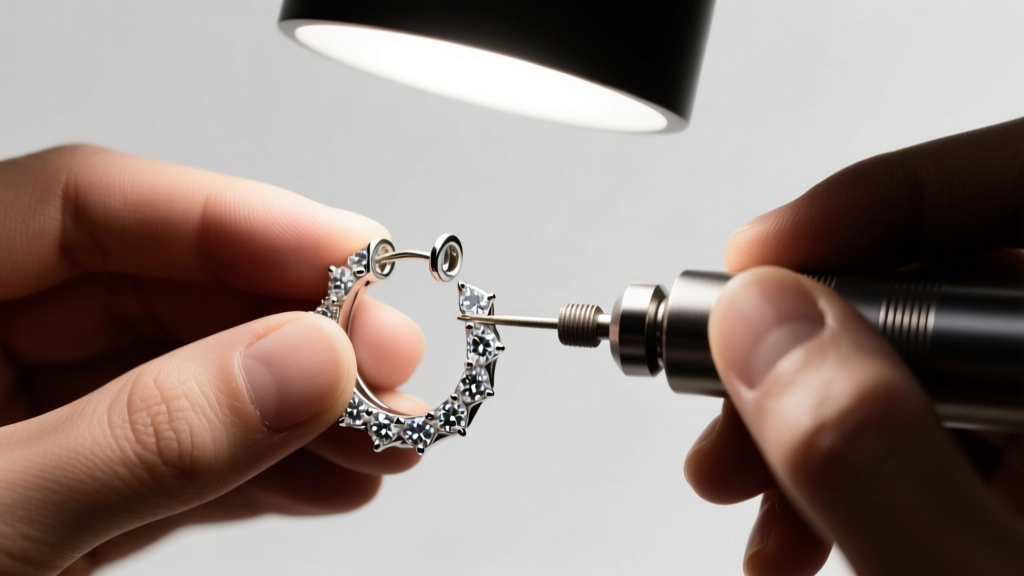
When to See a Professional Jeweler for Re-Cutting
There comes a point when DIY troubleshooting is no longer sufficient. If your diamond cut hoop earrings have suffered deep scratches, heavy tarnishing in the grooves that won't respond to chemical cleaning, or if the facets have been worn completely flat due to years of friction, it is time for professional intervention.
The Re-Cutting and Re-Plating Process
A master jeweler can place the hoops back onto a lathe to shave off a microscopic layer of metal, creating brand-new, sharp facets. This process, known as re-cutting, restores the original optical brilliance of the piece.
If your hoops are white gold, the cutting process will strip away the rhodium plating that gives white gold its bright white color. The jeweler will need to re-plate the earrings using an electrolytic rhodium bath. Expect to pay between $65 and $150 for a professional re-cutting and rhodium plating service, depending on the diameter of the hoops and the complexity of the facet pattern. While this may seem expensive, it is significantly more cost-effective than replacing a high-karat gold pair.
Summary Checklist for Hoop Maintenance
To keep your diamond cut hoop earrings in pristine condition and avoid common structural failures, incorporate these habits into your jewelry care routine:
- Weekly Degreasing: Clean the facets with a mild alkaline solution and a baby toothbrush to prevent sebum buildup in the micro-grooves.
- The Stocking Test: Periodically check for snags using sheer nylon to catch micro-burrs before they ruin your clothing.
- Gauge Verification: Ensure the post thickness matches the overall weight of the hoop to prevent earlobe collagen damage.
- Nightly Removal: Never sleep in faceted hoops; the pressure of your head against a pillow can bend the wire and fold the sharp facet edges over, creating permanent snags.
- Professional Servicing: Schedule a lathe re-cutting and ultrasonic steam cleaning with your jeweler every 3 to 5 years to maintain maximum light reflection.
By understanding the unique physical properties of faceted metal, you can troubleshoot issues effectively and ensure your diamond cut hoop earrings continue to catch the light beautifully for decades to come.


