White Stud Earrings Troubleshooting: Tarnish, Allergies & Cloudiness
Troubleshoot common white stud earrings problems. Learn how to fix white gold tarnish, nickel allergies, cloudy gemstones, and bent posts.

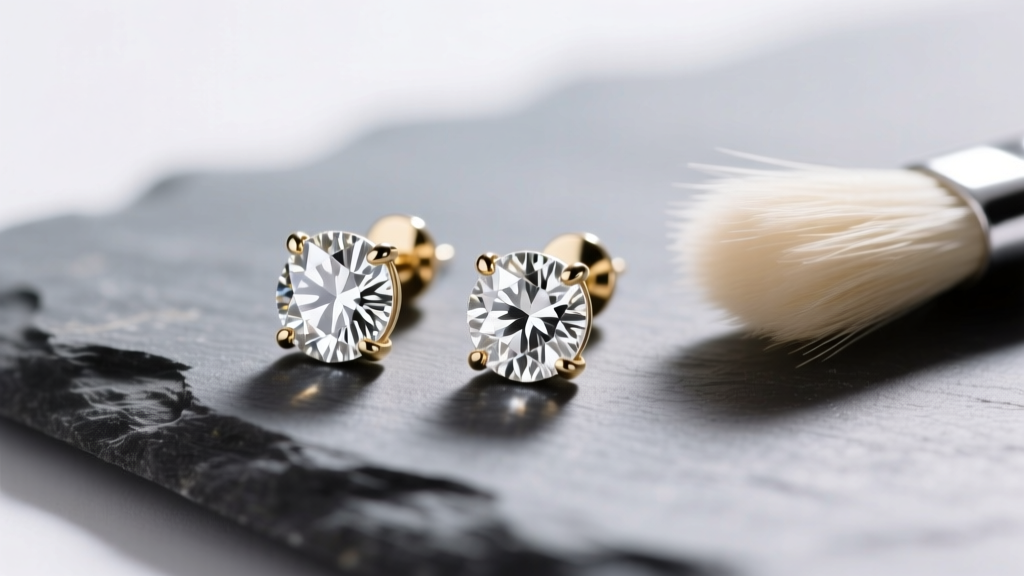
White stud earrings are a cornerstone of any jewelry collection, offering a crisp, versatile aesthetic that pairs with everything from casual wear to formal attire. However, maintaining their pristine appearance presents unique challenges compared to yellow gold or darker gemstones. From rhodium plating wear to unexpected skin reactions and gemstone clouding, white studs require specific troubleshooting protocols. This guide dives deep into the metallurgy, gemology, and structural engineering of white stud earrings to help you diagnose and resolve the most common issues.
The Most Common White Stud Earrings Problems
Before applying a fix, it is crucial to accurately diagnose the failure point. White studs typically fail in three distinct categories:
- Surface Discoloration: The bright white finish dulls, revealing a yellowish or grayish underlayer.
- Contact Dermatitis: The earlobe becomes itchy, red, or flaky specifically where the post touches the skin.
- Optical Degradation: White gemstones (diamonds, moissanite, cubic zirconia, or pearls) lose their brilliance and appear cloudy or gray.
Understanding the exact material composition of your earrings is the first step in troubleshooting. A stamp reading "14k" or "18k" on white gold indicates an alloy that behaves very differently than a "950 Pt" (platinum) stamp.
Troubleshooting Discoloration and Tarnish
The most frequent complaint regarding white metal studs is that they "tarnish" or turn yellow. True white gold does not exist in nature; it is created by alloying pure yellow gold with white metals like nickel, palladium, or silver. Even with these alloys, the resulting metal has a faint yellowish or grayish tint. To achieve the brilliant, mirror-like white finish, jewelers electroplate the surface with rhodium, a rare platinum-group metal.
The Rhodium Plating Lifecycle
Rhodium plating on earrings is typically applied at a thickness of 0.75 to 1.0 microns. Because earrings experience constant friction from hair, pillows, and skin oils, this microscopically thin layer eventually wears away. When the yellowish alloy beneath is exposed, owners often mistake this for tarnish.
The Fix: You cannot polish white gold back to a bright white. The only solution is professional rhodium replating, which typically costs between $35 and $65 per pair. For longer-lasting results, ask your jeweler for a "heavy flash" plating (up to 2.0 microns), though this will slightly soften the sharp edges of intricate milgrain details.
Pearl and Enamel Yellowing
If your white studs feature pearls, mother-of-pearl, or white enamel, yellowing is caused by UV degradation and exposure to acidic sweat or cosmetics.
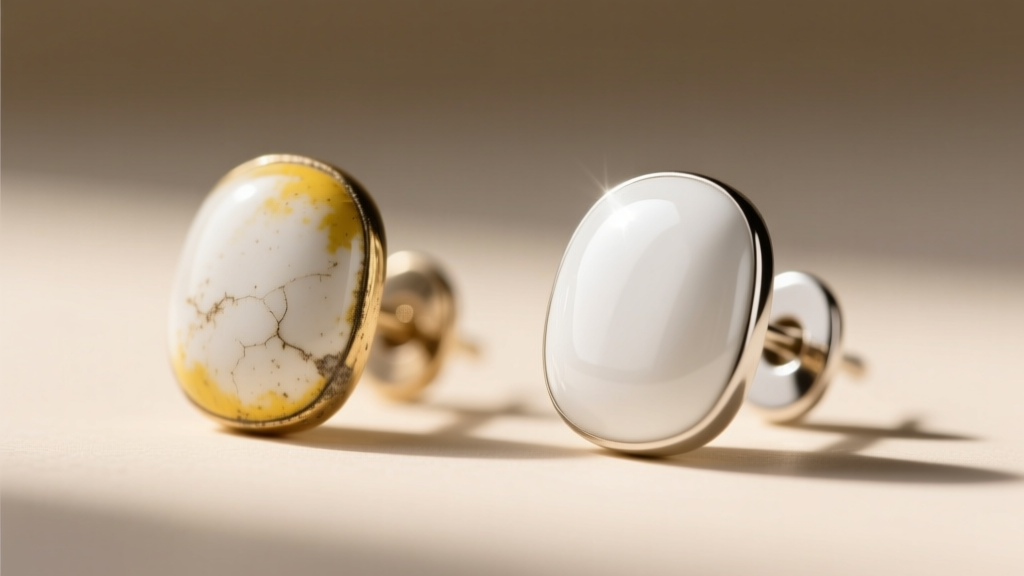
Unlike metal, you cannot replate organic or fired materials. Mild yellowing on pearls can sometimes be gently reduced by wiping them with a damp, lint-free cloth and allowing them to air dry in indirect sunlight, but severe UV damage is permanent. White enamel that has yellowed due to chemical exposure (like chlorine or acetone) must be professionally stripped and refired by an enamel artist.
Solving Allergic Reactions to White Metal Posts
If your earlobes itch, swell, or develop a rash after wearing white gold studs, you are likely experiencing allergic contact dermatitis. According to the American Academy of Dermatology, nickel allergy is one of the most common causes of skin reactions, affecting roughly 15% to 20% of the population. Because nickel is a primary hardening agent in 14k and 18k white gold alloys, the posts are a direct trigger.
Metal Allergy Troubleshooting Matrix
| Metal Type | Nickel Content | Allergy Risk | Troubleshooting Action |
|---|---|---|---|
| 14k White Gold | High (up to 15%) | Very High | Swap posts or coat with medical-grade silicone. |
| 18k White Gold | Moderate | High | Upgrade to Palladium-white gold or Platinum. |
| 950 Platinum | None | Zero | Ideal for sensitive ears; hypoallergenic. |
| ASTM F136 Titanium | None | Zero | The gold standard for fresh piercings and severe allergies. |
| Sterling Silver (925) | Trace (usually copper alloy) | Low/Moderate | Can cause reactions if copper/nickel impurities are present. |
The Fix: If you love your white gold tops but react to the posts, a jeweler can laser-weld new posts made from ASTM F136 Implant-Grade Titanium or 950 Platinum onto your existing settings. Avoid "commercial grade" titanium, which may contain trace alloys and lacks the mirror-polish finish necessary to prevent bacterial buildup in the piercing channel.
Restoring Cloudy White Gemstones
White gemstones are highly susceptible to looking cloudy, but the root cause varies drastically depending on the stone's material properties. The Gemological Institute of America (GIA) notes that even the hardest stones attract grease and oils, which disrupt light return.
Diagnosing the Cloudiness
- Diamond (Mohs 10): Diamonds are highly oleophilic (oil-attracting). Cloudiness is almost always surface grease and lotion buildup. Fix: Soak in warm water with a few drops of degreasing dish soap (like Dawn) for 20 minutes, then gently scrub the pavilion (underside) with a baby toothbrush.
- Moissanite (Mohs 9.25): If your moissanite stud exhibits a rainbow-colored "oil slick" on the surface, it has been exposed to extreme heat or harsh chemicals. Fix: This requires professional polishing with specialized cerium oxide compounds; home cleaning will not remove it.
- Cubic Zirconia (Mohs 8-8.5): CZ is slightly porous and scratches easily. If cleaning doesn't restore brilliance, the stone has likely sustained micro-abrasions that scatter light. Fix: CZ cannot be repolished; the stone must be replaced by a jeweler (typically $20-$40 for a new stone and setting labor).
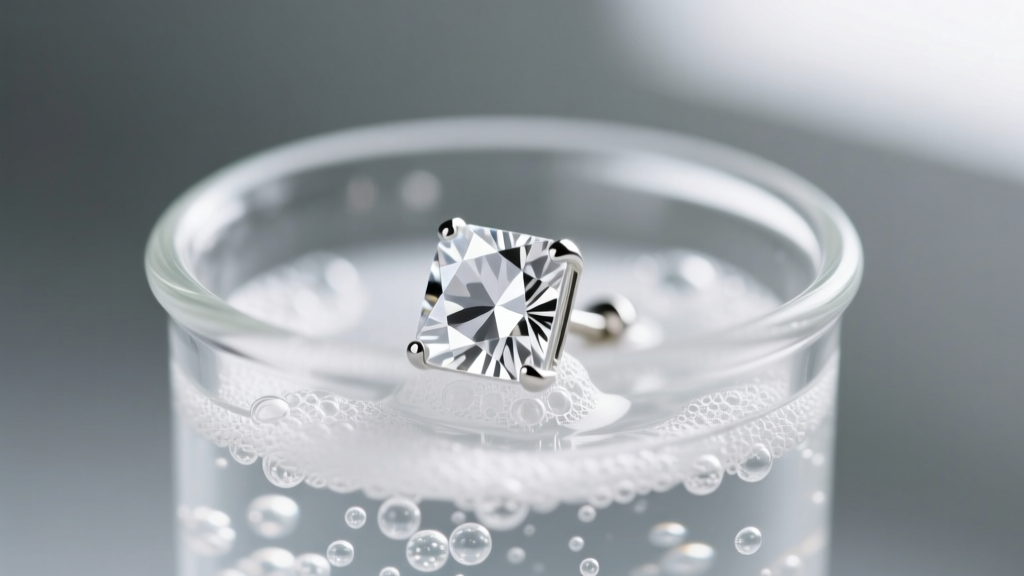
Warning: Never use ultrasonic cleaners on white stud earrings featuring fracture-filled diamonds, treated pearls, or opaque stones like white turquoise. The high-frequency vibrations can shatter treated stones or strip delicate organic finishes.
Structural Fixes: Bent Posts and Heavy Tops
A white stud earring that constantly droops forward or features a bent post is a structural engineering failure, usually related to the wire gauge. Standard earring posts are manufactured in two primary thicknesses:
- 20 Gauge (0.81mm): The industry standard for lightweight studs. Bends easily under pressure.
- 18 Gauge (1.02mm): Thicker and more rigid, required for heavier stones or active wearers.
If your white gold or platinum stud features a center stone over 1.0 carat (or a total weight exceeding 2.5 grams), a 20-gauge post will inevitably bend when sleeping or pulling hair.
The Fix: Have a jeweler swap the post to an 18-gauge or even 16-gauge (1.29mm) wire. Note that thicker posts require different earring backs. Standard "butterfly" friction backs often fail to grip 18-gauge posts securely because the notches aren't deep enough. Upgrade to La Pousette locking backs or screw-backs to ensure heavy white studs remain safely on the earlobe.
Final Decision Matrix: Repair, Replate, or Replace?
When your white stud earrings fail, use this quick framework to decide your next move:
- Replate: If the metal is turning yellow but the stones are secure and brilliant. (Cost: $35-$65)
- Repair/Weld: If the post is bent, snapped, or causing nickel allergies. (Cost: $40-$90)
- Deep Clean: If the stones are cloudy but the metal is bright. (Cost: Free at home, or $15 ultrasonic service at a jeweler)
- Replace: If the CZ stones are scratched, the pearls are severely yellowed, or the prongs holding the diamonds are worn paper-thin. (Cost: $150+ depending on materials)
By understanding the specific metallurgical and gemological properties of your white stud earrings, you can move beyond temporary fixes and implement permanent solutions that keep your jewelry looking pristine for decades.


