Earring Stud Styles: A Technical Guide to Posts, Backs & Metals
Master earring stud styles with our expert technical guide. Compare post gauges, friction vs. screw backs, and implant-grade metals for sensitive ears.

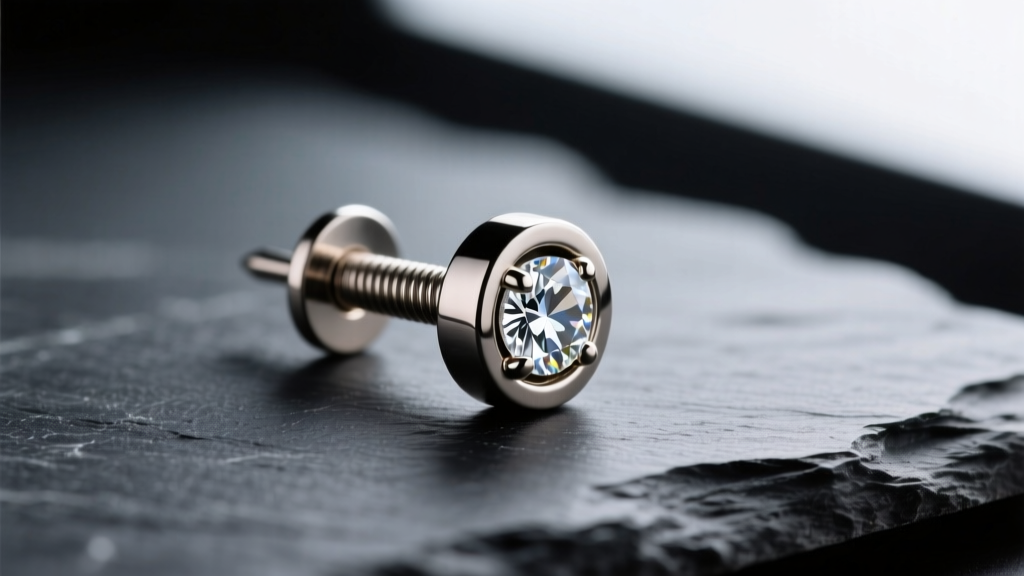
When most consumers shop for jewelry, their attention is immediately drawn to the carat weight of a diamond or the vibrant hue of a gemstone. However, for professional piercers, metallurgists, and seasoned collectors, the true quality of any piece lies in its hidden architecture. Understanding the technical nuances of earring stud styles requires looking past the aesthetic crown and examining the post gauge, threading mechanics, and alloy composition that actually interact with human tissue. This deep dive explores the engineering and material science behind premium stud earrings, providing a definitive framework for evaluating hardware quality, biocompatibility, and long-term wearability.
The Hidden Architecture of Earring Stud Styles
A stud earring is fundamentally a three-part mechanical system: the head (which holds the decorative element), the post (the shaft that traverses the fistula), and the backing (the retention mechanism). While mass-market jewelry often treats the post as an afterthought, high-end and professional-grade jewelry engineers these components to exact millimeter tolerances to prevent tissue irritation, migration, and allergic contact dermatitis.
Post Gauge and Length Tolerances
The thickness of the earring post, measured in gauge (G) or millimeters, dictates both the structural integrity of the metal and the comfort within the piercing channel. Standard commercial fashion studs typically utilize a 20-gauge (0.81mm) or 18-gauge (1.02mm) post. While sufficient for healed, standard lobe piercings, these thinner posts can suffer from the "cheese-cutter effect" in cartilage, where the thin wire slowly migrates through the tissue under the weight of the jewelry or accidental snags.
For cartilage placements (such as the helix, tragus, or conch), professional piercers universally recommend 16-gauge (1.29mm) or 14-gauge (1.63mm) posts. The increased surface area distributes pressure evenly, stabilizing the fistula and reducing the risk of rejection or hypertrophic scarring. Furthermore, post length is critical. Standard friction backs use a fixed 4mm to 5mm post, which often fails to accommodate the natural swelling of a fresh piercing or the varying thickness of ear cartilage. Threaded and threadless labret studs offer precise length increments—typically 1/4" (6mm), 5/16" (8mm), and 3/8" (10mm)—allowing for a customized, flush fit that eliminates the "spear" effect of protruding posts catching on hair and clothing.
Securing the Hardware: A Mechanical Analysis of Backings
The retention mechanism is the most common point of failure in earring stud styles. Losing a valuable diamond stud due to a faulty backing is a preventable mechanical error. Let us analyze the physics of the three primary backing systems.
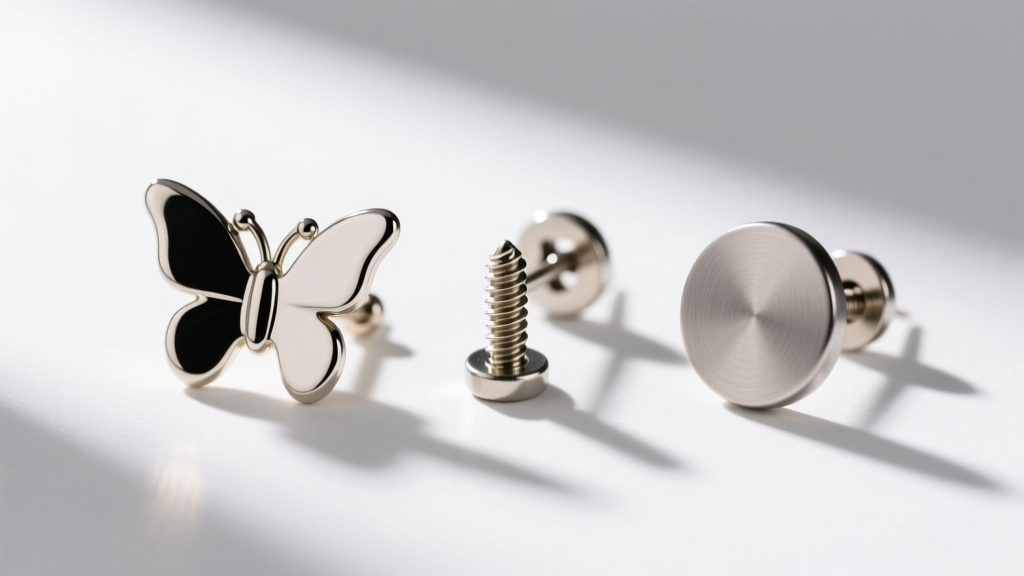
| Backing Type | Mechanical Action | Security Level | Best Application |
|---|---|---|---|
| Butterfly Friction | Relies on metal tension gripping grooves on the post. | Low to Medium | Standard healed lobe wear; inexpensive fashion jewelry. |
| Screw Back | Threads mate directly, requiring rotational torque to remove. | High | High-value diamond studs; active lifestyles. |
| Flat Back (Labret) | Internal threading or press-fit pin tension; disc rests flush. | Maximum | Cartilage, tragus, helix, and sleeping comfort. |
The traditional butterfly friction back (la pousette) is notoriously unreliable. Over time, the tension loops in the metal fatigue, reducing the gripping force. Furthermore, the hollow crevices of a butterfly back trap sebum, dead skin cells, and bacteria, frequently leading to localized infections. Conversely, screw backs and flat-back labrets rely on positive mechanical lock, ensuring that the earring will only detach when intentional rotational or pulling force is applied by the wearer.
Metallurgical Standards: What Actually Touches the Fistula
The term "hypoallergenic" is an unregulated marketing buzzword that offers no legal or scientific protection for the consumer. When evaluating the metallurgy of earring stud styles, experts rely on ASTM (American Society for Testing and Materials) and ISO certifications to verify biocompatibility.
Implant-Grade Titanium (ASTM F136) vs. Surgical Steel (ASTM F138)
The gold standard for any jewelry that resides inside the body is ASTM F136 Implant-Grade Titanium (Ti6Al4V ELI). This specific alloy contains absolutely zero nickel, making it entirely inert and safe for individuals with metal sensitivities. Its surface can be polished to a mirror finish, which prevents bacteria from adhering to microscopic scratches in the metal.
In contrast, 316L Surgical Steel (ASTM F138) contains between 10% and 14% nickel. While the alloy is bound tightly enough to pass some basic corrosion tests, it is not entirely immune to nickel leaching. The European Union's Nickel Directive strictly limits nickel release from post-assembly jewelry to 0.2 µg/cm²/week. Many mass-market surgical steel studs exceed this threshold when exposed to the slightly acidic pH of human sweat and sebum, triggering allergic contact dermatitis. According to research published by the National Center for Biotechnology Information, nickel allergy remains the most prevalent cause of contact dermatitis worldwide, making F136 titanium the only logical choice for sensitive or healing piercings.
Why External Threading is a Critical Failure Point
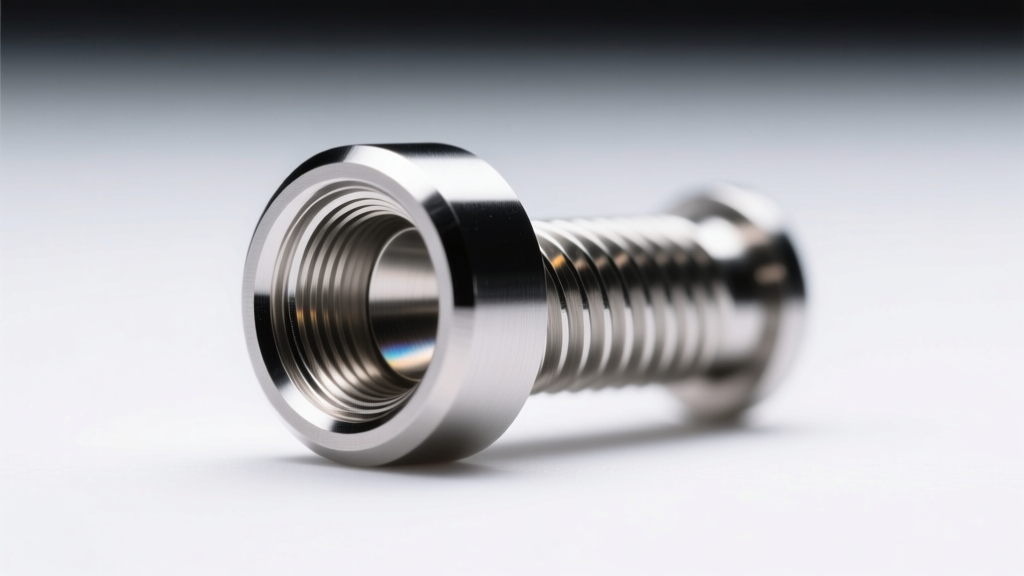
If you examine a low-quality threaded earring stud under a loupe, you will likely notice that the screw threads are cut directly into the post that passes through the ear. This is known as external threading. The sharp, jagged ridges of the threads act like a file, scraping and micro-tearing the delicate epithelial tissue of the fistula every time the earring is inserted or removed.
High-end earring stud styles utilize internal threading or threadless (press-fit) designs. In an internally threaded stud, the post itself is perfectly smooth, and the screw is located on the decorative end or the backing. This ensures that only a flawless, mirror-polished cylinder of titanium touches the inside of the piercing channel. The Association of Professional Piercers (APP) explicitly mandates internally threaded or threadless jewelry for all fresh piercings to prevent tissue trauma and delayed healing.
Troubleshooting Common Stud Hardware Failures
Even with premium materials, mechanical wear and tear can occur. Here is how to diagnose and resolve common issues with stud hardware:
- Stripped Internal Threads: Often caused by cross-threading (forcing the screw at an angle). Solution: Always start threading in reverse (counter-clockwise) until you feel a subtle "click" as the threads align, then tighten clockwise. If stripped, the threaded end must be replaced by the manufacturer.
- Loose Threadless Pins: Threadless (press-fit) ends rely on a slight bend in the pin to create tension inside the hollow shaft. Solution: Remove the decorative end and use smooth-jawed pliers to increase the bend angle of the pin by roughly 1 to 2 millimeters to restore the friction lock.
- Dull or Cloudy Metals: Titanium and gold can develop a cloudy film due to hard water deposits and soap scum. Solution: Soak the jewelry in a solution of warm distilled water and a few drops of mild, fragrance-free castile soap. Gently brush with an ultra-soft baby toothbrush, rinse in distilled water, and dry with a lint-free microfiber cloth.
- Post Bending in 18G Studs: Thinner posts are prone to warping if slept on. Solution: Upgrade to a 16G flat-back labret style, which offers superior structural rigidity and prevents the post from bending into the tissue bed.
Ultimately, mastering the landscape of earring stud styles means prioritizing engineering over mere ornamentation. By demanding precise gauge tolerances, internal threading mechanics, and verified implant-grade alloys, you ensure that your jewelry remains not only a beautiful accessory but a safe, lifelong companion for your piercings.


