What Are the Back of Earrings Called? A Complete Buying Guide
Discover what the back of earrings are called. Our expert buying guide covers push backs, screw backs, latch backs, and more for secure, comfortable wear.

Introduction: Why Earring Backs Matter More Than You Think
When shopping for fine jewelry, it is easy to become captivated by the sparkle of a diamond stud or the elegant sweep of a gold drop earring. However, the true unsung hero of any earring is the mechanism that keeps it anchored to your body. If you have ever found yourself asking, what are the back of earrings called, you are not alone. The terminology can be confusing, ranging from "butterfly clasps" to "La Pousette locks."
Understanding earring back types is not just a matter of vocabulary; it is a critical component of jewelry buying. The wrong back can lead to lost heirlooms, torn earlobes, severe contact dermatitis, or chronic cartilage irritation. In this comprehensive 2026 buying guide, we break down the exact terminology, material science, and mechanical failure points of every earring back on the market so you can buy with absolute confidence.
So, What Are the Back of Earrings Called? The Core Terminology
The term "earring back" is a blanket phrase. In the jewelry industry and among professional piercers, these components are categorized by their mechanical locking action. Here is the definitive glossary of earring backs.
1. Friction Backs (Push Backs / Butterfly Backs)
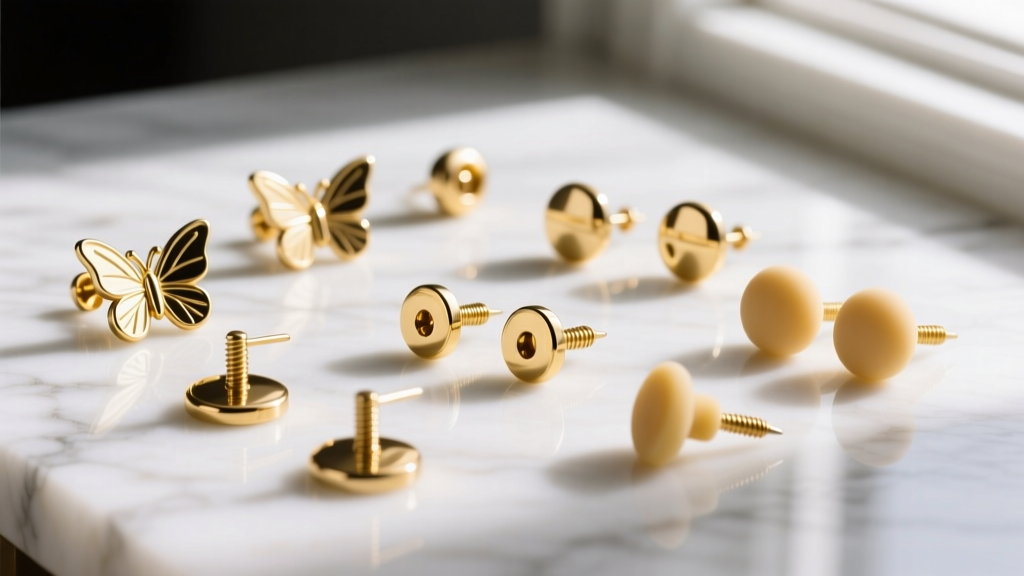
The most ubiquitous earring back in the world is the friction back, colloquially known as a butterfly back due to its winged shape. It slides onto a notched post and relies on the tension of the metal scroll to grip the grooves.
- Best For: Standard lobe piercings and lightweight studs.
- Gauge Compatibility: Typically 20G (0.81mm) or 18G (1.02mm).
- Failure Mode: Over time, the metal scroll loses tension. Furthermore, the crevices trap sebum, dead skin cells, and hair products, leading to localized odor (commonly called "ear cheese") and bacterial buildup.
2. Screw Backs
Screw backs feature a threaded post and a backing that screws into place. They are the gold standard for high-value diamond studs and children's earrings because they cannot be accidentally pulled off.
- Internal vs. External Threading: The Association of Professional Piercers strongly recommends internally threaded jewelry (where the threads are on the backing, not the post). Externally threaded posts act like a file, tearing the delicate fistula tissue every time you insert them.
- Best For: High-carat solitaire studs and active lifestyles.
3. Threadless (Push-Pin) Backs
Pioneered by high-end body jewelry brands like BVLA, threadless jewelry uses tension rather than threads. The decorative end has a slightly bent pin that inserts into a hollow post. The bend creates immense internal friction, locking the piece securely.
- Best For: Cartilage piercings (helix, tragus, conch) and flat-back lobe studs.
- Pro-Tip: To remove, you must push the two pieces together slightly to break the seal, then pull apart with a gentle twisting motion.
4. La Pousette (Secure Locking Backs)
Often found on luxury European jewelry, La Pousette backs feature a spring-loaded mechanism with two tiny metal "wings." You squeeze the wings to slide the back onto the post, and releasing them locks a hidden internal clutch into the post's groove.
5. Latch Backs / Lever Backs
Commonly used on hoops and huggies, a hinged wire passes through the piercing and "latches" into a grooved catch on the opposite side of the hoop. While convenient, a poorly machined catch will eventually wear down, causing the hoop to pop open during sleep.
Earring Backs Comparison Chart: Security, Comfort, and Price
Use this decision matrix to select the right backing based on your specific needs, budget, and piercing placement.
| Back Type | Security Level | Best Application | Avg. Replacement Cost | Gauge Range |
|---|---|---|---|---|
| Push / Butterfly | Medium | Everyday lightweight lobes | $5 - $15 | 20G - 18G |
| Screw Back (Internal) | High | Valuable studs, kids' ears | $20 - $60 | 18G - 14G |
| Threadless (Push-Pin) | Very High | Cartilage, flat-back lobes | $15 - $45 | 18G - 12G |
| La Pousette | Very High | Luxury diamond studs | $80 - $150+ | 18G - 16G |
| Silicone Stoppers | Low (Backup) | French wire drop earrings | $2 - $8 | N/A (Fits wire) |
Material Matters: Hypoallergenic Backs for Sensitive Ears
The back of your earring sits flush against your skin, creating a micro-environment of heat and moisture. If you suffer from contact dermatitis, the material of your earring back is just as important as the front. According to the Mayo Clinic, nickel allergy is one of the most common causes of allergic contact dermatitis, and many cheap "surgical steel" backs contain up to 12% nickel.
Expert Rule of Thumb: Never wear standard "surgical stainless steel" friction backs if you have sensitive skin. The term "surgical steel" is unregulated in the jewelry industry and often contains nickel.
The Safe List for 2026
- ASTM F136 Implant-Grade Titanium: The absolute pinnacle of biocompatibility. It contains zero nickel and is lightweight. Brands like Blomdahl and Inverness use medical-grade titanium and plastics for initial piercings and hyper-sensitive ears.
- Niobium: Highly unreactive and can be anodized into vibrant colors. Excellent for custom threadless ends and flat back posts.
- 14k or 18k Solid Gold (Nickel-Free): Ensure the gold is alloyed with silver, copper, or palladium rather than nickel for whiteness. Avoid gold-plated brass backs, as the plating will eventually wear off, exposing the reactive base metal to your skin.
Troubleshooting Common Earring Back Failures
Even the most expensive jewelry can fail if the mechanics of the back are misunderstood. Here is how to troubleshoot the most common issues.
Problem: Heavy Dangles Tearing the Lobe
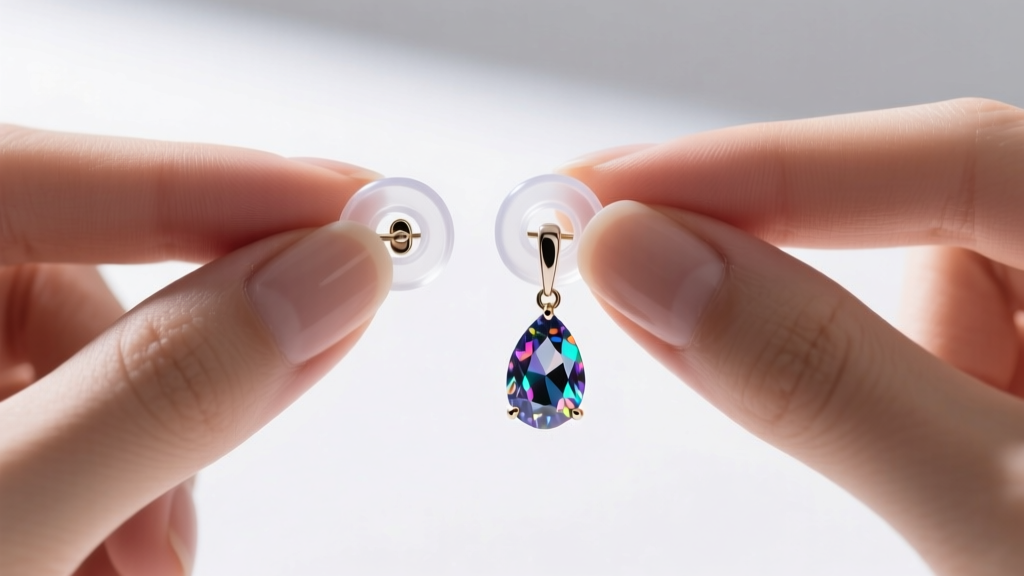
If you are wearing a 15-gram brass drop earring on a standard 20G post, gravity is working against you. The heavy front pulls the post downward, causing the butterfly back to dig into the back of your neck and the front wire to slice through the bottom of your fistula.
The Fix: Ditch the standard metal push back. Use silicone support discs (like BlingDots or generic earlobe support patches). These wide, flat discs distribute the weight of the earring across a 1-inch surface area on the back of the earlobe, preventing migration and tearing.
Problem: Flat Backs Poking the Neck or Scalp
Flat back labrets are incredible for cartilage and lobes, but if the post is too long, it will scratch you. If it is too short, it will embed into swelling tissue.
The Fix: Measure your tissue thickness using a digital caliper. Standard lobe thickness usually requires a 6mm or 8mm post length. Helix cartilage often requires a 5mm or 6mm. Always buy threadless posts in assorted lengths (e.g., from 5mm to 10mm) to customize your fit perfectly.
Problem: Screw Backs Cross-Threading
If you force a screw back at the wrong angle, you will strip the threads, rendering a $50 earring useless.
The Fix: Always use the "reverse-turn" trick. Place the backing on the post and turn it counter-clockwise (lefty-loosey) until you feel a subtle "click" as the threads align. Only then should you turn it clockwise to tighten.
How to Choose the Right Back for Your Piercing Type
Not all backs work for all piercings. The anatomy of your ear dictates the hardware you should buy.
- Standard Lobe: Push backs, screw backs, and La Pousette backs are all excellent. For heavy statement pieces, use silicone support discs.
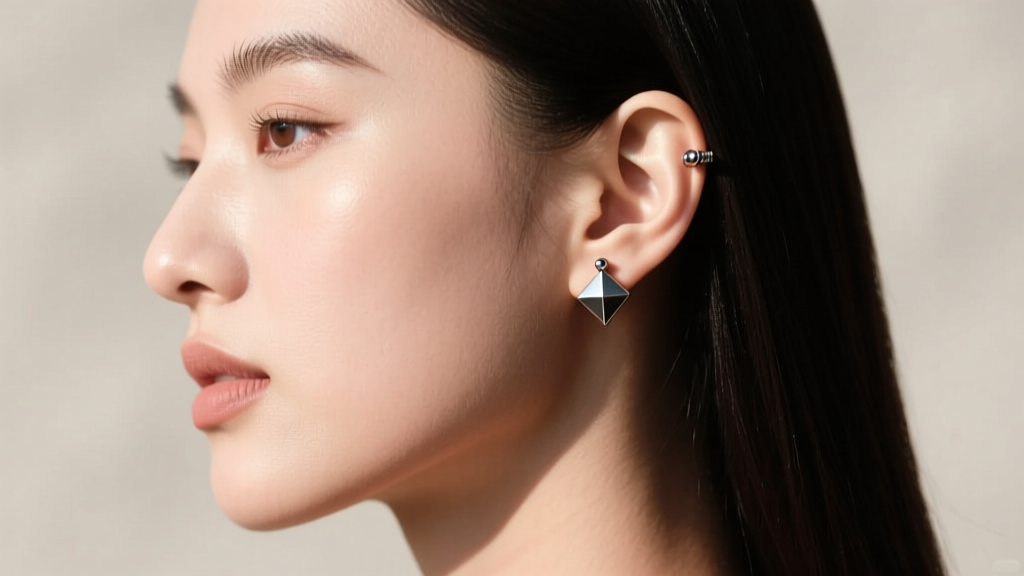
- Helix / Tragus / Conch (Cartilage):strong> Never use butterfly backs here. The prongs will press painfully into your scalp or neck, and they trap bacteria in tight cartilage folds. Always use internally threaded or threadless flat-back labrets.
- Daith / Rook: These require specialized captive bead rings (CBRs) or clickers with a hidden hinge and latch back, as straight posts cannot navigate the curvature of the inner ear.
Final Verdict & Buying Checklist
Knowing what the back of earrings are called is the first step toward building a comfortable, secure, and hygienic jewelry collection. When making your next purchase, run through this quick checklist:
- Check the Material: Is it ASTM F136 Titanium, Niobium, or solid 14k/18k gold? If it just says "surgical steel," walk away.
- Inspect the Threading: If it screws in, ensure it is internally threaded or threadless to protect your piercing channel.
- Match the Weight: Heavy fronts require wide, supportive backs (silicone discs) to prevent lobe migration.
- Consider the Placement: Cartilage demands flat backs; lobes can handle traditional clasps.
By prioritizing the mechanics and materials of your earring backs, you ensure that your jewelry remains secure, comfortable, and beautiful for a lifetime of wear.


