2026 Trend Guide to Large Hoop Earrings for Women
Discover the 2026 trends for large hoop earrings for women. Learn how to choose the right diameter, wire gauge, and metal weight.

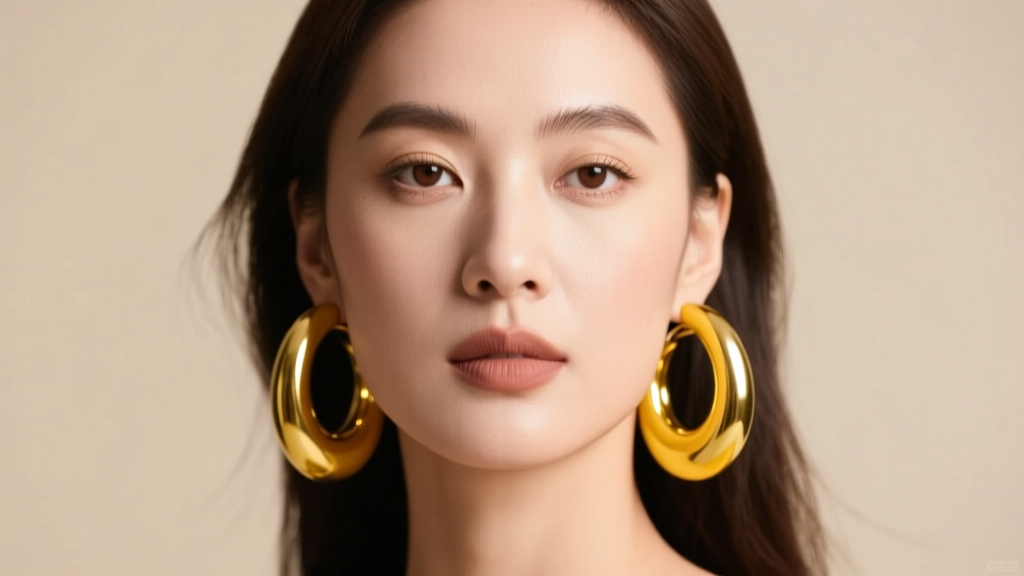
The 2026 Renaissance of the Statement Hoop
The landscape of ear styling has shifted dramatically as we move through 2026, moving away from the ultra-minimalist micro-hoops of the early 2020s and embracing bold, architectural volume. Today, large hoop earrings for women are no longer just a nostalgic callback to 80s and 90s power dressing; they have evolved into sophisticated, gravity-defying statements of personal architecture. On runways from Milan to Seoul, and in the curated wardrobes of global style influencers, the oversized hoop has reclaimed its throne as the ultimate transformative accessory. However, scaling up your jewelry introduces complex challenges regarding metallurgy, weight distribution, and facial geometry. A poorly engineered large hoop will stretch the earlobe, cause contact dermatitis, or bend out of shape within a week. This comprehensive guide breaks down the exact specifications, material grades, and styling frameworks you need to master the large hoop trend in 2026.
Decoding Dimensions: Diameter, Gauge, and Weight
When we classify large hoop earrings for women, we are generally referring to diameters starting at 50mm and extending well past 100mm. But diameter is only one-third of the equation. The true mark of quality lies in the relationship between the wire gauge (thickness) and the overall weight. Many mass-market brands produce 80mm hoops using solid 18-gauge wire, resulting in a flimsy accessory that tangles in hair and warps when pulled. Conversely, a solid 12-gauge wire at 80mm would weigh over 25 grams per earring—a guaranteed path to permanent earlobe elongation and discomfort.
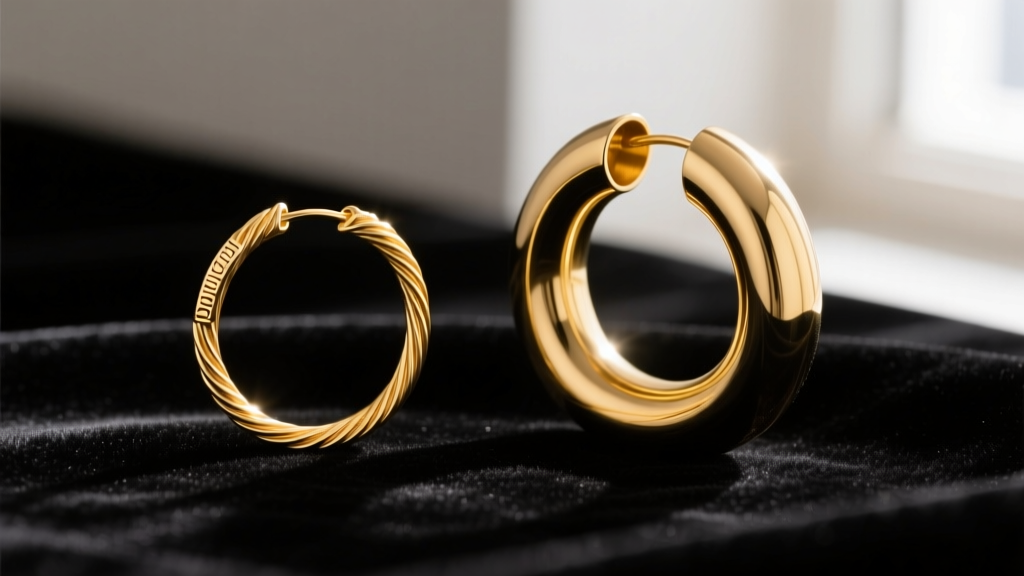
The 2026 industry standard for oversized hoops relies heavily on hollow electroformed tubing. This technique allows manufacturers to create a chunky, luxurious 10-gauge (2.5mm) visual profile while keeping the actual weight under 8 grams. Below is a decision matrix for selecting the right dimensions based on your lifestyle and piercing health.
| Diameter | Visual Gauge | Target Weight (Per Earring) | Best Use Case & Construction |
|---|---|---|---|
| 50mm - 65mm | 16G to 14G | 4g - 8g | Everyday wear; solid wire or semi-hollow tubing is perfectly safe here. |
| 66mm - 85mm | 12G to 10G | 6g - 12g | Statement evening wear; hollow tubing required to prevent lobe strain. |
| 86mm - 100mm+ | 8G to 6G | 8g - 15g | Editorial/Runway styling; must use advanced lightweight alloys or hollow electroforming. |
Expert Warning: Prolonged daily wear of any earring exceeding 15 grams per lobe will cause micro-tears in the fistula (the piercing channel) and accelerate gravitational stretching. If you love the heavy, solid feel of vintage gold, limit wear to under four hours.
Metallurgy and Material Grades: What to Actually Buy
The structural integrity of a hoop is entirely dependent on its alloy composition. Because large hoops act as levers, any snag on clothing or hair applies immense torque to the metal. Understanding what you are buying is critical to avoiding wasted investments.
14k Gold vs. 18k Gold
While 18k gold (75% pure gold) is highly prized for its rich, buttery yellow hue, it is inherently a softer metal. An 18k gold hoop over 70mm in diameter made with thin wire will bend permanently if slept on or snagged. 14k gold (58.5% pure gold) is alloyed with higher percentages of copper, silver, or zinc, giving it superior tensile strength. For large, thin-wire hoops, 14k is the superior choice for longevity. According to the Gemological Institute of America (GIA), the specific alloy mix not only dictates color but fundamentally alters the hardness and durability of the final piece, making 14k the pragmatic standard for structural jewelry.
Gold-Filled vs. Vermeil
If solid gold is outside your budget, you must understand the difference between vermeil and gold-filled. Vermeil is a thin layer of gold electroplated over sterling silver. The constant friction of the hoop post sliding through the earlobe will wear away vermeil within months, exposing the silver underneath. Gold-filled jewelry (legally required to be at least 1/20th 14k gold by weight) is mechanically bonded to a brass core using heat and pressure. It will withstand the friction of a hoop post for years without flaking.
ASTM F-136 Titanium for Sensitive Ears
Large hoops create more friction and movement in the piercing than studs. If you suffer from contact dermatitis, this friction will trigger severe flare-ups. The American Academy of Dermatology notes that nickel is the most common culprit in jewelry allergies, often hidden in cheap brass or low-karat gold alloys. For sensitive lobes, demand ASTM F-136 implant-grade titanium. It is entirely nickel-free, hypoallergenic, and 45% lighter than steel, making it an incredible base material for oversized, avant-garde hoop designs.
Face Shape Architecture: Pairing Hoops with Profiles
Beyond the raw materials, the architectural relationship between a hoop and the wearer's facial structure dictates the success of the styling. The 2026 trend relies on contrast and balance rather than simply matching round shapes to round faces.
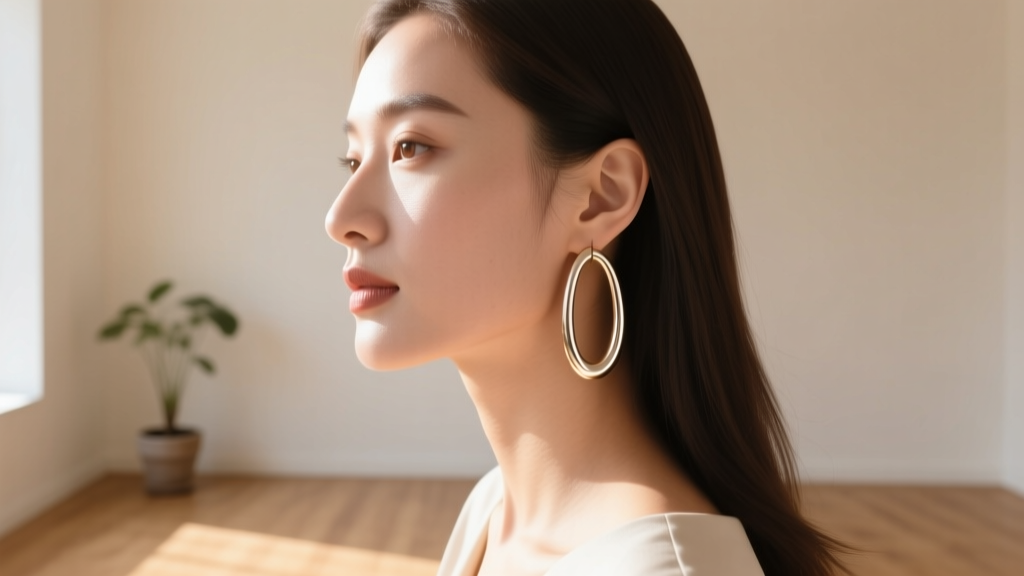
- Round Faces: Avoid perfectly circular, thick hoops which echo the face's natural geometry and can add unwanted visual width. Instead, opt for elongated oval hoops or geometric, angular shapes (like hexagons or diamonds) that measure 70mm in length but only 40mm in width. This creates a vertical line that elongates the neck and slims the jaw.
- Square and Angular Jawlines: Soften strong, prominent jawbones with classic, perfectly round large hoops (75mm+). The continuous, sweeping curve of a circular hoop draws the eye in a fluid motion, counteracting sharp angles. A hammered or textured gold finish works beautifully here to catch the light and soften the overall aesthetic.
- Heart-Shaped Faces: With a broader forehead and a narrow, pointed chin, the goal is to add visual weight to the lower half of the face. Teardrop hoops or bottom-heavy crescent hoops are ideal. Avoid top-heavy designs or hoops that taper downward, as they will exaggerate the narrowness of the chin.
- Oval Faces: The universal canvas. Oval faces can pull off extreme 2026 trends, including asymmetrical hoop styling (e.g., a 90mm chunky tube hoop on one side, and a stacked cluster of 30mm huggies on the other).
The Mechanics of the Clasp: Security vs. Comfort
The unsung hero of any large hoop is its closure mechanism. A heavy hoop with a weak clasp is a lost earring waiting to happen. There are three primary mechanisms you will encounter when shopping for large hoops this year:
1. The Latch-Back (V-Clip): The most common for medium-to-large hoops. A hinged post clicks into a V-shaped wire catch. While secure, the V-catch can sometimes pinch the skin behind the earlobe if the tolerances are poorly machined. Always test the hinge tension before purchasing.
2. The Hinged Snap-Back: Features a post that snaps securely into a hollowed-out groove on the opposite side of the hoop. This offers a seamless, invisible closure that is highly secure and comfortable, making it the premium choice for 2026 luxury hoops.
3. The Continuous (Endless) Hoop: A thin wire loops entirely through the piercing and tucks into the opposite hollow end. While this provides the sleekest, most uninterrupted visual line, it is notoriously difficult to insert at thicker gauges and offers the lowest security for heavy, large-diameter pieces. Reserve continuous hoops for lightweight, under-50mm styles.
Final Verdict: Building a 2026 Hoop Wardrobe
Mastering the art of large hoop earrings for women requires looking past the initial visual impact and scrutinizing the engineering beneath the shine. By prioritizing hollow tubing for diameters over 70mm, selecting 14k gold or implant-grade titanium for structural and biological safety, and mapping the hoop geometry to your specific facial architecture, you transform a simple accessory into a masterclass in personal styling. The 2026 ethos is all about intentional volume—do not be afraid to take up space, provided your jewelry is built to support the statement.


