2026 Trend Guide for Girls with Only One Side Earrings
Discover the 2026 asymmetrical ear trend. Our expert buying guide for girls with only one side earrings covers gauge sizes, metals, and styling tips.

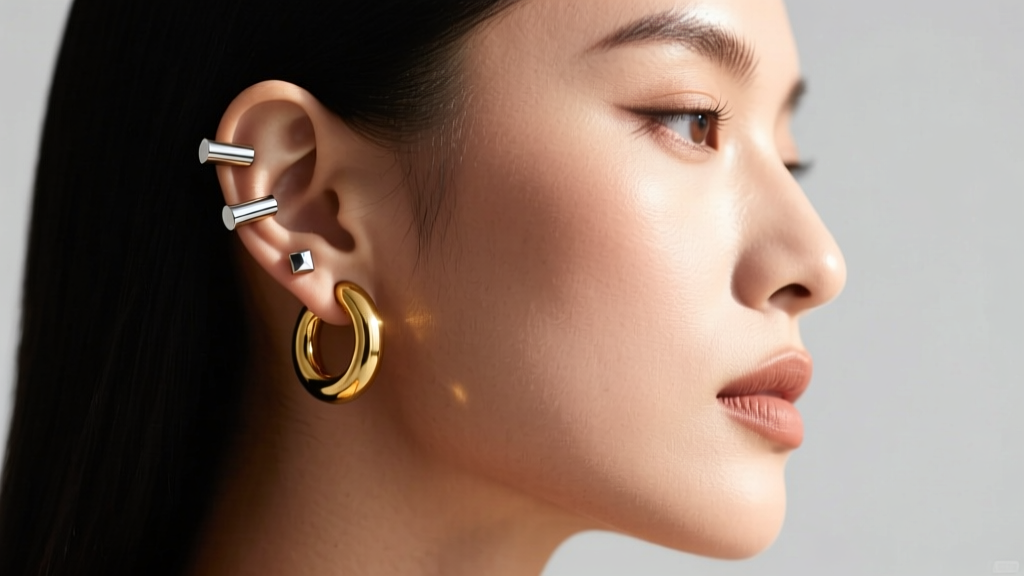
The Rise of Intentional Asymmetry in 2026
The landscape of ear styling has fundamentally shifted as we move through 2026. While the "curated ear" of the early 2020s focused on symmetrical, multi-piercing constellations on both lobes, the current zeitgeist embraces deliberate imbalance. The trend of girls with only one side earrings dominating social feeds and editorial spreads isn't just a fleeting aesthetic; it's a masterclass in visual weight, focal points, and high-impact minimalism. By concentrating high-quality jewelry on a single ear, you create a striking, avant-garde silhouette that draws the eye and allows for heavier, more elaborate pieces without overwhelming the face.
This buying guide breaks down exactly how to execute the single-ear stack. We will cover the critical importance of selecting the correct ASTM F-136 titanium hardware, how to balance gauge sizes across different cartilage zones, and the structural mechanics of threadless jewelry that make this specific trend possible. Whether you are working with a professional piercer to map out a new constellation or upgrading your existing jewelry, understanding the anatomy and hardware requirements of the asymmetrical ear is essential for long-term wearability and tissue health.
Hardware Mechanics: Threadless vs. Internally Threaded
When building a dense, single-sided ear stack, the physical mechanics of your jewelry posts become the most critical factor in your buying decision. The aesthetic of girls with only one side earrings relies heavily on tight, intricate clustering—particularly in the flat, conch, and helix regions. To achieve this, the hardware must be low-profile and exceptionally secure.
The Problem with Externally Threaded Jewelry
Externally threaded jewelry (where the screw threads are on the post that passes through the fistula) is universally condemned by professional piercers. The sharp threads cause micro-tears in the healing tissue and create a breeding ground for bacteria. Furthermore, the bulky threading at the back of the ear prevents tight clustering, making it impossible to achieve the seamless, gapless look required for a modern single-ear stack.
The Gold Standard: Threadless (Push-Pin) Hardware
For 2026, threadless jewelry is the undisputed gold standard for asymmetrical ear styling. Brands like BVLA and Junipurr Jewelry utilize a tension-fit mechanism where a slightly bent 18-gauge or 16-gauge pin is pushed into a hollow, threaded post. The tension holds the jewelry securely in place without the need for bulky screw backs. This allows the decorative ends to sit flush against the skin, enabling piercers to place multiple studs just millimeters apart in the conch or helix. When curating your single-side stack, insist on threadless or, at minimum, internally threaded posts to ensure tissue health and aesthetic precision.
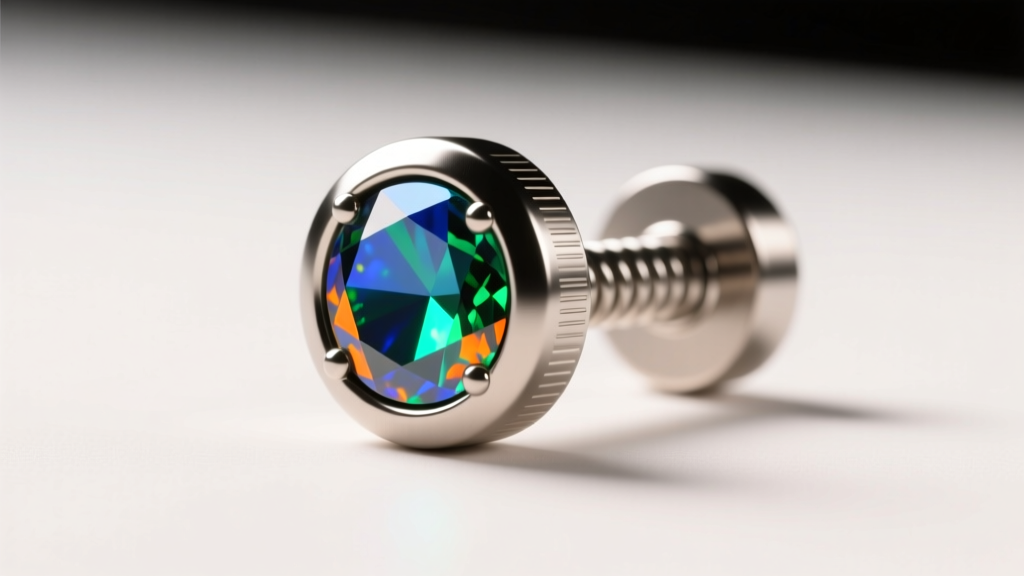
Material Grades: What to Look For
The concentrated nature of a single-ear stack means you are introducing multiple pieces of metal into a small surface area of tissue. This exponentially increases the risk of allergic contact dermatitis if subpar materials are used. According to the Association of Professional Piercers, only specific, verifiable material grades should be worn in the body.
- ASTM F-136 Implant-Grade Titanium: This is the baseline requirement for any new or healing piercings. Titanium 6AL-4V-Eli is completely nickel-free, lightweight, and highly biocompatible. It is the ideal choice for the foundational posts of your single-ear stack.
- Solid 14k or 18k Gold: If you prefer gold, it must be solid and specifically alloyed for body jewelry (nickel-free). Avoid anything labeled "gold plated," "gold filled," or "vermeil," as the friction from hair and headphones will quickly wear away the plating, exposing reactive base metals underneath.
- Niobium: A highly reactive metal that is anodized to create vibrant colors without the use of paints or dyes. It is an excellent, budget-friendly alternative to titanium for decorative ends.
Be highly suspicious of the term "surgical steel." It is a marketing buzzword, not a standardized ASTM grade, and frequently contains nickel. A study published by the National Center for Biotechnology Information highlights that nickel is the most common contact allergen, and prolonged exposure from multiple earrings on one ear can trigger severe, localized eczema and piercing migration.
Gauge Sizing and Anatomy Matrix
A common mistake when buying jewelry for an asymmetrical stack is assuming all piercings take the same gauge. Cartilage zones vary in thickness and tissue density. Forcing a 16-gauge post into an 18-gauge fistula will cause trauma, while an 18-gauge post in a 16-gauge hole can lead to the "cheese-cutter effect," where the thin wire slowly migrates through the tissue.
| Ear Anatomy Zone | Standard Gauge Size | Post Length Range (Swelling) | Recommended Jewelry Type |
|---|---|---|---|
| Standard Lobe | 18g (1.0mm) or 16g (1.2mm) | 6mm - 8mm | Threadless Studs, Small Huggies |
| Helix / Outer Rim | 16g (1.2mm) | 6mm - 8mm | Flat-back Labrets, Seamless Hoops |
| Flat | 18g (1.0mm) or 16g (1.2mm) | 5mm - 6mm | Small Threadless Studs (3mm - 5mm) |
| Conch | 16g (1.2mm) or 14g (1.6mm) | 6mm - 8mm | Large Cluster Studs, Conch Hoops |
| Tragus | 16g (1.2mm) | 6mm - 8mm | Flat-back Labrets with small gems |
Note: Always have a professional piercer measure your exact anatomy. Post lengths that are too long will snag on hair and masks, while posts that are too short will embed into the tissue, requiring emergency intervention.
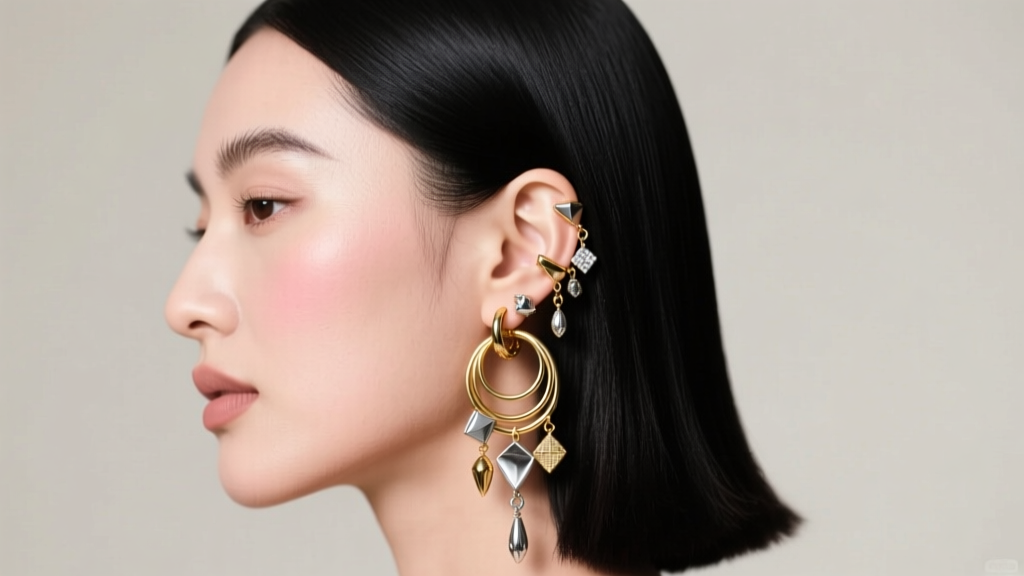
Curating the Stack: Balancing Visual Weight
The success of the single-side ear trend hinges entirely on the concept of visual weight. When you load one ear with 5 to 8 pieces of jewelry, you are creating a heavy, dark, and highly reflective focal point on one side of the face. If not balanced correctly, it can make the face look asymmetrical in an unflattering way.
The Hair Parting Rule
To balance the visual weight, your hairstyle must act as a counterweight. If you have a heavy stack on your left ear, part your hair on the right side of your head, sweeping the bulk of your hair over the bare right ear and tucking it tightly behind the stacked left ear. This frames the jewelry and prevents the "heavy" side from dragging your facial features downward.
The Bare Ear Counterbalance
What do you do with the opposite ear? The purist approach to the 2026 trend is to leave the opposite ear completely bare, emphasizing the stark contrast. However, if you feel too exposed, opt for a single, ultra-minimalist piece on the bare side—such as a 2mm flush-set diamond stud or a micro-huggie. This provides a subtle anchor without competing with the main event.
Color and Metal Consistency
When buying pieces for your single-ear stack, stick to a strict metal palette. Mixing yellow gold, white gold, and titanium on the same ear can look chaotic and diminish the high-end, curated aesthetic. Choose one primary metal (e.g., solid 14k yellow gold) and use gemstone colors (like deep emeralds, sapphires, or black onyx) to create depth and contrast within that single metal framework.
Troubleshooting and Maintenance for Heavy Stacks
Wearing multiple pieces of high-quality metal on one side of your head introduces unique maintenance challenges. The cumulative weight of solid gold and titanium, combined with the friction of daily life, requires a proactive aftercare routine.
- Sleeping Adjustments: Sleeping on a stacked ear is the primary cause of piercing migration and cartilage bumps (hypertrophic scarring). You must train yourself to sleep on the bare side. If you are a restless sleeper, invest in a piercings-friendly travel pillow (a U-shaped pillow that allows your ear to rest in the hollow center) to completely eliminate pressure on the jewelry.
- Snag Hazards: A dense cluster of threadless studs in the flat and helix acts like a net for hair, sweater threads, and headphone wires. Always remove over-ear headphones and switch to earbuds on the stacked side to prevent accidental trauma that can bend the posts or tear the fistula.
- Deep Cleaning: With multiple pieces of jewelry, sebum, dead skin cells, and hair products accumulate rapidly behind the flat-back posts. Twice a week, use a sterile saline wound wash (0.9% sodium chloride with no additives) and a non-woven gauze pad to gently clean the back of each post. Avoid cotton swabs, as the fibers can wrap around the threadless pins and cause irritation.
Final Verdict: Investing in the Asymmetrical Look
The trend of girls with only one side earrings represents a maturation in body modification and personal styling. It moves away from the "more is more" approach of bilateral piercing and embraces intentional, architectural design. When buying for this look, prioritize your budget: it is far better to have three exquisite, implant-grade BVLA or Maria Tada pieces clustered perfectly in the conch and helix than ten cheap, gold-plated studs that will cause allergic reactions and tarnish within a month. By respecting the anatomy, insisting on threadless hardware, and balancing your visual weight, your single-ear stack will serve as a striking, sophisticated hallmark of your personal style throughout 2026 and beyond.


