How to Choose the Best Small Earrings for Guys: A Step-by-Step Guide
Learn how to choose, size, and style small earrings for guys. Our step-by-step guide covers gauge sizes, hypoallergenic metals, and face-shape matching.

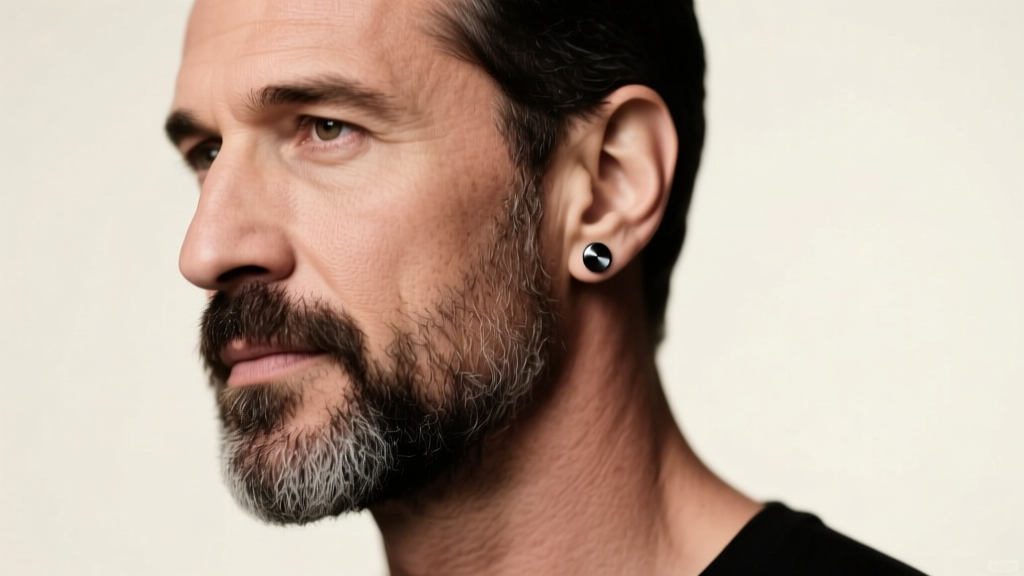
The Shift to Subtle: Why Small Earrings for Guys Dominate Men's Style
The era of oversized, distracting men's jewelry has given way to refined, intentional subtlety. Today, small earrings for guys serve as the ultimate versatile accessory, bridging the gap between professional environments and casual streetwear. Whether you are stepping into the boardroom or heading to a weekend gig, a well-chosen 3mm stud or an 8mm huggie hoop adds a layer of sophistication without overpowering your features. However, navigating the world of men's earrings requires more than just picking a shiny object. It demands an understanding of metallurgy, anatomical proportions, and piercing gauges. This step-by-step guide will walk you through the exact framework professional piercers and stylists use to select the perfect subtle ear adornment.
Step 1: Identify Your Gauge and Piercing Placement
The most common mistake men make when buying earrings is ignoring the gauge (the thickness of the metal post or wire). If you buy a 20-gauge earring for a 16-gauge piercing, the post will be too thin, causing the jewelry to slide around, irritate the fistula (the piercing channel), and potentially lead to migration. Conversely, forcing a thick post into a delicate lobe will cause tearing.
Here is the industry-standard sizing matrix for men's ear placements:
| Piercing Placement | Standard Gauge Size | Millimeter Equivalent | Best Small Jewelry Type |
|---|---|---|---|
| Standard Earlobe (Gun Pierced) | 20g or 18g | 0.81mm - 1.02mm | Friction-back studs (2mm-4mm) |
| Earlobe (Needle Pierced) | 16g or 14g | 1.29mm - 1.63mm | Flat-back labrets, small huggies |
| Helix (Upper Cartilage) | 16g | 1.29mm | Clicker hoops (6mm-8mm) |
| Tragus (Inner Cartilage Flap) | 16g | 1.29mm | Flat-back studs (2mm-3mm) |
Pro Tip: If you are unsure of your gauge, visit a professional piercer for a quick measurement. Do not guess, as a 0.5mm difference is highly noticeable in piercing jewelry.
Step 2: Choose Implant-Grade Materials (Avoid the 'Green Ear')
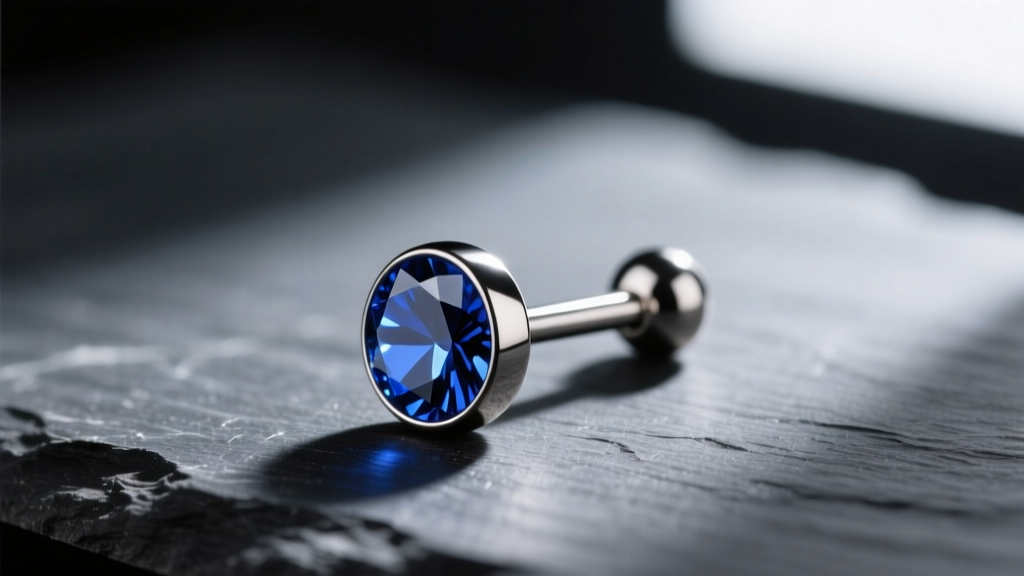
Men's skin chemistry, combined with daily sweat and grooming products, can cause cheap metals to oxidize, leaving a green or black ring around the piercing. More importantly, poor metals cause contact dermatitis. According to the Mayo Clinic, nickel allergy is one of the most common causes of allergic contact dermatitis, and many commercial 'surgical steel' earrings contain up to 10% nickel.
To ensure your small earrings for guys are safe for long-term wear, strictly adhere to these material grades:
- ASTM F136 Implant-Grade Titanium: The gold standard for body jewelry. It is completely nickel-free, lightweight, and highly resistant to corrosion. It can also be anodized to create subtle colors like matte black or deep bronze without using paints or coatings.
- 14k or 18k Solid Gold (Nickel-Free Alloyed): Ensure the gold is alloyed with silver or palladium, not nickel. Avoid gold-plated or gold-filled jewelry, as the thin outer layer will eventually wear off, exposing the reactive base metal underneath.
- Niobium: A highly biocompatible, hypoallergenic metal that is slightly heavier than titanium but excellent for those who want a dark, gunmetal aesthetic without using black coatings.
The Association of Professional Piercers (APP) explicitly recommends avoiding 316L surgical steel for fresh piercings or sensitive skin due to its nickel content. Stick to F136 titanium or solid gold for zero irritation.
Step 3: Match Proportions to Face Shape and Ear Anatomy
Small earrings do not exist in a vacuum; they interact directly with your facial structure and jawline. Choosing the right silhouette can subtly balance your features.
The Face-Shape Sizing Matrix
- Round Faces: Opt for angular, geometric small studs. A 3mm or 4mm square or hexagonal titanium stud introduces sharp lines that contrast with and balance softer, rounder facial features. Avoid perfectly round pearls or spherical beads.
- Square/Strong Jawlines: Soften angular jaws with circular motifs. A 4mm round bezel-set black diamond stud or a small 8mm seamless hoop complements a strong jaw without adding unnecessary harshness.
- Oval Faces: The most versatile shape. You can pull off anything from minimalist 2mm dot studs to slightly elongated 5mm drop earrings.
Accounting for Beards and Headphones
If you rock a full beard, your earrings will sit in a high-traffic zone. Avoid butterfly-back studs, as the sharp prongs will catch on beard hairs and cause painful snags. Furthermore, if you wear over-ear headphones daily (for gaming, production, or remote work), traditional stud posts will press into your neck. The solution? Flat-back labrets.
Step 4: Select the Right Backing for Comfort and Security

The backing mechanism dictates how the earring feels when you sleep and how securely it stays in your ear during physical activity.
The Golden Rule of Men's Earrings: Ditch the 'butterfly' friction back. They trap dead skin cells, harbor bacteria, and the sharp posts poke you when you sleep on your side. Upgrade to internally threaded or threadless flat backs immediately.
- Threadless (Push-Pin) Flat Backs: The post has a slight bend that creates tension against the inside of the hollow front piece. They are incredibly secure, have no sharp edges, and are the preferred choice for men who sleep on their sides.
- Internally Threaded Flat Backs: The screw threads are on the post, not the backing. This means the part that passes through your piercing is completely smooth, preventing micro-tears in the fistula.
- Hinged Clicker Hoops: For cartilage or lower lobe hoops, clickers feature a seamless hinge that snaps shut with an audible 'click.' They are far superior to captive bead rings (CBRs), which require pliers to open and close and frequently lose their tiny beads.
Step-by-Step Maintenance Routine for Men
Men's grooming routines often involve harsh chemicals (colognes, beard oils, salicylic acid face washes) that can degrade jewelry finishes or irritate piercings. Follow this simple maintenance protocol:
- Daily Cleaning: Spray the front and back of the earring with sterile 0.9% sodium chloride wound wash. Do not use rubbing alcohol or hydrogen peroxide, as these destroy the cellular matrix of the healing fistula and dry out the skin.
- Post-Shower Care: After showering, gently pat the earring dry with a non-woven gauze or a paper towel. Avoid bath towels, as the loops can catch on small hoops or threadless ends and rip them out.
- Monthly Deep Clean: Remove the jewelry (if fully healed) and soak it in a small cup of warm water with a drop of mild, fragrance-free liquid soap for 5 minutes. Use a soft-bristled toothbrush to gently scrub the backing and threading, then rinse thoroughly.
Final Verdict: Building Your Core Collection
Curating the right collection of small earrings for guys is an exercise in quality over quantity. Start with a 3mm or 4mm ASTM F136 titanium flat-back stud in a matte or polished finish for your primary lobe piercing. Once you are comfortable, expand into an 8mm or 10mm solid gold or niobium huggie hoop for a slightly more textured look. By prioritizing implant-grade materials, respecting your anatomical gauge, and choosing ergonomic backings, you will build a subtle, sophisticated jewelry rotation that lasts a lifetime without ever causing irritation.


