Expert Care & Cleaning Guide for Silver Dangling Earrings
Learn how to clean, polish, and store silver dangling earrings to prevent tarnish and protect delicate jump rings with expert jeweler tips.

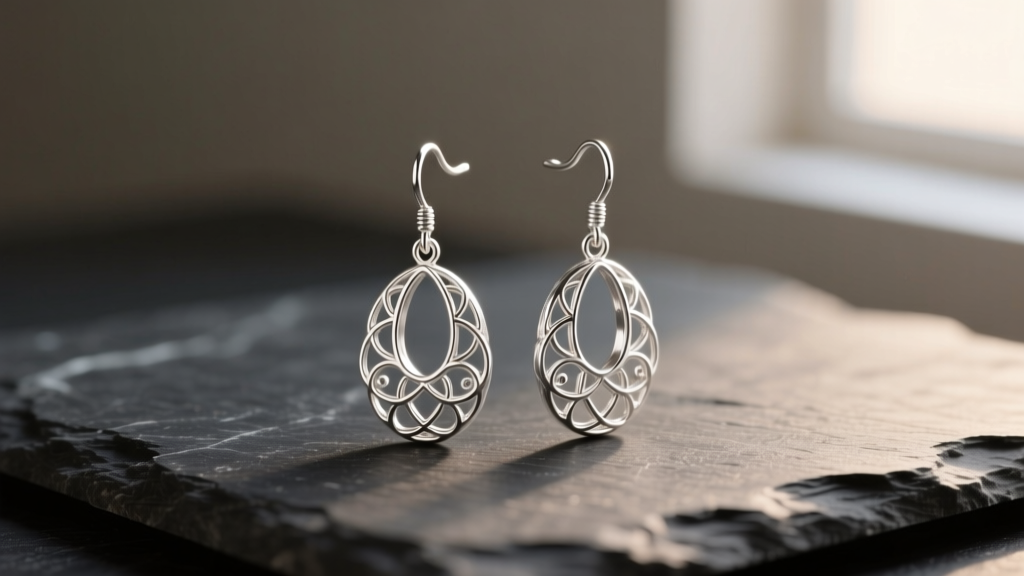
The Chemistry of Tarnish: Why Sterling Silver Dangles Darken
To properly care for silver dangling earrings, you must first understand the metallurgy of the material. Pure silver (.999 fine silver) is highly resistant to tarnish, but it is far too soft to withstand the structural demands of dangling jewelry. The kinetic nature of dangles requires tensile strength, which is why jewelers universally rely on .925 sterling silver—an alloy comprising 92.5% silver and 7.5% copper. It is this copper content that acts as the catalyst for tarnish. When copper is exposed to hydrogen sulfide and moisture in the atmosphere, it undergoes an oxidation reaction, forming copper sulfide. This manifests as the yellowish, brown, or black film that dulls the brilliant shine of your favorite drop earrings. Understanding this chemical reality is the first step toward implementing a maintenance routine that preserves both the aesthetic and structural integrity of your jewelry.
Essential Tools for Safe Silver Maintenance
Before you begin cleaning, gather the correct materials. Using abrasive or chemically harsh products can permanently micro-scratch the silver or degrade any intentional patinas. According to guidelines from Jewelers of America, gentle, non-ammoniated cleaners are always preferred for daily maintenance.
- Mild Liquid Dish Soap: A basic, phosphate-free dish soap (like original Dawn) is ideal for breaking down skin oils and cosmetics.
- Distilled Water: Tap water contains trace minerals and chlorine that can cause water spots or chemical etching. Always use distilled water for the final rinse.
- Lint-Free Microfiber Cloths: Essential for drying and buffing without leaving behind fibers that can catch on intricate filigree.
- Jeweler's Polishing Cloth: Cloths impregnated with micro-abrasives and anti-tarnish agents (such as the Sunshine Cloth) are perfect for targeted polishing.
- Ultra-Soft Baby Toothbrush: The bristles must be exceptionally soft to reach into crevices without scratching the silver surface.
Step-by-Step Cleaning Protocol for .925 Sterling Silver
For routine cleaning of silver dangling earrings that feature solid metal construction or securely prong-set hard gemstones (like sapphire or cubic zirconia), follow this gentle protocol:
Step 1: The Soak. Mix a few drops of mild dish soap into a bowl of lukewarm distilled water. Submerge the earrings for no more than three to five minutes. This loosens sebum, dead skin cells, and environmental dust trapped in the jump rings and ear wire loops.
Step 2: Gentle Agitation. Using the ultra-soft toothbrush, gently sweep the bristles over the surface of the dangles. Pay special attention to the back of the decorative elements and the connection points where dirt accumulates. Never scrub aggressively; let the bristles do the work.
Step 3: The Rinse. Rinse the earrings thoroughly under a slow stream of distilled water. Ensure all soap residue is washed away, as dried soap can leave a cloudy, iridescent film on the metal.
Step 4: Thorough Drying. Pat the earrings dry with a microfiber cloth. Moisture left in the crevices of a dangle will accelerate the copper oxidation process. For intricate designs, use a hair dryer on the 'cool' setting to blast water out of hard-to-reach areas.
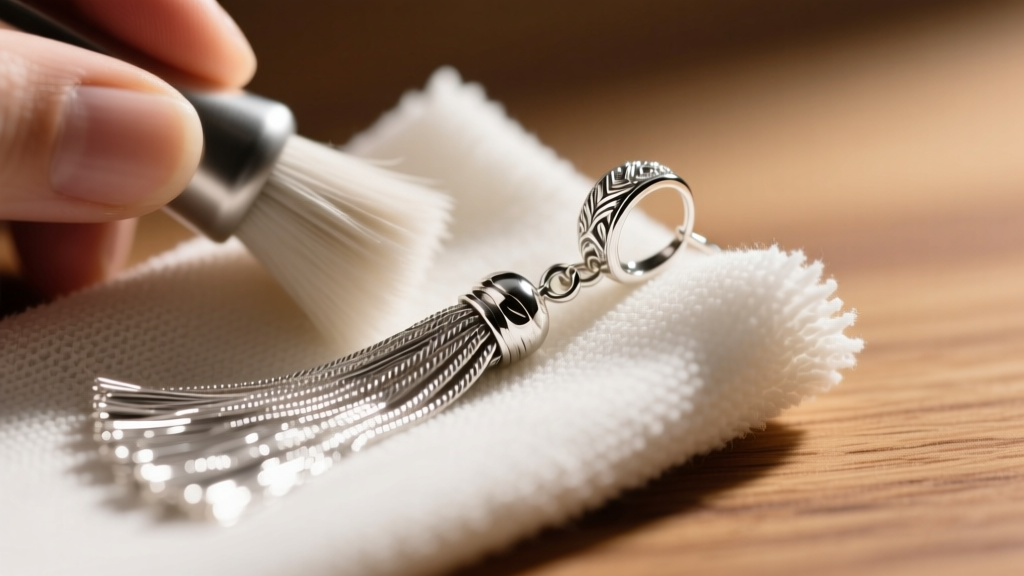
Structural Integrity: Protecting Joints and Ear Wires
Because they are kinetic jewelry, silver dangling earrings face unique mechanical stresses that stud earrings do not. Every time you turn your head, the dangle swings, creating friction at the connection point. This makes structural maintenance just as critical as cosmetic cleaning.
Gauge Thickness and Stress Points
Most commercial silver dangles utilize 20-gauge or 22-gauge wire for the ear hook and the jump ring connecting the dangle to the hook. Over time, the constant swinging motion can cause the silver alloy to experience 'work hardening.' Work hardening makes the metal brittle. If you notice that the jump ring is slightly gapped or the ear wire loop is elongated, it is a sign of metal fatigue. Gently squeeze jump rings closed using two pairs of nylon-jaw pliers to prevent the dangle from slipping off and getting lost. Never pull the ear wire open and closed repeatedly to clean it; instead, clean it in place or slide the dangle off carefully if the design permits.
The Electrochemical Dip: Why You Should Avoid It
You have likely seen the viral 'aluminum foil, baking soda, and boiling water' trick for cleaning silver. While this electrochemical ion-exchange process effectively converts silver sulfide back into silver, it is highly dangerous for many silver dangling earrings. First, the boiling water will melt the cyanoacrylate adhesives used to secure gemstones in glued settings, causing stones to fall out. Second, this dip strips away all oxidation indiscriminately. If your dangles feature intentional blackened accents (oxidized patina) to highlight engraved details, the dip will erase this contrast, leaving the earrings looking flat and washed out. Always stick to mechanical polishing with a jeweler's cloth for dangles with mixed finishes.
Chemical Hazards: What Destroys Silver Alloys
Silver is highly reactive to specific household and environmental chemicals. Exposure to these agents can cause irreversible pitting, etching, or rapid tarnishing. Industry suppliers like Rio Grande emphasize keeping silver away from harsh chlorides and sulfur sources.
| Chemical Agent | Common Source | Reaction with .925 Silver | Resulting Damage |
|---|---|---|---|
| Chlorine | Swimming pools, hot tubs, tap water | Forms silver chloride | Permanent white/gray etching and pitting |
| Sulfur | Rubber bands, hard-boiled eggs, hot springs | Forms silver sulfide | Rapid, heavy black tarnish |
| Ammonia | Glass cleaners, household sprays | Dissolves copper alloy | Surface weakening and micro-porosity |
| Mercury | Broken thermometers, certain skin creams | Forms silver amalgam | Permanent silvery-white surface staining |
Archival Storage Solutions to Halt Oxidation
Proper storage is the most effective way to reduce the frequency of deep cleanings. The goal is to limit the silver's exposure to atmospheric sulfur and ambient humidity.
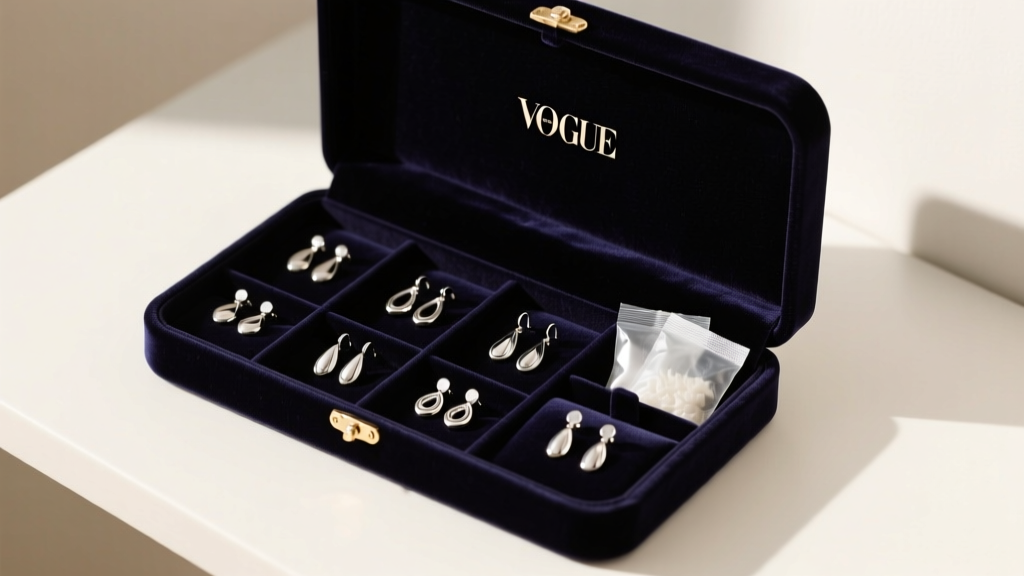
- Airtight Environments: Store your silver dangling earrings in individual, sealable polyethylene ziplock bags. Squeeze out as much air as possible before sealing.
- Anti-Tarnish Strips: Place a 3M anti-tarnish strip inside each bag. These strips contain copper-based particles that act as a sacrificial anode, absorbing sulfur gases before they can reach your silver.
- Moisture Control: Include a small silica gel desiccant packet in the storage bag to control humidity, which acts as a catalyst for the tarnishing reaction.
- Isolation: Never store silver dangles loosely in a communal jewelry box where they can tangle with chains or scratch against harder gemstones like diamonds or sapphires. Silver is relatively soft (2.5 to 3 on the Mohs scale) and scratches easily.
Expert Troubleshooting: Heavy Tarnish and Deep Scratches
If your silver dangling earrings have been neglected and feature heavy, black tarnish that a polishing cloth cannot remove, you will need a dedicated liquid silver polish. Products like Wright's Silver Cream or Hagerty Silversmiths' Polish contain mild chemical tarnish removers and micro-abrasives. Apply a small amount to a damp sponge, work it into a lather over the earring, rinse thoroughly with distilled water, and dry completely.
For deep scratches caused by contact with harder metals or surfaces, chemical cleaners will not suffice. Deep gouges require professional refinishing. A jeweler will use a motorized buffing wheel with a tripoli compound to level the metal surface, followed by a final polish with jeweler's rouge (iron oxide) to restore the mirror finish. While this process removes a microscopic layer of silver, it is the only way to completely erase deep physical abrasions and restore the earrings to their original luster.


