How to Clean Silver Earrings: A Metallurgist's Guide
Learn how to clean silver earrings safely. Compare sterling, Argentium, and plated silver properties to prevent tarnish and damage.
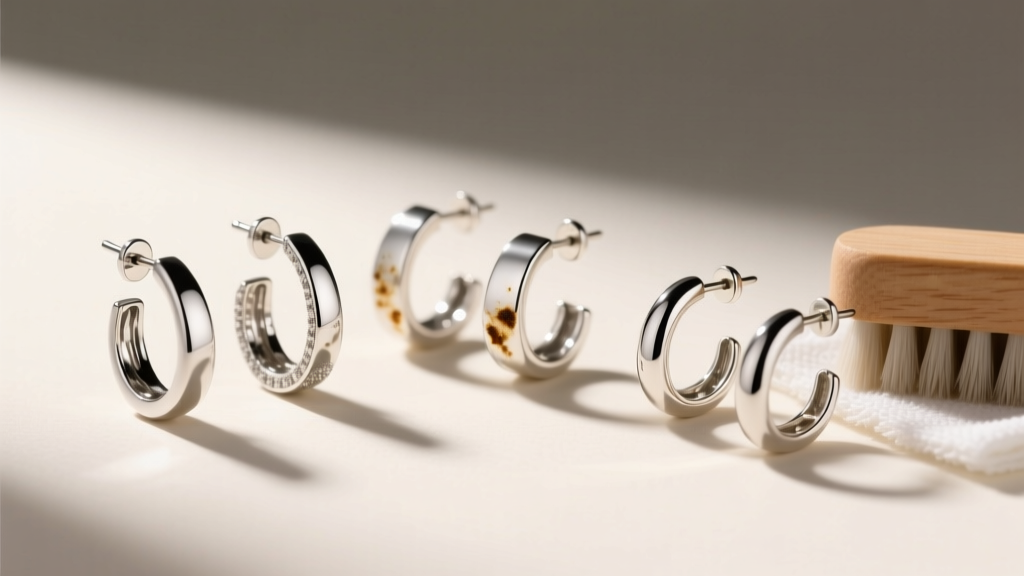
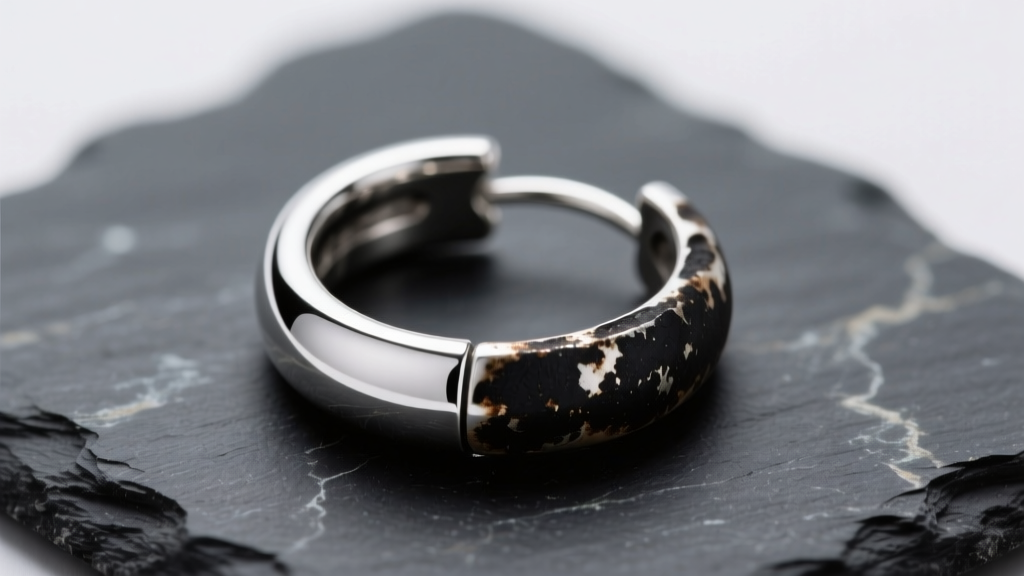
Silver earrings remain a staple in fine jewelry, favored for their brilliant luster and versatility. However, learning how to clean silver earrings properly requires more than just a quick wipe with a cloth. It demands an understanding of metallurgy. The method you use to clean a pair of heavy cast sterling silver huggies will completely destroy a pair of delicate, silver-plated brass ear cuffs. In this comprehensive guide, we break down the chemical properties of different silver grades and provide precise, actionable cleaning protocols to restore your earrings without compromising their structural integrity or surface finish.
The Metallurgy of Tarnish: Why Silver Earrings Oxidize
Contrary to popular belief, silver does not tarnish from reacting with oxygen. According to the Silver Institute, pure silver is highly stable in the presence of oxygen. Tarnish is actually a chemical reaction between silver and sulfur compounds in the environment, primarily hydrogen sulfide ($H_2S$). This reaction forms silver sulfide ($Ag_2S$), a black or dark grey crust that dulls the metal's reflectivity.
Furthermore, the anatomy of an earring creates unique micro-environments for tarnish and grime. The 18-gauge to 22-gauge wires used for ear hooks, as well as the friction backs and threaded posts of stud earrings, trap sebum, dead skin cells, and cosmetic residues. This organic matter holds moisture and sulfur, accelerating localized tarnishing and creating a stubborn, dark sludge that requires targeted surfactant cleaning before any chemical tarnish removal can occur.
Silver Grades & Their Cleaning Vulnerabilities
Before applying any cleaning solution, you must identify the specific grade of your earrings. The alloy composition dictates the metal's hardness, tarnish resistance, and vulnerability to abrasion.
| Silver Grade | Composition | Tarnish Resistance | Cleaning Risk Level |
|---|---|---|---|
| Fine Silver (999) | 99.9% Silver | High | Low (Chemical), High (Physical) |
| Sterling Silver (925) | 92.5% Silver, 7.5% Copper | Moderate | Moderate |
| Argentium Silver | 93.5%+ Silver, Germanium | Very High | Low |
| Silver-Plated | Brass/Copper core, 0.5-2.5µm Silver | Low | Extreme (Abrasive/Chemical) |
Fine Silver (99.9%)
Fine silver is exceptionally soft, making it rare for structural earring components like ear wires or posts, which require the tensile strength of alloys. However, it is sometimes used for bezel settings or delicate wire-wrapping. Because it lacks copper, it resists tarnish well. The primary risk when cleaning fine silver is physical deformation. Aggressive rubbing with polishing cloths can easily bend 20-gauge fine silver wire.
Sterling Silver (92.5%)
The industry standard for silver earrings. The 7.5% copper alloy provides necessary durability for snap-closures on huggies and tension on butterfly backs. However, copper is highly reactive. In the presence of moisture and sulfur, the copper in sterling silver can undergo galvanic corrosion, leading to rapid, deep tarnishing that requires electrochemical reduction to remove safely.
Argentium Silver (93.5% - 96%)
A modern metallurgical marvel, Argentium replaces some of the copper with germanium. As noted by the Gemological Institute of America (GIA), germanium migrates to the surface and forms a transparent, protective layer of germanium dioxide. This makes Argentium highly resistant to tarnish. Cleaning Argentium usually requires nothing more than a mild soap wash; harsh chemical dips are unnecessary and can disrupt the germanium layer.
Silver-Plated Brass or Copper
Plated earrings feature a base metal core coated with a microscopic layer of silver, typically ranging from 0.5 microns (flash plating) to 2.5 microns (heavy plating). Never use abrasive polishes or electrochemical dips on plated earrings. These methods will strip the silver layer entirely, exposing the base metal beneath and permanently ruining the piece.
Step-by-Step: How to Clean Silver Earrings Safely
Based on the metallurgical properties outlined above, select the appropriate cleaning protocol for your specific earrings.
Method 1: The Electrochemical Reduction Bath (For Sterling Silver)
This method reverses the chemical reaction of tarnish, converting silver sulfide back into pure silver without removing any metal mass. It is ideal for heavily tarnished sterling silver hoops, dangles, and chains.
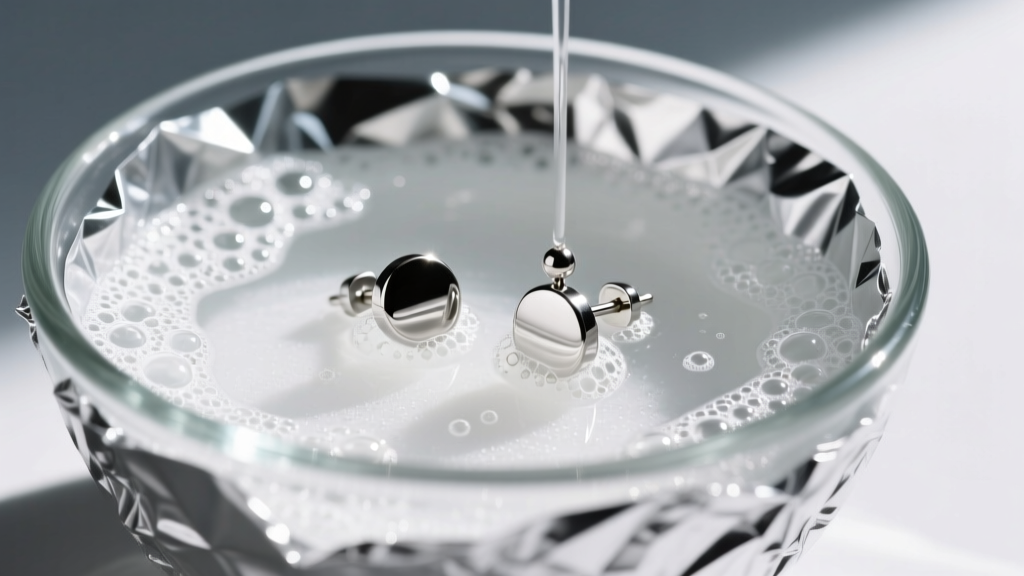
- Line a glass or ceramic bowl with aluminum foil, shiny side up.
- Place your sterling silver earrings on the foil, ensuring they make direct physical contact with the aluminum.
- Sprinkle 1 tablespoon of baking soda (sodium bicarbonate) and a pinch of non-iodized salt over the jewelry.
- Pour boiling water into the bowl. You will immediately smell a sulfur (rotten egg) odor as the aluminum sacrifices itself to pull the sulfur away from the silver.
- Let the earrings soak for 3 to 5 minutes. Remove with plastic or wooden tongs (metal tongs can disrupt the ionic exchange).
- Rinse thoroughly in distilled water and pat dry with a microfiber cloth.
Warning: Do not use this method on earrings with porous gemstones (like turquoise, opal, or pearls) or glued-in settings, as the boiling water and alkaline solution will destroy the adhesive and fracture the stones.
Method 2: Mild Surfactant Wash (For Plated, Argentium, and Gemstone Earrings)
For silver-plated ear cuffs, Argentium studs, or any earrings featuring delicate gemstone settings, a gentle pH-neutral wash is the only safe option.
- Mix a few drops of phosphate-free, pH-neutral dish soap into a bowl of lukewarm (not hot) distilled water.
- Submerge the earrings for 5 minutes to loosen sebum and cosmetic buildup.
- Use an extra-soft, baby-hair toothbrush to gently agitate the crevices around the earring posts and friction backs.
- Rinse under a gentle stream of distilled water and immediately dry with a lint-free cloth to prevent water spots.
Method 3: Targeted Post & Back Deep Cleaning
The posts and butterfly backs of stud earrings accumulate a specific type of grime: a mixture of oxidized skin oils, soap scum, and localized tarnish. To clean these without damaging the earring face, dip a cotton swab in 90% isopropyl alcohol and carefully swab the 20-gauge post and the interior of the friction back. The alcohol dissolves the lipids (fats) in the sebum, allowing you to wipe away the dark buildup safely.
What to Avoid: Chemical Reactions That Ruin Earrings
When researching how to clean silver earrings, you will encounter several destructive "hacks" that metallurgists strongly advise against:
- Chlorine and Bleach: Never expose silver to chlorine (including swimming pools and household bleach). Chlorine reacts with silver to form silver chloride ($AgCl$). Unlike silver sulfide, silver chloride is photosensitive, turns a permanent grey-purple, and penetrates deeply into the metal's crystalline structure. It cannot be reversed with an aluminum foil bath.
- Toothpaste: Toothpaste contains abrasive silica particles designed to scrub enamel. Silver is a 2.5 on the Mohs hardness scale; toothpaste will leave thousands of microscopic scratches, permanently dulling the mirror finish of your earrings.
- Commercial Silver Dips (Thiourea-based): While fast, liquid dips strip away a microscopic layer of silver and leave behind a porous surface that actually accelerates future tarnishing. They also emit toxic sulfur dioxide gas.
Preventative Storage: Halting Oxidation Before It Starts
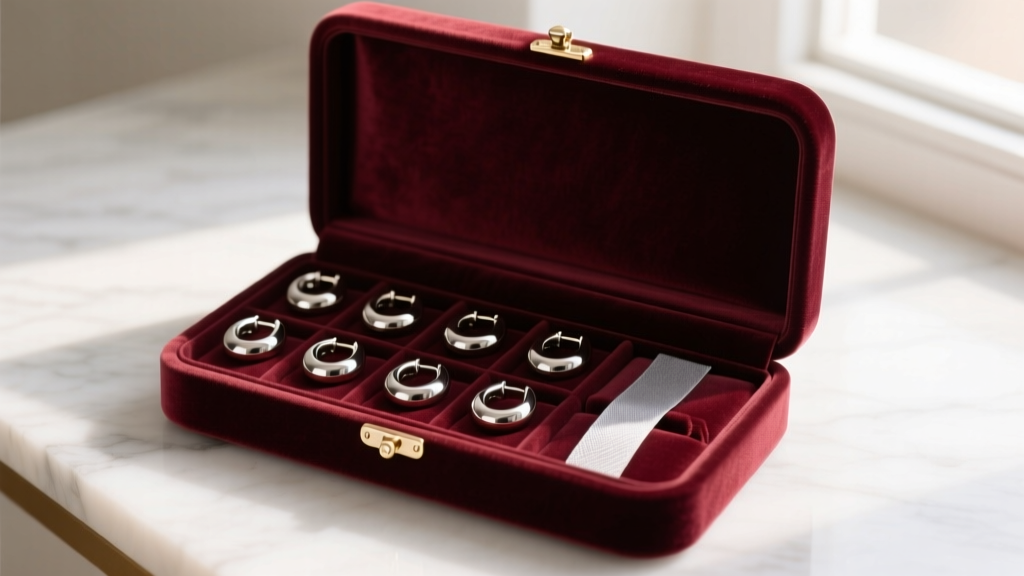
The most effective way to manage silver tarnish is to prevent the chemical reaction from occurring in the first place. Store your silver earrings in an airtight, low-humidity environment.
Invest in high-quality anti-tarnish strips, such as those manufactured by 3M. These strips utilize activated carbon and copper particles to aggressively absorb hydrogen sulfide and other corrosive gases from the air inside your jewelry box. Place one strip inside a ziplock bag or a sealed velvet-lined box with your earrings. Additionally, include a small packet of silica gel to control ambient moisture, as humidity acts as a catalyst for the sulfur-silver reaction. By combining proper metallurgical knowledge with targeted cleaning and storage protocols, your silver earrings will maintain their brilliant luster for decades.


