Ultimate Care Guide for Panacea Earrings & Sensitive Metals
Learn how to properly clean, store, and maintain your Panacea earrings. Expert tips for preserving implant-grade titanium and solid gold finishes.

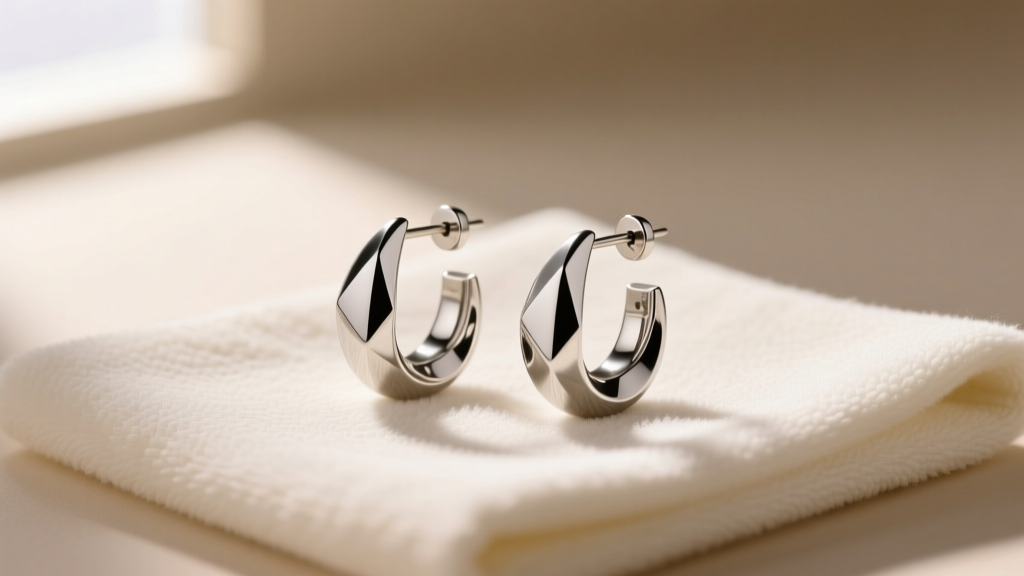
The Metallurgy of Comfort: Why Panacea Earrings Require Specific Care
Panacea earrings have built a sterling reputation in the fine jewelry and body modification communities as the ultimate "cure-all" for sensitive ears and reactive skin. This reputation is largely anchored in their strict adherence to high-purity, biocompatible materials—most notably ASTM F136 implant-grade titanium, 99.9% pure niobium, and nickel-free 18k gold alloys. However, the very properties that make these metals hypoallergenic also dictate a highly specific care regimen. As of 2026, with more consumers investing in premium, body-safe jewelry, understanding the metallurgical science behind your pieces is no longer optional; it is essential for longevity.
Unlike standard sterling silver or brass-based fashion jewelry, implant-grade titanium relies on a microscopic, invisible passivation layer (a chromium and titanium oxide film) to prevent corrosion and allergic reactions. Harsh chemicals, abrasive polishing cloths, and improper storage can compromise this layer or introduce micro-scratches that harbor bacteria, leading to the very irritation you bought Panacea earrings to avoid. According to the Association of Professional Piercers (APP), maintaining the mirror polish of biocompatible metals is critical, as a rough surface can cause microscopic trauma to the fistula (piercing channel) during insertion and removal.
Daily Maintenance vs. Deep Cleaning: A Structural Framework
To maintain the structural integrity and aesthetic brilliance of your Panacea earrings, you must separate your care routine into daily maintenance and periodic deep cleaning. Mixing these up—or neglecting one for the other—leads to sebum buildup, dulled finishes, and degraded gemstone settings.
The Daily Wipe-Down Protocol
Human skin naturally sheds cells and produces sebum (oil). When worn daily, Panacea studs and huggies accumulate a microscopic layer of this organic matter, which can oxidize and dull the metal's shine.
- Action: At the end of the day, gently wipe the earrings with a clean, dry, lint-free microfiber cloth.
- Target Areas: Focus on the post, the backing mechanism (especially if using threaded or push-pin ends), and the underside of the setting where skin contact is highest.
- Avoid: Do not use tissue paper or cotton balls, as these shed microscopic fibers that can snag on prong settings or threading.
The Monthly Deep-Clean Bath
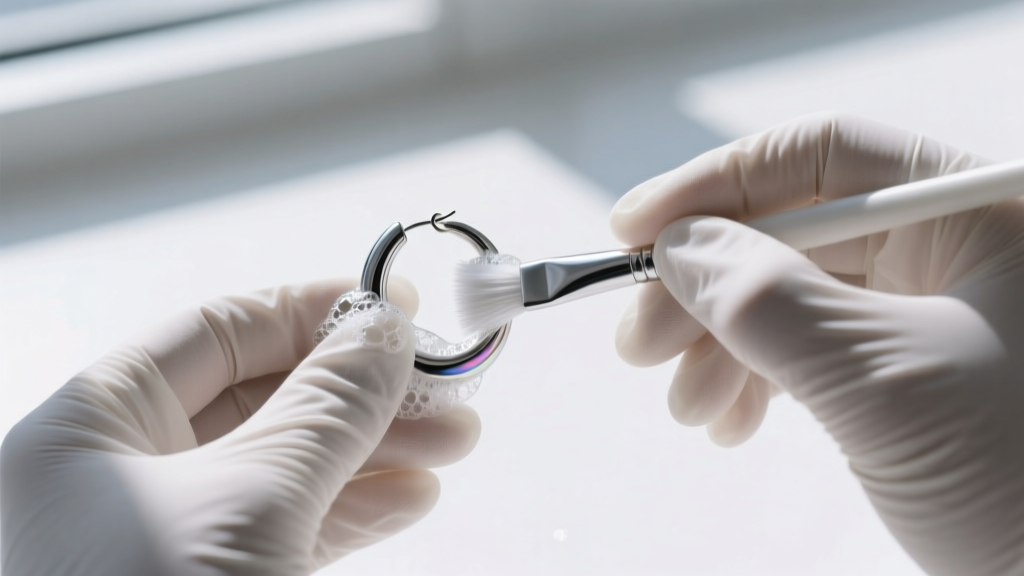
Once a month, or whenever the jewelry is rotated out of your piercing, a deep clean is required to dissolve hardened sebum and environmental pollutants.
- Prepare the Solution: Fill a small glass bowl with warm (not hot) distilled water. Add two drops of a pH-neutral, fragrance-free dish soap. Avoid tap water, as the trace minerals and chlorine can leave hard water spots on high-polish titanium.
- Soak: Submerge the Panacea earrings for 5 to 10 minutes. This softens any hardened organic debris without attacking the metal's passivation layer.
- Agitate Gently: Using an extra-soft baby toothbrush (never a standard adult toothbrush, which can cause micro-scratching), gently brush the jewelry. Pay special attention to the junction where the post meets the decorative end, and the inside curve of any huggies or hoops.
- Rinse and Dry: Rinse thoroughly under a gentle stream of distilled water. Pat dry with a fresh microfiber cloth, or use a hair dryer on the "cool" setting to blow water out of intricate crevices and threading.
Special Considerations: Anodized Niobium and Gemstone Inlays
Many Panacea earring designs feature vibrant, anodized niobium or delicate gemstone inlays. Anodization is an electrolytic process that alters the thickness of the metal's oxide layer, refracting light to create color without the use of dyes or plating. While highly biocompatible, this colored layer is incredibly delicate.
According to gemological care standards outlined by the Gemological Institute of America (GIA), organic gems (like pearls or opals) and fracture-filled stones require vastly different care than hard stones like sapphires or diamonds. If your Panacea earrings feature opals or moonstones, never submerge them. Instead, use a slightly damp microfiber cloth to wipe the metal around the stone, avoiding direct moisture contact which can degrade the adhesive or cause the porous stone to crack.
The Ultrasonic Cleaner Warning
While ultrasonic cleaners are popular in 2026 for home jewelry maintenance, they are strictly prohibited for anodized niobium, plated jewelry, and any Panacea earrings featuring tension settings or soft gemstones. The high-frequency acoustic cavitation bubbles can strip the anodized color layer right off the niobium, leaving you with a dull, grey base metal, and can easily dislodge micro-pave diamonds.
Chemical Compatibility: What to Keep Away from Your Earrings
The environment your earrings are exposed to dictates their lifespan. Below is a definitive guide to chemical interactions with the metals commonly used in Panacea earrings.
| Chemical / Substance | Effect on Titanium / Niobium | Effect on 18k Gold Alloys | Verdict |
|---|---|---|---|
| Chlorine (Pools/Spas) | Minimal effect on passivation layer | Can cause stress corrosion cracking and weaken prongs | AVOID |
| Rubbing Alcohol (70%+) | Safe for metal, but dries out O-rings | Safe for metal, degrades soft gem treatments | USE SPARINGLY |
| Bleach / Ammonia | Can pit and permanently dull the surface | Will strip alloy metals, causing severe tarnish | STRICTLY AVOID |
| Witch Hazel / Toners | Safe, but leaves a sticky residue | Safe, but dulls high-polish finishes | RINSE AFTER |
| Sunscreen / Lotions | Creates a cloudy film over time | Traps dirt against the skin, causing irritation | CLEAN DAILY |
Proper Storage: Preventing Micro-Scratches and Oxidation
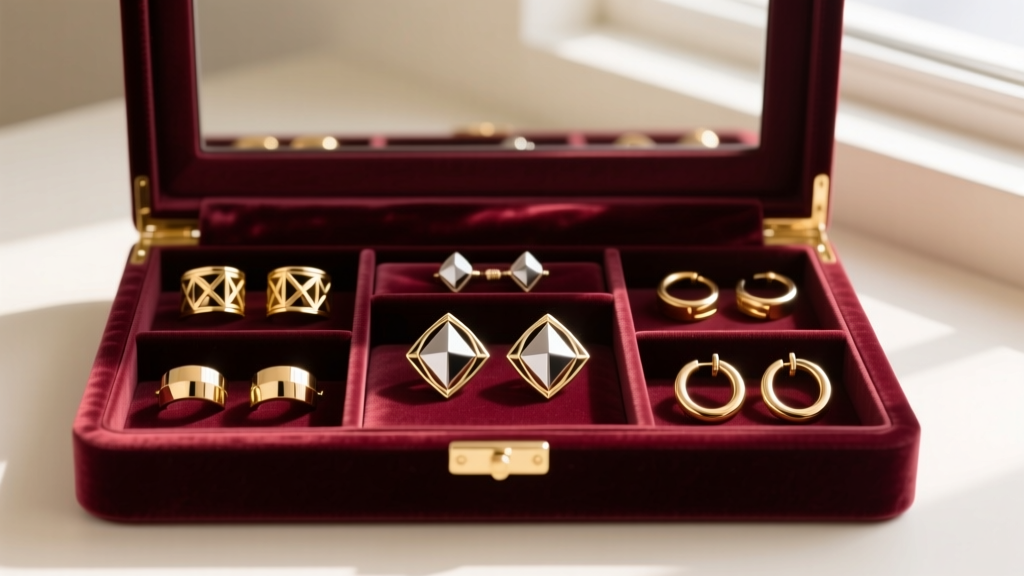
How you store your Panacea earrings when they are not in your ears is just as critical as how you clean them. Titanium, while incredibly strong, can still be scratched by harder materials or even by other titanium pieces rubbing together in a communal jewelry box.
- Individual Compartments: Store each pair in its own velvet-lined slot or individual soft pouch.
- Anti-Tarnish Strips: While pure titanium and niobium do not tarnish, the alloy metals in 18k gold or any silver components in mixed-media Panacea designs can react to sulfur in the air. Place a 3M anti-tarnish strip in your jewelry box, replacing it every six months.
- Thread Protection: If your earrings feature internally threaded or threadless (push-pin) posts, store them fully assembled or with the posts capped. Exposed threads can snag on fabric pouches, bending the delicate pins and ruining the tension fit.
Troubleshooting: When "Hypoallergenic" Earrings Cause Irritation
A common complaint among jewelry wearers is experiencing sudden irritation or itching from pieces that previously felt like a panacea for their sensitive ears. If your Panacea earrings suddenly cause redness or discomfort, do not immediately assume an allergy has developed. Consider the following mechanical and biological failure modes:
1. Sebum and Soap Buildup on the Post
If you are not deep-cleaning the post and the backing mechanism, a microscopic layer of hardened soap scum and dead skin cells will form. This rough layer acts like sandpaper against the delicate tissue of your piercing channel. Solution: Soak the posts in warm distilled water and gently brush with a baby toothbrush until the metal feels perfectly smooth to the touch.
2. Microscopic Scratches Harboring Bacteria
If you have accidentally dropped your earrings on a hard tile floor or cleaned them with an abrasive paste, you may have introduced micro-scratches to the post. These scratches harbor bacteria that normal washing cannot reach, leading to localized contact dermatitis or minor infections. Solution: Inspect the post under a jeweler's loupe or macro lens. If deep scratches are present, the piece must be sent back to the manufacturer for professional repolishing, or the post must be replaced.
3. Residual Polishing Compounds
Brand new Panacea earrings straight from the manufacturer may occasionally retain trace amounts of polishing rouge (jeweler's compound) in the crevices of the design. This black or brown residue is highly irritating to fresh or sensitive piercings. Solution: Always perform an initial deep-clean soak with mild dish soap before wearing any new jewelry for the first time to ensure all manufacturing residues are completely removed.
By treating your Panacea earrings not just as accessories, but as precision-engineered, biocompatible instruments, you ensure they will remain a comfortable, brilliant staple in your collection for decades to come.


