How to Style Renaissance Earrings for Modern Elegance
Master the art of wearing Renaissance earrings. Learn step-by-step how to style, balance, and source historical girandole and pendeloque drops.

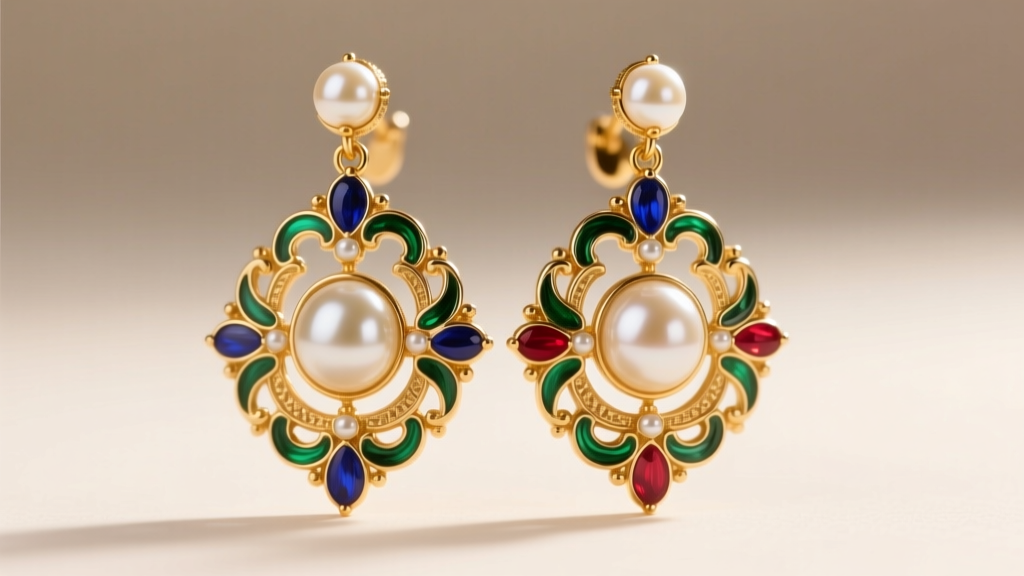
The Anatomy of Renaissance Earrings
To master styling these pieces, you must first understand their architecture. Renaissance earrings are not simple studs; they are complex, multi-tiered feats of metalsmithing that originated in the 15th and 16th centuries. According to the Victoria and Albert Museum, jewelry from this era was heavily symbolic, utilizing intricate goldwork, vibrant enamel, and large gemstones to display wealth and status.
When shopping for or styling renaissance earrings today, you will primarily encounter two historical silhouettes:
- The Girandole: The quintessential chandelier earring. It features a central motif (often a bow, rosette, or cameo) from which three pear-shaped drops are suspended. The central drop usually hangs slightly lower than the two flanking it.
- The Pendeloque: A more streamlined silhouette featuring a single, elongated drop suspended from a decorative surmount. These are slightly lighter and offer a more vertical line that elongates the neck.
Understanding these shapes is critical because their visual weight dictates everything from your neckline choice to your hair placement.
Step-by-Step Guide to Styling Renaissance Drops
Integrating heavy historical designs into a 2026 wardrobe requires a deliberate approach to balance. You want the renaissance earrings to be the focal point without overwhelming your modern aesthetic.
Step 1: Match the Neckline Architecture
Renaissance earrings demand negative space. Avoid high collars, turtlenecks, or busy ruffled blouses, which will tangle with the delicate wirework and pearls. Instead, opt for:
- Sweetheart or Off-the-Shoulder: Exposes the collarbone and allows girandole drops to frame the face perfectly.
- Deep V-Neck: Complements the verticality of pendeloque earrings, drawing the eye downward.
- Asymmetric One-Shoulder: Creates a modern, editorial contrast with the symmetrical, historical nature of the jewelry.
Step 2: Strategic Hair Placement
The intricate basse-taille enamel and repoussé goldwork of authentic renaissance earrings are meant to be seen. Sweeping your hair into a structured updo—such as a low chignon or a sleek French twist—ensures the earrings do not get caught in your hair while maximizing their visual impact. If you prefer wearing your hair down, tuck one side securely behind your ear and use a hidden bobby pin to keep the hair anchored away from the earring's clasp.
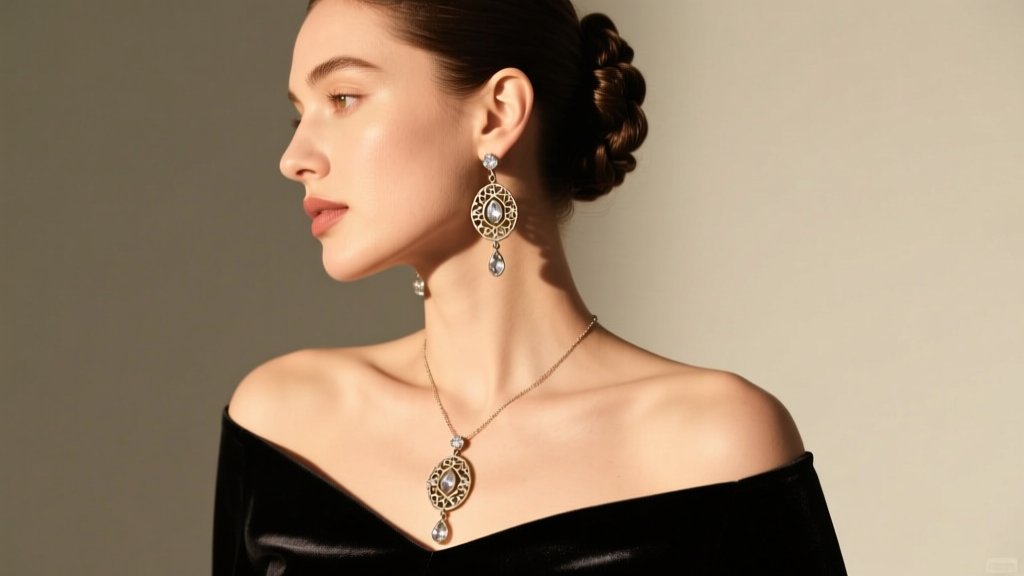
Step 3: Balance the Rest of Your Jewelry
Because renaissance earrings are inherently maximalist, your remaining jewelry should be minimalist. Skip the necklace entirely. If you must wear a bracelet or ring, choose simple, unadorned gold bands that match the karat purity of the earrings, avoiding competing gemstones or modern pavé settings.
Managing Weight and Lobe Health
Here is where most style guides fail. Authentic or high-quality reproduction renaissance earrings are heavy. A true 18k gold girandole featuring natural baroque pearls and enamel can easily weigh between 15 and 25 grams per earring. For context, a standard earlobe can comfortably support about 10 grams before experiencing fatigue, stretching, or micro-tears.
Follow this step-by-step protocol to protect your piercings while wearing heavy drops:
- Upgrade the Wire Gauge: Many antique reproductions use flimsy 22-gauge French wires to save on gold weight. Take your earrings to a bench jeweler and have them swap the wires for sturdy 20-gauge or 18-gauge hooks. This prevents the wire from bending and slicing through your earlobe.
- Use Earlobe Support Patches: Products like OuchPouch or generic clear silicone earring support patches are non-negotiable for heavy renaissance earrings. Apply the adhesive patch to the back of your earlobe before inserting the earring. The patch distributes the 20g weight across a 1-inch surface area, completely eliminating the pulling sensation.
- Employ Silicone Stoppers: Never use standard metal butterfly backs on heavy drops; they will slip off and fail to support the weight. Use wide, flat silicone stoppers to provide a secure, cushioned backing.
Weight Distribution Comparison Chart
| Earring Style | Average Weight (Per Pair) | Recommended Wire Gauge | Support Method Required |
|---|---|---|---|
| Pendeloque (Hollow Gold) | 8 - 12 grams | 20-gauge | Wide Silicone Stopper |
| Pendeloque (Solid/Enamel) | 14 - 18 grams | 18-gauge | Adhesive Lobe Patch |
| Girandole (Glass/Crystal) | 10 - 15 grams | 20-gauge | Wide Silicone Stopper |
| Girandole (18k Gold/Pearl) | 25 - 40 grams | 18-gauge or 16-gauge | Adhesive Lobe Patch + Stopper |
Sourcing Authentic vs. Reproduction Pieces
When building your collection, you must decide between antique originals, high-end reproductions, and costume interpretations. The pricing and material grades vary wildly.
According to the Gemological Institute of America (GIA), natural pearls were the standard during the Renaissance, prized for their unique baroque shapes and deep orient. Today, high-end reproductions will use high-grade cultured baroque pearls, while costume versions rely on glass or resin. When evaluating a piece, check the pearl's luster and surface imperfections; true baroque pearls have irregular, organic ridges, whereas molded glass is overly uniform.
Pricing and Material Tiers
- Museum-Grade Antiques (16th-18th Century): Priced between $15,000 and $80,000+. These feature 22k or 18k gold, émail en ronde bosse, and natural pearls. Sourced via auction houses like Sotheby's or specialized antique dealers. Require extreme care and insurance.
- Fine Artisan Reproductions: Priced between $2,500 and $8,000. Crafted in 18k gold with hand-painted guilloché enamel and premium cultured baroque pearls. Brands like Hemmerle or specialized historical jewelers offer these. They provide the historical look with modern structural integrity.
- Theatrical & Costume Pieces: Priced between $150 and $600. Made from gold-plated brass, cubic zirconia, and faux pearls. Ideal for occasional wear, cosplay, or editorial shoots where weight is a primary concern, though they lack the heirloom value of fine metals.
Pro-Tip for 2026 Buyers: If you are investing in fine reproductions, request a Metropolitan Museum of Art catalog reference from the jeweler to verify the historical accuracy of the filigree and enamel techniques used in your renaissance earrings.
Final Checklist for Your Renaissance Look
Before stepping out, run through this quick diagnostic checklist to ensure your historical jewelry remains secure and stunning:
- [ ] Wire Check: Ensure the French hook is at least 20-gauge and free of micro-fractures.
- [ ] Patch Application: Verify the silicone lobe patch is applied flush against the skin, with no peeling edges.
- [ ] Catch Test: Gently tug your clothing near the collarbone to ensure no lace or embroidery can snag the lower drops.
- [ ] Hair Clearance: Confirm your updo or tucked hair is fully secured and will not swing into the earring clasp.
- [ ] Pearl Care: Ensure no hairspray, perfume, or makeup has settled onto the pearls or porous enamel, as these materials degrade rapidly when exposed to modern cosmetics.
By respecting the historical architecture of renaissance earrings and employing modern structural supports, you can seamlessly bridge the gap between 16th-century opulence and contemporary high fashion. Wear them with confidence, knowing your earlobes are protected and your styling is historically informed.


