Care and Cleaning Guide for the Standard Earring Gauge
Learn how to properly clean, sanitize, and maintain jewelry in a standard earring gauge to prevent irritation, buildup, and metal degradation.

Understanding the Standard Earring Gauge and Hygiene
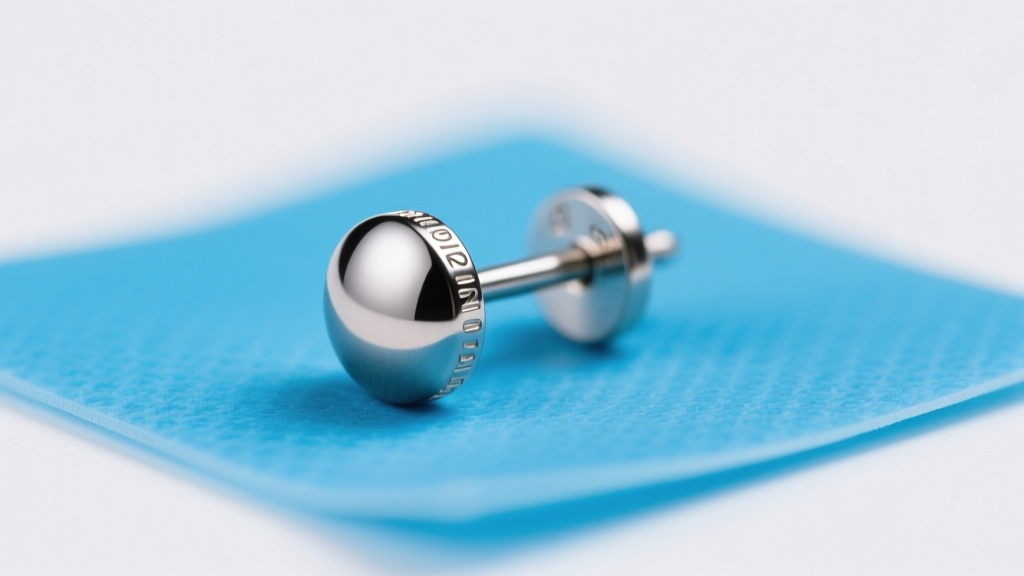
When discussing ear piercing aftercare and jewelry maintenance, the conversation often revolves around metal quality and gemstone care. However, the physical dimensions of the jewelry—specifically the post thickness—play a critical role in how sebum, dead skin cells, and cosmetic residues accumulate. The standard earring gauge for most healed lobe piercings is 20G (0.81mm) or 18G (1.02mm), while standard cartilage piercings typically rest at 16G (1.29mm). Understanding how these specific millimeter measurements interact with your fistula (the healed tube of skin lining the piercing channel) is the first step toward establishing a flawless hygiene routine.
Thinner posts, such as the ubiquitous 20G wire used in many commercial fashion earrings, present unique cleaning challenges. Because the surface area is narrow, any accumulation of hardened sebum or hair product residue creates a disproportionate amount of friction when the earring is inserted or removed. Over time, this friction can cause micro-abrasions inside the piercing channel, leading to localized inflammation and an increased risk of bacterial introduction. Proper maintenance of a standard earring gauge requires a targeted approach that addresses both the jewelry's surface and the biological environment of the piercing itself.
The Biology of Piercing Buildup: Why Gauge Size Matters
The infamous "earring cheese" odor is not a myth; it is a biological reality caused by the breakdown of sebum and dead keratinocytes by naturally occurring skin bacteria. This mixture produces volatile fatty acids, notably butyric acid and isovaleric acid, which emit a distinctly pungent smell. The gauge of your earring dictates how this material traps and accumulates.
The Cheese Cutter Effect and Micro-Tears
If you wear a heavy dangle or a dense glass gemstone on a thin 20G standard earring gauge, gravity and momentum work against your anatomy. The thin wire acts much like a cheese cutter, applying concentrated downward pressure on the bottom of the fistula. This continuous stress causes micro-tears in the delicate epithelial lining. When you apply makeup, hairspray, or lotions, these microscopic wounds trap chemical irritants and cosmetic polymers. Cleaning a 20G or 18G post requires not just wiping the metal, but actively flushing the fistula to remove trapped debris that the thin gauge may have pushed deep into the channel during insertion.
Step-by-Step Cleaning Protocol for 20G and 18G Posts
Maintaining jewelry in a standard earring gauge requires a multi-tiered approach. According to guidelines established by the Association of Professional Piercers (APP), harsh chemicals should be avoided on both the skin and the jewelry, as they can degrade certain metal alloys and strip the skin's natural acid mantle.
Daily Maintenance: The Saline Flush
- Preparation: Use a sterile, isotonic saline solution (0.9% sodium chloride) with no additives or preservatives.
- Application: Spray the saline directly onto the front and back of the earlobe, allowing it to flow through the standard earring gauge channel.
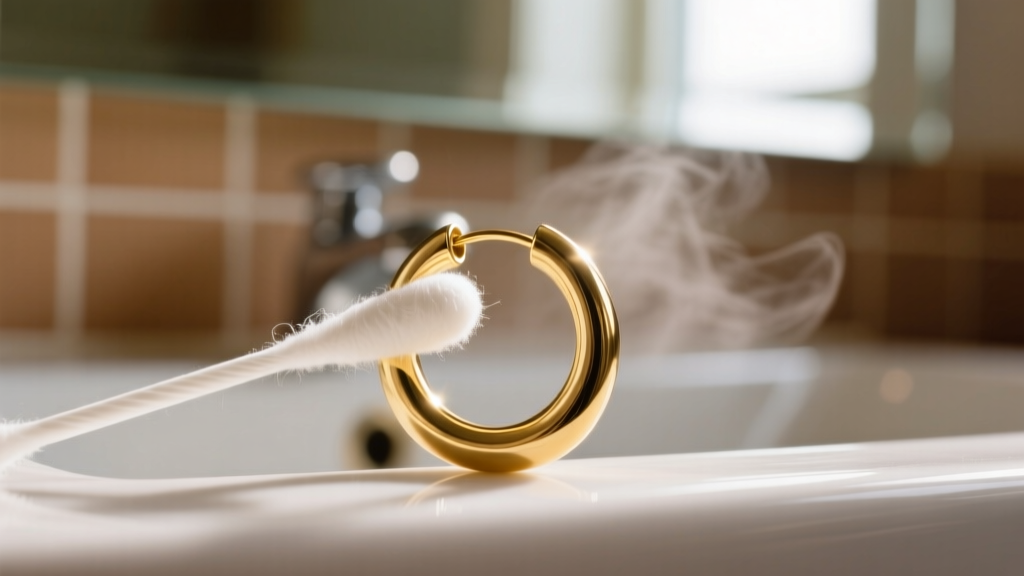
- Drying: Gently pat the area dry with a non-woven gauze pad. Avoid cotton balls or swabs, as their microscopic fibers can wrap around thin 20G posts and become lodged in the piercing.
Weekly Deep Clean: Emulsifying Sebum
Once a week, remove the earrings to clean both the jewelry and the ear. Fill a small glass bowl with warm water and a few drops of mild, fragrance-free liquid antibacterial soap. Submerge your 18G or 20G earrings for five minutes. The warm water softens hardened sebum, while the surfactants in the soap emulsify the oils. Use a dedicated, extra-soft baby toothbrush to gently brush the post and the backing mechanism, paying special attention to the grooves of friction backs or the threads of screw-backs where debris hides.
Chemical Compatibility: Matching Cleaners to Metals
Not all metals react identically to cleaning agents. While a standard earring gauge dictates the physical size of the post, the metallurgical composition dictates its chemical resilience. Using the wrong solvent can cause pitting, discoloration, or the release of allergenic nickel ions.
| Metal Type | Grade / Standard | Safe Cleaning Agents | Agents to Avoid |
|---|---|---|---|
| Titanium | ASTM F-136 Implant-Grade | Isopropyl Alcohol (70%), Mild Soap, Saline | Hydrogen Peroxide, Bleach |
| Surgical Steel | 316L Low-Carbon | Mild Soap, Warm Water, Saline | Isopropyl Alcohol, Chlorine |
| Yellow/White Gold | 14k or 18k Nickel-Free | Mild Dish Soap, Commercial Gold Polishing Cloths | Ammonia, Toothpaste, Abrasives |
| PVD Coated | Titanium Base with TiN Coating | Warm Water, Mild Soap, Microfiber Cloth | Ultrasonic Cleaners, Alcohol, Polishing Cloths |
Expert Insight: Many commercial brands use the term "surgical steel" loosely. For long-term wear in a standard earring gauge, always verify that the metal is ASTM F-136 compliant titanium or 316L steel. Lower-grade steels can suffer from intergranular corrosion when exposed to the chlorides in sweat and tap water, leading to a rough post surface that harbors bacteria.
Ultrasonic Cleaners: Safe for Standard Gauges?
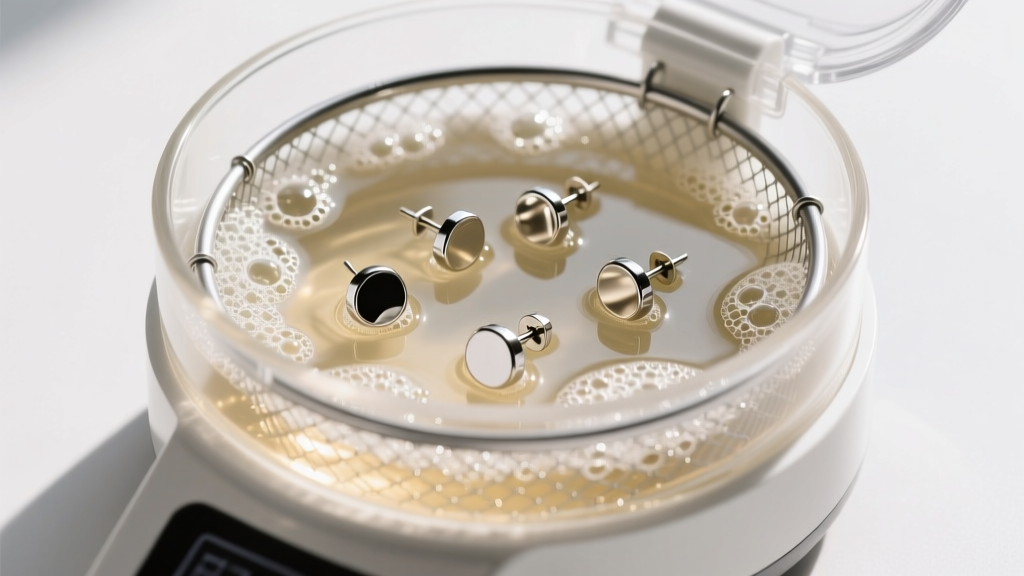
Ultrasonic jewelry cleaners use high-frequency sound waves (typically 40 to 45 kHz) to create microscopic cavitation bubbles in a liquid solution. When these bubbles collapse against the surface of the jewelry, they generate intense localized pressure that blasts away dirt, oils, and dead skin from hard-to-reach crevices. For standard earring gauge posts, ultrasonic cleaners are incredibly effective at removing the microscopic ring of sebum that forms exactly where the post meets the earring head.
When to Avoid Ultrasonic Baths
While the metal post of a standard earring gauge will easily survive an ultrasonic bath, the gemstones or decorative elements attached to it might not. Never place earrings featuring opals, emeralds, turquoise, pearls, or moonstones into an ultrasonic cleaner. The cavitation process can fracture stones with high porosity or internal inclusions. Furthermore, if your standard gauge earrings feature glued-in settings rather than prong-set stones, the vibrations can weaken the jeweler's epoxy, causing the gem to dislodge.
Preventing Contact Dermatitis and Metal Fatigue
Maintaining the structural integrity of your jewelry is just as important as keeping it clean. Contact dermatitis is a prevalent issue among earring wearers, often triggered by nickel exposure. The American Academy of Dermatology (AAD) notes that nickel allergy is one of the most common causes of allergic contact dermatitis worldwide. Even if a standard earring gauge post is labeled "hypoallergenic," the friction of daily insertion and removal can wear away microscopic rhodium platings or gold flashings, exposing the base alloy underneath.
To prevent metal fatigue and allergic reactions, inspect the posts of your 20G and 18G earrings monthly under a magnifying lamp. Look for micro-scratches, dull spots, or bending. A bent 20G post will never insert cleanly again; attempting to force it through the fistula will scrape the channel walls. If a thin-gauge post becomes warped, it is time to retire the piece or have a professional jeweler replace the post with a fresh, straight wire of implant-grade titanium.
Long-Term Storage and Maintenance
How you store your earrings between cleanings directly impacts their longevity. Tossing standard gauge earrings into a communal jewelry box allows the thin posts to scratch against harder gemstones and exposes them to ambient humidity, which accelerates tarnishing in silver and lower-karat gold alloys.
Store your cleaned and thoroughly dried earrings in individual, airtight polyethylene ziplock bags or a lined jewelry box equipped with anti-tarnish strips (such as 3M Silver Protector strips). For 18G and 20G wire earrings, consider using a dedicated earring card or a slotted silicone organizer that keeps the posts suspended and prevents them from bending under the weight of heavier decorative tops. By combining meticulous biological hygiene with rigorous metallurgical care, your standard gauge jewelry will remain pristine, safe, and comfortable for decades of continuous wear.