How to Clean and Style Ruby Pearl Earrings: Expert Guide
Learn how to safely clean, restore, and style ruby pearl earrings. Expert steps for protecting delicate nacre and brilliant corundum gems.

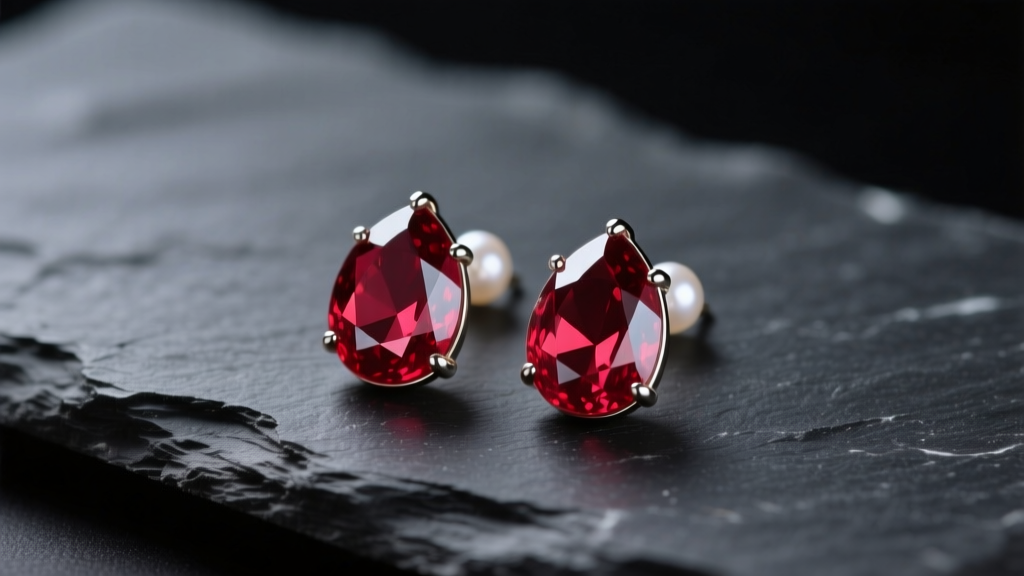
Combining the fiery brilliance of corundum with the organic luster of nacre creates a masterpiece of contrast. Ruby pearl earrings are a staple in fine jewelry collections, offering a vintage yet timeless aesthetic. However, maintaining these pieces requires a deep understanding of gemology. Because rubies and pearls sit on opposite ends of the Mohs hardness scale and react entirely differently to chemicals, a one-size-fits-all cleaning approach will inevitably lead to irreversible damage.
In this comprehensive guide, we break down the exact step-by-step protocols for cleaning, styling, and troubleshooting your ruby pearl earrings, ensuring they remain pristine for generations.
The Material Paradox: Corundum vs. Organic Nacre
To properly care for your earrings, you must first understand the materials. Rubies are a variety of corundum, scoring a 9 on the Mohs hardness scale. They are incredibly durable, resistant to scratching, and can generally withstand heat and mild acids. Pearls, conversely, are organic gemstones composed of calcium carbonate and conchiolin. They score a mere 2.5 to 4.5 on the Mohs scale, making them highly susceptible to scratching, dehydration, and chemical dissolution.
According to the Gemological Institute of America (GIA), the porous nature of pearls means they can easily absorb chemicals from everyday cosmetics, which dulls their orient and overtone. When these two stones are set in a single earring, the cleaning method must default to the most delicate stone—the pearl.
Step-by-Step Guide to Safely Cleaning Ruby Pearl Earrings
Never use ultrasonic cleaners, steamers, or commercial silver dips on these earrings. The high-frequency vibrations of an ultrasonic cleaner can shatter the internal structure of a pearl, while heat can melt the jeweler's epoxy used to secure the pearl to its post.
Step 1: Inspect the Settings and Prongs
Before applying any moisture, examine the earring under a jeweler's loupe or a bright LED light. Pearls in earrings are typically half-drilled and mounted on a metal peg using a two-part jeweler's epoxy (such as G-S Hypo Cement). If you notice the pearl spinning freely or wobbling, stop immediately. Introducing water into a compromised drill hole will degrade the epoxy further and cause internal rot. Take the piece to a professional jeweler for a re-peg.
Step 2: Prepare a Pearl-Safe Cleaning Solution
Mix a solution of lukewarm distilled water and two drops of pH-neutral, unscented liquid castile soap. Avoid tap water, as the chlorine and trace minerals can leave microscopic deposits on the pearl's surface. Do not use dish soaps containing degreasers or citrus extracts, as the citric acid will etch the pearl's nacre.
Step 3: The Microfiber Wipe-Down Technique
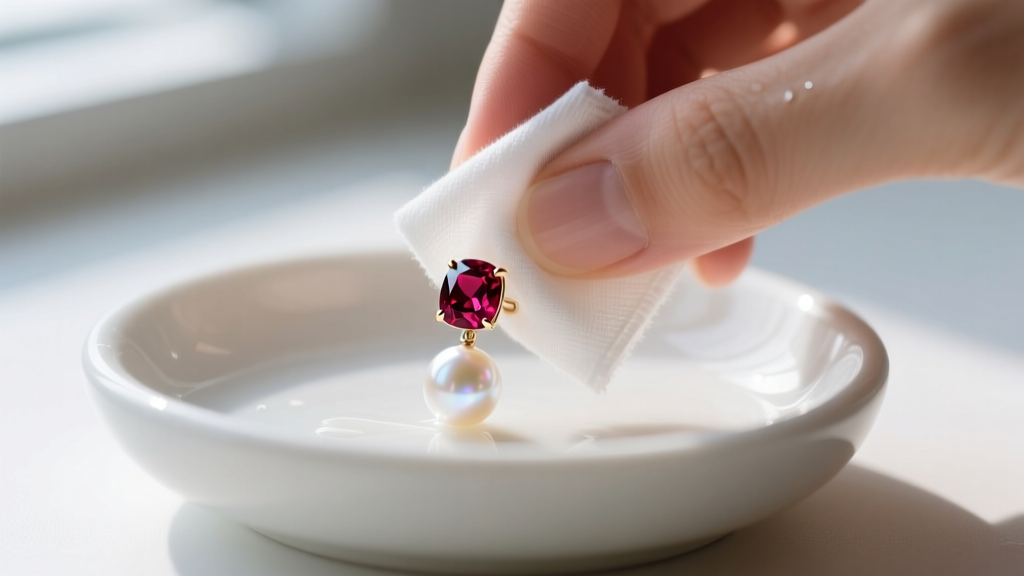
Dip a lint-free microfiber cloth into the solution and wring it out until it is only slightly damp. Gently wipe the surface of the pearl to remove oils and lotion buildup. Next, use a baby toothbrush with ultra-soft bristles dipped in the same solution to gently scrub the pavilion (the back underside) of the ruby. Rubies lose their brilliance when the pavilion is coated in sebum and hairspray; cleaning the back of the stone restores its light return without submerging the pearl.
Step 4: Drying and Polishing
Use a dry, clean microfiber cloth to gently buff the ruby and pat the pearl dry. Allow the earrings to air dry completely on a soft towel for at least two hours before storing them. This ensures no moisture remains trapped in the pearl's drill hole or the earring's butterfly back mechanisms.
Choosing the Right Metal Setting for Longevity
The metal holding your ruby pearl earrings dictates how you care for the overall piece. In 2026, we are seeing a massive shift away from sterling silver for pearl settings due to oxidation risks.
- 18k Yellow Gold: The traditional choice. It provides a warm contrast to the ruby and requires minimal polishing, which protects the adjacent pearl from abrasive friction.
- Platinum: Highly recommended for heavy dangle earrings. Platinum's density provides a secure grip on the ruby prongs and does not tarnish, eliminating the need for chemical dip cleaners that would destroy the pearl.
- Sterling Silver: If your earrings are set in silver, never use silver polishing cloths near the pearl. The mild abrasives in the cloth will scratch the nacre and leave dark, unsightly smudges in the pearl's blemishes.
How to Style Ruby Pearl Earrings for Every Face Shape
Beyond maintenance, styling ruby pearl earrings correctly can dramatically enhance your facial features. The deep crimson of the ruby draws the eye, while the pearl provides a softening reflector of light near the jawline.
| Face Shape | Ideal Earring Style | Why It Works |
|---|---|---|
| Round | Angular Ruby Drops with Pearl Accents | Geometric ruby cuts (like emerald or baguette) elongate the face, while a small pearl at the bottom adds weight without widening the cheeks. |
| Oval | Classic Ruby and Pearl Studs or Medium Hoops | Oval faces are universally balanced. Studs highlight the cheekbones, while hoops framed with alternating rubies and pearls add elegant width. |
| Square | Curved Dangle Earrings with Oval Rubies | Soft, curved lines and oval cabochon rubies soften a strong jawline. Avoid stiff, linear drop earrings that mimic the face's natural angles. |
| Heart | Teardrop Pearls with Ruby Caps | A teardrop pearl adds visual weight to the narrower lower half of the face, balancing a wider forehead and prominent cheekbones. |
Common Care Mistakes That Ruin Nacre and Corundum

Even seasoned jewelry collectors make critical errors when managing multi-gemstone pieces. The GIA's ruby care guidelines note that while rubies are tough, the treatments applied to them (like fracture filling) can be sensitive. Here is what you must avoid:
- Ammonia-Based Cleaners: Ammonia will strip the natural oils from a pearl, causing it to crack and peel over time. It can also dissolve the epoxy securing the pearl post.
- Hairspray and Perfume: Always put your ruby pearl earrings on after applying cosmetics. Alcohol in perfumes will instantly dull a pearl's luster and leave a sticky residue on the ruby's table facet.
- Storing in Plastic Bags: Pearls require moisture from the air to prevent dehydration. Storing them in sealed plastic ziplocks will cause the nacre to craze (develop microscopic surface cracks).
Expert Troubleshooting: Loose Pearls and Cloudy Rubies
If your ruby appears cloudy even after cleaning the pavilion, it may be a fracture-filled ruby. Some lower-grade rubies are treated with lead-glass to improve clarity. This glass filling is highly reactive to even mild acids like lemon juice or vinegar. If you suspect your ruby is fracture-filled, clean it only with a dry, soft brush.
If your pearl has lost its overtone and appears chalky, it may be suffering from severe dehydration. While you cannot reverse structural damage, you can temporarily restore luster by gently rubbing the pearl with a drop of pure, cosmetic-grade sweet almond oil on a soft cloth. Wipe away all excess oil immediately so it does not attract dust or degrade the metal setting. For high-value estate pieces, always consult a certified gemologist appraiser before attempting restorative treatments.
"The beauty of ruby and pearl combinations lies in their contrast, but that same contrast is what makes them challenging to maintain. Treat the pearl as a living organism, and the ruby as a resilient shield, and your earrings will retain their heirloom quality indefinitely." — Senior Gemologist, Jewel Style Radar
By following these meticulous, step-by-step protocols, your ruby pearl earrings will continue to captivate with their rich history and striking visual depth. Proper care is not just about cleanliness; it is about preserving the structural integrity of two of nature's most fascinating gifts.


