Ultimate Guide to Cleaning and Caring for Ball Hoop Earrings
Learn expert techniques for cleaning ball hoop earrings, maintaining captive bead tension, and preventing loss with our comprehensive care guide.

The Anatomy of Ball Hoop Earrings and Why They Need Special Care
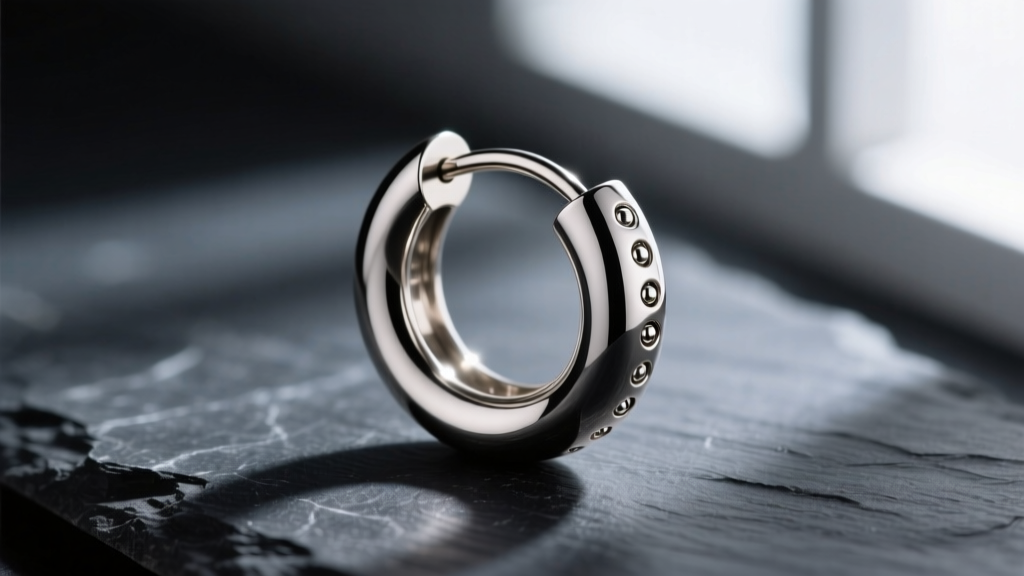
Ball hoop earrings, technically referred to in the professional body modification industry as Captive Bead Rings (CBRs) or Ball Closure Rings (BCRs), are a timeless staple for both earlobe and cartilage piercings. Their continuous, seamless aesthetic is highly sought after, but their mechanical design presents unique maintenance challenges. Unlike hinged clickers or threadless push-pin jewelry, a standard ball hoop relies entirely on the physical tension of the metal ring to hold a small, dimpled bead in place.
This tension-based architecture means that improper cleaning, aggressive handling, or the use of harsh chemicals can compromise the metal's structural integrity. When the ring's circular geometry is distorted, or when the microscopic dimples on the captive bead become clogged with cellular debris and soap residue, the earring loses its grip. The result is the most common frustration among hoop wearers: the dreaded dropped and lost ball. To keep your ball hoop earrings secure and hygienic, you must adopt a care routine that respects both the metallurgy of the jewelry and the biomechanics of the closure system.
Step-by-Step Deep Cleaning Routine
Routine maintenance of ball closure rings requires more than a simple wipe-down. Because the junction where the bead meets the ring ends creates a micro-crevice, it becomes a prime trap for sebum, dead skin cells, and environmental dust. According to guidelines supported by the Association of Professional Piercers (APP), proper hygiene for tension-based jewelry requires targeted mechanical cleaning.
1. The Saline Soak
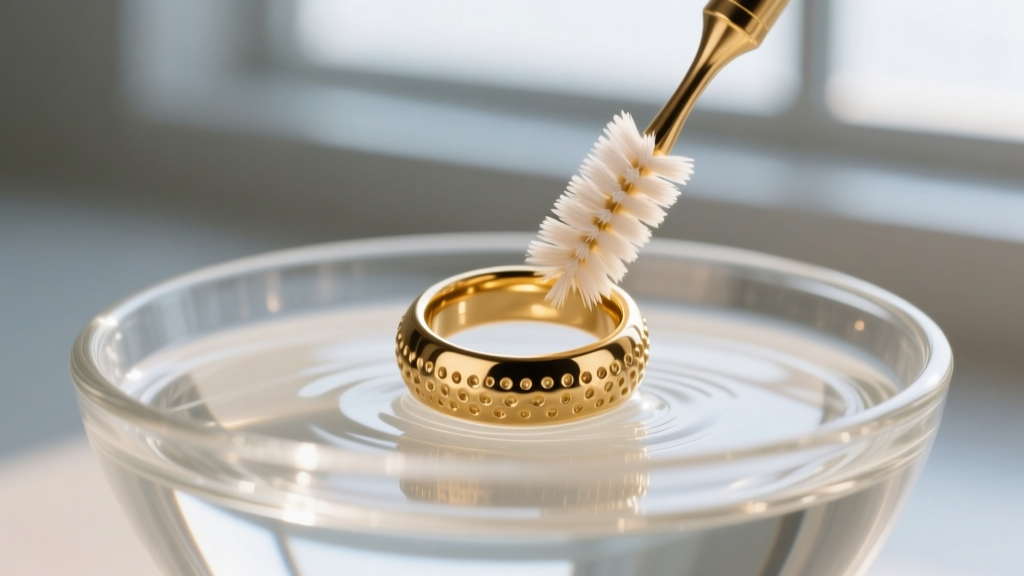
Remove the earring using proper ring-opening pliers (never use your bare fingers, as this introduces lateral stress). Submerge the ring and the bead in a small glass bowl filled with warm, sterile saline solution or a pH-neutral, fragrance-free liquid soap diluted in warm water. Let the jewelry soak for five to ten minutes. This softens any hardened sebum or cosmetic buildup lodged inside the dimples of the bead and along the ring's beveled ends.
2. The Interdental Brush Technique
This is the most critical, yet frequently overlooked, step in ball hoop maintenance. Standard toothbrush bristles are too thick to penetrate the 1mm to 2mm dimples found on most captive beads (which typically range from 3mm to 6mm in diameter). Instead, use a soft-bristled interdental brush—the kind designed for orthodontic braces or dental gaps. Gently scrub the inside of the bead's dimples and the rounded ends of the hoop. Removing debris from these contact points restores the friction necessary for a secure snap-fit.
3. Rinsing and Drying
Rinse the components thoroughly under warm distilled water to prevent hard water spots, especially on high-polish gold or mirror-finish titanium. Dry the jewelry using a lint-free microfiber cloth. Avoid paper towels or cotton swabs, as microscopic fibers can snag on the ring ends or remain trapped in the bead dimples, interfering with the tension seal and potentially introducing irritants back into your piercing channel.
Maintaining Bead Tension and Preventing Metal Fatigue
The longevity of your ball hoop earrings depends entirely on how you open and close them. The most common cause of a loose ball is metal fatigue induced by improper handling. When you pull the ends of the ring apart laterally (like stretching a rubber band), you warp the metal from a perfect circle into an oval. Over time, this destroys the vector of tension required to grip the bead, and the ring will permanently lose its "snap."
The Correct Method: Always use a pair of captive bead ring opening pliers. Insert the grooved tips of the pliers into the center of the ring and gently squeeze the handles. This expands the ring outward uniformly. To remove the bead, you only need a fraction of a millimeter of expansion. When reinserting the bead, align one dimple with one ring end, and use your fingers or a bead-grabbing tool to snap the opposite end into the second dimple. The ring should naturally spring back into its perfect circular shape, locking the bead with hundreds of pounds of localized pressure.
Material-Specific Care and Tension Durability
Not all ball hoop earrings are created equal. The metal alloy dictates how well the earring holds tension over time and how it reacts to chemical cleaners. Below is a breakdown of common materials used for CBRs and their specific care requirements.
| Material Grade | Tension Memory | Ultrasonic Cleaner Safe? | Specific Care Notes |
|---|---|---|---|
| Implant-Grade Titanium (ASTM F-136) | Excellent | Yes | Highly resistant to corrosion. Best for sensitive skin and fresh piercings. Maintains tension indefinitely. |
| 14k / 18k Solid Gold (Nickel-Free) | Good to Moderate | No (if gem-set) | Gold is a softer metal. Repeated opening/closing can cause slight fatigue. Avoid harsh chemical dips that strip the polish. |
| 316L Surgical Steel | Very Good | Yes | Contains trace nickel. According to the American Academy of Dermatology, prolonged exposure to sweat and moisture can cause nickel leaching, triggering contact dermatitis in sensitive individuals. |
| Niobium | Poor to Moderate | Yes | Hypoallergenic and easily anodized for color. However, niobium is highly malleable; handle with extreme care to prevent warping. |
Troubleshooting a Stuck or Loose Ball
Even with meticulous care, you may encounter mechanical issues with your ball hoop earrings. Here is how to troubleshoot the two most common failure modes:
- The Loose Ball (Won't Snap In): If the bead falls out easily, the ring has likely been stretched into an oval. You can attempt to gently bend the ring back into a true circle using your fingers, checking the alignment frequently. If the dimples on the bead appear shallow or scratched, the bead itself is worn out and must be replaced. Always keep a stash of spare captive beads in standard sizes (e.g., 4mm for 16G, 5mm for 14G).
- The Stuck Ball (Won't Come Out): Never use brute force or household pliers, which will crush the bead and score the metal. If the bead is stuck due to dried soap or sebum, soak the earring in warm saline for 15 minutes. If it is mechanically jammed because the ring was over-expanded and clamped down too hard, use specialized CBR opening pliers to apply uniform outward pressure until the bead releases.
Safe Storage and Handling Practices
When you are not wearing your ball hoop earrings, proper storage is essential to prevent scratching and loss. Never toss loose hoops into a shared jewelry box where they can become tangled with chains or scratched by harder gemstones like diamonds or sapphires.
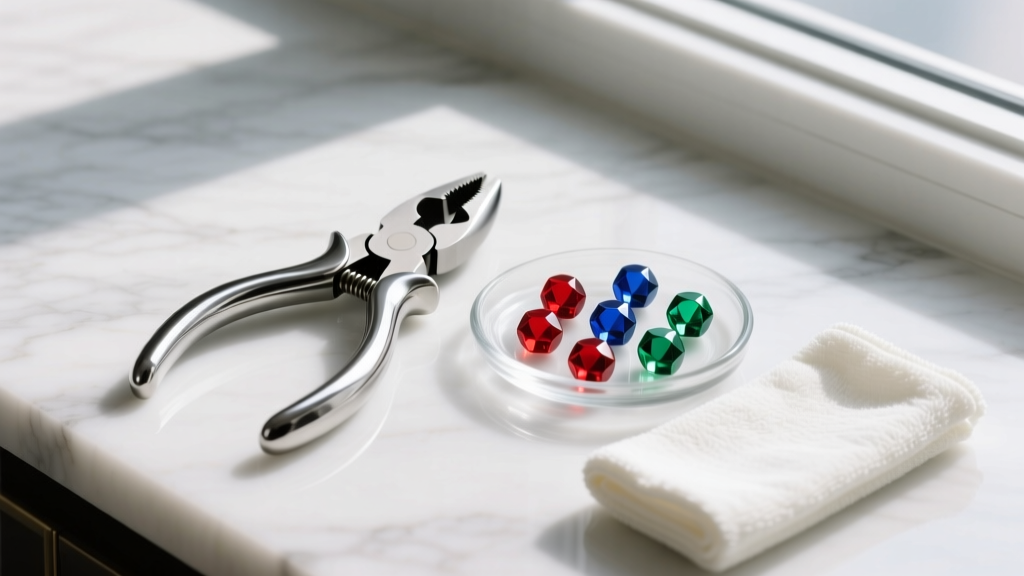
Store your cleaned and dried CBRs in individual soft microfiber pouches or a dedicated compartmentalized jewelry organizer. If you prefer to store the ring and the bead separately to relieve metal tension, place the captive bead inside a small, sealable glassine envelope or a silicone pill organizer to ensure it doesn't vanish into the carpet. Keep a dedicated jewelry maintenance kit on hand, complete with ring-opening pliers, bead-grabbing tweezers, and a microfiber polishing cloth, to ensure every interaction with your earrings is precise and controlled.
When to Replace Your Ball Hoop Earrings
While high-quality, implant-grade titanium ball hoops can last a lifetime, they are not entirely immune to wear and tear. It is time to retire the earring if you notice any of the following signs of degradation:
- Flattened Ring Ends: The ends of the hoop that press into the bead should be smoothly rounded. If they appear flattened or jagged from repeated use of metal pliers, they will no longer seat correctly into the bead's dimples.
- Pitting or Discoloration: If you are wearing lower-grade steel and notice dark spotting, pitting, or rust along the curve of the hoop, the metal's protective chromium oxide layer has been compromised. Discard the earring immediately to prevent severe skin irritation or infection.
- Stripped Dimples: If the indentations on the captive bead are visibly widened or scratched, the bead will never hold tension securely again. Fortunately, captive beads are universally sized by diameter and gauge, meaning you can simply purchase a replacement ball from a reputable body jewelry brand without needing to replace the entire hoop.
By treating your ball hoop earrings as precision mechanical instruments rather than simple accessories, you ensure they remain secure, comfortable, and brilliantly polished for years to come.


