The Anatomy of Gold Dragon Earrings: A Technical Guide
Explore the metallurgy, casting techniques, and structural engineering behind fine gold dragon earrings. Learn about alloys, gauges, and weight distribution.

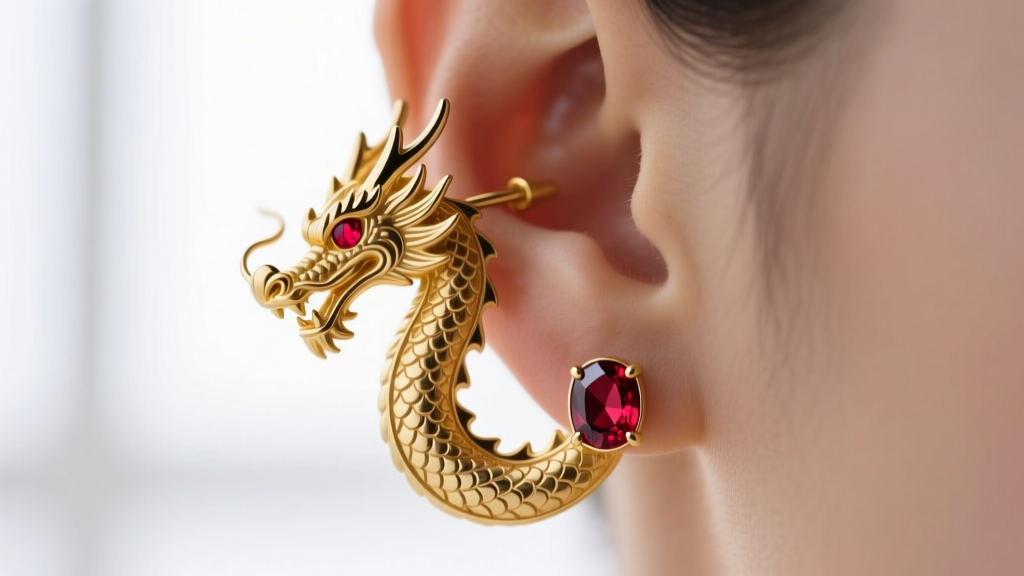
Beyond the Fantasy Aesthetic: Engineering Micro-Sculptures
The translation of mythological draconian anatomy into wearable micro-sculptures requires a rigorous understanding of fluid dynamics, metallurgical tensile strength, and biomechanical load distribution. While mass-market fantasy jewelry often relies on cheap zinc alloys and shallow stamping, fine gold dragon earrings represent a pinnacle of bench jewelry and advanced CAD (Computer-Aided Design) engineering. Crafting a piece that features sprawling wings, articulated tails, and microscopic scales involves navigating the physical limitations of precious metals. This guide deconstructs the technical specifications, alloy grades, and manufacturing processes that separate heirloom-quality draconian jewelry from costume novelties.
Metallurgical Breakdown: Alloying for Intricate Scales
Pure 24-karat gold is entirely unsuitable for complex fantasy motifs. With a Vickers Hardness (HV) of merely 25 to 90 (depending on work-hardening), it lacks the tensile strength to support protruding elements like dragon horns or wing tips, which would bend under minimal lateral pressure. Therefore, master casters rely on specific gold alloys to balance malleability during the casting phase with structural rigidity in the final piece. According to metallurgical data published by the Gemological Institute of America (GIA), the introduction of copper, silver, and zinc drastically alters the crystalline lattice of the gold, increasing its durability.
For dragon earrings, 14k and 18k gold are the industry standards. 18k gold (75% pure gold) offers a rich, deep yellow hue that mimics the traditional aesthetic of dragon hoards, but it requires thicker structural armatures. 14k gold (58.5% pure gold) yields a higher hardness rating, allowing for impossibly thin, translucent wing membranes and sharply defined dorsal spikes without the risk of deformation during daily wear.
| Alloy Type | Gold Purity | Primary Alloying Metals | Vickers Hardness (HV) | Best Use Case in Dragon Motifs |
|---|---|---|---|---|
| 24k Pure | 99.9% | None | 25-90 | Not recommended; structural failure risk |
| 18k Yellow | 75.0% | Silver, Copper, Zinc | 130-150 | Thick, sculptural ear cuffs; heavy scales |
| 14k Yellow | 58.5% | Silver, Copper, Zinc | 160-180 | Delicate wing membranes; sharp dorsal spikes |
| 14k Rose | 58.5% | High Copper, Silver | 170-190 | Fire-breathing motifs; high-stress ear climbers |
The Lost-Wax Casting Process for Micro-Detailing
Capturing the overlapping texture of a dragon’s scales—often measuring less than 0.5 millimeters in depth—demands precision beyond traditional hand-carved wax models. Modern high-end dragon earrings utilize photopolymer resins printed via DLP (Digital Light Processing) 3D printers. These resins achieve a dimensional accuracy of 25 microns, allowing CAD designers to draft individual scales, wrinkles in the leather-like wing membranes, and microscopic claw textures.
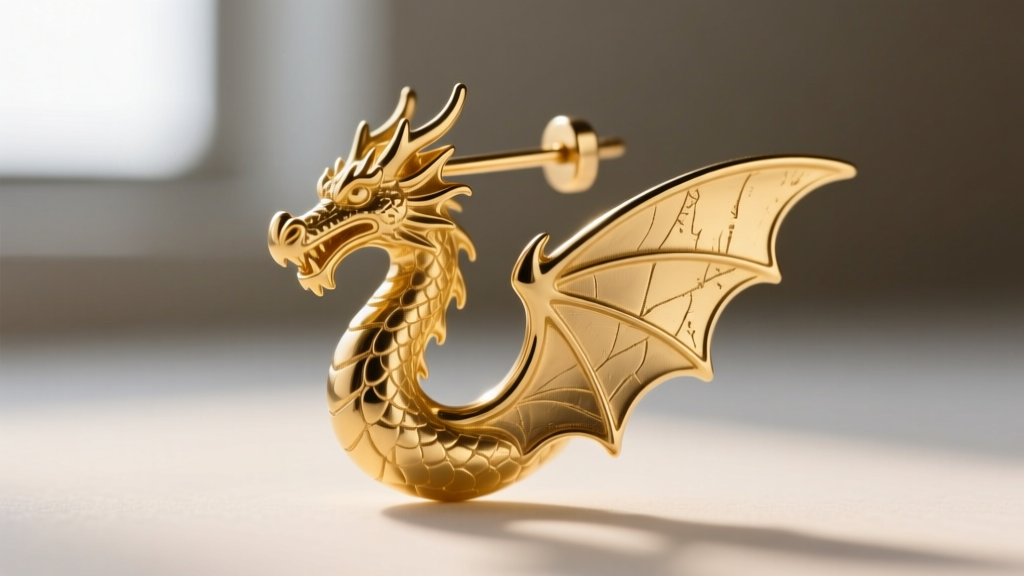
Once the resin model is sprued to a central wax tree, it is encased in a phosphate-bonded investment powder. The burnout schedule is critical: the flask must be heated to exactly 730°C to vaporize the resin completely without leaving ash residue, which would cause porosity in the final gold casting. Vacuum-assisted casting is heavily preferred over centrifugal casting for dragon earrings. The vacuum pulls the molten 14k or 18k gold into the deepest recesses of the scale textures and the thinnest edges of the wings, preventing the "misrun" defects that plague complex fantasy geometries. The World Gold Council notes that vacuum casting significantly reduces internal gas porosity, ensuring the structural integrity of thin, sprawling appendages.
Structural Engineering: Weight Distribution and Gauge Sizing
The most common point of failure in statement fantasy earrings is biomechanical overload. A solid 18k gold dragon wrapping around the earlobe can easily exceed 14 grams. The human earlobe is not designed to sustain this static load; prolonged wear of heavy earrings leads to tissue stretching, lobe tearing, and migration of the piercing fistula. To combat this, expert jewelers employ advanced CAD shelling techniques.
Electroforming and CAD Shelling
Instead of casting a solid block of gold, the 3D model is digitally hollowed out, leaving a uniform wall thickness of 1.1 to 1.4 millimeters. This reduces the final weight of a voluminous dragon earring from 14 grams down to a highly wearable 4.5 grams, without sacrificing the visual impact or the external scale detailing. For the posts and wire elements, gauge thickness is meticulously calculated based on the Association of Professional Piercers (APP) guidelines for load-bearing jewelry.
- Standard Lobe Posts (Friction Backs): 18-gauge (1.0mm). Only suitable for hollowed dragon heads weighing under 5 grams.
- Heavy Statement Lobes (Threaded/La Pousette): 16-gauge (1.2mm) or 14-gauge (1.6mm). Required for solid or semi-solid dragons exceeding 6 grams to prevent post bending.
- Cartilage Ear Cuffs (Tension Wraps): 19-gauge (0.9mm) to 17-gauge (1.15mm) wire. The dragon's tail must possess enough spring-temper to grip the helix securely without applying necrotic pressure to the cartilage.
Antiquing and Micro-Setting Tolerances
To give the gold dragon a sense of ancient realism, bench jewelers frequently apply chemical patinas. Liver of sulfur or specialized ruthenium plating is brushed into the recesses between the scales and then polished off the high points. This high-contrast antiquing process requires the gold to be properly stress-relieved post-casting; otherwise, the chemical baths can induce stress-corrosion cracking in the thin wing joints. Furthermore, if the dragon features micro-pavé diamond eyes or ruby accents, the prongs must be integrated directly into the CAD wax model rather than drilled post-cast, ensuring the gemstone seats are perfectly aligned with the draconian skull geometry.
Hallmarking and Authenticity Verification
Because the fantasy jewelry market is saturated with gold-plated brass and hollow resin knockoffs, verifying the metallurgical authenticity of gold dragon earrings is paramount. Reputable manufacturers will laser-engrave their hallmarks in discreet areas to avoid disrupting the aesthetic flow of the sculpture. Common locations include the underside of the dragon’s belly, the inner curve of an ear cuff, or the flat backplate of a friction post.
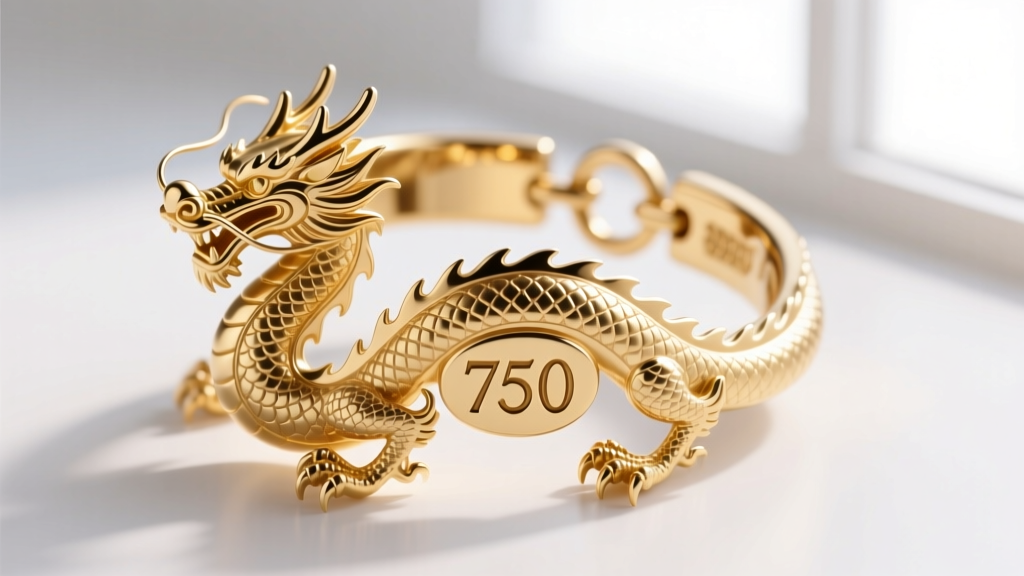
Buyers should look for the "585" (14k) or "750" (18k) numeric stamps, alongside the maker's mark. However, visual inspection of a hallmark is insufficient for high-value pieces. The definitive verification method is XRF (X-ray Fluorescence) testing, which non-destructively analyzes the elemental composition of the alloy to ensure the copper-to-gold ratio matches the stamped karat weight. Acid testing is strongly discouraged for intricate dragon earrings, as the nitric acid will permanently destroy the micro-detailing of the scales and strip away any intentional antiquing patinas.
"True mastery in fantasy jewelry is invisible. The wearer should feel the magic of the dragon, not the burden of its weight or the sharp edge of a poorly finished sprue." — Master Bench Jeweler Adage
Conclusion: Investing in Heirloom-Quality Fantasy
Purchasing or commissioning gold dragon earrings is an exercise in applied physics and metallurgy as much as it is an appreciation of mythological art. By understanding the necessity of 14k or 18k alloy hardness, the precision of vacuum-assisted lost-wax casting, and the biomechanical limits of earlobe gauges, collectors can acquire pieces that are not only visually breathtaking but structurally engineered to endure for generations. When evaluating your next draconian acquisition, look past the surface shine and demand transparency regarding the CAD shelling, alloy composition, and tension engineering that keep the beast securely tethered to your ear.


