How to Clean and Care for Tiny Earrings Without Losing Them
Learn expert techniques for cleaning, sanitizing, and storing tiny earrings. Prevent tarnish, bent posts, and lost micro-studs safely.

The Micro-Jewelry Maintenance Paradox
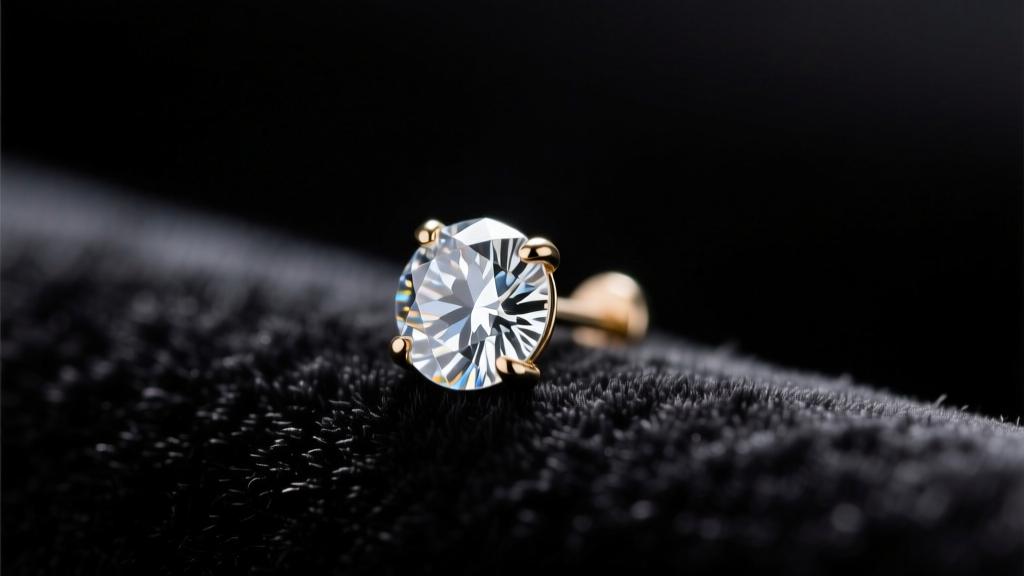
In the evolving landscape of curated ear stacks and minimalist aesthetics, tiny earrings have become a staple of modern jewelry wardrobes. However, as we navigate the jewelry trends of 2026, a distinct maintenance paradox has emerged: the smaller the earring, the more complex its care regimen. Micro-studs, delicate huggies, and ear threads possess a high surface-area-to-volume ratio that makes them magnets for sebum, dead skin cells, and environmental pollutants. Furthermore, their diminutive size makes them incredibly prone to slipping down sink drains or suffering structural damage during routine cleaning.
Caring for tiny earrings requires a departure from standard jewelry maintenance. Traditional polishing cloths are too bulky to reach the crevices of a 2mm gemstone setting, and standard ultrasonic cleaners can actually shatter the lower-clarity diamonds often used in micro-jewelry. This comprehensive guide provides a highly specific, actionable framework for cleaning, sanitizing, and securing your micro-earrings without compromising their structural integrity or losing them in the process.
The Anatomy of Tiny Earrings and Vulnerability
To properly maintain micro-jewelry, you must first understand its structural vulnerabilities. Tiny earrings—typically defined as pieces with a focal point under 4mm and a total weight under 0.5 grams—are engineered differently than standard pieces.
Gauge Thickness and Bending Risks
Most standard earrings feature an 18-gauge (1.02mm) or 20-gauge (0.81mm) post. However, to maintain the delicate visual profile of tiny earrings, manufacturers frequently utilize 22-gauge (0.64mm) or even 24-gauge (0.51mm) wire. These ultra-thin posts are highly susceptible to bending when subjected to lateral pressure. Attempting to aggressively scrub a 22-gauge post with a standard toothbrush, or forcing a tight metal butterfly back onto it, will often result in a permanently warped or snapped post. Always handle the posts of tiny earrings by the base of the setting, never by the wire itself.
Micro-Prong Snagging
Tiny diamond or gemstone studs often utilize micro-prong settings. Because the prongs are exceptionally small, they can easily catch on microfiber cloths, hair, or sweater threads. When cleaning, you must use a pat-and-dab motion rather than a rubbing motion to prevent catching a prong and lifting it away from the stone's girdle, which can lead to stone loss.
The Ultimate Sink-Safe Cleaning Protocol
The most common way tiny earrings are permanently lost is by dropping them into an open sink drain while cleaning. Before beginning any maintenance routine, you must secure your environment and use the correct chemical agents.
Required Tools
- Silicone Sink Strainer: A fine-mesh silicone catcher to place over the drain.
- Distilled Water: Tap water contains dissolved minerals (calcium and magnesium) that will leave microscopic hard-water spots on micro-pave settings, dulling their sparkle.
- Phosphate-Free Dish Soap: A mild, clear surfactant (like original Dawn) to break down sebum without leaving a cloudy film.
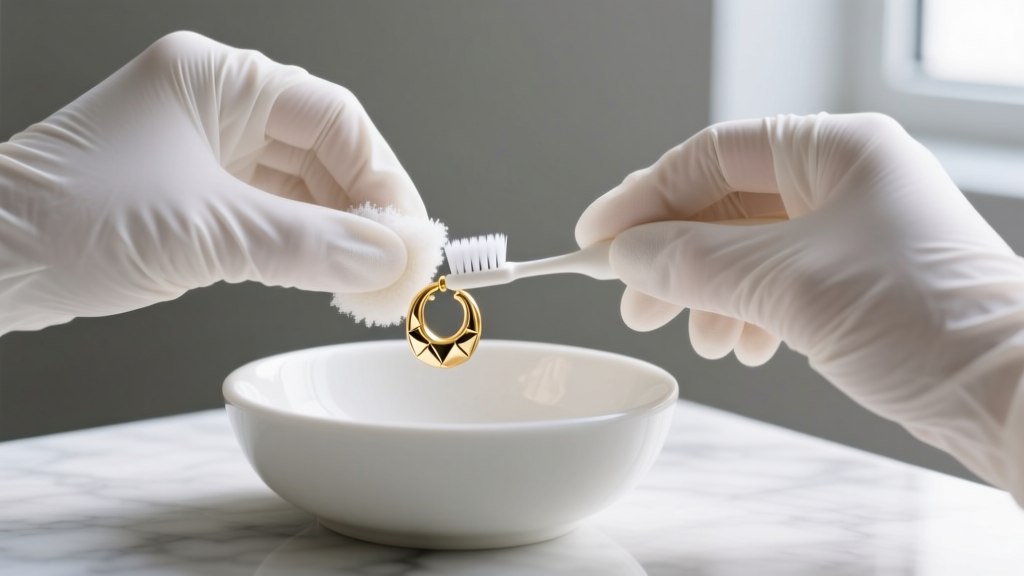
- Extra-Soft Baby Toothbrush: Standard toothbrush bristles are too stiff and can scratch high-polish 18k gold or dislodge micro-prongs.
- Compressed Air Duster: For blowing water out from beneath the gallery of the setting.
Step-by-Step Cleaning Process
- Prepare the Solution: In a small ceramic or glass bowl (never metal, which can scratch your pieces), mix one cup of warm distilled water with three drops of phosphate-free dish soap.
- Soak: Submerge the tiny earrings for exactly 15 minutes. This allows the surfactant to penetrate the hardened sebum trapped beneath the gemstone without requiring aggressive mechanical scrubbing.
- Gentle Agitation: Using the baby toothbrush, gently brush the back of the setting and the post. Avoid brushing the top of the prongs directly; instead, use a swirling motion around the perimeter of the stone.
- Rinse and Dry: Rinse under a gentle stream of warm distilled water. Place the earring on a lint-free paper towel and use a quick burst of compressed air to evaporate the water trapped under the stone. Water left under a micro-stud will dry into a visible, dulling spot.
Material and Gemstone Care Matrix
Not all tiny earrings can be subjected to the same cleaning agents. The use of lower-clarity gemstones (like SI1 or SI2 diamonds) in micro-jewelry means that stones may contain internal fractures or be treated with clarity-enhancing resins. According to the Gemological Institute of America (GIA), ultrasonic cleaners and harsh chemicals can strip these treatments or shatter included stones. Refer to the matrix below for material-specific guidelines.
| Material / Gemstone | Safe Cleaning Agents | Strictly Avoid | Drying Method |
|---|---|---|---|
| 14k / 18k Solid Gold | Mild dish soap, warm distilled water | Chlorine, bleach, toothpaste | Compressed air, microfiber pat |
| Implant-Grade Titanium (ASTM F136) | 70% Isopropyl alcohol, sterile saline | Abrasive pastes, iodine | Air dry, non-woven gauze |
| Micro-Pave Diamonds (SI Clarity) | Ammonia-free jewelry cleaner, soapy water | Ultrasonic cleaners, steam | Compressed air |
| Opal / Pearl / Emerald Micro-Studs | Damp microfiber cloth only | Soaking, alcohol, ultrasonics | Soft cotton cloth |
| Sterling Silver (Anti-Tarnish Coated) | Mild soap, specialized silver dip (sparingly) | Baking soda paste, hard brushing | Lint-free cloth |
Sanitization and Contact Dermatitis Prevention
A frequent complaint among wearers of tiny earrings is localized itching or redness on the earlobe. While many immediately assume they have developed a nickel allergy, the culprit is often allergic contact dermatitis triggered by bacterial and fungal buildup on the earring post. Because tiny earrings sit flush against the skin, they create a micro-environment that traps moisture, dead skin cells (desquamation), and sweat.
The American Academy of Dermatology (AAD) notes that maintaining strict jewelry hygiene is the first line of defense against contact dermatitis. For sanitization, the protocol differs from cosmetic cleaning:
- For the Post Only: After the cosmetic cleaning process outlined above, saturate a cotton swab with 70% isopropyl alcohol and wipe down the earring post and the earring back. Do not apply alcohol to porous gemstones like pearls or opals.
- For Fresh Piercings: If your tiny earrings are being worn in healing piercings, avoid alcohol entirely, as it destroys new cellular growth. Instead, use a sterile saline wound wash (0.9% sodium chloride) and spray it directly onto the post and lobe, as recommended by the Association of Professional Piercers (APP).
Expert Insight: If you experience persistent irritation with tiny studs, check the earring back. Standard metal 'butterfly' backs trap immense amounts of bacteria and press tightly against the lobe, restricting airflow. Switching to flat-back labret studs or medical-grade silicone O-rings dramatically improves lobe health.
Anti-Loss Storage and Handling
Tiny earrings are notoriously difficult to store. Tossed into a standard jewelry box, they will inevitably slip through the fabric lining or become tangled in chains. Proper storage is a critical component of micro-jewelry maintenance.
Silicone O-Rings vs. Metal Butterfly Backs
The most effective way to prevent losing a tiny earring is to upgrade its backing system. Metal butterfly backs rely on tension, which weakens over time, especially when subjected to the friction of hair and pillows. For tiny earrings, transition to 3mm or 4mm silicone O-rings. These provide a high-friction grip on the post that will not degrade or loosen with daily wear. Furthermore, silicone backs are softer on the neck when sleeping, making them ideal for the 'sleep-in' studs that are currently trending.
Dedicated Micro-Storage Solutions
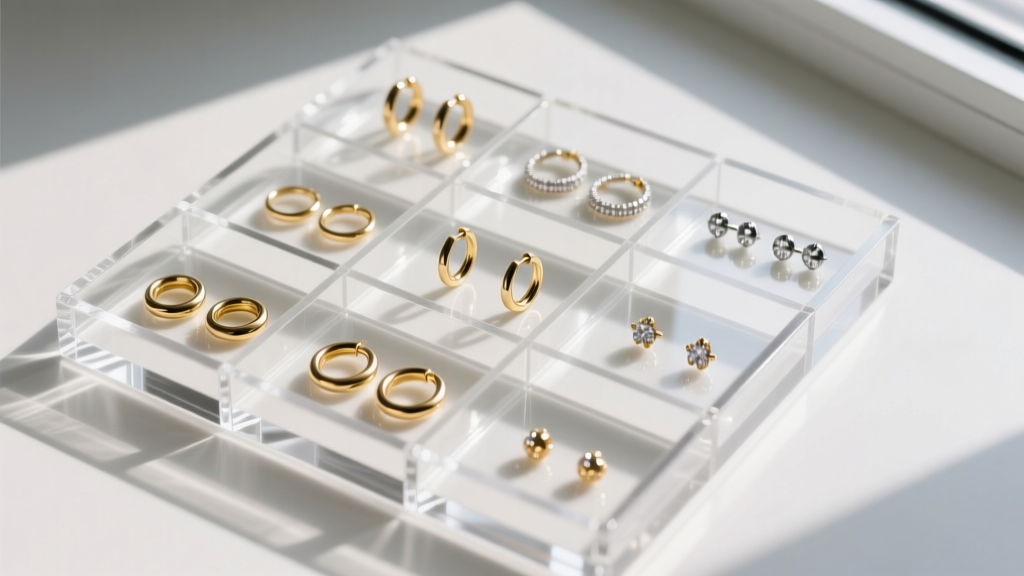
Never store tiny earrings loosely. Invest in a dedicated micro-jewelry organizer featuring individual, shallow silicone-lined slots. Alternatively, use a pill organizer with individual daily compartments lined with a small piece of felt. Always secure the earring back onto the post before placing it in storage; a tiny stud stored without its back is highly likely to slip out of its designated slot and become lost in the drawer or box.
By implementing these targeted cleaning protocols, utilizing the correct chemical agents for specific alloys, and upgrading your storage and backing systems, you can ensure your tiny earrings remain brilliant, sanitary, and securely in place for years to come.


