The Ultimate Cleaning Guide for All Stud Earring Sizes
Learn how to properly clean and maintain different stud earring sizes, from 2mm micro studs to 8mm statement pieces, with expert gauge-specific tips.

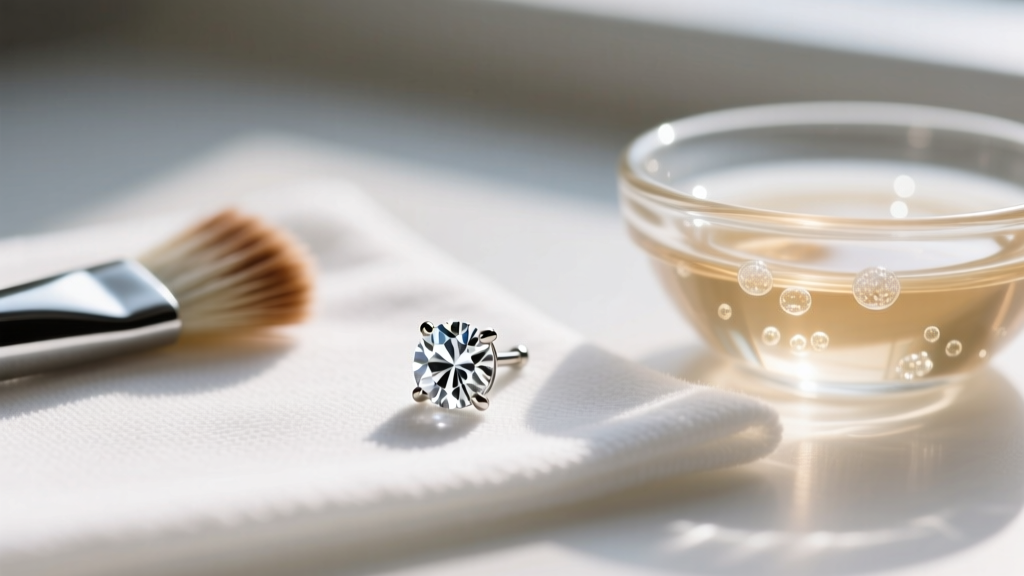
Why Stud Earring Sizes Dictate Your Cleaning Strategy
When building a jewelry care routine, most collectors focus entirely on metal composition and gemstone porosity. However, the physical dimensions of your jewelry play an equally critical role in maintenance. Understanding the nuances of different stud earring sizes is essential because a 2mm micro-stud accumulates debris in entirely different ways than an 8mm statement piece. The crevice-to-surface-area ratio changes drastically as the millimeter count increases, meaning your cleaning tools and chemical solutions must scale accordingly.
In this comprehensive 2026 guide, we break down the exact maintenance protocols required for every stud size category. From navigating the delicate basket settings of micro-studs to polishing the expansive table facets of large carat weights, mastering these size-specific techniques will extend the lifespan of your jewelry and keep your piercings healthy.
The Physics of Dirt: Surface Area vs. Crevices
Before diving into solutions, it is vital to understand how sebum, dead skin cells, and environmental pollutants interact with different stud earring sizes. Dirt accumulation is not uniform; it is dictated by the architecture of the earring's setting.
- Micro Studs (2mm - 4mm): These feature low-profile basket settings or bezel settings. Because the gemstone sits flush against the earlobe, airflow is restricted. Sebum and soap scum become trapped in the microscopic gaps between the gallery wire and the lobe, leading to a dull appearance and potential contact dermatitis.
- Medium Studs (5mm - 7mm): Typically set in three-prong or four-prong martini or crown settings. These allow more light and airflow but introduce larger crevices under the pavilion (the bottom of the gemstone) where lotion and hairspray collect.
- Statement Studs (8mm+): These require heavy, multi-prong settings to support the gemstone's weight. The primary issue here is not just trapped debris, but the visibility of fingerprints and oils on the large table (top facet) of the stone, which immediately dulls the refraction of light.
Size-Specific Cleaning Protocols
A one-size-fits-all approach to jewelry cleaning often results in damaged stones or bent posts. Below are the expert-approved methodologies tailored to specific dimensions.
Micro Studs (2mm - 4mm): The Ultrasonic Approach
Attempting to scrub the underside of a 3mm diamond stud with a toothbrush is largely ineffective; the bristles simply cannot penetrate the sub-millimeter gaps of the setting. For durable stones like diamonds, sapphires, and rubies, an ultrasonic cleaner is the superior choice.
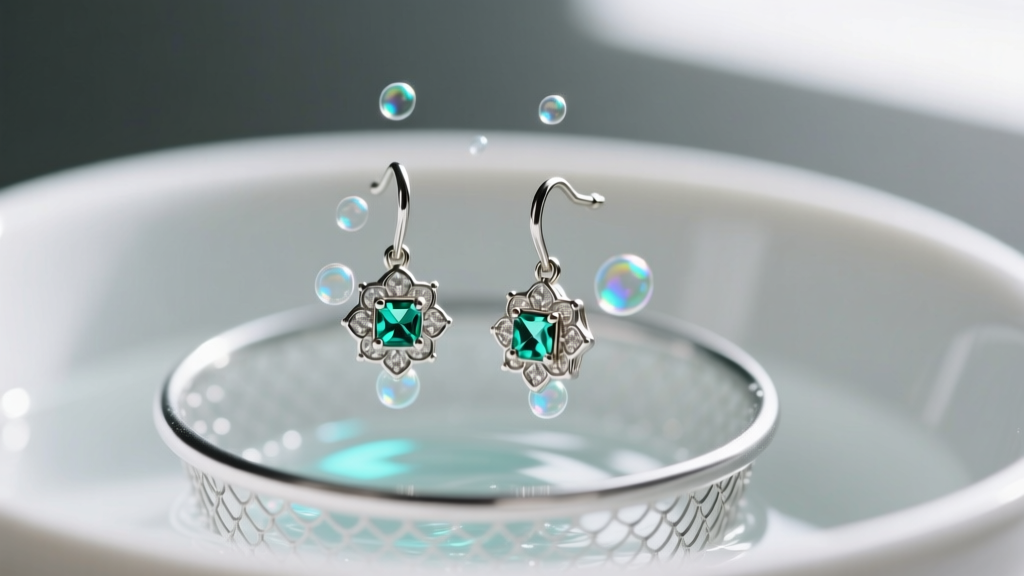
Modern 2026 piezoelectric ultrasonic cleaners operate at frequencies around 40-45 kHz, creating microscopic cavitation bubbles that implode and dislodge debris from areas no brush can reach. Warning: Never use ultrasonic cleaners for fracture-filled diamonds, emeralds, opals, or pearls, regardless of their size. For porous micro-studs, use a damp, lint-free microfiber swab instead.
Medium Studs (5mm - 7mm): The Interdental Brush Technique
For medium-sized studs, manual agitation is required. While a soft baby toothbrush is standard, domain experts recommend using interdental brushes (sizes 0.4mm to 0.6mm, such as those made by TePe). These specialized brushes feature a thin, wire-core bristle arrangement designed to slide horizontally through the open gallery of a martini setting, sweeping out compacted sebum from beneath the stone's girdle.
Pro Tip: Mix a solution of 1 part mild, phosphate-free dish soap (like Dawn) to 10 parts warm distilled water. Soak 5mm-7mm studs for 15 minutes to soften hardened cosmetics before using the interdental brush.
Statement Studs (8mm+): Surface Polishing and Prong Audits
Large studs demand a dual-focus approach: optical clarity on top, and structural integrity on the bottom. Because an 8mm round brilliant diamond equates to roughly 2.00 carats, the financial stakes of a loose prong are high.
- The Top: Use a 1:6 ratio of household ammonia to water (strictly for diamonds and hard corundum) to cut through heavy skin oils on the large table facet. Rinse with distilled water to prevent hard water spots.
- The Bottom: Use a 10x jeweler's loupe to inspect the prong tips. Large stones endure more kinetic shock against doorframes and headrests. If the prong metal is no longer flush against the crown of the stone, cease cleaning and visit a jeweler immediately.
Post and Backing Maintenance by Gauge
The post is the unsung hero of the stud earring, and its thickness—measured in gauges—dictates how aggressively you can clean it. Standard lobe piercings are typically 20-gauge (0.81mm) or 18-gauge (1.02mm), while cartilage studs often utilize 16-gauge (1.29mm) posts for stability.
| Post Gauge | Thickness (mm) | Common Backing Type | Cleaning Focus & Vulnerability |
|---|---|---|---|
| 20-Gauge | 0.81mm | Friction / Butterfly | Highly prone to bending. Clean gently with a cotton swab soaked in isopropyl alcohol. Avoid aggressive brushing. |
| 18-Gauge | 1.02mm | Screw-back / La Pousette | Threads can strip if scrubbed with abrasive pastes. Use a soft brass brush to clean the threading grooves. |
| 16-Gauge | 1.29mm | Flat-back Labret | Flat backs trap dead skin against the ear. Requires daily flushing with sterile saline spray to prevent granulomas. |
According to guidelines published by the American Gem Society (AGS), maintaining the mechanical integrity of your earring backings is just as important as polishing the gemstone. Screw-backs, in particular, require meticulous cleaning of their threaded grooves, where microscopic skin cells can cross-thread and permanently jam the mechanism.
Chemical Reactions: What to Avoid Based on Size
It is a common misconception that chemical safety is solely dependent on the gemstone species. In reality, the size of the stone influences its structural vulnerability to chemical shocks.
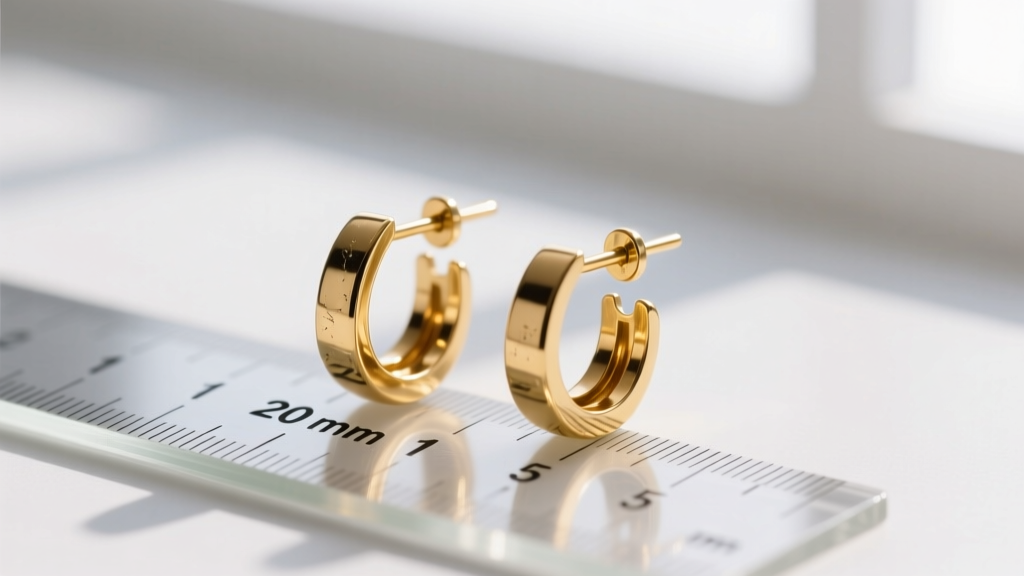
For instance, a 2mm emerald stud may survive a brief, accidental exposure to a harsh commercial jewelry dip because the total surface area and internal fracture network are relatively small. However, an 8mm emerald of the same quality possesses a vastly larger internal matrix of natural inclusions (jardin). When exposed to the same chemicals, the capillary action draws the corrosive liquids deeper into the stone's fissures, leading to catastrophic internal fracturing or the dissolution of fracture-filling oils.
The Gemological Institute of America (GIA) explicitly warns against using chlorine bleach or harsh abrasives on any fine jewelry, as chlorine can chemically react with the copper alloys in 14k and 18k gold settings, leading to stress corrosion cracking over time—a risk magnified in the heavy settings required for large studs.
Storage Solutions Tailored to Stud Dimensions
Proper storage is the final pillar of maintenance. Tossing all your studs into a single communal tray guarantees that the sharp, heavy prongs of an 8mm statement piece will scratch the delicate table of a 4mm sapphire.
- Micro Studs: Store in sealed, anti-tarnish ziplock bags with a small silica gel packet to prevent moisture-induced oxidation of the rhodium plating on white gold settings.
- Medium Studs: Utilize a jewelry box with individual, fabric-lined slots. Ensure the posts are inserted through the fabric to keep them upright and prevent the butterfly backings from being crushed against the gemstone.
- Statement Studs: Keep in individual soft-flannel pouches. Because large studs are front-heavy, laying them flat in a shallow drawer can cause the post to bend under the weight of the stone if something is placed on top of them.
By aligning your cleaning, handling, and storage habits with the specific physical dimensions of your jewelry, you ensure that every piece, from a subtle 2mm everyday diamond to a show-stopping 10mm pearl, retains its structural integrity and optical brilliance for decades to come.


