How to Clean and Maintain 5 Carat Earrings Safely
Learn expert cleaning and maintenance tips for 5 carat earrings. Discover safe degreasing methods, prong care, and gemstone-specific protocols.

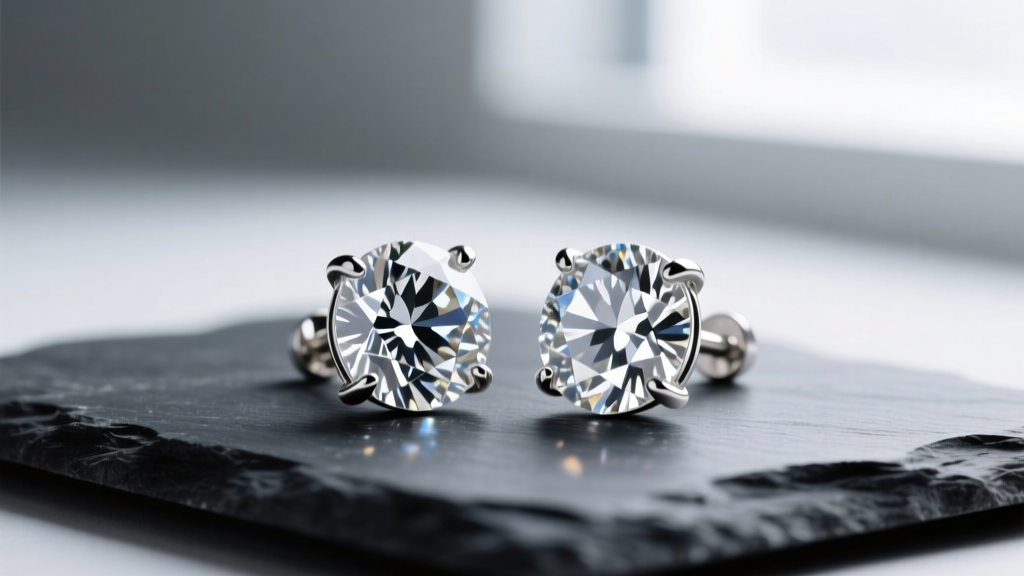
Owning a pair of 5 carat earrings is a milestone achievement that requires a commensurate level of care and maintenance. Whether your investment takes the form of 5.00 carat total weight (CTW) diamond studs—meaning each ear wears a substantial 2.50 carat stone—or a pair of striking 5 carat gemstone drops, the sheer physical scale of these jewels introduces unique vulnerabilities. Large-carat earrings possess a greater surface area, making them magnets for skin oils, cosmetics, and environmental dust, which can reduce a diamond’s brilliance by up to 40%. Furthermore, the leverage exerted by a heavy 2.50 carat stone places continuous stress on the earring post and setting prongs. In this comprehensive guide, we explore the exact protocols required to clean, inspect, and preserve high-carat earrings, ensuring they remain as secure and radiant as the day you acquired them.
The Unique Vulnerabilities of Large-Carat Jewelry
When you step up to a 5 carat weight class, standard jewelry care advice is no longer sufficient. A 2.50 carat round brilliant diamond measures approximately 8.8mm in diameter. This expansive table and deep pavilion create more crevices for microscopic debris to accumulate, particularly near the culet (the bottom point of the stone). More critically, the physics of a large earring dictate that the center of gravity sits further away from the earlobe. This creates a lever effect that can slowly bend earring posts and loosen prongs over time.
Leverage, Prong Stress, and Post Integrity
For stones of this magnitude, jewelers typically recommend platinum settings due to the metal's superior tensile strength and durability compared to 14k or 18k gold. Prongs on a 2.50 carat stone should ideally be crafted from 0.8mm to 1.0mm platinum wire to withstand daily snags on hair and clothing. However, even platinum can fatigue. If you wear martini-style settings, the three-prong design minimizes metal visibility but concentrates stress at the base of the basket. Basket settings with four or six prongs offer better security for heavy stones but trap more dead skin cells and lotion near the post. Monthly inspections with a 10x jeweler's loupe are non-negotiable for 5 carat earrings to check for lifted prongs or bent posts.
Step-by-Step Cleaning Protocol for 5 Carat Diamonds
Diamonds are lipophilic, meaning they naturally attract and hold grease. A simple rinse with water will not suffice for a 5 carat diamond; you must break down the lipid bonds to restore the stone's refractive index. According to the Gemological Institute of America (GIA), a mild degreasing solution is the safest and most effective method for home cleaning.
The Degreasing Bath and Brushing Technique
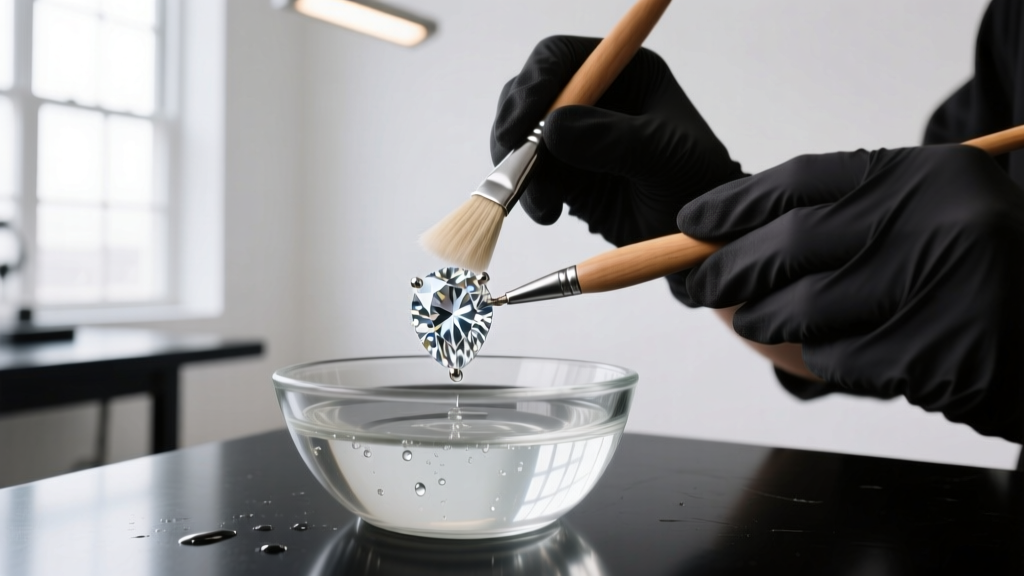
Follow this precise protocol to safely clean large-carat diamond earrings without risking damage to the setting:
- Prepare the Solution: Mix a few drops of ammonia-free, mild dish soap (such as Dawn) into a bowl of warm—not hot—water. Avoid harsh chemicals or chlorine, which can degrade the alloy metals in your setting.
- The Soak: Submerge the earrings for 15 to 20 minutes. This allows the surfactants to penetrate the microscopic gaps between the diamond's girdle and the setting's gallery.
- Precision Brushing: Use an extra-soft baby toothbrush or a specialized jewelry brush with ultra-fine bristles. Gently brush the pavilion (the underside of the diamond) using small circular motions. This is where the majority of light-blocking grime accumulates.
- The Rinse and Dry: Rinse thoroughly under lukewarm running water over a closed sink drain. Pat dry with a lint-free microfiber cloth, avoiding paper towels which can leave microscopic scratches on precious metal finishes.
Gemstone-Specific Maintenance Matrix
Not all 5 carat earrings are diamonds. Large-carat sapphires, rubies, and emeralds are highly coveted for statement drops and chandelier earrings. However, their crystalline structures dictate entirely different care regimens. The Jewelers of America emphasizes that treating all gemstones with a one-size-fits-all approach is a primary cause of irreversible damage.
| Gemstone (5ct Class) | Mohs Hardness | Safe Home Cleaning Method | Ultrasonic Risk | Steam Risk |
|---|---|---|---|---|
| Diamond | 10 | Mild soap, warm water, soft brush | Low (unless fracture-filled) | Low (unless fracture-filled) |
| Sapphire / Ruby | 9 | Mild soap, warm water, soft brush | Moderate (avoid if heavily included) | Moderate (avoid if heat-treated) |
| Emerald | 7.5 - 8 | Damp cloth only, no soaking | Extreme (strips cedar oil fillers) | Extreme (causes thermal shock) |
| Tourmaline / Spinel | 7 - 8 | Mild soap, quick rinse, soft cloth | High (vibrations cause cleavage) | Moderate |
What to Avoid: Ultrasonic and Steam Cleaner Risks
While commercial ultrasonic cleaners use 40 kHz sound waves to cavitate dirt away from jewelry, they pose severe risks to 5 carat earrings. First, the high-frequency vibrations can easily shake loose friction posts or loosen the tension on screw-back earring mechanisms, leading to lost stones. Second, if your 5 carat diamond has been clarity-enhanced via fracture filling or laser drilling, the intense heat and vibrations of ultrasonic and steam cleaners can cloud the filler or shatter the stone entirely.
Expert Warning: Never place emerald earrings in an ultrasonic cleaner. Virtually all large-carat emeralds are treated with cedar oil or synthetic resins to mask natural surface-reaching fissures. Ultrasonic waves will strip this oil out, leaving the stone looking opaque, heavily fractured, and significantly devalued.
Secure Storage and Insurance Appraisals
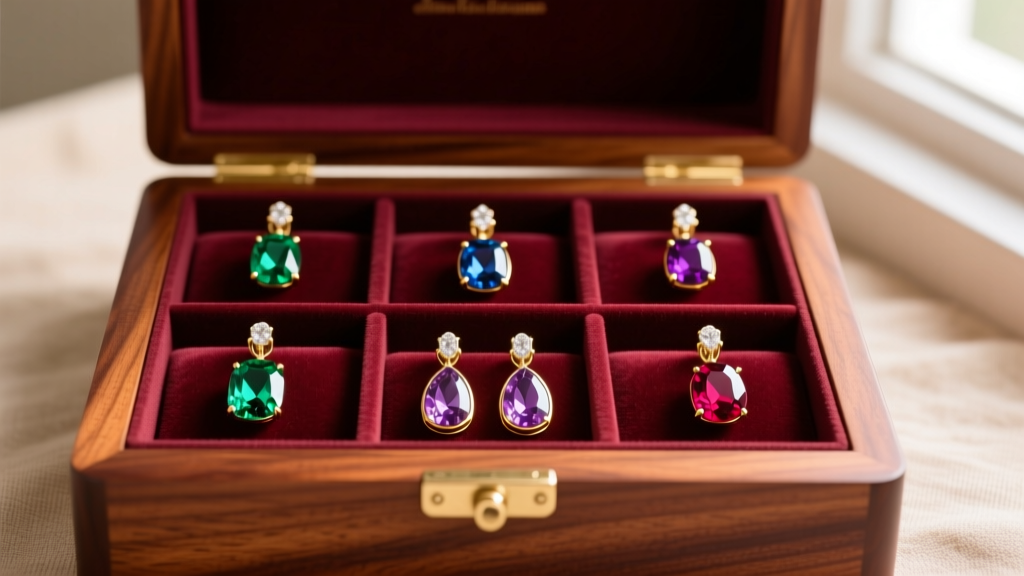
The maintenance of 5 carat earrings extends beyond cleaning; it encompasses secure storage and financial protection. When storing large studs or drops, never toss them loosely into a communal jewelry box. Diamonds can easily scratch the metal settings of adjacent pieces, and heavy drops can tangle, bending their posts. Store each earring in its own individual, velvet-lined compartment or a soft microfiber pouch.
Keeping Appraisals Current
Finally, the value of high-carat gemstones fluctuates with the market. An insurance appraisal conducted five years ago may not reflect the current replacement cost of a 5 carat diamond pair in today's market. We recommend updating your appraisal with a certified gemologist every two to three years. Ensure your policy specifically covers 'loss of a single stone' and 'accidental damage to the setting,' as the leverage risks associated with large-carat earrings make them uniquely susceptible to impact damage compared to smaller, lighter jewelry.


