How to Choose the Perfect Cluster Earring: A Buyer's Guide
Discover what to look for when buying a cluster earring. Our expert guide covers metal grades, stone settings, weight distribution, and pricing tiers.

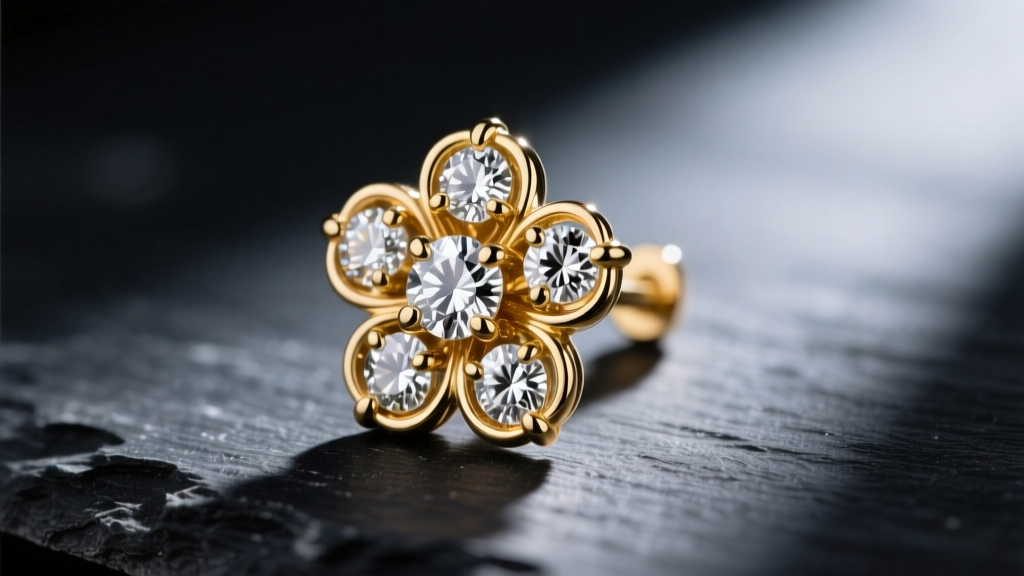
Cluster earrings offer a brilliant optical illusion: by grouping multiple smaller gemstones tightly together, they mimic the visual impact of a single, massive carat weight while delivering intricate, textured designs. Whether you are eyeing a vintage-inspired floral stud, a geometric Art Deco dangle, or a modern pavé hoop, the cluster design remains a staple in fine jewelry. However, the complex anatomy of a cluster earring introduces unique structural vulnerabilities. Poorly constructed clusters are notorious for stone loss, bent prongs, and earlobe fatigue. This comprehensive buying guide breaks down the metallurgy, setting mechanics, and weight distribution factors you must evaluate before investing in your next pair.
Anatomy of a Cluster Earring: What You Are Actually Buying
Unlike a simple solitaire stud, a cluster earring is a micro-architecture of metal and stone. The three critical components determining its longevity are the base metal alloy, the stone setting technique, and the backing mechanism. Because the surface area is densely packed with gemstones, the metal framework beneath must be cast or fabricated with zero porosity. When shopping, you are not just paying for the total carat weight (CTW); you are paying for the precision of the lapidary work and the structural integrity of the setting.
Metal Purity and Base Construction
The metal base dictates both the security of the stones and the biocompatibility of the post. According to the Federal Trade Commission (FTC), gold jewelry must meet strict karatage standards, but for cluster earrings, higher purity is not always better.
- 14k Gold (58.5% pure gold): The optimal choice for cluster settings. The higher alloy content (copper, silver, or zinc) provides superior tensile strength, ensuring the delicate prongs holding the micro-stones resist bending and snapping.
- 18k Gold (75% pure gold): Offers a richer color and higher hypoallergenic properties but is softer. Prongs in 18k gold require more frequent maintenance and tightening to prevent stone loss.
- Platinum: The ultimate choice for high-end diamond clusters. Its density and durability mean prongs rarely wear thin, though it commands a significant price premium and adds noticeable weight to the earring.
- Sterling Silver & Vermeil: Acceptable for fashion jewelry, but silver oxidizes and softens over time. Avoid silver for expensive gemstone clusters, as the prongs will eventually fail.
Stone Setting Techniques: Durability vs. Aesthetics
How the gemstones are secured within the cluster drastically impacts both the sparkle and the survival rate of the stones. The Gemological Institute of America (GIA) notes that the setting style must match the wearer's lifestyle and the stone's hardness.
| Setting Type | Durability | Maintenance Level | Best For |
|---|---|---|---|
| Individual Prong | High | Medium (Annual check) | Premium diamonds, active wearers |
| Shared Prong | Medium | High (Bi-annual check) | Maximum light exposure, delicate looks |
| Bezel | Very High | Low | Soft stones (opal, emerald), daily wear |
| Micro-Pavé | Low-Medium | High | Halo clusters, intricate vintage styles |
| Glue/Adhesive | Very Low | Replace when stones fall | Costume jewelry (Avoid for fine gems) |
Expert Warning: Never purchase fine gemstone cluster earrings held together by adhesive. Heat from hair dryers, hot showers, or even prolonged sun exposure can degrade the glue, resulting in sudden stone loss.
Weight Distribution and Backing Mechanisms
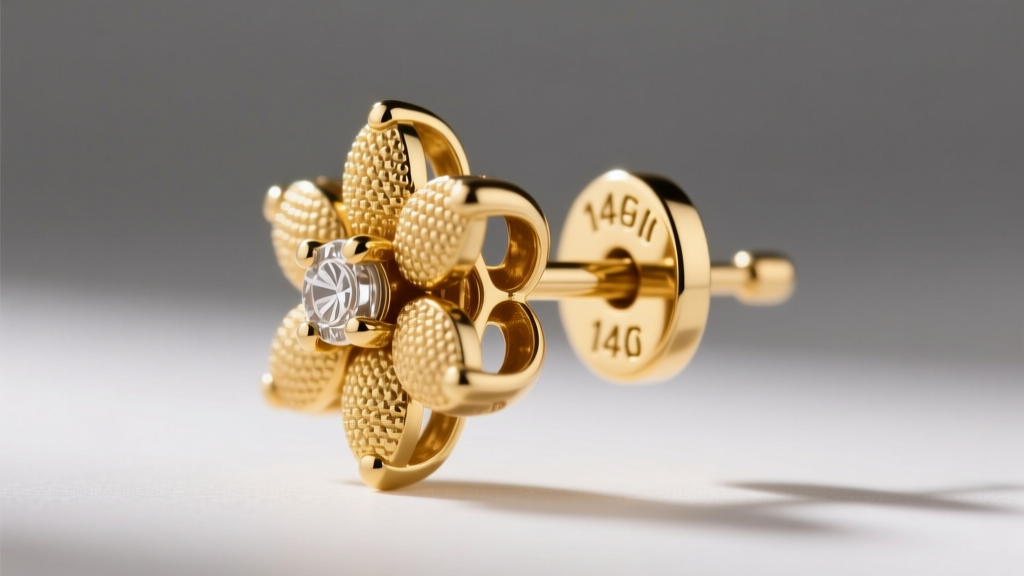
The most common failure point in cluster earrings is not the setting itself, but the backing. Cluster studs are inherently front-heavy, often weighing between 2.5 grams and 6 grams per earring. A standard butterfly friction back relies on a single tension notch on a thin 20-gauge (0.81mm) post. This is insufficient for a heavy cluster.
"When a heavy cluster earring droops, the post angles downward, pressing the metal against the lower tissue of the piercing tract. This causes micro-tears, irritation bumps, and eventual migration of the piercing."
The Solution: Insist on earrings with an 18-gauge (1.02mm) post for added rigidity. Furthermore, upgrade the backing. Look for La Pousette backings (which feature a mechanical locking click), jumbo silicone friction backs (which distribute the weight across a wider surface area of the earlobe), or screw-backs for maximum security.
2026 Pricing Tiers and Market Expectations
The market for cluster earrings has shifted significantly with the mainstream adoption of lab-grown diamonds and advanced casting techniques. Here is what you should expect to pay based on material and stone quality:
- Budget ($80 - $250): Sterling silver or 10k gold, featuring cubic zirconia, white sapphire, or low-grade opaque gemstones. Often utilizes glued or weak micro-pavé settings.
- Mid-Range ($350 - $900): Solid 14k gold with lab-grown diamonds (0.50 to 1.50 CTW) or genuine semi-precious stones (amethyst, garnet). Features secure prong or bezel settings and upgraded backings.
- High-End ($1,200 - $4,000+): 18k gold or Platinum, featuring natural earth-mined diamonds (VS clarity, G-H color) or premium colored gemstones. Master-level setting work with individual prongs and reinforced posts.
Face Shape and Styling Framework
Because cluster earrings command visual attention, pairing them with your face shape is crucial for balance.
- Round Faces: Opt for elongated cluster dangles or oval-shaped cluster drops. Avoid wide, circular floral clusters that emphasize facial width.
- Square Faces: Choose rounded cluster hoops or teardrop cluster designs to soften sharp jawlines and angular cheekbones.
- Heart Faces: Chandelier cluster earrings or bottom-heavy cluster drops help add visual weight to the lower half of the face, balancing a wider forehead.
- Oval Faces: Highly versatile. Geometric cluster studs and bold, oversized cluster hoops both complement the natural proportions of an oval face.
Red Flags and the Quality Control Checklist
Before finalizing your purchase, perform a physical or high-resolution visual inspection using these expert troubleshooting steps:
The Cotton Swab Test
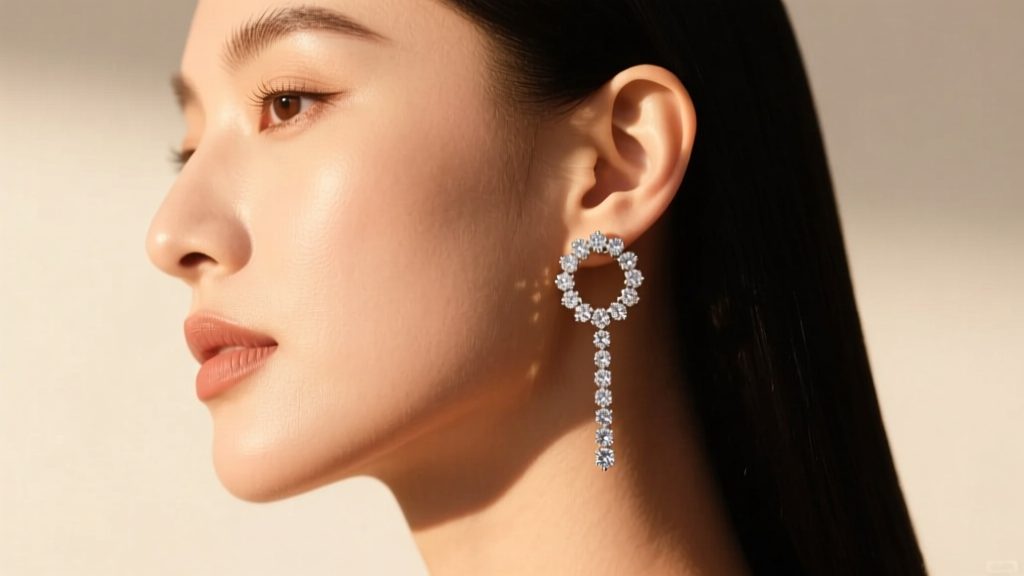
Gently run a cotton swab over the surface of the cluster. If the cotton fibers snag on any of the prongs, the setting is poorly finished. Snagging prongs will catch on hair, sweaters, and towels, eventually lifting and dropping the gemstones.
Check for Casting Porosity
Inspect the metal base between the stones. If you see tiny pits, bubbles, or a rough, sandpaper-like texture, the metal suffered from porosity during the casting process. This weakens the entire structure and makes the earring prone to snapping under minor pressure.
Verify the Hallmarks
Ensure the earring post is stamped with a clear hallmark (e.g., 14K, 585, PT950). Unclassified stamps or missing hallmarks on heavy cluster pieces are a major indicator of hollow construction or plated base metals masquerading as solid gold.
Investing in a cluster earring is an investment in intricate craftsmanship. By prioritizing structural integrity over sheer carat illusion, you ensure your earrings remain secure, comfortable, and brilliant for a lifetime.


