Pearl Emerald Earrings: Technical Setting & Care Guide
Discover the technical nuances of pearl emerald earrings. Learn about gemstone grading, secure setting methods, gauge sizes, and expert care protocols.

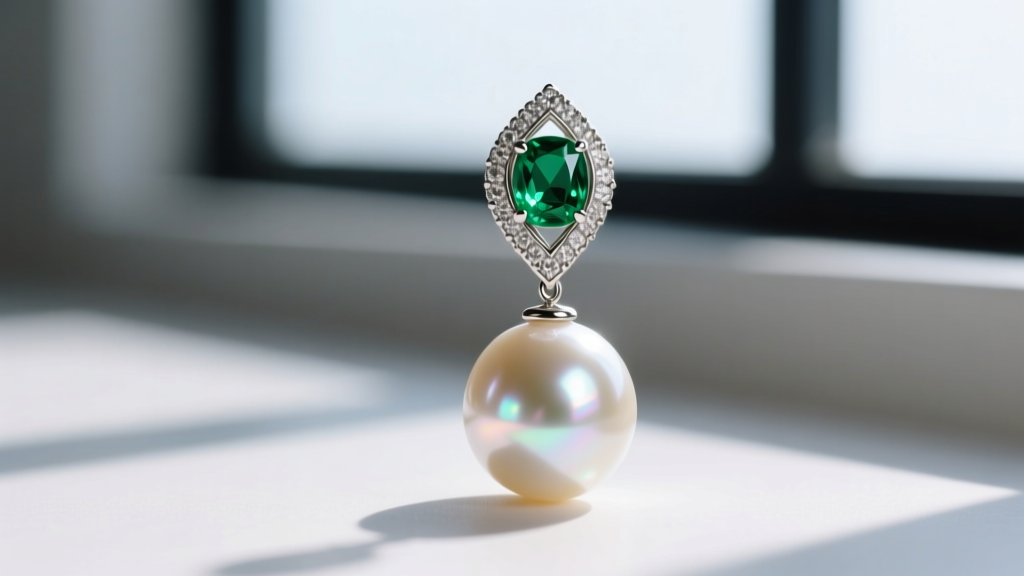
The Gemological Clash: Hardness and Structural Vulnerability
Designing and maintaining pearl emerald earrings requires navigating one of the most extreme material contrasts in fine jewelry. While both gemstones are prized for their rich, saturated colors and historical prestige, their physical properties are fundamentally incompatible when subjected to mechanical stress. Emeralds rank between 7.5 and 8 on the Mohs hardness scale, while pearls sit at a fragile 2.5 to 4.5. However, hardness (scratch resistance) should not be confused with toughness (resistance to breaking). According to the Gemological Institute of America (GIA), emeralds are classified as Type III clarity gemstones, meaning they almost always contain visible inclusions, fractures, and structural weaknesses known as 'jardin'. This makes them highly susceptible to chipping upon impact. Pearls, composed of concentric layers of aragonite and conchiolin, are vulnerable to heat, acids, and dehydration. Combining these two stones in a single earring silhouette—such as an emerald-studded huggie with a pearl drop—demands rigorous engineering to prevent catastrophic failure.
Evaluating Emerald Quality and Treatment Stability
When sourcing emeralds for earrings, the primary technical concern is the type and extent of clarity enhancement. Over 90% of commercial emeralds are fracture-filled to improve transparency. Traditional cedar oil filling is temporary and highly sensitive to the heat and ultrasonic vibrations often used during jewelry manufacturing and cleaning. Modern polymer resins, such as Opticon or ExCel, offer greater stability but fundamentally alter the stone's refractive index and long-term value. For pearl emerald earrings, it is critical to match the treatment stability of both emeralds in the pair. If one emerald is oil-filled and the other is resin-filled, they will degrade at different rates, leading to a mismatched appearance within 12 to 18 months of regular wear. Always request a lab report from a recognized institution like GIA or AGL that explicitly details the filler type and the extent of the enhancement (minor, moderate, or significant).
Pearl Grading: Nacre Thickness and Drill Tolerances
The structural integrity of the pearl component relies entirely on nacre thickness and drilling precision. For fine pearl emerald earrings, Akoya and South Sea pearls are the industry standard. The GIA Pearl Description System emphasizes that nacre thickness directly impacts durability. Akoya pearls should possess a minimum nacre thickness of 0.4mm, though premium grades exceed 0.8mm to prevent peeling or cracking around the drill hole. In drop-style earrings, pearls are typically half-drilled to accommodate a cup-and-post setting. The tolerance of this drill hole is paramount: it must be exactly 0.05mm to 0.10mm wider than the metal post. If the hole is too tight, the hydraulic pressure of the setting adhesive will cause the pearl to split; if too wide, the pearl will 'spin' or detach under the lateral torque of daily wear.
Engineering the Mount: Setting Techniques and Wire Gauges
The physical assembly of pearl emerald earrings requires distinct setting methodologies for each stone. Emeralds must never be set in standard tension or bead settings. The sharp corners of an emerald cut (the most common shape) are its weakest points. Master jewelers utilize V-prongs—thick, triangular metal caps that completely encase the corners—or full bezel settings to distribute compressive force evenly and protect against lateral impacts.
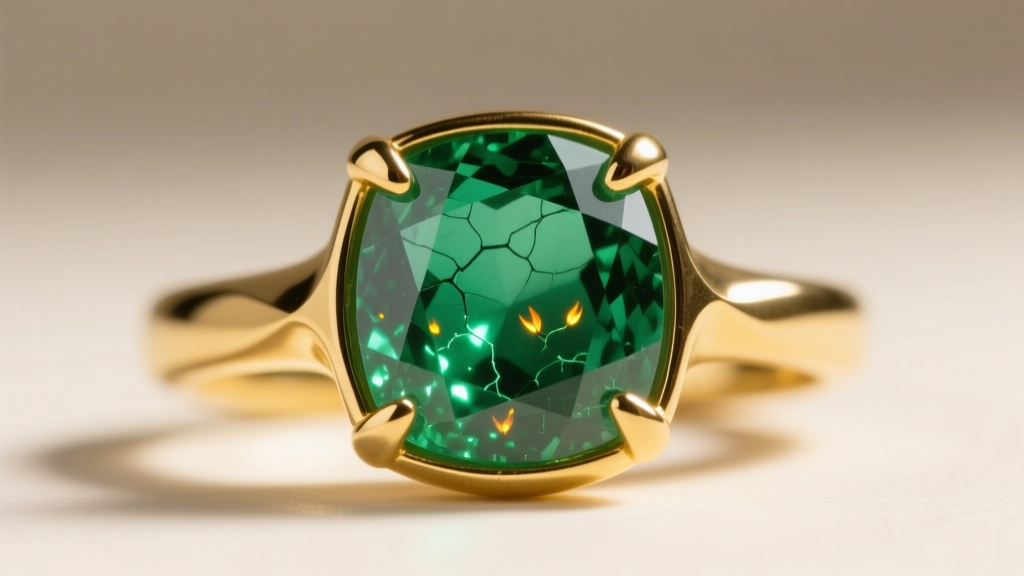
Conversely, pearls are secured mechanically and chemically via a cup-and-post system. The metal cup must feature a slightly concave interior that matches the exact curvature of the pearl's base to maximize surface area contact. The adhesive used is equally critical. Cyanoacrylate (commonly known as Super Glue) is strictly prohibited; it cures into a brittle, glass-like plastic that shatters under stress and leaves a white residue that permanently ruins the pearl's nacre. Expert bench jewelers exclusively use a two-part, non-shrinking epoxy, such as Devcon 5-Minute Steel or specialized gem-setting epoxies, which retain a slight flexibility after a 24-hour cure time, absorbing micro-shocks from daily movement.
Post Gauge Specifications
The wire gauge of the earring post dictates the lifespan of the mounting. Standard fashion earrings utilize 20-gauge (0.81mm) or 22-gauge (0.64mm) wire. However, the combined weight of a multi-carat emerald and a 9mm South Sea pearl generates significant downward leverage. For pearl emerald earrings, an 18-gauge (1.02mm) or even 16-gauge (1.29mm) solid gold or platinum post is mandatory. Thinner posts will inevitably bend when snagged on clothing, transferring kinetic energy directly to the pearl's drill hole and causing it to snap off the epoxy bond.
Failure Modes and Engineering Solutions
Understanding how these complex earrings fail allows buyers and designers to preempt structural disasters. Below is a technical matrix of common failure points in dual-gemstone earrings.
| Failure Mode | Root Cause | Engineering Solution |
|---|---|---|
| Pearl Detachment | Use of cyanoacrylate glue or 20-gauge posts bending under weight. | Upgrade to 18-gauge posts; use two-part flexible jeweler's epoxy with a 24-hour cure. |
| Emerald Corner Chipping | Standard prong settings leaving the 90-degree corners exposed to impact. | Implement V-prongs or a full bezel setting machined from 18k gold for shock absorption. |
| Stone Clouding / Whitening | Ultrasonic cleaning removing cedar oil from emerald fractures or damaging pearl nacre. | Strict prohibition of ultrasonics; use only lukewarm water and a microfiber cloth. |
| Pearl Spinning | Drill hole tolerance is too wide, or the cup base is perfectly flat rather than concave. | Custom-fit the cup to the pearl's curvature; ensure drill hole is within 0.05mm of post diameter. |
Maintenance Matrix: Cleaning and Storage Protocols
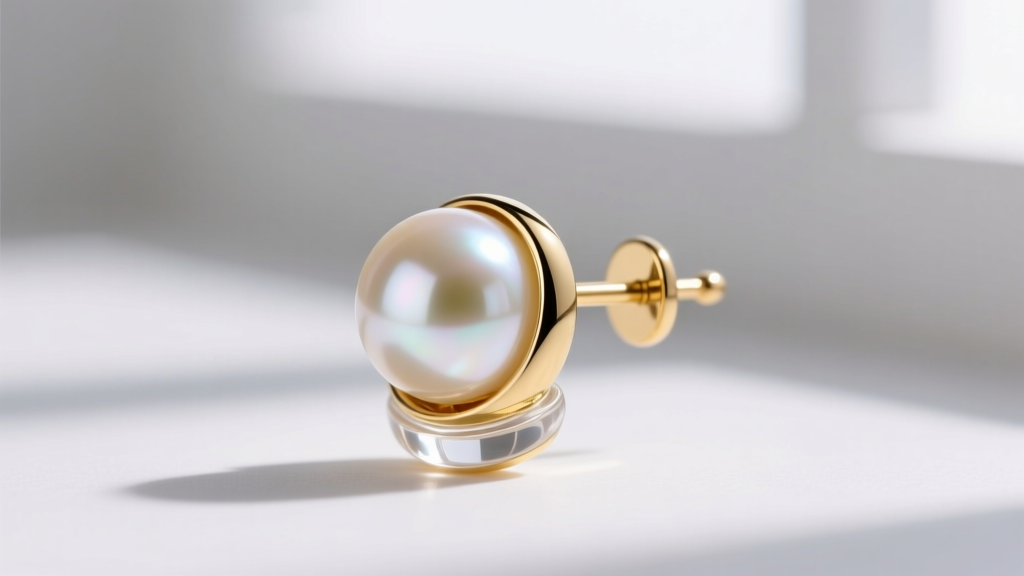
The care protocol for pearl emerald earrings must cater to the most delicate component: the pearl. Because emeralds are porous and fracture-filled, and pearls are organic and acid-sensitive, commercial jewelry dips, steam cleaners, and ultrasonic machines are universally destructive. The oils in emeralds will be stripped away, revealing white fracture lines, while the high-frequency vibrations of an ultrasonic cleaner will literally shake the pearl off its epoxy mount or shatter the nacre layers.
Step-by-Step Cleaning Protocol
- Step 1: Use a dry, ultra-soft makeup brush to gently sweep away dust and skin cells from the emerald's pavilion and the pearl's surface.
- Step 2: Dampen a lint-free microfiber cloth with distilled water (tap water contains chlorine and trace minerals that can etch the pearl over time).
- Step 3: Gently wipe the metal setting and the emerald. Avoid direct, heavy rubbing on the emerald's table facet to prevent micro-scratches from trapped silica dust.
- Step 4: Wipe the pearl with a separate, clean, slightly damp cloth to remove skin oils and cosmetics, which are mildly acidic and will degrade the luster.
- Step 5: Allow the earrings to air dry completely in a low-humidity environment before storage to prevent moisture from degrading the epoxy bond.
Storage is equally critical. Pearl emerald earrings must never be tossed into a communal jewelry box. The diamond or sapphire rings in a shared compartment will effortlessly scratch both the emerald and the pearl. Store them individually in a soft, untreated flannel pouch. Avoid airtight plastic bags or safe deposit boxes for long-term storage, as pearls require trace ambient moisture to prevent the conchiolin from drying out, which leads to irreversible crazing and yellowing.


