Best Gold Mesh Hoop Earrings: 2026 Budget & Value Guide
Discover the true value of gold mesh hoop earrings in 2026. Compare vermeil, filled, and solid options to find the best budget-friendly luxury.

The Allure and Economics of Gold Mesh Hoops
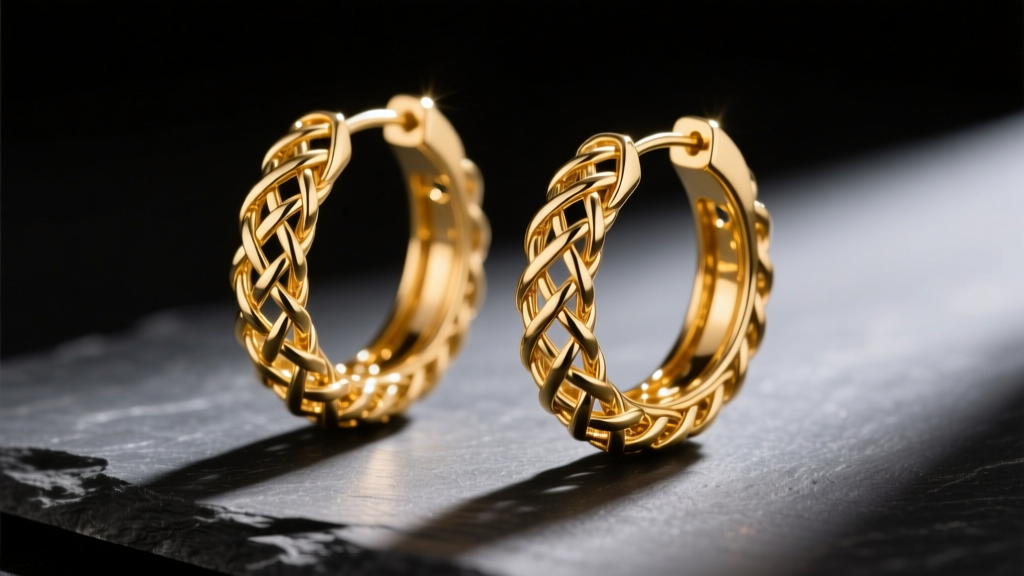
Gold mesh hoop earrings possess a unique ability to mimic the fluid drape of liquid gold while maintaining a structured, geometric silhouette. As we navigate the 2026 jewelry market, the demand for these textural statement pieces has surged, leading to a flooded marketplace where pricing often obscures true material value. For the budget-conscious collector, distinguishing between a fleeting fashion accessory and a lasting wardrobe staple requires a deep understanding of metallurgy, manufacturing techniques, and structural engineering. This guide strips away the marketing fluff to provide a rigorous budget and value assessment of gold mesh hoops, ensuring your investment aligns with your expectations for longevity and wearability.
The Anatomy of Gold Mesh Hoops: Why Construction Dictates Price
The term 'mesh' in jewelry manufacturing is frequently misused. True mesh is an intricate textile-like weave of micro-wires, whereas budget alternatives often rely on optical illusions created by metal stamping. Understanding this distinction is the first step in accurately assessing value.
Woven vs. Stamped Mesh: The Manufacturing Divide
Authentic woven mesh is created by drawing gold alloy into ultra-fine wires, sometimes as thin as 0.1 millimeters, and weaving them on specialized micro-looms. This process requires immense tensile strength from the metal, which is why pure 24k gold is never used; it is far too soft. Instead, 14k gold (58.5% pure gold alloyed with copper and silver) provides the necessary structural integrity to hold the weave without snapping. Because of the labor-intensive weaving and the sheer volume of gold wire required, true woven mesh commands a premium price.
Conversely, stamped or cast 'mesh' is merely a solid or hollow sheet of metal that has been run through a textured roller or 3D-printed with a mesh-like pattern. While visually similar from a distance, stamped mesh lacks the flexibility, light-play, and luxurious drape of woven wire. It is significantly cheaper to produce, and budget brands often pass these off as genuine mesh hoops.
Material Grades & Pricing Tiers (2026 Market Data)
When evaluating gold mesh hoop earrings, the base metal and the thickness of the gold layer are your primary metrics for determining lifespan and value retention. The 2026 market has seen a sharp increase in gold-filled options bridging the gap between cheap plating and solid gold.
| Material Grade | Base Metal | Gold Layer / Composition | 2026 Price Range | Expected Lifespan |
|---|---|---|---|---|
| Gold Vermeil | Sterling Silver (925) | Minimum 2.5µm of 14k/18k | $45 - $120 | 1 - 3 Years (Daily) |
| Gold-Filled | Jeweler's Brass | 1/20th 14k Gold (5% weight) | $65 - $150 | 5 - 15 Years |
| Solid 14k Gold | None (Homogenous Alloy) | 58.5% Pure Gold | $350 - $950+ | Lifetime / Heirloom |
According to the Gemological Institute of America (GIA), the specific alloy mix in 14k gold not only dictates the color (yellow, rose, or white) but also the hardness required for intricate wirework. When buying on a budget, gold-filled mesh offers the highest ROI, as the mechanical bonding of the gold layer to the brass core prevents the flaking commonly seen in electroplated vermeil.
Failure Modes: Where Budget Mesh Earrings Fall Short
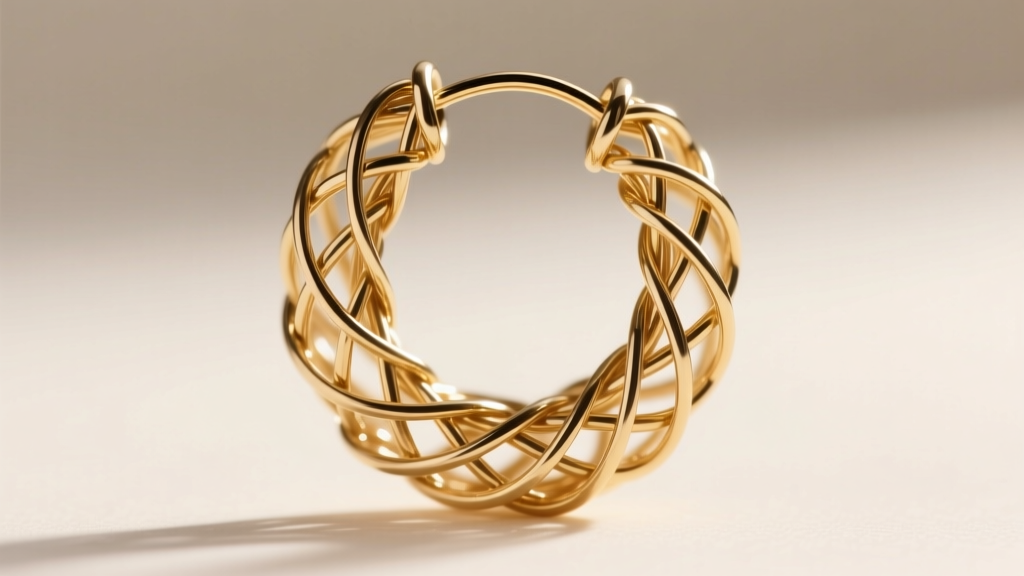
Understanding how jewelry fails is the cornerstone of smart budget allocation. Mesh earrings, due to their complex surface area, are prone to specific structural and chemical vulnerabilities that budget manufacturers often ignore.
The 'Velcro Effect' and Wire Breakage
True woven mesh is notorious for snagging. If a single micro-wire in the weave breaks or bends outward, it acts like a microscopic hook, catching on knitwear, lace, and even fine hair. In budget hoops, the tension of the weave is often inconsistent, leading to 'dead spots' where wires are loose. Once a wire snaps, the structural integrity of the entire hoop is compromised, and the mesh will begin to unravel or bunch up near the clasp. High-value hoops feature laser-welded end-caps that seal the mesh weave, preventing individual wires from slipping out of the pattern.
Friction Point Tarnish and Clasp Wear
The clasp and the ear post endure the most mechanical friction. In gold vermeil mesh hoops, the 2.5-micron gold layer can wear away entirely at these friction points within months of daily wear, exposing the sterling silver beneath. While silver tarnishes rather than turning the skin green (like copper or brass bases), it still requires constant polishing. The Federal Trade Commission Jewelry Guides strictly regulate how gold layers are advertised, yet many fast-fashion brands use ambiguous terms like 'gold dipped' to hide sub-micron plating that will fail almost immediately.
How to Evaluate Value: A Buyer's Checklist
Before purchasing gold mesh hoops, run the piece through this structural and material checklist to ensure you are paying for quality, not just a brand name.
- Post Gauge Thickness: Mesh hoops carry significant weight. The ear post must be at least 18-gauge (1.02mm) or 20-gauge (0.81mm). Anything thinner, such as 22-gauge, will bend under the weight of the mesh, causing earlobe tearing and discomfort.
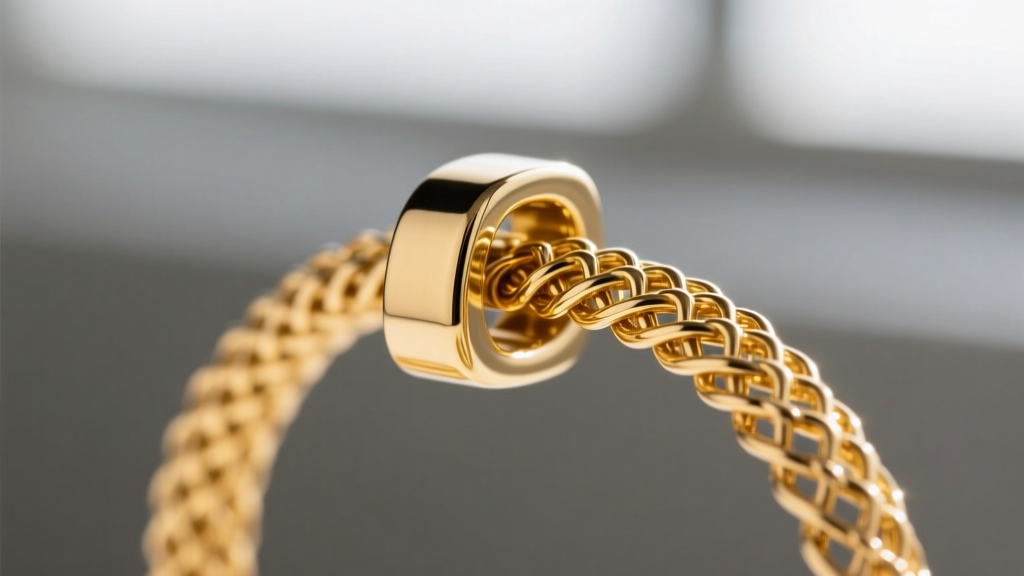
- Clasp Security: Avoid standard latch-back clasps on heavy mesh hoops. Look for a hinged saddleback or a click-top closure. These mechanisms lock the post securely into a grooved housing, preventing the earring from opening if it snags on a sweater.
- The Flexibility Test: Gently squeeze the hoop. True woven mesh should have a slight, fluid give and should not produce a metallic 'creaking' sound. If it feels entirely rigid, it is likely stamped metal or heavily soldered, which defeats the purpose of the mesh aesthetic.
- Mesh Density: Count the wires per millimeter. Higher density (more wires packed tightly) indicates a higher quality weave that is less prone to snagging and offers a more luxurious, opaque reflection of light.
Brand Benchmarking: Who Offers the Best ROI?
In the 2026 landscape, several brands have carved out niches that balance budget constraints with genuine material value. Direct-to-consumer brands like Mejuri and Gorjana frequently utilize gold vermeil and gold-filled techniques for their mesh collections, keeping prices in the $60 to $120 range. While these are excellent entry points for trend-driven styling, they require careful maintenance to avoid friction-point wear.
For those willing to stretch their budget into the $300+ range, independent jewelers and specialized goldsmiths offering solid 14k woven mesh provide unparalleled value. These pieces often feature hand-finished end-caps and custom-hinged clasps that mass-market brands cannot replicate at scale. The ROI on solid 14k mesh is significantly higher, as the piece retains intrinsic scrap value and requires zero replating costs over its lifetime.
"A well-constructed mesh hoop should move like silk, not clank like chainmail. If the jewelry sounds rigid when you tap it, you are paying for a texture, not a true weave." — Master Jeweler Benchmark
Final Verdict: Allocating Your Jewelry Budget
Gold mesh hoop earrings represent a fascinating intersection of textile-inspired design and metallurgical engineering. If your budget is strictly under $100, prioritize gold-filled options over vermeil to maximize the lifespan of the gold layer, and meticulously inspect the clasp mechanism for security. However, if you view jewelry as a long-term capsule wardrobe investment, saving for solid 14k woven mesh is the ultimate value play. By understanding the mechanics of the weave, the reality of gold alloys, and the specific failure modes of budget manufacturing, you can confidently navigate the market and select hoops that offer both enduring beauty and structural excellence.


