How to Clean and Polish Pure Silver Earrings Safely
Learn how to safely clean pure silver earrings at home. Discover expert tips on removing tarnish, storing 999 fine silver, and avoiding harsh chemicals.

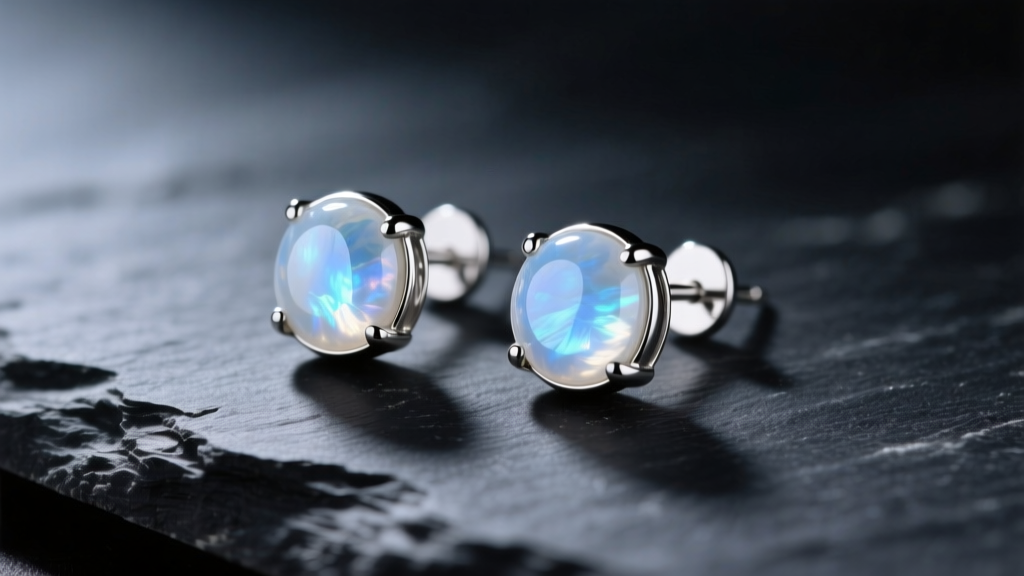
The Metallurgy of "Pure" Silver Earrings
When discussing pure silver earrings, it is crucial to first understand the metallurgical reality of the jewelry you own. In the jewelry industry, "pure silver" refers to 999 fine silver, meaning it is 99.9% silver with only trace elements of other metals. According to The London Assay Office, fine silver is exceptionally soft, boasting a Vickers Hardness (HV) of roughly 25. By comparison, standard 925 sterling silver has an HV of around 65.
Because of this extreme softness, it is virtually impossible to find a pair of earrings where every single component is 999 pure silver. The structural elements—specifically the earring posts, hooks, and butterfly backs—must be crafted from 925 sterling silver, surgical steel, or titanium to prevent bending and ensure the earring stays securely in your piercing. Therefore, when you clean your pure silver earrings, you are often dealing with a hybrid piece: a 999 fine silver decorative face or bezel, attached to a harder alloy post. This distinction is vital, as the cleaning agents you use must be safe for both the pure silver elements and any secondary metals or gemstones present.
The Chemistry of Tarnish on Fine Silver
A common misconception is that pure silver does not tarnish. While it is true that 999 silver lacks the copper alloy found in sterling silver (which is responsible for rapid blackening and the dreaded "green skin" effect), pure silver is still susceptible to environmental degradation. The Gemological Institute of America (GIA) notes that silver reacts with hydrogen sulfide (H2S) in the air to form silver sulfide (Ag2S), which manifests as a dull, yellowish, or eventually black film on the surface of the metal.
Because pure silver earrings lack copper, their tarnish layer tends to develop much slower and is generally easier to remove than the stubborn copper sulfide tarnish found on sterling pieces. However, the softness of 999 silver means that aggressive polishing to remove this silver sulfide layer can easily strip away microscopic layers of the precious metal itself, leading to a loss of detail in intricately cast or engraved designs.
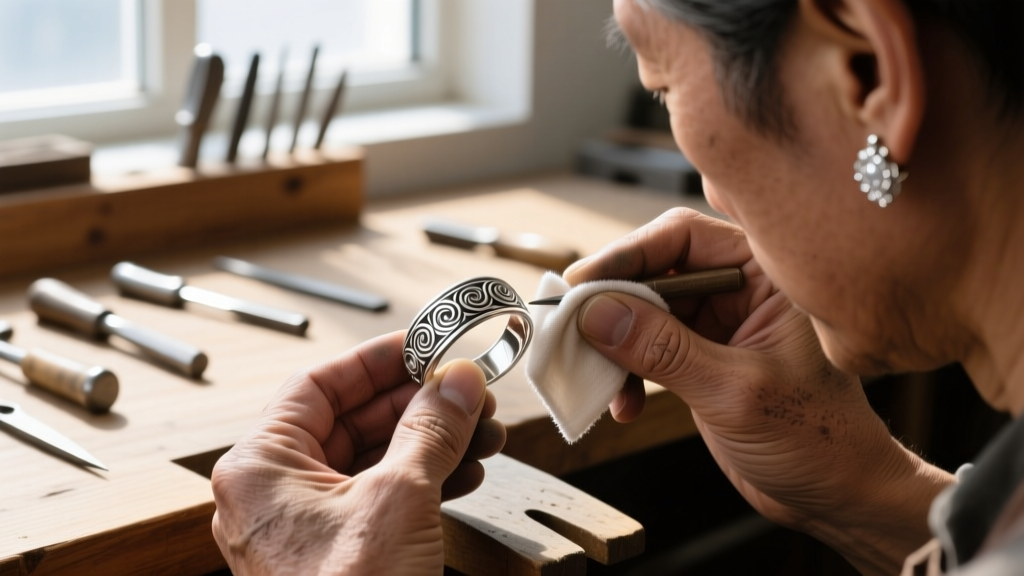
Step-by-Step Cleaning Routine for Pure Silver
To maintain the brilliant luster of your pure silver earrings without causing micro-scratches, follow this gentle, expert-approved cleaning protocol. This method is specifically designed for 999 fine silver components.
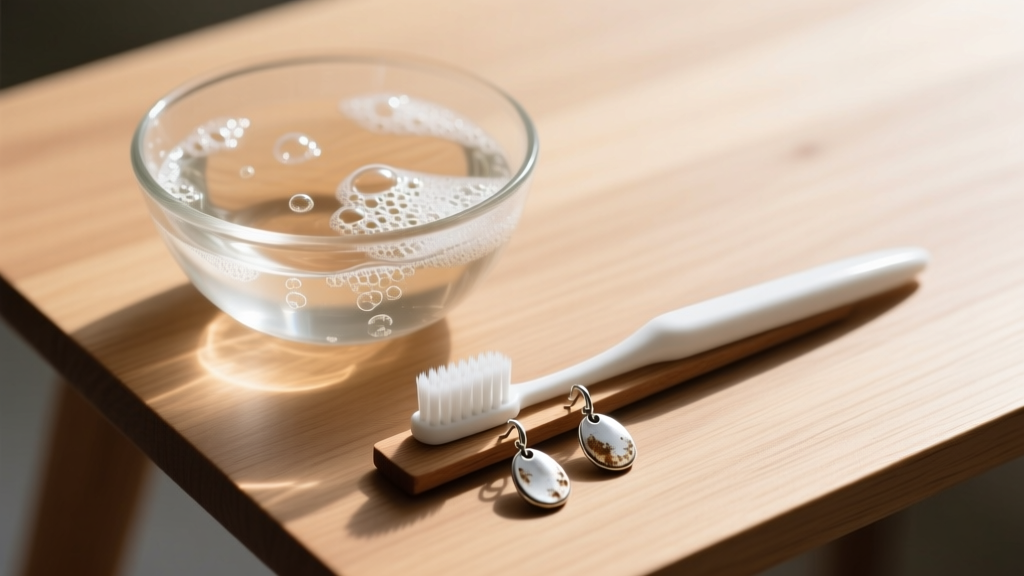
Step 1: The Distilled Water Soak
Tap water contains chlorine and dissolved minerals that can leave spots or react with the silver. Fill a small glass bowl with lukewarm distilled water. Add two drops of a phosphate-free, mild dish soap (such as original blue Dawn). Submerge your earrings for exactly 3 to 5 minutes. This loosens sebum, dead skin cells, and cosmetic residue trapped in the bezels or crevices without requiring abrasive scrubbing.
Step 2: Gentle Agitation
Remove the earrings from the soak. Using an ultra-soft baby toothbrush (never a standard adult toothbrush, as the bristles are too stiff for 999 silver), gently brush the crevices. Always brush in a single direction rather than using circular motions, which can create visible swirl marks on the soft metal.
Step 3: The Microfiber Buff
Rinse the earrings under a gentle stream of distilled water. Pat them dry with a lint-free paper towel, then use a dedicated, untreated microfiber jewelry cloth to buff the surface. Apply zero downward pressure; let the fibers of the cloth do the work of picking up the remaining moisture and light surface sulfides.
Hazardous Cleaning Methods to Avoid
The internet is rife with DIY jewelry cleaning hacks that can permanently damage pure silver earrings. Below is a breakdown of common methods and why they should be avoided for 999 fine silver.
| Cleaning Method | Effect on 999 Pure Silver | Verdict |
|---|---|---|
| Baking Soda & Aluminum Foil Bath | Creates an electrochemical reaction that can cause micro-pitting on pure silver and strip intentional antiquing or patina. | Avoid |
| Ultrasonic Cleaners | High-frequency vibrations can bend soft 999 silver components and shake tension-set gemstones loose from their bezels. | Avoid |
| Whitening Toothpaste | Contains hydrated silica with a Mohs hardness of 7, which will deeply scratch 999 silver (Mohs 2.5-3) and ruin the mirror finish. | Strictly Avoid |
| Commercial Silver Dips (Thiourea) | Strips tarnish instantly but leaves a chemical residue that accelerates future tarnishing and can irritate sensitive earlobes. | Use with Extreme Caution |
"Fine silver (999) is prized for its brilliant luster and hypoallergenic properties, but its Vickers hardness of roughly 25 HV means it requires a gentler touch than standard sterling alloys. Treat it like a soft gemstone, not a hardened metal."
Advanced Storage Protocols to Prevent Tarnish
Because prevention is always superior to polishing, proper storage is the cornerstone of pure silver earring maintenance. The goal is to eliminate the two primary catalysts for silver sulfide formation: airborne sulfur compounds and ambient humidity.
- Anti-Tarnish Strips: Place a 3M Anti-Tarnish strip inside your jewelry box or ziplock bag. These strips utilize a specialized copper-based polymer that absorbs hydrogen sulfide gas from the surrounding air before it can reach your earrings. Replace them every 6 months.
- Pacific Silvercloth: For long-term storage, wrap your pure silver earrings in Pacific Silvercloth. This material is embedded with microscopic silver particles that act as a sacrificial barrier, tarnishing themselves so your earrings do not.
- Silica Gel Packets: Moisture accelerates chemical reactions. Toss a few silica gel packets into your jewelry drawer to keep the relative humidity below 40%, drastically slowing the tarnishing process.
- Avoid Cardboard and Rubber: Never store pure silver in cardboard boxes or near rubber bands. Both materials emit sulfur gases as they degrade, which will rapidly blacken your earrings.
Troubleshooting Scratches, Bends, and Gemstone Care
Due to the inherent softness of 999 fine silver, minor scratches and slight bends are an inevitable part of ownership. If your pure silver earrings feature a mirror finish, micro-scratches will be highly visible. You can mitigate this by embracing a "satin" or "matte" finish, which can be achieved by a professional jeweler using a fiberglass scratch brush; this finish hides future wear beautifully.
If your earring post (which, as noted, is likely 925 sterling or steel) becomes bent, do not attempt to bend it back into shape while it is still attached to the 999 silver decorative face. The stress transfer can cause the pure silver solder joint to snap. Instead, take the piece to a bench jeweler who can secure the decorative element in a thermoplastic jig before straightening the post.
Finally, if your pure silver earrings feature porous gemstones like turquoise, opal, or pearls, never submerge them in water. The distilled water soak mentioned earlier can seep into the bezel and degrade the adhesive or cause the porous stones to crack as they dry. For these pieces, rely solely on a slightly damp microfiber cloth to wipe the silver, carefully avoiding the gemstone settings.


