How to Choose and Wear a Continuous Gold Earring Band Safely
Learn how to choose, insert, and care for a continuous gold earring band. Discover gauge sizes, karat differences, and safe insertion techniques.

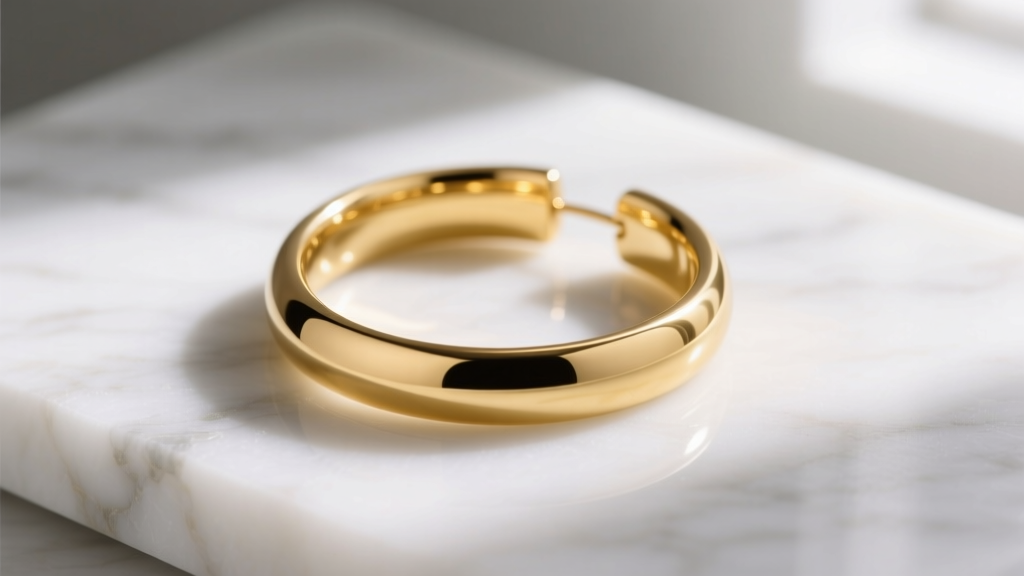
The Ultimate Beginner’s Guide to the Continuous Gold Earring Band
If you are stepping into the world of fine body jewelry, few pieces are as iconic, versatile, and deceptively complex as the continuous gold earring band. Often referred to as seamless hoops, sleeper rings, or continuous loops, these minimalist staples have dominated 2026 jewelry trends due to their sleek, uninterrupted silhouettes. Unlike hinged clickers or captive bead rings that rely on mechanical tension or tiny ball bearings, a continuous band is a single, unbroken circle of precious metal with a straight, flush-cut seam.
While they look incredibly simple, choosing the right gold earring band requires a solid understanding of metallurgy, piercing anatomy, and proper handling techniques. Bend it the wrong way, and you will permanently warp the circle. Choose the wrong gauge, and you risk migration or tearing. This comprehensive guide will walk you through everything you need to know to confidently select, insert, and maintain your first seamless gold hoop.
Decoding Gold Purity: Why 24K Is a Terrible Idea
When shopping for a gold earring band, the karat weight dictates not just the color and price, but the structural integrity of the jewelry. Pure gold is exceptionally malleable, which is a major liability for seamless hoops that rely on the metal's tensile strength and "spring-back" memory to stay closed in your ear.
| Karat | Gold Purity | Durability & Tensile Strength | Best Use Case |
|---|---|---|---|
| 24K | 99.9% | Extremely soft; warps easily and lacks spring-back memory. | Avoid for continuous bands. Suitable only for solid, non-moving plugs. |
| 18K | 75.0% | Rich color with good durability. Slightly softer than 14K but highly biocompatible. | Ideal for healed lobes and cartilage. The premium choice for fine jewelry. |
| 14K | 58.5% | Excellent tensile strength. Holds its circular shape perfectly under daily stress. | The gold standard for daily wear, active lifestyles, and fresh piercings. |
According to the Gemological Institute of America, the alloy metals mixed with pure gold (such as copper, silver, and zinc) are what provide the necessary hardness. For a continuous gold earring band, 14K and 18K are the only viable options. The alloy composition also dictates the color: rose gold gets its hue from a higher copper content, which incidentally makes it slightly more durable than white gold, which relies on nickel or palladium alloys and rhodium plating.
Gauge Sizes and Inner Diameters: Getting the Perfect Fit
Sizing a seamless hoop requires two distinct measurements: the gauge (the thickness of the wire) and the inner diameter (the empty space inside the circle). Getting either of these wrong will result in discomfort, pressure necrosis, or the jewelry falling out.
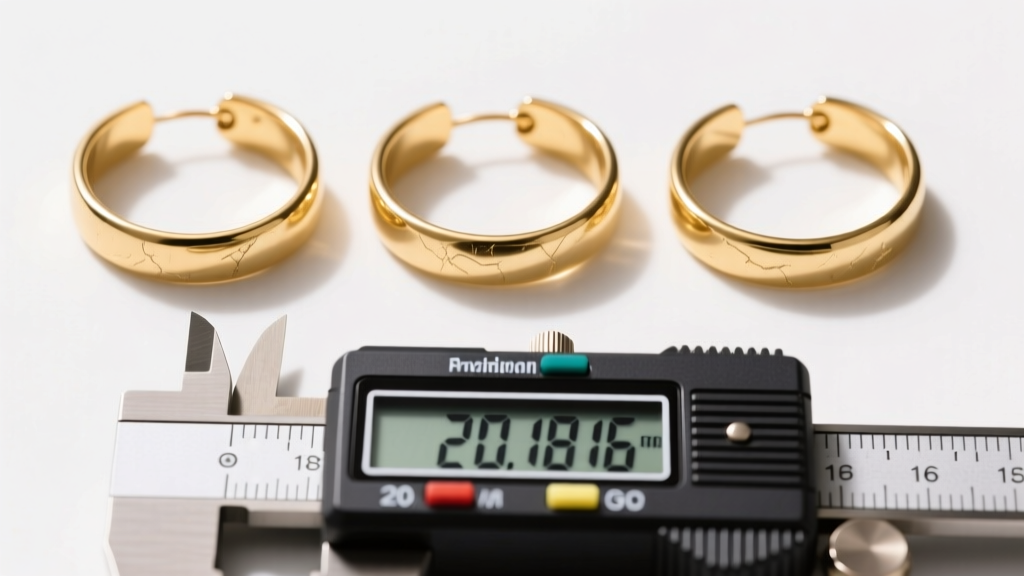
Understanding Wire Gauge
- 20 Gauge (0.81mm): The standard for traditional earlobe piercings done with a piercing gun (though we strongly advise against gun piercings). It is delicate and best for lightweight, small-diameter lobes.
- 18 Gauge (1.02mm): The most common size for professionally needle-pierced earlobes and some finer cartilage piercings like the rook or daith.
- 16 Gauge (1.29mm): The universal standard for most cartilage piercings, including the helix, tragus, conch, and septum. It provides the necessary structural support to prevent the "cheese-cutter effect," where thin wire slowly migrates through the tissue.
Selecting the Inner Diameter (ID)
The ID determines how the band sits against your anatomy. A 6mm ID will act as a snug "huggie" on a standard lobe, but might be too tight for a thick helix, causing the seam to pull apart when the tissue swells. An 8mm ID is the most versatile starting point for standard lobes, while 10mm to 12mm is preferred for a dangle effect or for accommodating the curvature of a conch piercing. Always consult a professional piercer to measure your specific anatomy before purchasing.
Step-by-Step: How to Insert and Remove Your Earring Band
The most common reason beginners ruin their seamless hoops is by opening them incorrectly. If you pull the two ends of the seam apart laterally like a clamshell (forming a "C" shape), you will destroy the circular geometry. The band will never close flush again, and the jagged seam will tear your piercing channel.
Expert Rule of Thumb: Never pull a continuous band apart. Always twist it open. The metal is designed to handle torsional stress, not lateral bending.
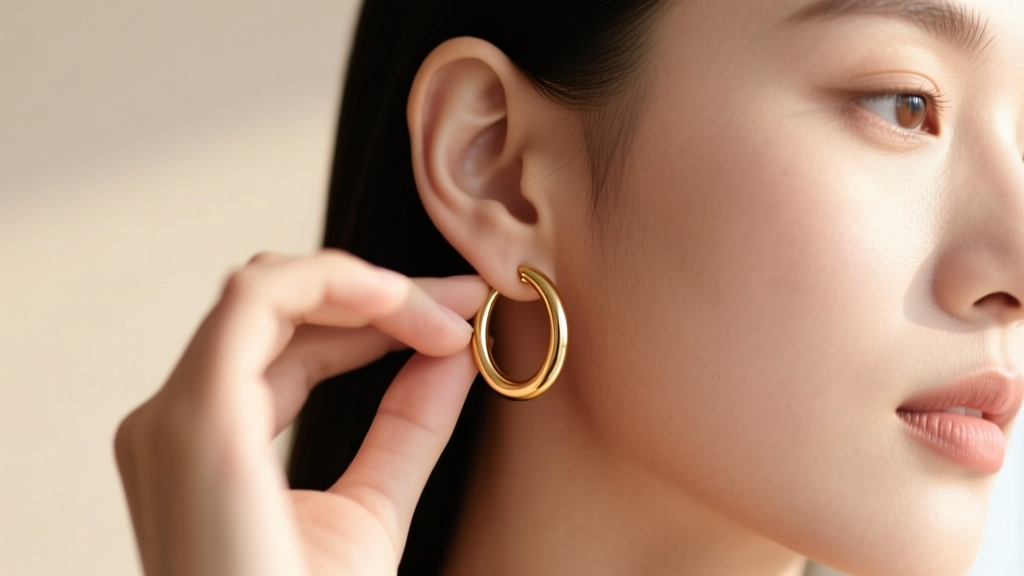
The Lateral Twist Method
- Grip the Band: Hold the earring with both hands, placing your thumbs and index fingers on either side of the seam.
- Twist, Don't Pull: Gently twist one hand toward your body and the other hand away from your body. This lateral torsion opens the seam sideways, keeping the perfect circle intact.
- Insert: Slide the straight, flush-cut wire through your piercing channel from the front to the back.
- Close the Loop: Once the wire is through, reverse the twisting motion to bring the two ends back together. You should feel a satisfying "click" or friction lock as the ends align perfectly flush.
- Check the Seam: Run your fingernail lightly over the closure. If it catches, the band is slightly misaligned. Twist it a fraction of a millimeter until it is perfectly smooth.
For detailed safety protocols and material biocompatibility standards, always refer to the guidelines published by the Association of Professional Piercers.
Common Beginner Mistakes and Troubleshooting
Even with the right technique, beginners often encounter a few hurdles when transitioning to seamless jewelry. Here is how to troubleshoot the most frequent issues:
The Seam Keeps Opening
If your gold earring band constantly pops open, the inner diameter is likely too small for your piercing's swelling profile, or the gauge is too thin to withstand the tension of your anatomy. Upsizing the diameter by 1mm or moving from 20G to 18G usually resolves this. Additionally, sleeping on a tight hoop can put lateral pressure on the seam, forcing it open against your pillow.
The Band Won't Close Flush
This happens when the hoop has been accidentally pulled into an oval shape. To fix it, gently squeeze the hoop between your palms to restore its circular shape, then use the lateral twist method to realign the ends. If the wire is severely kinked, take it to a professional jeweler who can reshape it using a mandrel.
Hygiene and the Micro-Seam
While high-quality continuous bands are milled to have a nearly invisible seam, microscopic bacteria can still accumulate in the gap. During your daily shower, gently rotate the band through the piercing to flush the seam with warm water and a mild, fragrance-free soap. For healing piercings, sterile saline wound wash is mandatory, as recommended by the APP aftercare guidelines.
Trusted Brands and 2026 Pricing Expectations
Investing in a high-quality gold earring band means paying for precise CNC milling and premium alloys. Cheap, mass-produced "gold-plated" seamless rings will quickly wear down at the seam, exposing base metals that cause contact dermatitis and green skin.
- BVLA (Body Vision Los Angeles): The pinnacle of luxury body jewelry. Their 14K and 18K continuous rings are milled to exacting tolerances. Expect to pay between $80 and $150 per band, depending on the diameter and karat weight.
- Maria Tash: Famous for popularizing the curated ear aesthetic. Their seamless bands often feature subtle matte finishes or diamond-dust textures that are highly trendy in 2026. Prices range from $120 to $350.
- Anatometal: Known for their aerospace-grade metals, their 18K gold seamless rings are incredibly durable and perfectly flush. Pricing typically sits around $90 to $130.
- Small Batch Jewelers (Etsy/Instagram): Many independent casters offer solid 14K sleeper hoops in the $35 to $60 range. Always verify that the seller guarantees solid gold, not gold-filled or heavily plated brass, which will eventually snap at the seam.
Final Thoughts on Your First Gold Band
A continuous gold earring band is more than just a piece of jewelry; it is a masterclass in minimalist engineering. By respecting the metallurgy of 14K and 18K gold, accurately measuring your gauge and diameter, and mastering the lateral twist insertion method, you will secure a timeless, comfortable, and infinitely stylish staple for your curated ear. Take your time, invest in solid metals, and never force the seam—your piercings will thank you for it.


