Copper Patina Earrings: Expert Buying Guide & Care
Discover what to look for when buying copper patina earrings. Our expert guide covers alloy grades, sealants, gauge sizes, and skin-safe care tips.

The Allure of Oxidized Copper: Why Patina Matters
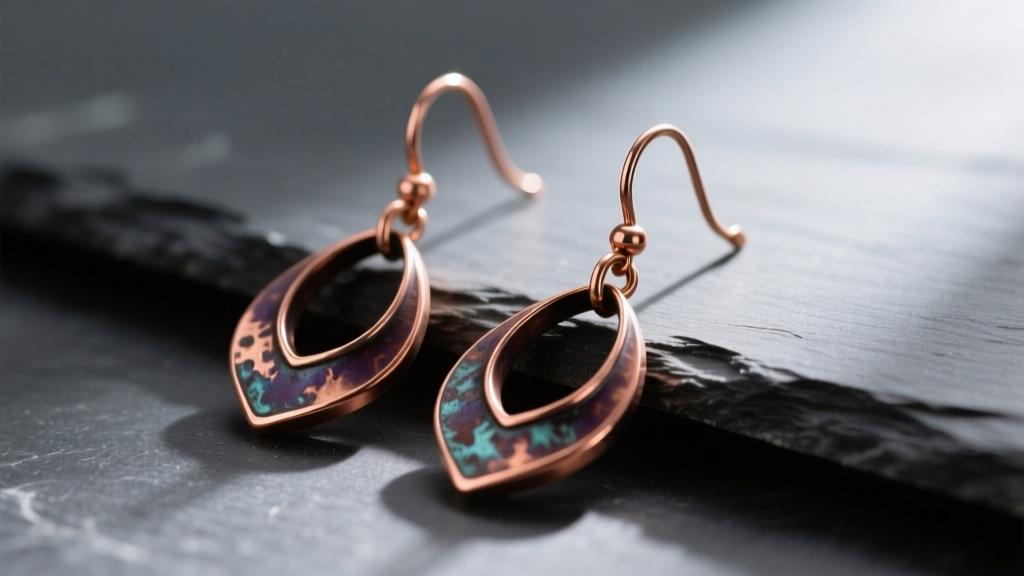
Copper patina earrings occupy a unique space in modern jewelry design, bridging the gap between rustic antiquity and contemporary bohemian aesthetics. Unlike polished gold or sterling silver, which rely on high-reflectivity for their appeal, patinated copper draws the eye through depth, texture, and complex color gradients. The patina—a controlled layer of oxidation or sulfide—transforms flat, bright orange metal into a canvas of deep mahogany, charcoal black, or even striking verdigris greens and blues. However, buying copper jewelry requires navigating a minefield of metallurgical realities, skin chemistry, and structural integrity. This guide provides a comprehensive framework for evaluating copper patina earrings, ensuring you invest in pieces that are both visually stunning and structurally sound.
The Metallurgy of Patina: Pure Copper vs. Alloys
Not all 'copper' earrings are created equal. The base metal dictates not only the structural durability of the earring but also how it accepts and holds a patina. When shopping, look for artisans and brands that disclose their specific alloy grades. According to the Rio Grande Metal Guide, understanding these grades is critical for predicting how a piece will age.
| Alloy Grade | Composition | Patina Profile | Durability & Notes |
|---|---|---|---|
| C110 (Pure Copper) | 99.9% Cu | Deep black/brown with Liver of Sulfur; natural verdigris (green/blue) over time. | Highly malleable. Requires work-hardening for ear wires to prevent bending. |
| C260 (Cartridge Brass) | 70% Cu, 30% Zn | Warmer, golden-brown oxidation. Slower to develop natural verdigris. | Stiffer than pure copper. Excellent for structural dangles and geometric shapes. |
| C510 (Phosphor Bronze) | 95% Cu, 5% Sn | Rich, earthy sepia tones. Highly resistant to uneven spotting. | Very high fatigue resistance. Ideal for heavy hoop earrings and cartilage cuffs. |
The Chemistry of Wear: Preventing the 'Green Ear' Effect
The most common complaint regarding copper earrings is the chelation reaction that turns the skin green. This is not an allergic reaction, but a chemical one. When the acids in your sweat and sebum interact with unsealed copper, they create copper chloride—a green salt that transfers to the skin. While harmless and easily washed off with soap, it is highly undesirable for daily wear. When buying, you must verify how the artisan has sealed the areas of the earring that touch the skin, particularly the ear wire and the back of the post or clip.
Sealants and Finishes: What to Demand from Artisans
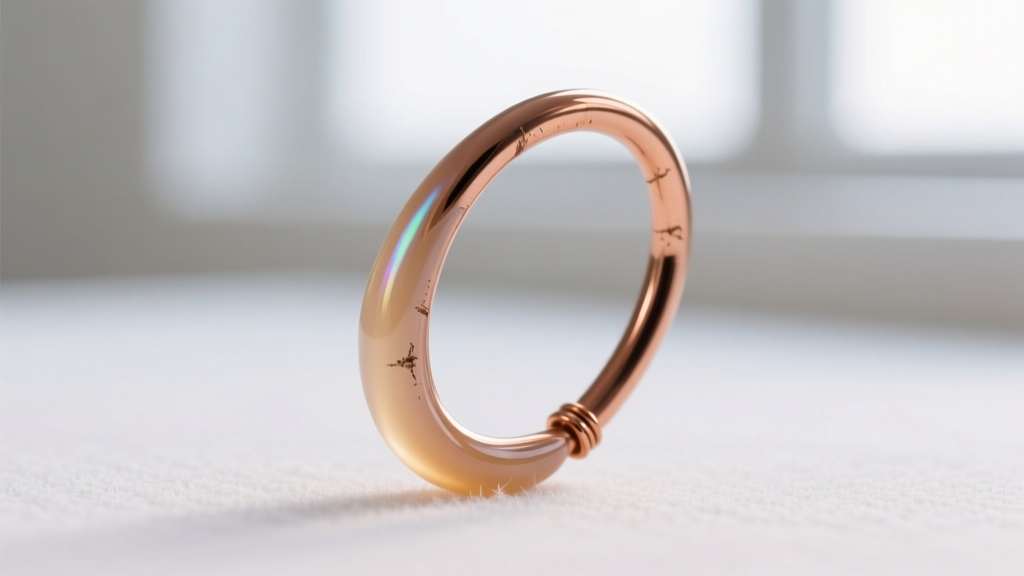
In 2026, the jewelry market has moved beyond cheap polyurethane sprays that peel and flake within weeks. High-quality copper patina earrings utilize advanced barrier methods that preserve the oxidation without altering the tactile feel of the metal. Here is the decision framework for evaluating sealants:
- Microcrystalline Wax (e.g., Renaissance Wax): The gold standard for museum conservation. It provides a soft, matte finish that feels like bare metal. Failure mode: Requires reapplication every 3-6 months with frequent wear.
- Cross-Linked Polymers (e.g., ProtectaClear): A two-part clear coat that cures into a flexible, skin-safe resin. It is virtually invisible and highly resistant to sweat. Failure mode: If applied too thickly, it can look like cheap plastic and trap moisture underneath if scratched.
- Nano-Ceramic Coatings: The newest innovation in artisan jewelry. These e-coatings are applied via electrolysis, creating a microscopic ceramic barrier. They are incredibly durable but often strip the 'warmth' from the copper, leaving it feeling slightly cold and glassy.
Avoid: Standard clear nail polish or generic aerosol lacquers. These contain solvents that can react with liver-of-sulfur patinas, turning them milky or causing them to flake off in humid climates.
Sizing, Gauges, and Ear Wire Anatomy
Copper is a relatively soft metal, which presents unique challenges for ear wires. A poorly constructed copper hook will slowly unroll and drop the earring throughout the day. According to metallurgical resources at Ganoksin, the hardening process is just as important as the gauge size.
- 20-Gauge (0.81mm): The standard for most lobe piercings. If buying 20g copper wires, ensure the artisan specifies they are 'work-hardened' or 'half-hard.' Dead-soft 20g copper will deform under the weight of even a modest dangle.
- 18-Gauge (1.02mm): Recommended for heavier statement pieces, large hoops, or cartilage piercings (like the helix or conch). The extra thickness provides the necessary tensile strength to hold the earring's shape without needing excessive hardening, which can make the wire brittle.
Pro-Tip: Look for 'tumbled' ear wires. Artisans often tumble copper findings in stainless steel shot to compress the surface molecules, vastly increasing the wire's stiffness and creating a smoother surface that won't drag through a healing or sensitive piercing.
Pricing Tiers: Artisan vs. Mass-Produced
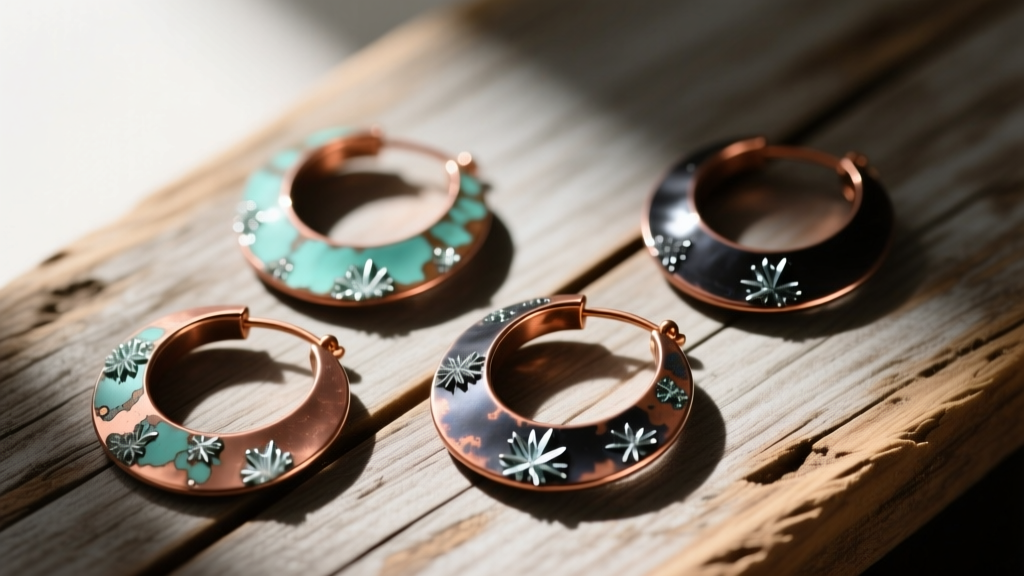
Understanding the pricing structure of copper patina earrings helps you identify true craftsmanship versus inflated drop-shipped goods.
- $15 - $35 (Mass-Produced/Cast): Typically cast from lower-grade brass alloys with a faux-patina wash. The 'oxidation' is often just a surface paint that rubs off. Ear wires are usually dead-soft and prone to snapping or bending.
- $45 - $90 (Studio Artisan): Hand-fabricated from C110 or C260 sheet and wire. Patinas are chemically grown using liver of sulfur or ammonia fuming, then hand-sanded with steel wool to reveal highlights. Properly sealed with Renaissance wax or ProtectaClear.
- $120 - $250+ (Master Metalsmiths): Features complex techniques like fold-forming, keum-boo (gold foil application), or mokume-gane. The patina is used to create extreme topographical contrast, and the structural engineering of the clasps and hinges is flawless.
Care and Maintenance Framework
Even the best-sealed copper patina earrings require specific care to maintain their intentional coloration. The goal is to clean the piece without stripping the sulfide layer.
- Daily Wipe: After wearing, wipe the unsealed high-points with a dry, lint-free microfiber cloth to remove skin oils.
- Deep Cleaning: Use a drop of pH-neutral dish soap and lukewarm water. Gently rub with your fingertips. Never use a toothbrush, as the bristles will act as a mild abrasive and polish away the dark patina in the crevices.
- Storage: Store in an anti-tarnish cloth pouch. Avoid airtight plastic baggies, as trapped humidity combined with residual skin acids can cause localized 'bronze disease' (a destructive, powdery green corrosion).
'The beauty of copper lies in its reactivity. As a jeweler, my job isn't to stop the metal from changing, but to guide its evolution so that the piece looks better in five years than it did on the day it was finished.' — Elena Rostova, Master Metalsmith
By prioritizing specific alloy grades, demanding modern skin-safe sealants, and verifying the work-hardening of ear wires, you can confidently curate a collection of copper patina earrings that are as durable as they are beautiful. For further reading on metal allergies and contact dermatitis, consult the American Academy of Dermatology to ensure your chosen alloys are free from hidden nickel contaminants often found in cheap brass mixtures.


