Corkscrew Earrings: 2026 Trend Analysis & Styling Guide
Discover the 2026 trends for corkscrew earrings. Our expert guide covers tension mechanics, gauge sizes, premium materials, and curated ear styling.

The Resurgence of the Spiral: 2026 Trend Context
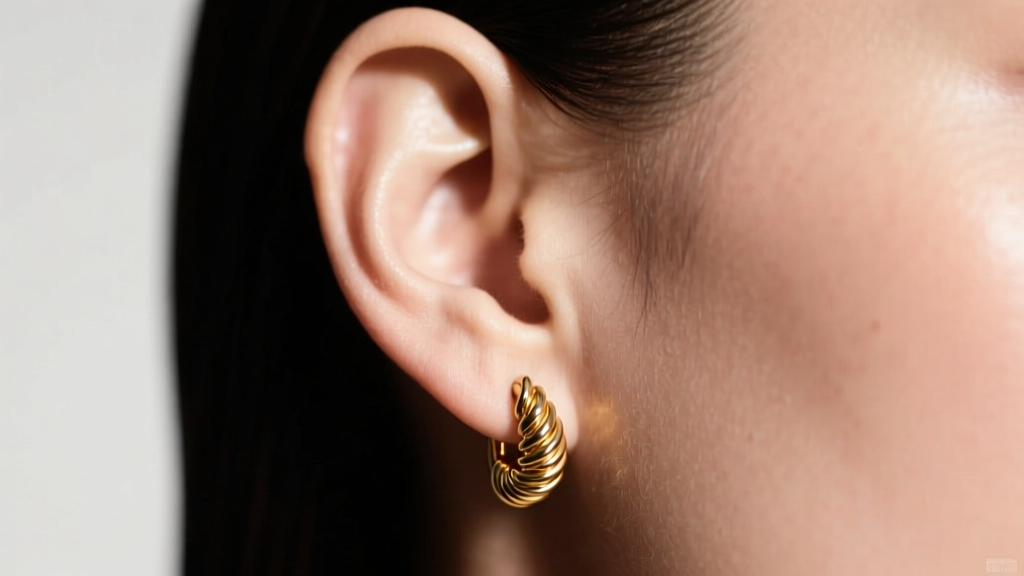
Corkscrew earrings—frequently referred to as ear spirals, helix wraps, or continuous cuffs—have officially transcended their early-2000s alternative subculture roots. In 2026, they are a cornerstone of the "ethereal armor" and high-end curated ear movements. According to recent trend forecasts by Vogue, the modern consumer is moving away from static, single-point piercings in favor of dynamic, sweeping jewelry that interacts with the natural topography of the auricle. Corkscrew earrings provide the illusion of multiple piercings or an elaborate ear cuff, often requiring only a single helix piercing (or no piercing at all, in the case of tension cuffs).
However, the market is flooded with poorly engineered spirals that fail within weeks. As a domain expert, I see countless clients struggling with warped metals, lost tension, and allergic contact dermatitis. This guide deconstructs the mechanics, metallurgy, and styling frameworks of corkscrew earrings to help you invest in pieces that actually stay on your ear.
Anatomy of a Corkscrew: Gauges, Tension, and Failure Modes
To understand why some corkscrew earrings fall off while others grip perfectly, you must understand radial tension and metal memory. A true corkscrew earring relies on the tensile strength of the wire to maintain its spiral shape against the curved edge of the ear.
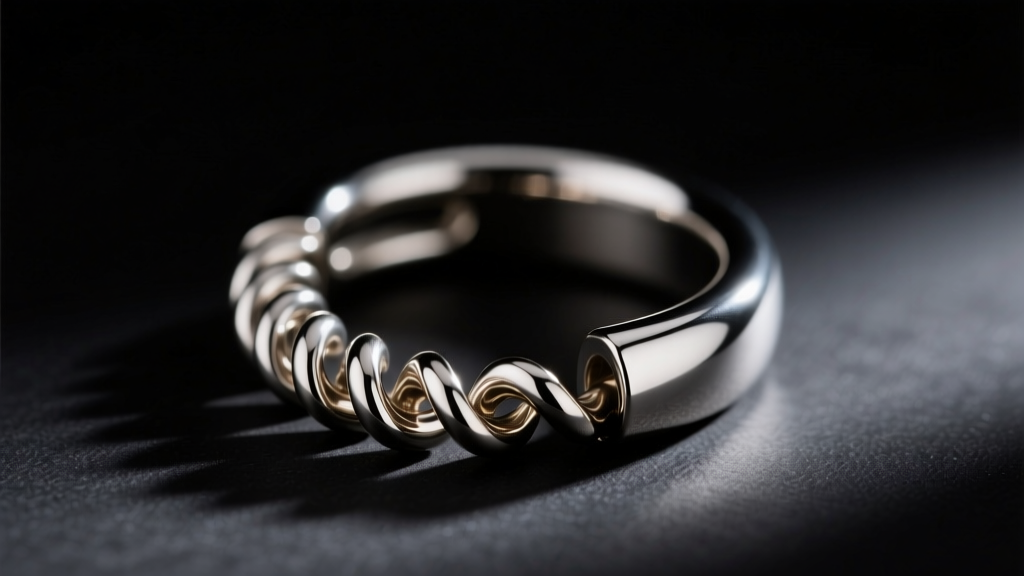
The most common failure mode in budget corkscrew earrings is gauge miscalculation. Many fast-fashion brands manufacture spirals using 20-gauge (0.8mm) or 22-gauge (0.6mm) wire to save on material costs. At this thickness, the metal lacks the structural rigidity to withstand the friction of putting on a sweater or brushing your hair. The wire work-hardens, bends outward, and loses its grip.
For a corkscrew earring to maintain permanent tension, the optimal gauge is 18-gauge (1.0mm) for delicate lobe wraps, and 16-gauge (1.2mm) for robust helix and cartilage spirals. Furthermore, the metal must possess high "memory"—the ability to return to its original shape after slight flexion.
Why Cheap Spirals Fall Out (And How to Fix It)
Sterling silver (925) is notoriously soft. When used for a corkscrew ear cuff, the constant micro-adjustments required to put it on and take it off cause the silver to fatigue. Once the crystalline structure of the silver fatigues, the spiral widens, and the earring slides off the ear, usually resulting in loss. If you already own a high-end gold or titanium spiral that has lost its grip, a professional piercer can carefully re-tension the wire using nylon-jaw pliers, restoring the original radial curve without marring the polished finish.
Material Matrix: What to Buy in 2026
When investing in corkscrew earrings, material choice dictates both the longevity of the tension and the biocompatibility of the piece. The Association of Professional Piercers strictly recommends specific alloys for long-term wear, especially for pieces that hug the cartilage where moisture and friction can trigger reactions.
| Material | Optimal Gauge | Tension Memory | Biocompatibility | Price Range |
|---|---|---|---|---|
| Implant-Grade Titanium (ASTM F136) | 16g (1.2mm) | Excellent | Hypoallergenic, ideal for sensitive skin | $80 - $150 |
| 14k Solid Gold (Nickel-Free) | 16g or 18g | Very Good | High, but verify nickel-free alloy | $250 - $450 |
| 18k Solid Gold | 18g (1.0mm) | Good (softer than 14k) | Excellent, premium luxury standard | $400 - $800+ |
| Niobium (Anodized) | 16g (1.2mm) | Excellent | Hypoallergenic, great for color options | $60 - $120 |
| Sterling Silver (925) | N/A (Not Recommended) | Poor (work-hardens) | Low (contains copper, causes reactions) | $20 - $50 |
How to Measure Your Ear for a Perfect Fit
One of the most overlooked aspects of buying corkscrew earrings online is the inner diameter of the spiral. Unlike a standard hoop earring that hangs freely, a corkscrew must hug the exact thickness of your ear's outer rim. To measure, use a digital caliper to measure the width of your helix or lobe edge where the jewelry will sit.
- Thin Rim (4mm - 5mm): Requires a tight, custom-bent spiral or a specialized small-diameter cuff. Standard 6mm cuffs will feel loose and rotate.
- Standard Rim (6mm - 7mm): Fits most off-the-rack tension cuffs and threading spirals perfectly.
- Thick Rim (8mm+): Requires specialized wide-gauge spirals. Attempting to force a standard 6mm spiral onto an 8mm rim will result in the "pinch effect," where the metal restricts blood flow, leading to tenderness, swelling, and eventual rejection of the jewelry.
Curated Ear Styling: Placement Frameworks
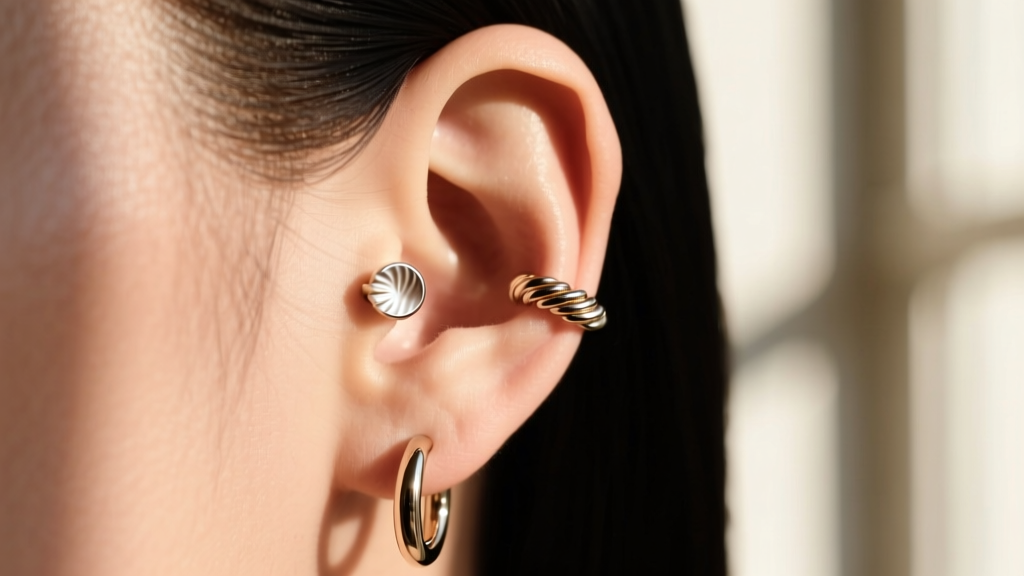
Styling a corkscrew earring in 2026 is all about intentional spacing and balancing visual weight. Because the spiral draws the eye along the outer rim of the ear, it acts as a framing device for your inner-ear jewelry.
The Helix Wrap Illusion
If you have a standard outer helix piercing, you can thread a continuous corkscrew through the hole and wrap the remaining coils down the edge of the ear. This creates the illusion of three or four sequential piercings. Pair this with a minimalist, bezel-set diamond or lab-grown sapphire conch stud to anchor the visual weight in the center of the ear.
The Lobe Climber Alternative
For those without cartilage piercings, an 18-gauge tension corkscrew can be applied to the upper lobe. By wrapping the spiral upward toward the antitragus, you mimic the look of an ear climber or a lobe-to-helix chain, but with a much more organic, sculptural aesthetic.
Conch-to-Helix Cascades
The most avant-garde trend for 2026 involves pairing a heavy, 14k gold corkscrew on the upper helix with a delicate chain that drops down into a large conch hoop. This "cascade" effect bridges the gap between the outer rim and the inner bowl of the ear, creating a cohesive, armor-like silhouette that is highly favored in editorial fashion.
Troubleshooting Common Corkscrew Issues
Even with premium materials, wearers occasionally encounter mechanical issues. Here is how to solve them:
- Hair Snagging: Continuous spirals often catch fine hair between the coils. Solution: Look for "flush-fit" corkscrews where the wire tapers to a blunt, polished point, or apply a microscopic dot of clear, skin-safe silicone adhesive to the terminal end of the wire when wearing it in high-wind environments.
- Rotation and Shifting: If your threading corkscrew constantly rotates so the decorative end faces backward, the wire gauge is likely too thin for your piercing fistula. Solution: Upgrade to a 16-gauge spiral or use a silicone O-ring stopper discreetly behind the helix to lock the orientation.
- Metal Tarnish in Crevices: Intricate corkscrews with beaded or milgrain edges trap dead skin cells and sebum. Solution: Clean weekly using an ultrasonic jewelry cleaner with a mild, ammonia-free solution, or soak in warm water with a drop of castile soap, scrubbing gently with a baby toothbrush.
Investment Guide: Pricing and Top Tier Brands
High-quality corkscrew earrings are an investment in precision engineering. Expect to pay between $80 and $150 for implant-grade titanium spirals from brands like Anatometal or Industrial Strength. For 14k or 18k solid gold options featuring diamond accents or intricate milgrain detailing, prices from luxury houses like BVLA (Body Vision Los Angeles) or Maria Tash typically range from $250 to over $600 per piece.
"A well-engineered corkscrew should feel like a natural extension of the ear's anatomy. If you have to constantly adjust it, the tension curve was not designed for your specific auricle geometry." — Master Piercer & Jewelry Fabricator
Final Verdict
Corkscrew earrings are no longer just a rebellious accessory; they are a sophisticated, architectural element of modern jewelry styling. By prioritizing 16g or 18g thickness, demanding implant-grade materials, and understanding the mechanics of radial tension, you can curate an ear that is as secure as it is breathtaking.


