The Craig Melvin Earring: Technical Guide To Men's Diamond Studs
Decode the Craig Melvin earring style with our technical deep dive into men's diamond studs, covering carat weights, bezel settings, and post gauges.

The Broadcast Standard: Defining the Craig Melvin Earring
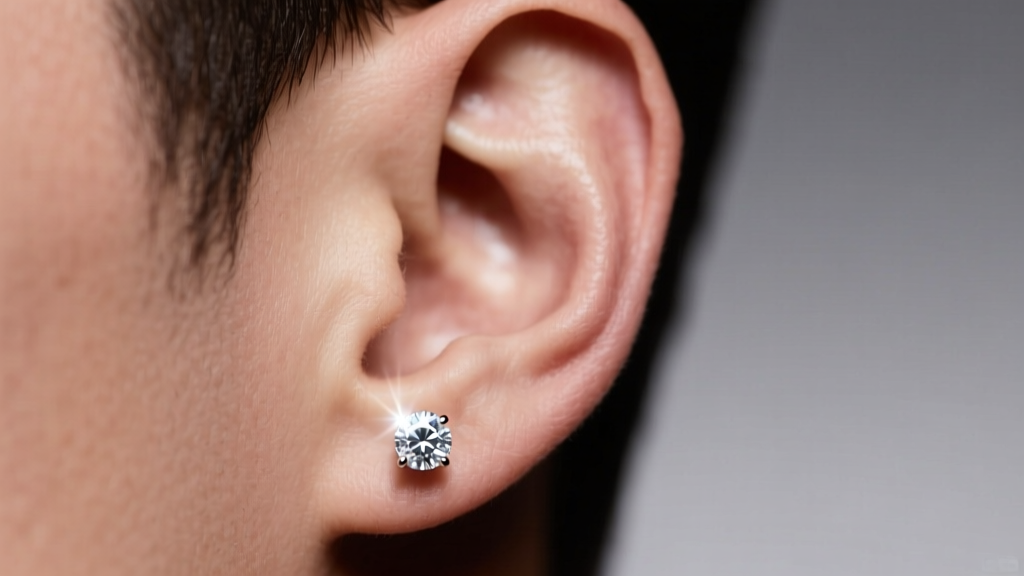
When analyzing the evolution of men’s fine jewelry in mainstream media, few aesthetics are as consistently referenced as the "Craig Melvin earring." The NBC News anchor’s signature look—a solitary, meticulously proportioned diamond stud—has become the gold standard for men seeking to incorporate high-end jewelry without compromising professional gravitas. But what exactly makes this specific earring style so effective on camera and in person? The answer lies not in mere fashion, but in the precise technical specifications of the diamond's cut, the engineering of the setting, and the metallurgy of the post.
Unlike women's diamond studs, which frequently push the boundaries of carat weight and intricate halo designs, the Craig Melvin earring aesthetic relies on strict minimalism and structural integrity. It requires a deep understanding of facial proportions, lobe thickness, and light reflection under harsh studio lighting. In this expert deep dive, we deconstruct the exact anatomy of this iconic men's earring style, providing a technical framework for jewelers and consumers alike.
Diamond Metrics: Carat Weight and Millimeter Spread
The most common mistake men make when purchasing diamond studs is prioritizing carat weight over millimeter spread and cut quality. The male earlobe is generally thicker and less pliable than the female earlobe, meaning an overly heavy diamond will cause the lobe to droop, tilting the pavilion of the diamond downward and destroying its light return. The Craig Melvin look strictly adheres to a lightweight, flush profile.
According to grading standards outlined by the Gemological Institute of America (GIA), the physical dimensions of a diamond are just as critical as its weight. For the quintessential broadcast-ready men's stud, the sweet spot lies between 0.25 and 0.40 carats. This provides enough surface area to catch the light without overwhelming the ear's natural architecture.
| Carat Weight | Avg. Diameter (mm) | Visual Impact | Lobe Droop Risk |
|---|---|---|---|
| 0.15 ct | 3.4 mm | Subtle / Minimalist | None |
| 0.25 ct | 4.1 mm | Classic / Standard | Very Low |
| 0.33 ct | 4.5 mm | Prominent / Bold | Low |
| 0.50 ct | 5.2 mm | Statement / Flashy | Moderate |
For color and clarity, the Craig Melvin earring typically utilizes G-H color grades with VS2 to SI1 clarity. Because the earring is viewed from a distance (often several feet away on a television screen or across a desk), flawless (FL) or internally flawless (IF) clarity is a waste of capital. An eye-clean SI1 diamond with an Excellent cut grade will outperform a poorly cut VVS diamond in terms of brilliance and scintillation.
Setting Architecture: Bezel vs. Martini vs. Basket
The setting dictates not only the security of the stone but also the overall masculine or feminine coding of the jewelry. While women's studs frequently utilize 4-prong basket settings to maximize light entry, men's professional earrings demand a more robust, industrial architecture.
The Case for the Bezel Setting
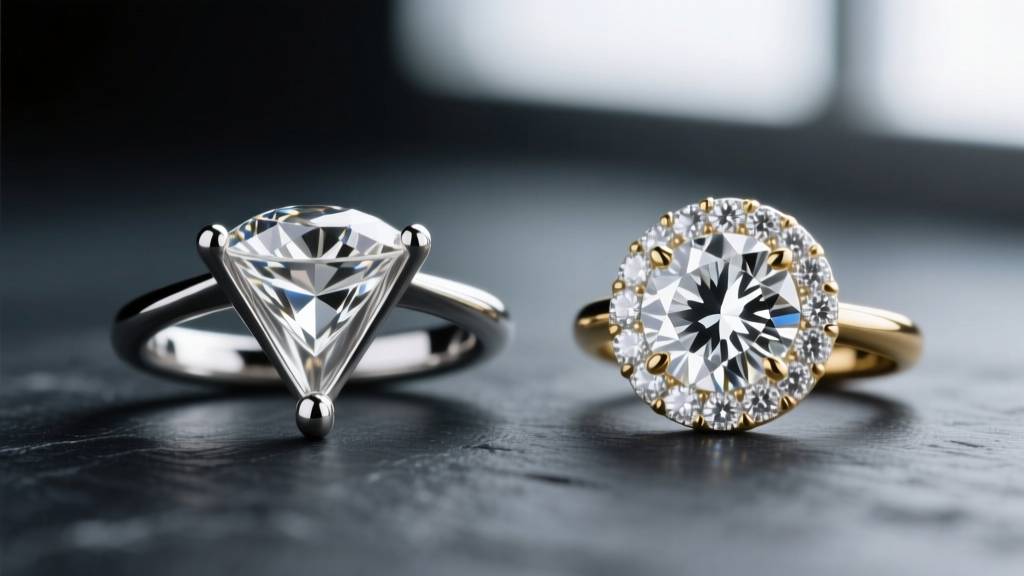
The bezel setting is the undisputed champion of the Craig Melvin earring aesthetic. In a bezel setting, a continuous rim of metal surrounds the entire girdle of the diamond. This offers three distinct technical advantages for men:
- Snag Resistance: Men frequently put on and take off collared shirts, ties, and over-ear headphones. Prong settings can easily catch on fabric or cables, risking stone loss. A bezel is completely flush.
- Girdle Protection: The girdle is the thinnest part of a diamond and most susceptible to chipping upon impact. The metal rim acts as a shock absorber.
- Aesthetic Weight: The solid metal rim gives the earring a heavier, more substantial visual footprint without requiring a larger, heavier diamond.
Light Performance in Martini Settings
If a bezel feels too modern or restrictive, the 3-prong martini setting is the traditional alternative. Shaped like a martini glass, the V-shaped prongs cradle the pavilion. While it allows more ambient light to enter the stone from the sides—increasing brilliance—it leaves the girdle exposed. If opting for a martini setting, ensure the prongs are V-tipped and heavily polished to prevent microscopic fabric snags.
Metallurgy and Post Mechanics
The structural integrity of an earring is only as strong as its post and backing mechanism. The Association of Professional Piercers (APP) emphasizes the importance of proper gauge sizing and biocompatible metals, especially for jewelry worn 24/7.
Gauge Sizing and Post Length
Standard men's lobe piercings are typically performed at 18 gauge (1.02mm) or 20 gauge (0.81mm). An 18-gauge post is highly recommended for diamond studs, as the thicker wire provides greater tensile strength, preventing the post from bending if the earring is bumped during sleep or physical activity. Post length should be customized to the lobe thickness; a standard 6mm post is often too short for thicker male lobes, leading to tissue compression. An 8mm to 10mm post allows for adequate clearance and airflow, preventing moisture buildup and localized dermatitis.
Backing Security Systems
The standard friction back (or "butterfly" back) is fundamentally flawed for high-value men's jewelry. Over time, the microscopic tension in the metal loops degrades, leading to accidental loss. For a secure fit, two alternatives are mandatory:
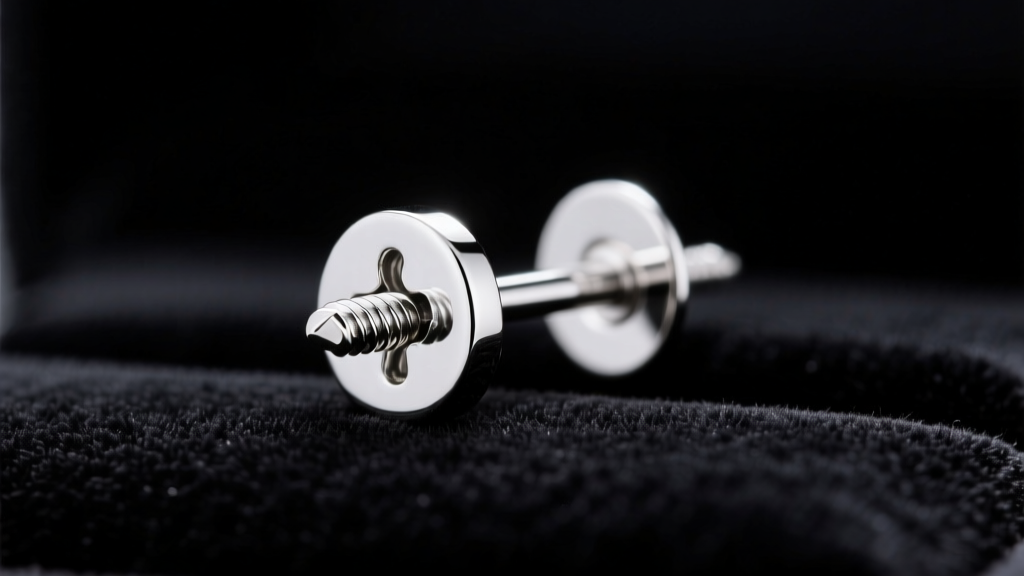
- Screw-Backs: The post is threaded, and the backing screws onto it. This is highly secure but requires manual dexterity and can strip if cross-threaded.
- La Pousette (Locking) Backs: Utilizing a spring-loaded internal mechanism with dual notches on the post, these backs lock into place with an audible click and require a deliberate pinching motion to release. This is the premier choice for broadcast professionals.
Material Science: Platinum vs. White Gold
When replicating the Craig Melvin earring, the choice of metal impacts both longevity and maintenance. 18k or 14k white gold is an alloy of yellow gold mixed with white metals (like nickel or palladium) and plated with rhodium to achieve a bright white finish. However, rhodium plating wears off over time, revealing the slightly yellowish undertone of the base metal, requiring annual re-plating.
Conversely, 950 Platinum (95% pure platinum, usually alloyed with ruthenium or iridium) is naturally white, hypoallergenic, and significantly denser. While platinum costs roughly 40% to 60% more upfront than white gold, its scratch resistance (it displaces rather than loses metal) and lack of required rhodium maintenance make it the superior technical choice for a lifelong, daily-wear men's stud.
Sourcing and Pricing Framework (2026 Market Analysis)
Acquiring an earring that meets these exacting standards requires bypassing traditional mall jewelers, which often overcharge for poor cut grades and flimsy settings. For a 0.33ct, G/VS2 round brilliant diamond set in a 950 platinum bezel with La Pousette backs, expect the following pricing tiers in the current market:
Direct-to-Consumer Online Jewelers: $1,200 – $1,600 (Best value, requires verifying GIA certification and return policies).
Independent Custom Bench Jewelers: $1,800 – $2,500 (Ideal for custom post lengths and hand-forged bezels).
Legacy Luxury Brands: $3,500 – $5,000+ (Paying primarily for brand equity and packaging, not superior diamond metrics).
Ultimately, the Craig Melvin earring is a triumph of restraint and engineering. By prioritizing millimeter spread over raw carat weight, selecting a protective bezel setting, and investing in high-tensile platinum hardware, men can achieve a sophisticated, camera-ready aesthetic that is built to withstand the rigors of daily professional life.


