Diane Katzman Gold Hammered Hoop Earrings: Style & Care Guide
Discover everything about Diane Katzman gold hammered hoop earrings. Learn about materials, gauge sizes, face-shape styling, and care.


The Allure of Artisanal Texture in Ear Styling
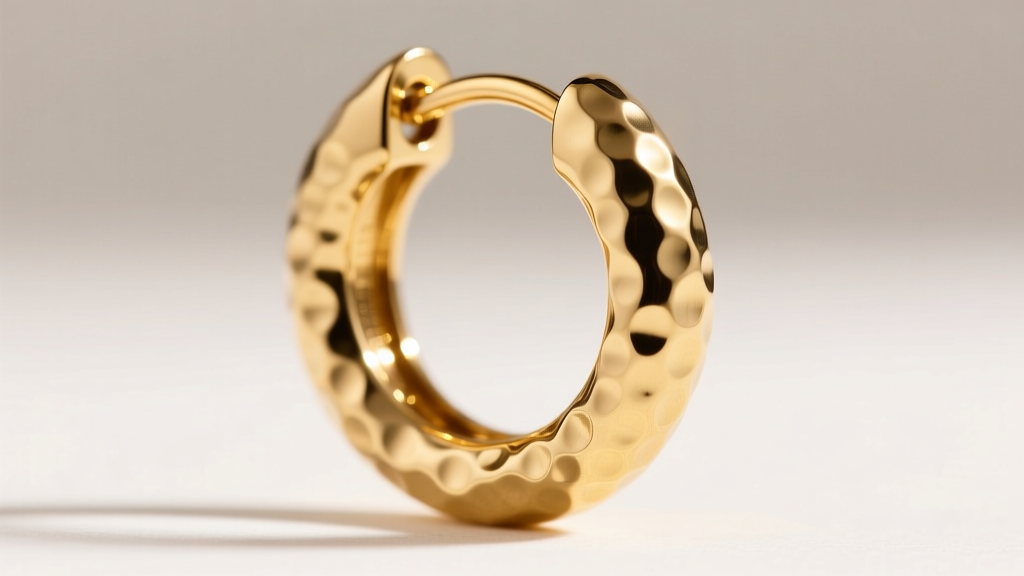
When you first encounter Diane Katzman gold hammered hoop earrings, the immediate draw is the artisanal, light-catching texture that mass-produced jewelry simply cannot replicate. For beginners stepping into the world of curated ear styling, hammered hoops represent a perfect bridge between everyday wearability and statement-making design. The dimpled surface breaks up light, creating a warm, vintage-inspired glow that flatters virtually every skin tone. However, navigating the world of textured gold jewelry requires more than just an eye for aesthetics. It demands a foundational understanding of metallurgy, gauge sizing, and structural integrity. In this comprehensive beginner-friendly explainer, we will deconstruct everything you need to know about selecting, styling, and maintaining hammered gold hoops, ensuring your investment remains a staple in your jewelry box for years to come.
The Metallurgy of the Hammer: Why Texture Matters
The hammered finish on artisanal hoops is not merely an aesthetic choice; it is a byproduct of a metallurgical process known as work-hardening. When a jeweler strikes a smooth gold wire with a ball-peen or texturing hammer, they are physically compressing the crystalline structure of the metal. According to jewelry fabrication experts, this compression increases the metal's yield strength, making the hoop significantly more resistant to bending, warping, or losing its perfect circular shape during daily wear. For a beginner, this means that a properly work-hardened hammered hoop will maintain its structural integrity far better than a smooth, soft-tempered wire of the exact same thickness. Furthermore, the texturing process hides micro-scratches that naturally accumulate over time, making hammered gold an exceptionally forgiving and low-maintenance finish for everyday wearers.
Decoding the Gold: Plated, Vermeil, or Solid?
One of the most common pitfalls for beginners is misunderstanding gold terminology. While the Diane Katzman gold hammered hoop earrings aesthetic is highly sought after, similar styles are produced across a wide spectrum of material grades. Understanding these distinctions is critical for managing expectations regarding longevity and skin sensitivity. The Federal Trade Commission Jewelry Guides strictly regulate how these terms can be used in the market, protecting consumers from misleading marketing.
| Material Type | Base Metal | Gold Thickness | Durability & Price Range |
|---|---|---|---|
| Gold Plated | Brass or Copper | < 0.5 microns | Low; $20 - $50 |
| Gold Vermeil | Sterling Silver | ≥ 2.5 microns | Medium; $60 - $150 |
| Gold-Filled | Jeweler's Brass | 5% of total weight | High; $40 - $120 |
| Solid 14k Gold | N/A (Alloy) | N/A | Lifetime; $250+ |
For those with sensitive ears or nickel allergies, solid 14k gold or high-quality 18k gold vermeil (which mandates a sterling silver base) are the safest options. The Gemological Institute of America (GIA) notes that 14k gold contains 58.3% pure gold, alloyed with metals like silver, copper, or zinc to provide the necessary hardness for jewelry that withstands daily friction. If you are purchasing gold-filled hammered hoops, ensure the wire is at least 14k gold-filled, meaning the gold layer is mechanically bonded to the brass core and constitutes at least 1/20th of the total weight, offering decades of wear without flaking.
Anatomy and Gauge: Getting the Right Fit
The structural anatomy of a hoop earring dictates both its comfort and its security. Standard earlobe piercings are typically performed at 20-gauge (0.81mm) or 18-gauge (1.02mm). However, to achieve a visible hammered texture without compromising the wire's strength, artisanal jewelers usually craft hammered hoops using 18-gauge or even 16-gauge (1.29mm) wire. If your piercings are relatively new or tight, an 18-gauge post is the maximum thickness you should attempt to insert comfortably.
Equally important is the closure mechanism. The most common closure for medium-to-large hammered hoops is the latch-back (or saddle-back) hinge. This features a hinged post that clicks securely into a notched catch on the opposite side of the hoop. When evaluating a latch-back, test the tension. The post should snap into the catch with an audible click and require deliberate, firm pressure to release. Continuous (or endless) hoops are another option, featuring a seamless wire that threads through the piercing and tucks into a hollow tube on the other end. While continuous hoops offer a sleek, uninterrupted silhouette, they are notoriously difficult to open and close, and the thin tension wire can easily snap if bent at the wrong angle during insertion.
Face Shape Proportions and Styling Frameworks
Styling hammered hoops is an exercise in balancing proportions. Because the textured surface inherently draws the eye and adds visual weight, selecting the correct diameter for your face shape is essential for a harmonious look.
- Round Faces: Opt for elongated, slightly oval hammered hoops or teardrop-shaped hammered wires that drop 2 to 2.5 inches below the lobe. The vertical lines help elongate the facial structure, counteracting the width of a round face.
- Square Faces: Choose medium-sized circular hoops (1.5 to 2 inches in diameter) with a softer, heavily hammered finish. The rounded edges and organic texture soften strong jawlines and angular features.
- Heart-Shaped Faces: Look for bottom-heavy designs or chandelier-style hammered hoops that add visual volume near the jawline, balancing a narrower chin and wider forehead.
- Oval Faces: This versatile shape can pull off almost any proportion, from subtle 15mm hammered huggies that hug the lobe to dramatic 3-inch statement hoops. For a modern 2026 aesthetic, try stacking a small hammered huggie on the upper lobe with a larger hammered hoop on the primary piercing.
Common Failure Modes and Troubleshooting
Even the most meticulously crafted hammered hoops can experience mechanical failures if not handled correctly. Understanding these common failure modes will help you troubleshoot issues before they result in lost jewelry. The most frequent issue is hinge fatigue. Repeatedly opening and closing a latch-back hoop by pulling the wire laterally (side-to-side) rather than vertically (up-and-down) will eventually weaken the microscopic solder joint at the hinge, leading to a snap. Always open the hinge by pushing the post straight up.
Another common issue is catch tension loss. Over time, the notched catch on a latch-back hoop can stretch, causing the post to pop open unexpectedly. If this happens, do not discard the earring. A professional jeweler can easily use a pair of flat-nose pliers to gently squeeze the catch housing, restoring the original tension and securing the closure. Finally, metal fatigue at the curve can occur if the hoop is frequently squeezed or crushed in a purse. Always store hammered hoops in a dedicated, rigid jewelry box rather than tossing them loosely into a bag.
Cleaning Crevices: A Maintenance Protocol
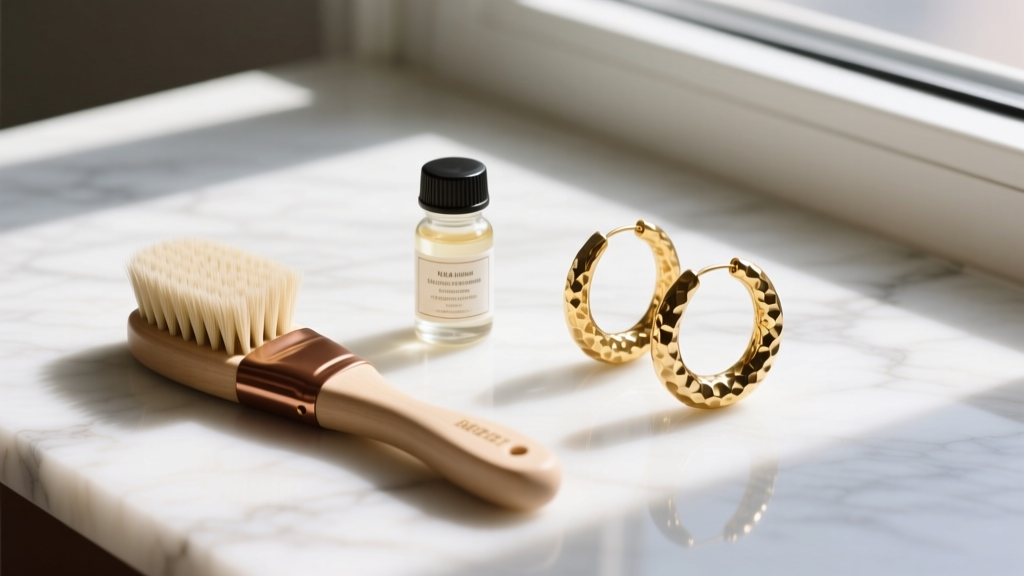
The very texture that makes hammered gold so beautiful also creates microscopic crevices where sebum, dead skin cells, lotion, and environmental dust can accumulate. If left unchecked, this buildup will dull the gold's brilliance and create a dark, tarnished appearance in the divots. To maintain the pristine condition of your hammered hoops, implement a bi-weekly cleaning protocol.
Avoid ultrasonic cleaners, as the high-frequency vibrations can sometimes loosen auxiliary solder joints or damage delicate oxidized accents that some jewelers intentionally apply to hammered crevices for contrast. Instead, prepare a lukewarm bath of distilled water and a few drops of mild, phosphate-free dish soap. Submerge the hoops for five minutes to soften the debris. Next, use a brand-new, extra-soft baby toothbrush to gently agitate the textured surface. The ultra-fine bristles will reach into the hammered dimples without scratching the gold alloy. Rinse thoroughly under lukewarm running water, and immediately pat dry with a lint-free microfiber cloth. Never let gold jewelry air-dry, as water spots can leave a cloudy film that obscures the reflective qualities of the hammered finish. By treating your textured hoops with this level of metallurgical respect and care, they will remain a luminous, enduring cornerstone of your personal style.


