Technical Guide to Creole Earrings: Alloys, Gauges & Closures
Discover the technical anatomy of creole earrings. We analyze gauge thickness, metallurgical alloys, hinge mechanisms, and structural failure points.

Defining the Creole: Beyond the Standard Hoop
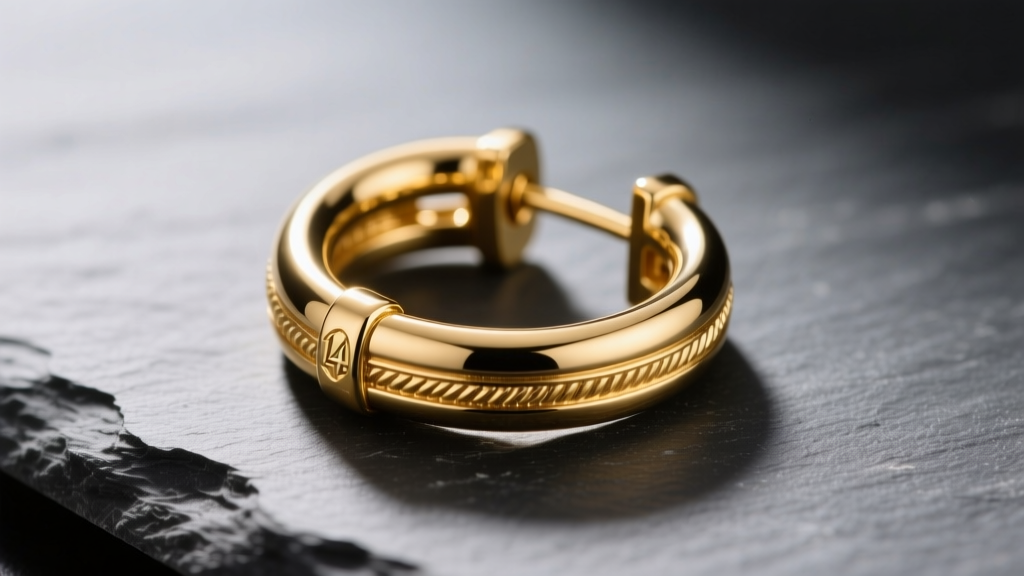
In the taxonomy of ear adornments, creole earrings occupy a distinct structural category that is frequently conflated with standard hoop earrings. While a traditional hoop is typically crafted from a continuous, uniform-gauge wire, a true creole is defined by its varied cross-sectional geometry, substantial weight distribution, and specialized closure mechanisms. Historically rooted in Caribbean and European heritage, the modern creole is characterized by a thicker profile—often tubular, D-shaped, or flattened—and a center of gravity that sits closer to the earlobe.
From a manufacturing perspective, this distinction is critical. The increased mass and altered geometry of creole earrings demand rigorous attention to metallurgical tensile strength and hinge engineering. A standard wire hoop can bend and be reshaped by hand; a thick-walled creole, once deformed, suffers from permanent structural compromise. Understanding the technical specifications of these pieces is essential for both jewelers and informed collectors seeking longevity and ergonomic comfort.
Metallurgical Breakdown: Alloys and Tensile Strength
The structural integrity of a creole earring is entirely dependent on its alloy composition. Because creoles carry more mass than standard studs or wire hoops, the metal must resist both gravitational pull and accidental impact. According to data from the Gemological Institute of America (GIA), pure 24k gold (Vickers Hardness ~25 HV) is entirely unsuitable for creole construction due to its extreme malleability.
14k vs. 18k Gold Alloys
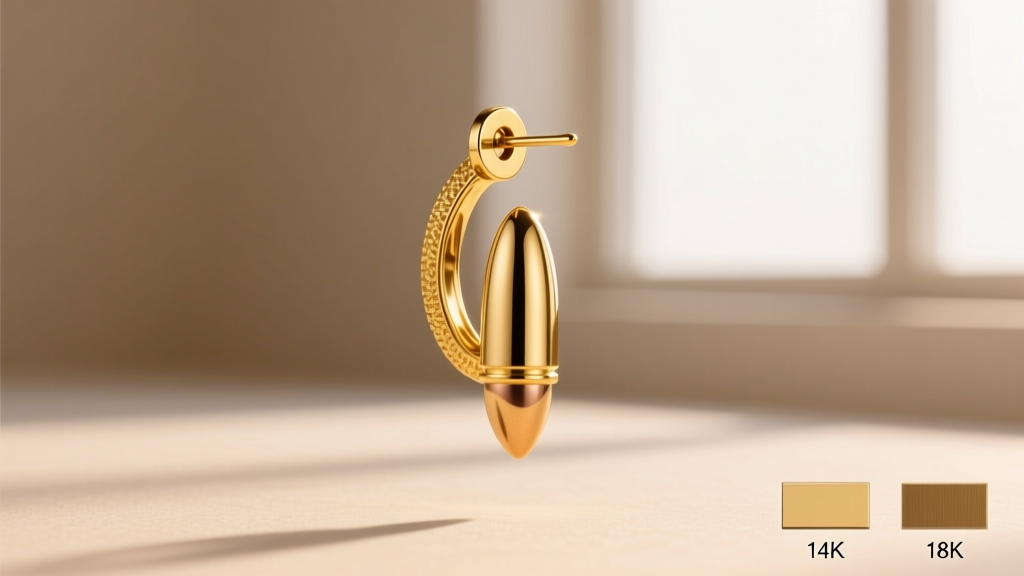
Most high-end creoles are cast or struck in 14k or 18k gold. 18k yellow gold (75% gold, typically alloyed with silver and copper) offers a Vickers Hardness of approximately 120 HV. While prized for its rich color, it is prone to micro-scratching and hinge deformation over time. Conversely, 14k gold (58.5% gold) achieves a hardness of roughly 140-150 HV. This 20% increase in tensile strength makes 14k the superior choice for the ultra-thin wire components used in creole closure mechanisms, which are highly susceptible to metal fatigue.
Titanium and Platinum Alternatives
For hypoallergenic requirements, Grade 5 Titanium (Ti-6Al-4V) is increasingly utilized in modern creole manufacturing. With a tensile strength of 895 MPa and a density nearly half that of gold, titanium allows for oversized creole designs without causing lobe trauma. Platinum (950 Pt), while incredibly durable and resistant to wear, presents a density challenge; a solid platinum creole earring can easily exceed 12 grams per ear, necessitating specialized heavy-duty clasps.
Structural Engineering: Gauge, Wall Thickness, and Weight
The term "gauge" in jewelry refers to the thickness of the metal. However, because creoles are often volumetric rather than linear, we must evaluate them through the lens of outer diameter (OD) and wall thickness. Manufacturing techniques like The Santa Fe Symposium on Jewelry Manufacturing Technology frequently highlight the shift from traditional lost-wax casting to precision CNC machining and electroforming for hollow tubular creoles.
| Profile Type | Avg. Wall Thickness | Weight (per 25mm OD) | Structural Characteristics |
|---|---|---|---|
| Solid Wire (Round) | 2.0mm - 4.0mm (Solid) | 6.5g - 12.0g | Highly durable, difficult to reshape if bent, heavy on the lobe. |
| Solid D-Shape | Flat inner, domed outer | 5.0g - 9.0g | Comfortable fit against the neck, excellent light reflection on the domed exterior. |
| Hollow Tubular | 0.4mm - 0.8mm | 2.0g - 4.5g | Electroformed or stamped. Lightweight, but highly susceptible to denting from compressive force. |
| CNC Milled Block | Variable (Solid) | 8.0g - 15.0g | Flawless geometric precision, sharp edges, requires tumbling for ergonomic comfort. |
Hollow tubular creoles dominate the commercial market because they offer the visual impact of a 4mm gauge while maintaining the weight of a 1.5mm wire. However, the failure mode of hollow creoles is compressive denting. Once the thin outer wall is compromised, the structural rigidity collapses, and repair is often economically unviable due to the risk of melting the solder joints during laser welding.
Closure Mechanics: Hinge, Snap, and Wire Failures
The closure mechanism is the most critical point of failure in any creole earring. Unlike a standard butterfly back on a stud, a creole must support its own weight while resisting the rotational torque caused by head movements and clothing friction.
The Hinged Snap-Back (Tension Groove)
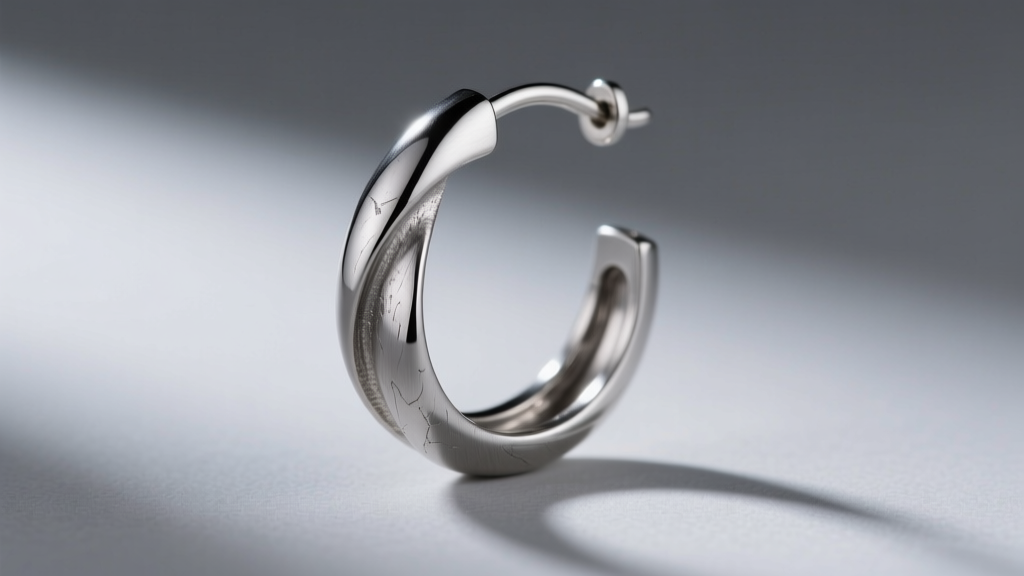
The most common closure on modern tubular creoles is the hinged snap-back. This mechanism relies on a precision-machined friction groove. When the post is pressed into the catch, a microscopic "click" occurs as the metal snaps into the groove. Over years of use, the repetitive friction wears down the groove's microscopic lip. This metal fatigue results in a failure mode where the earring opens spontaneously. High-end manufacturers mitigate this by using a beryllium-copper internal spring within the hinge, though this is rare in pieces under the $500 price point.
The Omega Clip and Saddle Back
For heavier, solid D-shape creoles, the omega clip or saddle back is required. This mechanism features a hinged, curved wire that snaps over a central post, distributing the weight across a wider surface area of the earlobe's posterior. The tension of the omega wire must be calibrated perfectly; too loose, and the earring falls off; too tight, and it causes ischemic pain by restricting blood flow to the lobe.
Ergonomics and Lobe Tension Management
The physics of a creole earring directly impacts earlobe health. The "cheese-cutter effect" occurs when a heavy earring rests on a thin post, gradually migrating downward through the piercing channel. While standard hoops distribute some weight dynamically as they swing, the rigid, front-heavy geometry of many creoles concentrates downward force on the inferior edge of the piercing.
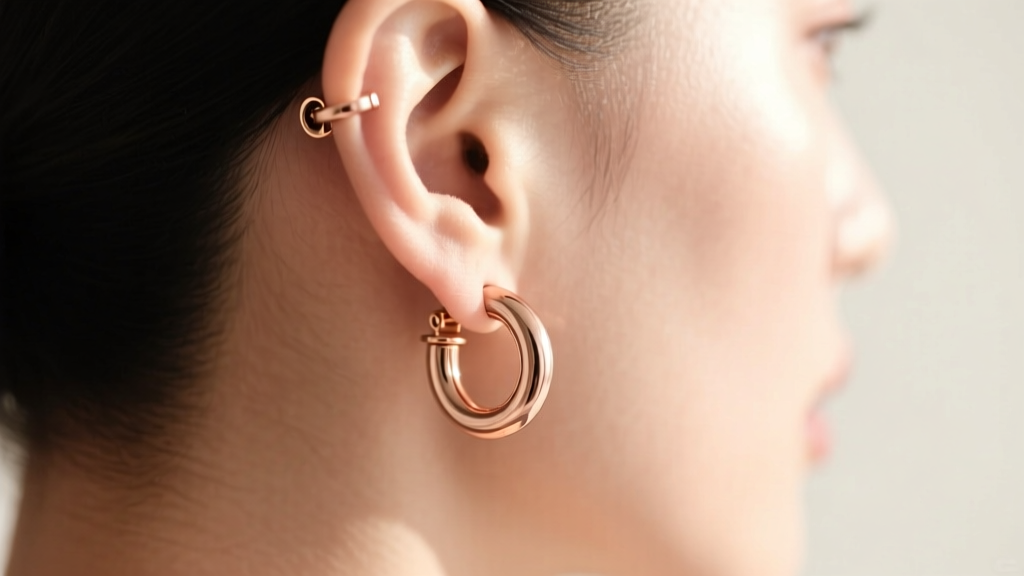
To counteract this, expert jewelers design creoles with a wider posterior catch or integrate a silicone o-ring stopper behind the lobe. Furthermore, the angle of the post relative to the hoop's plane is crucial. A post angled slightly upward (by roughly 5 to 8 degrees) compensates for the natural downward droop of a pierced lobe, ensuring the creole hangs perfectly perpendicular to the floor when worn.
Maintenance and Ultrasonic Cleaning Protocols
Proper maintenance of creole earrings requires an understanding of their mechanical vulnerabilities. While ultrasonic cleaners are excellent for removing sebum and cosmetic buildup from the textured surfaces of cast gold, they pose a severe risk to hinged creoles. The high-frequency cavitation bubbles generated in an ultrasonic bath can penetrate the microscopic tolerances of a snap-back hinge, dislodging the tension pin or accelerating the wear of the friction groove.
Recommended Cleaning Protocol:
- Daily: Wipe the posterior post and catch with a microfiber cloth to remove skin oils that can degrade the metal's polish and harbor bacteria.
- Monthly: Submerge the creoles in a warm bath of distilled water and a few drops of pH-neutral dish surfactant. Use a soft-bristled infant toothbrush to gently agitate the hinge area.
- Annually: Have a bench jeweler inspect the hinge tolerance using a loupe. If the snap-back exhibits lateral play exceeding 0.2mm, the hinge pin must be laser-welded or replaced before catastrophic failure occurs.
By treating creole earrings not merely as decorative accessories, but as precision-engineered mechanical devices, wearers can ensure their pieces remain structurally sound and ergonomically comfortable for decades.