Expert Guide to Crochet Earrings With Beads: Tension & Materials
Master the structural engineering of crochet earrings with beads. Explore thread weights, bead calibrations, tension mechanics, and hardware.

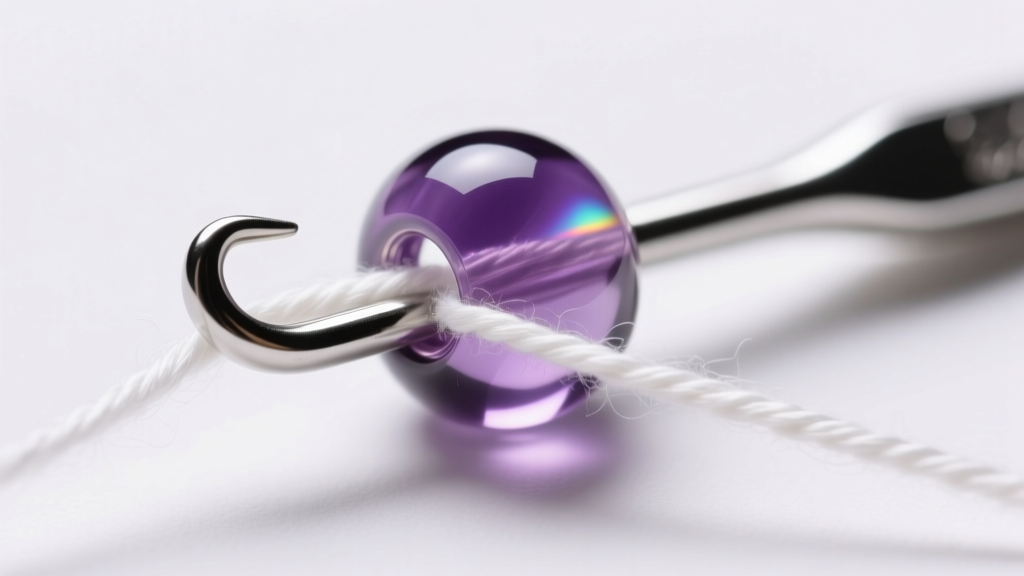
The Intersection of Textile Arts and Jewelry Engineering
Creating crochet earrings with beads is not merely a craft; it is an exercise in micro-engineering. Unlike standard yarn-based crochet, which relies on the friction and loft of fibers to hold structural integrity, beaded crochet demands precise mathematical alignment of thread tensile strength, bead hole calibration, and metallic hardware integration. As the artisanal jewelry market continues to evolve in 2026, collectors and makers alike are demanding pieces that possess both aesthetic fluidity and structural permanence. A beautifully designed beaded earring will quickly fail if the underlying physics of tension and load-bearing are ignored. This deep dive explores the technical specifications required to elevate your beaded crochet earrings from fragile crafts to enduring, high-end jewelry pieces.
The Physics of Beaded Crochet: Why Tension Dictates Drape
In bead crochet, tension is the primary variable that determines the drape, weight distribution, and longevity of the earring. When a bead is incorporated into a chain stitch or single crochet, it acts as a micro-pendulum. If the artisan's tension is too loose, the bead will slide along the thread, causing the stitch to distort and the overall geometric pattern to collapse. Conversely, if the tension is pulled too tightly, the thread is forced to bend at acute angles against the interior rim of the bead hole. Over time, the kinetic friction from the wearer's movement will cause the thread to fray and eventually snap.
The ideal tension creates a 'cradled' effect, where the thread forms a snug, uniform cylinder around the bead without compressing it. This requires matching the thread's denier (thickness) to the exact millimeter diameter of the bead's drill hole. According to textile standards referenced by Interweave, mercerized cotton threads undergo a chemical treatment that increases their luster and tensile strength, making them highly resistant to the abrasive interior edges of glass and stone beads.
Material Matrix: Thread Weights and Bead Calibrations
Selecting the correct combination of thread, bead, and hook size is the most critical decision in the design phase. Below is a technical matrix for standard beaded crochet earring constructions.
| Thread Type & Size | Approx. Thickness | Ideal Bead Hole Size | Recommended Hook | Structural Outcome |
|---|---|---|---|---|
| Size 10 Mercerized Cotton | 0.30mm | 1.0mm - 1.5mm | 1.75mm - 2.0mm Steel | Stiff, structured lace; ideal for large gemstone chips. |
| Size 20 Mercerized Cotton | 0.20mm | 0.8mm - 1.0mm | 1.25mm - 1.5mm Steel | Fluid drape; perfect for 8/0 and 6/0 seed beads. |
| Size 30 Cotton / Silk Blend | 0.15mm | 0.6mm - 0.8mm | 0.85mm - 1.0mm Steel | Delicate, web-like; requires 11/0 or 15/0 seed beads. |
| C-Lon Nylon (Tex 210) | 0.25mm | 0.8mm+ | 1.5mm Steel | High abrasion resistance; best for sharp-edged crystals. |
Seed Beads vs. Gemstone Chips: Load-Bearing Considerations
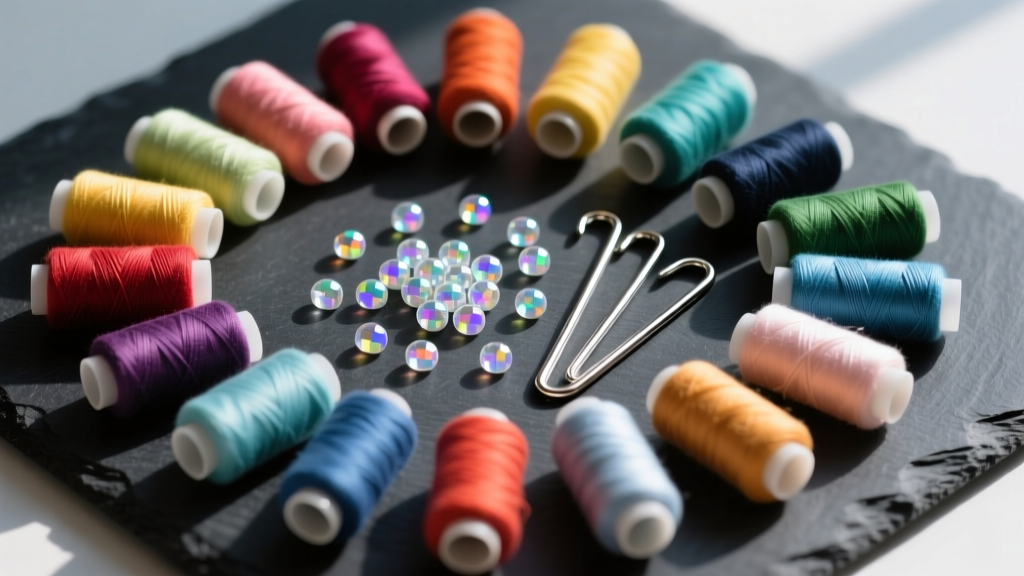
When designing crochet earrings with beads, the morphology of the bead drastically alters the stress placed on the thread. Japanese cylinder beads, such as Miyuki Delicas or Toho Treasures, are manufactured with uniform, smooth, and slightly rounded drill holes. These are the safest options for fine threads like Size 30 cotton or silk, as they minimize micro-abrasions.
Gemstone chips, however, present a severe structural hazard. The drilling process for natural stones like amethyst, turquoise, or quartz often leaves microscopic, jagged silica edges inside the hole. If you must use gemstone chips, it is mandatory to use a high-tensile nylon thread (like C-Lon or WildFire) rather than natural cotton or silk. Nylon possesses a higher modulus of elasticity and will not shear against sharp stone interiors under the dynamic loads of daily wear.
Hardware Integration: Attaching Crochet to Ear Wires
The transition point between the soft textile and the hard metal hardware is the most common failure point in handmade earrings. Directly looping crochet thread over a standard ear wire will result in rapid fraying due to the friction of the wire's surface and the accumulation of skin oils.
To engineer a permanent connection, artisans must utilize intermediate metallic findings. The standard protocol involves weaving the thread tail back through the top three rows of the crochet work, securing it with a micro-drop of flexible jeweler's adhesive (such as G-S Hypo Cement), and attaching a seamless jump ring. According to jewelry fabrication guidelines from Rio Grande, a seamless or soldered jump ring is essential; split rings possess a microscopic gap that will act as a saw blade against the thread over time.
"When selecting ear wires for textile-based jewelry, always opt for 20-gauge or 22-gauge dead-soft wire that you work-harden yourself. Commercially stamped ear wires often have sharp burrs at the loop closure that will sever a cotton thread within weeks of wear."
Step-by-Step Tension Calibration for Artisans
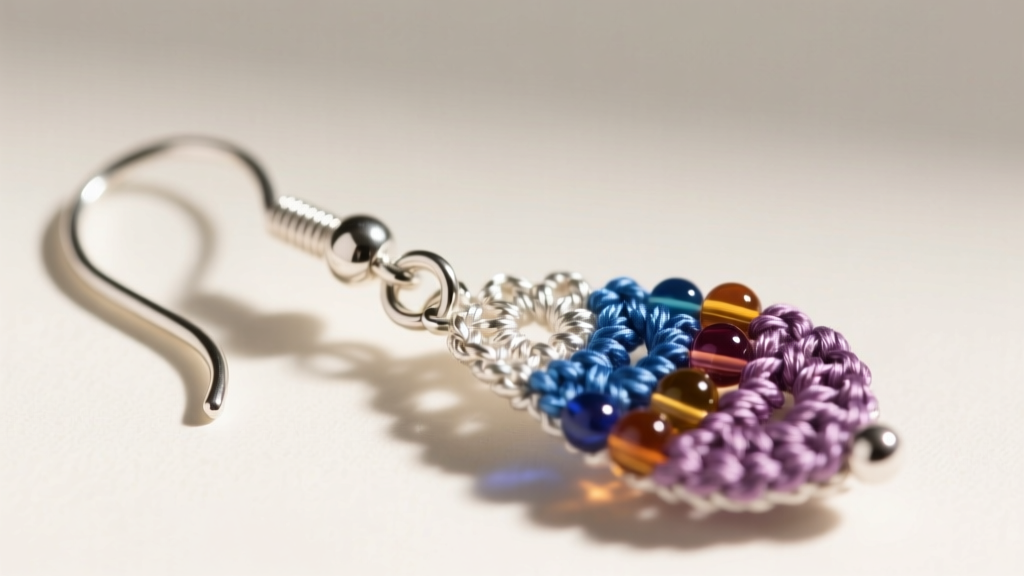
Achieving the perfect gauge requires deliberate practice and calibration. Before beginning a full pair of crochet earrings with beads, execute the following tension test:
- Step 1: The Pre-Stringing Test. Thread 10 beads onto your chosen thread. Pass the thread back and forth through the beads three times. If the thread snags or shows visible fuzzing, the bead holes are too abrasive or too small; discard the combination.
- Step 2: The Chain Stitch Drape Test. Crochet a 10-stitch beaded chain. Hold it vertically. The beads should stack directly on top of one another without spiraling. If they spiral, your tension is too tight on the lateral pull.
- Step 3: The Tug Test. Apply gentle lateral pressure to the beaded chain. The thread should not be visible between the beads. If gaps appear, your base chain tension is too loose, and the earring will lack structural rigidity.
- Step 4: Hook Sizing Adjustment. If your tension is naturally tight, move up a 0.25mm hook size to compensate without altering your hand mechanics. If loose, drop down a 0.25mm size.
Care, Maintenance, and UV Degradation
The longevity of beaded crochet earrings is heavily dependent on environmental factors. Natural fibers like cotton and silk are highly susceptible to UV degradation and moisture absorption. Prolonged exposure to direct sunlight will break down the polymer chains in mercerized cotton, reducing its tensile strength by up to 40% over a single summer season. Furthermore, the dyes used in glass seed beads can sometimes bleed onto lighter threads if exposed to high humidity or perspiration.
For long-term archival care, store your crochet earrings flat in an acid-free, UV-blocking jewelry box. Never hang beaded crochet pieces by their ear wires for extended periods, as the constant gravitational pull will stretch the textile fibers, permanently distorting the geometric pattern. If cleaning is required, avoid ultrasonic cleaners and harsh chemical dips. Instead, use a soft, dry microfiber brush to gently dislodge dust from between the bead interstices, preserving both the metallic luster of the findings and the structural integrity of the thread. For more detailed information on gemstone care and cleaning protocols, refer to the extensive resources provided by Fire Mountain Gems.
By respecting the material science and physics inherent in the craft, jewelers can produce crochet earrings with beads that are not only visually breathtaking but engineered to withstand the rigors of daily wear for decades.


