Gold Earrings Ruby: 2026 Trend Analysis & Style Guide
Discover the 2026 style trends for gold earrings ruby. Explore karat pairings, Burmese vs. lab-grown rubies, and expert styling tips for every face shape.

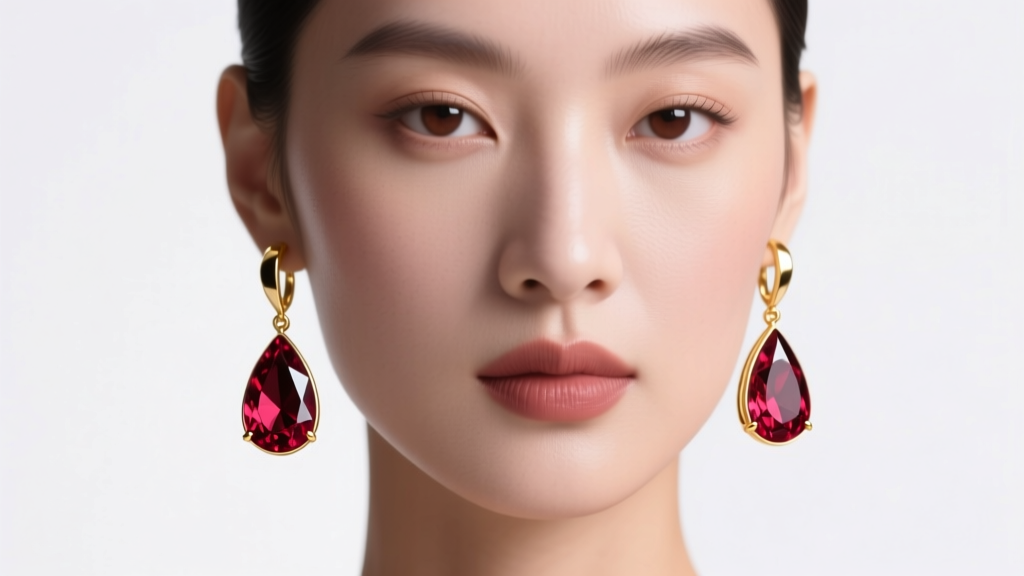
The landscape of fine jewelry is shifting. As we navigate 2026, the minimalist 'quiet luxury' movement has given way to 'romantic maximalism' and heritage revival. At the center of this aesthetic pivot is the classic combination of gold and ruby. However, the modern consumer's approach to purchasing gold earrings ruby designs is far more technical and nuanced than in previous decades. Today's buyers are scrutinizing gemological origins, gold alloy durability, and ethical sourcing, demanding pieces that are as scientifically sound as they are beautiful.
The Gemological Foundation: Ruby and Gold Synergy
Rubies rank 9 on the Mohs scale of mineral hardness, second only to diamonds. This exceptional durability makes them ideal for daily-wear earrings, which are prone to accidental impacts and environmental exposure. However, the gold setting requires equal consideration to ensure the stone remains secure over decades of wear.
14K vs. 18K Gold: The Durability Matrix
When selecting gold earrings ruby settings, the karat weight dictates both the color saturation and the structural integrity of the prongs.
- 18K Gold (75% pure): Offers a rich, buttery yellow hue that beautifully complements the deep red of Burmese rubies. However, its softer nature requires V-prong settings for pear or marquise cuts to prevent the prongs from bending and losing the stone.
- 14K Gold (58.5% pure): The industry standard for secure, everyday settings. The higher alloy content (typically copper and silver) increases tensile strength, making it the superior choice for tension settings, bezels, and active lifestyles.
According to the Gemological Institute of America (GIA), the interplay between the gold's reflective color and the ruby's pleochroism (its ability to show different colors in different directions) is critical. Yellow gold settings can mask brownish or purplish secondary hues in a ruby, making the stone appear more vividly red, while white gold enhances purplish and pinkish undertones.
2026 Market Trends: Natural vs. Lab-Created Origins
The market for gold earrings ruby styles has bifurcated into two distinct camps: heritage natural stones and technologically advanced lab-grown alternatives. The American Gem Trade Association (AGTA) notes a massive surge in consumer demand for flux-grown synthetic rubies, which share the exact chemical, physical, and optical properties as their mined counterparts but come without the geopolitical and environmental baggage.
| Metric | Natural Burmese (Mogok) | Natural Mozambique | Lab-Grown (Flux) |
|---|---|---|---|
| Avg. Price per Carat (1ct) | $8,000 - $25,000+ | $1,500 - $5,000 | $250 - $600 |
| Color Profile | Pigeon Blood (High UV fluorescence) | Deep Red (Slight purplish/brownish) | Highly Saturated Vivid Red |
| Standard Treatments | Traditional Heat (H) | Heat with Flux Residues | None (As-grown) |
| 2026 Trend Status | Investment & Heirloom | Accessible Luxury | Eco-Conscious Everyday Wear |
Trending Silhouettes: Beyond the Classic Stud
While the 5mm round stud remains a staple, 2026's trend analysis reveals a strong preference for architectural and asymmetrical gold earrings ruby designs that interact dynamically with the anatomy of the ear.
1. The Cartilage Huggie (16-Gauge)
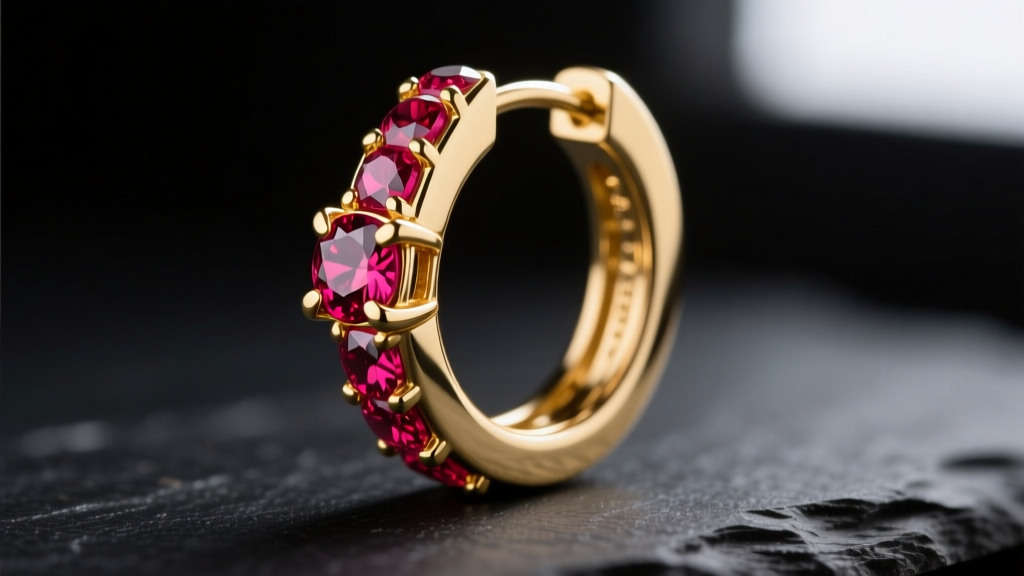
Huggies designed for the upper lobe or helix are dominating the market. These require a thicker 16-gauge (1.2mm) wire for cartilage stability. Channel-set lab-grown rubies in 14K gold huggies offer a continuous sparkle without the snag risk of traditional prongs, making them perfect for sleepers or active wear.
2. Asymmetric Drop Earrings
Mismatched pairs are a defining trend. A common configuration pairs a heavy, bezel-set ruby geometric drop on the left ear with a delicate, diamond-accented ruby ear cuff on the right. This balances visual weight while embracing modern, editorial styling.
3. Gauge Sizes and Piercing Anatomy
Understanding gauge is vital when buying gold earrings ruby pieces for non-standard piercings. Standard lobe piercings are typically 20-gauge (0.8mm) or 18-gauge (1.0mm). However, the 2026 trend of 'curated ears' heavily involves the helix, tragus, and conch, which are usually pierced at 16-gauge (1.2mm) or 14-gauge (1.6mm). Purchasing an 18-gauge ruby stud for a 16-gauge cartilage piercing will result in the earring post sliding through the hole, risking loss of the precious stone. Always verify your piercing gauge before purchasing specialty cartilage cuffs or threaded barbells.
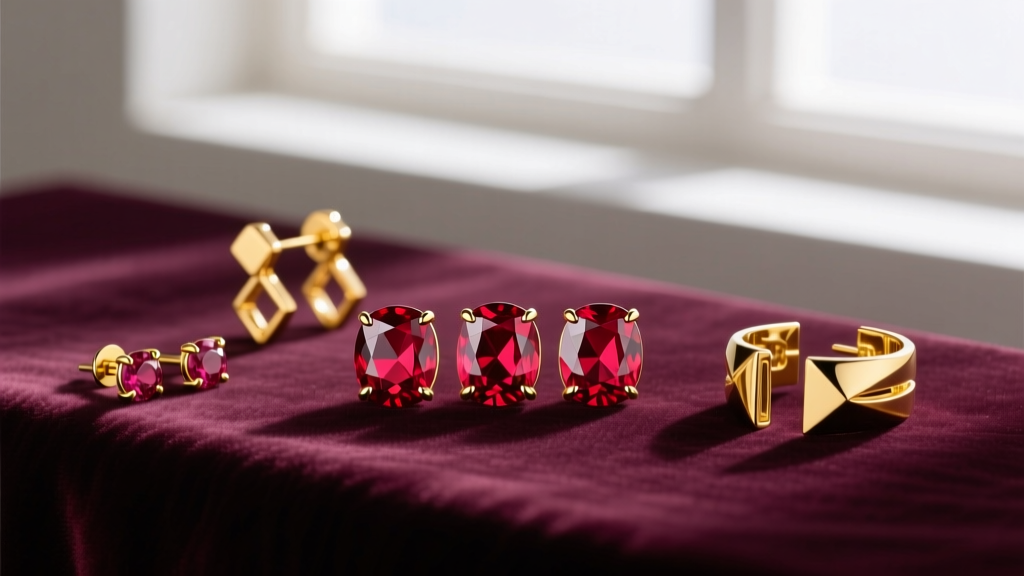
Face Shape & Skin Undertone Pairing Matrix
Styling gold earrings ruby pieces effectively requires an understanding of facial geometry and skin undertones. Use this matrix to guide your styling or purchasing decisions:
| Face Shape | Recommended Silhouette | Gold & Ruby Pairing |
|---|---|---|
| Round | Elongated Drop / Dangle | 18K White Gold + Purplish Ruby (creates vertical lines and cool contrast) |
| Square | Curved Hoops / Oval Studs | 14K Rose Gold + Pinkish Ruby (softens angular jawlines) |
| Heart | Chandelier / Teardrop | 18K Yellow Gold + Pigeon Blood Ruby (draws eye downward, adds warmth) |
| Oval | Geometric Studs / Huggies | Any Karat / Any Origin (versatile canvas) |
Care, Maintenance, and Prong Security
Rubies are incredibly tough, but the settings holding them are not. A critical failure mode for gold earrings ruby jewelry is prong degradation caused by chemical exposure and mechanical stress.
Expert Warning: Never place fracture-filled rubies in an ultrasonic cleaner. The high-frequency vibrations and heat can dissolve the lead-glass fillers, leaving the stone cloudy and structurally compromised. Always verify the treatment disclosure (e.g., 'F' for filled) before cleaning.
For standard heat-treated rubies set in 14K or 18K gold, a gentle soak in warm water with a few drops of mild dish soap, followed by a soft-bristled brush, is the safest method. Inspect the prongs every six months. If you feel the ruby catch on a silk garment, the prong has lifted and requires immediate professional burnishing.
Insurance and Appraisals for Natural Stones
If you invest in natural Burmese or Mozambique rubies, a standard jewelry rider on your homeowner's policy is insufficient. You must obtain a Gemological Laboratory Report (from GIA or Gübelin) detailing the exact origin, weight, and treatment status. In 2026, insurance underwriters require these specific lab reports to replace high-value gold earrings ruby pieces at current market replacement costs, which fluctuate based on global mining outputs and geopolitical factors in ruby-producing regions.
Conclusion: The Future of Ruby and Gold
The evolution of gold earrings ruby trends in 2026 proves that this ancient pairing is anything but dated. By leveraging advanced lab-grown options for everyday architectural pieces and reserving natural, untreated Burmese stones for heirloom investments, consumers can build a curated ear that is both scientifically sound and aesthetically breathtaking. Whether you opt for a rugged 14K gold bezel or a delicate 18K V-prong drop, understanding the material science behind your jewelry ensures your rubies will burn brightly for generations.


