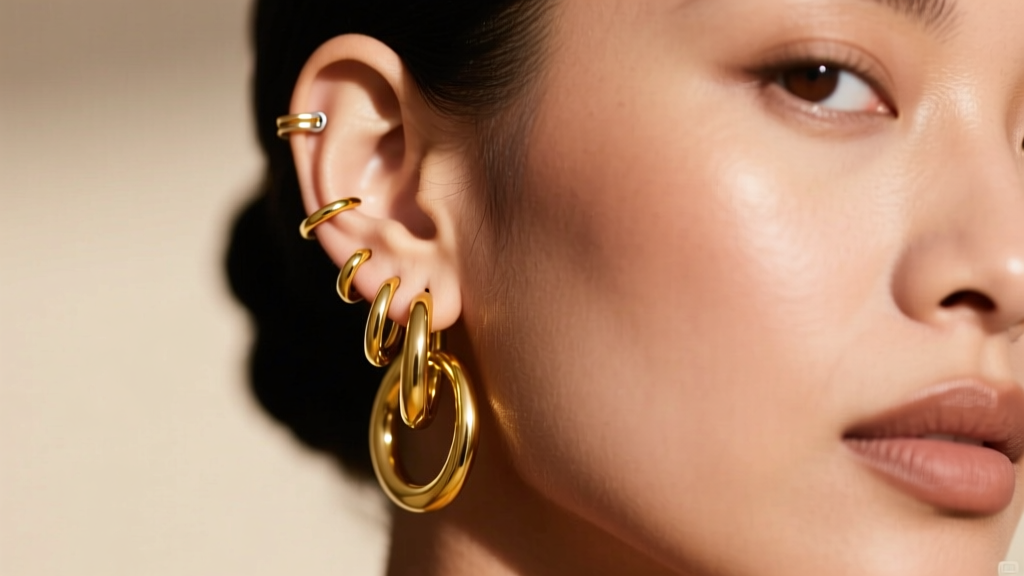
Silver Gold Hoop Earrings: A Metallurgy & Style Guide
Compare silver gold hoop earrings by metal purity, durability, and skin sensitivity. Expert metallurgy insights for your next fine jewelry purchase.

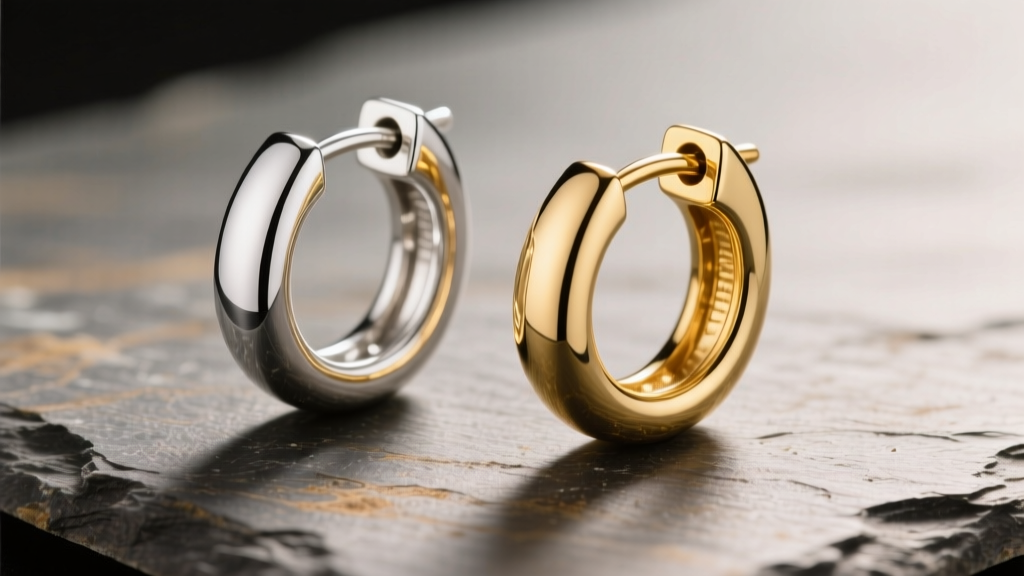
The Metallurgy of Hoops: Why Alloy Composition Matters
When evaluating silver gold hoop earrings, consumers are typically navigating two distinct paths: comparing the inherent properties of silver versus gold, or exploring two-tone bi-metal designs that combine both. As we move through 2026, the fine jewelry market has seen a massive shift toward transparency in metallurgy. Buyers are no longer satisfied with generic 'precious metal' labels; they demand exact alloy compositions, hardness ratings, and ethical sourcing data.
Hoop earrings present a unique structural challenge. Unlike stud earrings, which are supported by a rigid post and butterfly back, hoops must rely on the tensile strength of their wire or tubing to maintain their circular geometry. A metal that is too soft will warp when pressed against a pillow, while a metal that is too brittle may snap at the clasp hinge. Understanding the Vickers Hardness (HV) and alloy makeup of your metals is critical for selecting hoops that will last a lifetime.
Sterling Silver vs. Fine Silver in Hoops
Pure silver, also known as fine silver (99.9% Ag), is exceptionally malleable. With a Vickers Hardness of roughly 25 HV, fine silver is entirely unsuitable for crafting hoop earrings. A fine silver hoop would easily bend out of shape under minimal pressure. To solve this, jewelers alloy silver with other metals, most commonly copper.
The 925 Sterling Standard and Tarnish Dynamics
Sterling silver is composed of 92.5% pure silver and 7.5% copper. This addition raises the hardness to approximately 65 HV, providing enough structural integrity for standard 18-gauge (1.0mm) hoop wires. However, the copper content introduces a chemical vulnerability: oxidation. When copper reacts with sulfur compounds in the air or on the skin, it forms silver sulfide, manifesting as black tarnish.
According to the Gemological Institute of America (GIA), modern metallurgical advancements have introduced alternatives like Argentium silver. By replacing a portion of the copper with germanium, Argentium (often 935 or 960 purity) creates a transparent germanium dioxide layer on the surface that drastically slows tarnishing. For buyers seeking low-maintenance silver hoops, Argentium is a superior, albeit slightly more expensive, choice.
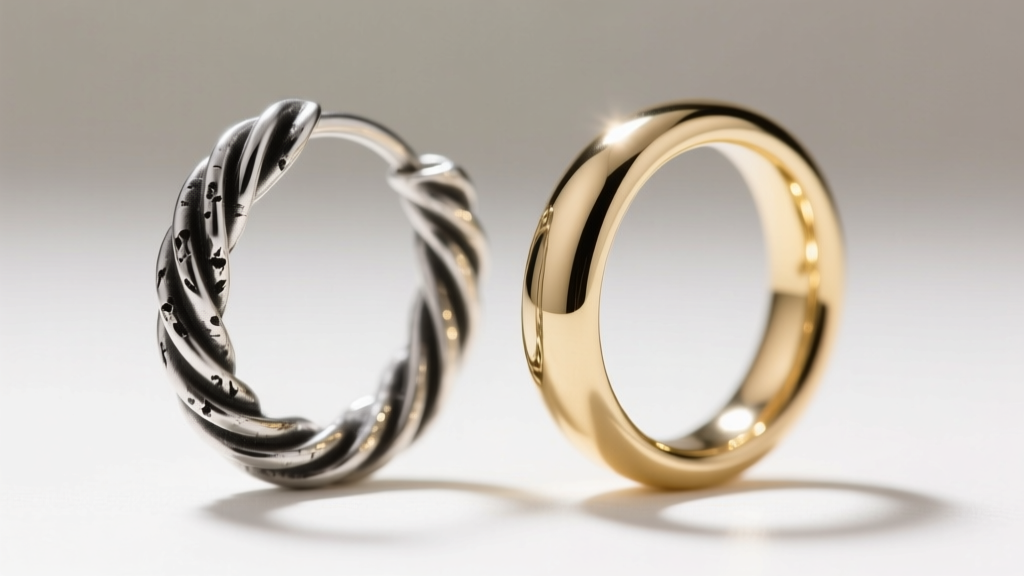
Decoding Gold Karats for Hoop Earrings
Gold purity is measured in karats, with 24k representing 99.9% pure gold. Like fine silver, 24k gold is far too soft (approx. 25 HV) for functional hoop earrings. The GIA notes that gold must be alloyed with metals like copper, zinc, silver, or palladium to achieve the necessary durability for daily wear. Here is how the most common gold karats perform in hoop designs:
- 10k Gold (41.7% Au): The hardest gold alloy (approx. 170 HV). Highly resistant to warping, making it ideal for ultra-thin 20-gauge (0.8mm) continuous hoops. However, it contains high levels of copper and zinc, which can trigger contact dermatitis in sensitive wearers.
- 14k Gold (58.3% Au): The industry sweet spot. With a hardness of roughly 150 HV, 14k gold offers an optimal balance of rich color, structural rigidity, and skin compatibility. It is the standard for high-quality medium and large-diameter hoops.
- 18k Gold (75% Au): Softer (approx. 125 HV) and heavier, 18k gold boasts a deep, luxurious yellow hue. Because it is softer, 18k hoops are usually crafted with thicker 16-gauge (1.2mm) wire or as chunky huggie styles to prevent deformation.
The Two-Tone Dilemma: Vermeil vs. Solid Bi-Metal
The search for 'silver gold hoop earrings' often leads to two-tone designs. It is vital to distinguish between gold vermeil and solid bi-metal construction. Gold vermeil consists of a thick layer of gold (minimum 2.5 microns) electroplated over a sterling silver base. While beautiful, the gold layer on high-friction areas—like the hoop's post or clasp—will eventually wear away, exposing the silver beneath.
Conversely, true solid two-tone hoops are constructed by mechanically bonding or soldering a solid gold wire to a solid silver wire, or by casting distinct segments and laser-welding them together. These pieces cost significantly more but offer permanent dual-metal aesthetics without the risk of plating loss.
Material Comparison Matrix
To visualize the technical differences, refer to the metallurgical matrix below. This data assumes standard polished finishes without rhodium or anti-tarnish coatings.
| Material | Purity / Composition | Hardness (HV) | Ideal Hoop Gauge | Tarnish Risk | Avg. Price (5g Hoops) |
|---|---|---|---|---|---|
| Sterling Silver | 92.5% Ag, 7.5% Cu | ~65 | 18g (1.0mm) | High | $45 - $85 |
| Argentium Silver | 93.5% Ag, Cu, Ge | ~70 | 18g (1.0mm) | Very Low | $60 - $110 |
| 14k Yellow Gold | 58.3% Au, Cu, Zn, Ag | ~150 | 20g - 18g | None | $350 - $450 |
| 18k Yellow Gold | 75% Au, Cu, Ag | ~125 | 16g (1.2mm) | None | $450 - $600 |
| Gold Vermeil | 925 Base, >2.5µm Au | ~65 (Base) | 18g (1.0mm) | Moderate (Wear) | $90 - $150 |
Gauge, Weight, and Earlobe Tension
The longevity of your hoop earrings is dictated not just by the metal, but by the wire thickness (gauge) relative to the hoop's diameter. The American Wire Gauge (AWG) system is inversely proportional: a lower number means a thicker wire.
Jeweler's Rule of Thumb: For hoops under 15mm in diameter (huggies), 18-gauge or 16-gauge wire is sufficient regardless of metal. For hoops between 20mm and 40mm, 14k gold can comfortably utilize 18-gauge wire due to its high tensile strength. Sterling silver hoops of the same diameter should ideally step up to 16-gauge (1.2mm) wire to prevent the silver from bending out of its circular axis during sleep or wear.
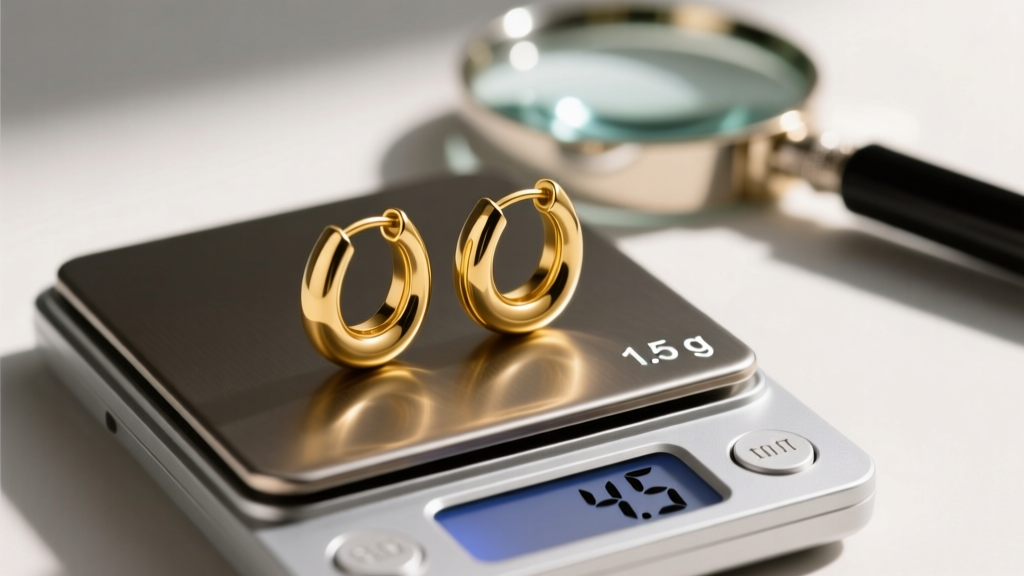
Weight is another critical factor. Gold is significantly denser than silver (19.3 g/cm³ vs. 10.49 g/cm³). A pair of solid 18k gold hoop earrings with a 30mm diameter and 1.5mm tube thickness can easily weigh 8 to 10 grams. Over time, heavy gold hoops can stretch the earlobe piercing, leading to a drooping appearance. If you prefer large-diameter statement hoops, sterling silver or hollow-tubing gold constructions are vastly superior for maintaining earlobe health.
Skin Sensitivity and Allergic Contact Dermatitis
For individuals with sensitive piercings, the alloy composition of silver and gold is paramount. The Mayo Clinic identifies nickel as the leading cause of allergic contact dermatitis in jewelry wearers. While pure gold and silver are hypoallergenic, the alloying metals are often the culprits.
In white gold hoops, nickel is frequently used alongside palladium and zinc to achieve a silvery-white color. If you have a known nickel allergy, you must explicitly seek out nickel-free white gold (alloyed with palladium) or opt for platinum or rhodium-plated sterling silver. Sterling silver is generally safe, but the 7.5% copper content can cause a harmless greenish-black discoloration on the skin if the wearer's sweat has a highly acidic pH. This is not an allergy, but a simple chemical reaction that can be mitigated by coating the earring post with a clear jeweler's lacquer.
Care, Tarnish, and Longevity Protocols
Maintaining silver gold hoop earrings requires tailored care routines based on their metallurgy. Sterling silver hoops should be stored in anti-tarnish cloth pouches infused with silver nitrate to absorb ambient sulfur. When cleaning, avoid abrasive toothpaste or harsh baking soda pastes, which will create micro-scratches on the silver, accelerating future tarnish by increasing the surface area exposed to air.
Gold hoops, while impervious to tarnish, accumulate sebum, dead skin cells, and cosmetic residues, which dull their brilliance. A simple soak in warm water with a few drops of phosphate-free dish soap, followed by a gentle brush with a baby-soft toothbrush, will restore the refractive index of the gold. For two-tone hoops, ultrasonic cleaners are generally safe, provided the piece does not contain porous gemstones like turquoise or opals, which can fracture under high-frequency vibrations.
Final Verdict: Choosing Your Metal
Choosing between silver and gold for your hoop collection ultimately comes down to budget, maintenance tolerance, and structural needs. If you desire thin, delicate, 'sleep-in' hoops that will not warp, 14k gold is the undisputed champion due to its superior tensile strength and hardness. If you prefer bold, oversized, or chunky statement hoops where weight and cost are primary concerns, sterling silver or Argentium silver offers exceptional value and aesthetic versatility. For those who refuse to compromise, investing in solid bi-metal two-tone hoops provides the best of both worlds, ensuring your jewelry box is equipped for any occasion.