How to Style Triple Hoop Earrings Gold: A Step-by-Step Guide
Master the triple hoop earrings gold look. Learn step-by-step piercing placement, gauge sizing, 14k vs 18k gold selection, and stacking techniques.
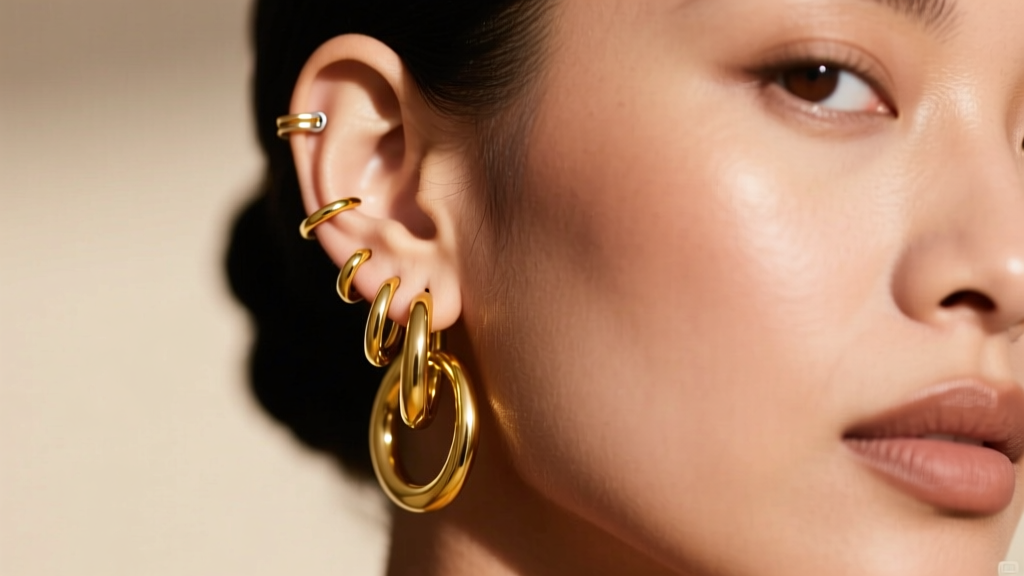
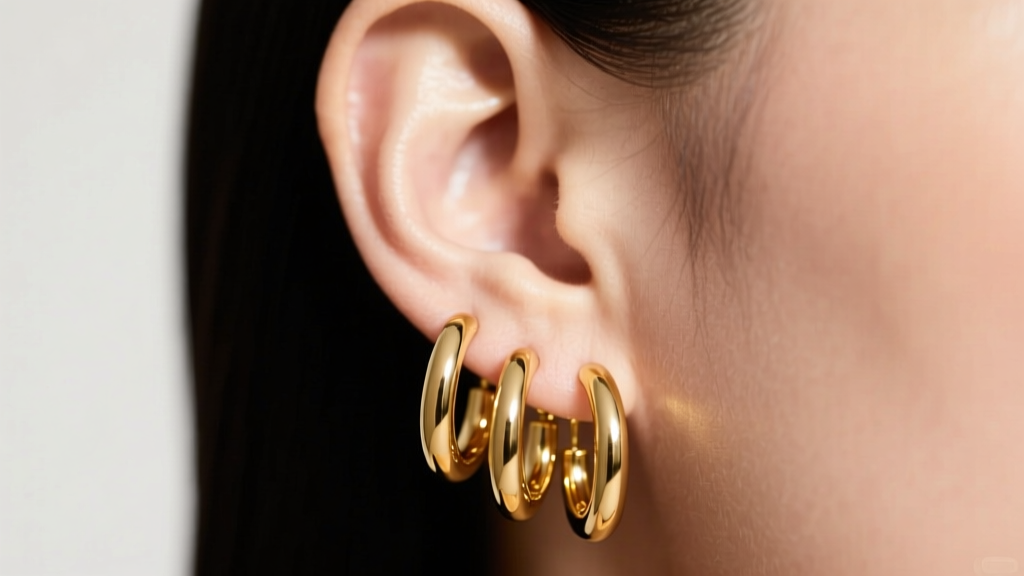
The Anatomy of a Perfect Triple Gold Hoop Stack
Curating a flawless ear stack is an exercise in spatial awareness, metallurgy, and personal style. When building a triple hoop earrings gold aesthetic, the margin for error is incredibly slim. Unlike single studs, a three-hoop stack requires precise piercing placement, careful consideration of jewelry outer diameters, and a deep understanding of gold alloys to prevent friction wear and irritation. Whether you are stacking standard lobes or creating a helix-to-tragus cascade, this step-by-step guide will walk you through the exact measurements, material grades, and insertion techniques required to achieve a professional, high-end look.
Step 1: Piercing Placement and Gauge Sizing
The foundation of any triple stack is the piercing geometry. According to the Association of Professional Piercers (APP), standard lobe piercings are typically placed 6mm to 8mm apart. However, this metric is designed for flat-back studs, not hoops.
Calculating Hoop Spacing
When wearing hoops, you must calculate the outer diameter of the jewelry, not just the post. If you plan to wear 10mm inner-diameter hoops (which typically have a 12mm outer diameter depending on the wire thickness), your piercing holes must be spaced at least 13mm to 15mm apart. If the holes are too close, the hoops will overlap, causing metal-on-metal friction that degrades the gold and creates a cluttered, messy silhouette.
- First Hole (Standard Lobe): Usually pierced at 18g (1.0mm) or 16g (1.2mm). This will hold your largest hoop.
- Second Hole (Upper Lobe): Placed 13mm-15mm above the first. Best kept at 16g for structural stability.
- Third Hole (High Lobe/Lower Helix): Placed 13mm-15mm above the second. Must account for the curvature of the ear's anti-helix ridge.
Step 2: Selecting the Right Gold (14k vs. 18k vs. Plated)
Not all gold is created equal, especially when multiple pieces interact in a confined space. The Gemological Institute of America (GIA) notes that pure 24k gold is far too soft for body jewelry. Therefore, alloying is necessary, but the karat weight you choose dictates the longevity of your triple stack.
Material Comparison Chart
| Gold Type | Composition | Durability (Vickers Hardness) | Price Range (Per Hoop) | Best For |
|---|---|---|---|---|
| 14k Solid Gold | 58.5% Gold, 41.5% Alloy | ~160 HV (High) | $60 - $150 | Daily wear, hinged clickers, high-friction stacks |
| 18k Solid Gold | 75% Gold, 25% Alloy | ~125 HV (Medium) | $120 - $300+ | Special occasions, seamless continuous hoops, sensitive skin |
| Gold Vermeil | Sterling Silver base, 2.5µm Gold | Low (Prone to stripping) | $25 - $60 | Avoid for triple stacks (friction will strip plating) |
Expert Rule: Never use gold-plated or vermeil earrings for a triple stack. The constant micro-movements of the hoops rubbing against one another will strip the plating within weeks, exposing the base metal and potentially causing contact dermatitis. Always invest in solid 14k or 18k gold.
Step 3: Sizing Your Inner Diameters (The Cascade Effect)
To achieve a visually pleasing triple hoop earrings gold arrangement, you must utilize the "cascade effect." Uniformly sized hoops can look heavy and blocky. Instead, graduate the inner diameters to follow the natural tapering of the ear.
- Bottom Hoop (Lobe): 12mm inner diameter. This anchors the stack and frames the face.
- Middle Hoop (Upper Lobe): 10mm inner diameter. Provides a transitional bridge.
- Top Hoop (High Lobe): 8mm inner diameter (or a tight 7mm huggie). Snugly hugs the cartilage ridge without drooping.
Ensure the wire thickness (gauge) remains consistent across all three hoops—preferably 16g (1.2mm)—to maintain a cohesive visual weight.
Step 4: Insertion and Securing the Hoops
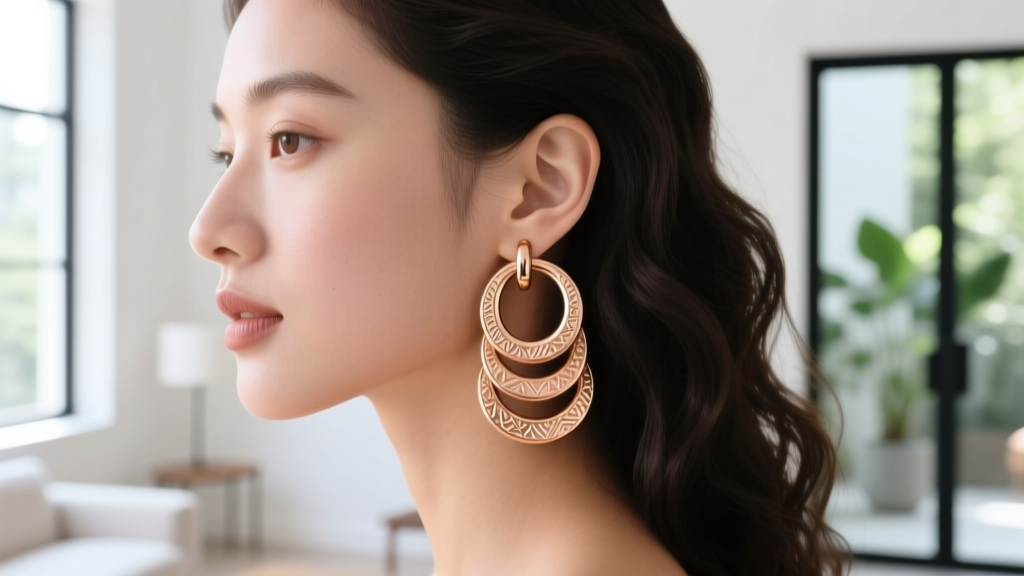
The mechanics of your hoop closure dictate how easily you can manage a triple stack. Continuous (endless) hoops require you to bend the wire post laterally to snap it into the receiving tube. Doing this blindly on a high-lobe third hole often results in warping the gold or dropping the earring.
The Clicker Advantage
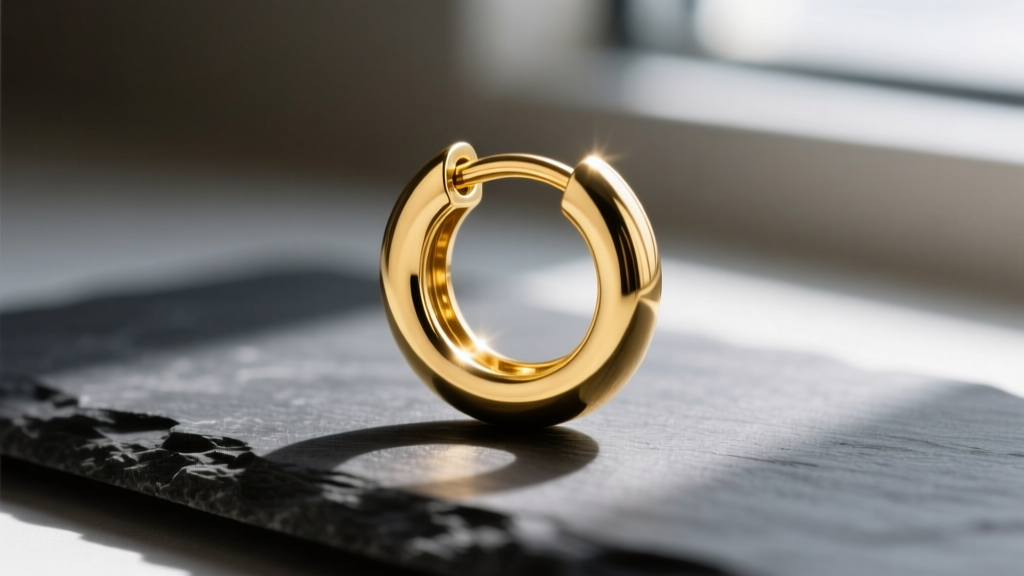
For triple stacks, hinged segment clickers are vastly superior. The hinge allows the hoop to open fully, slide through the fistula effortlessly, and snap shut with an audible "click." This mechanism preserves the structural integrity of the gold and makes swapping out your stack a frictionless process.
Step-by-Step Insertion:
- Start from the top hole and work your way down. This prevents your knuckles from bumping and irritating the lower, more sensitive lobe piercings.
- Use a clean, dry microfiber cloth to grip the clicker. Wet fingers will slip on the polished gold.
- Push the hinged segment firmly until you hear the click. Run your fingernail over the seam; it should feel completely flush with no catching.
Step 5: Maintenance and Tarnish Prevention
While pure gold does not tarnish, the copper and silver alloys in 14k and 18k gold can oxidize when exposed to sulfur, chlorine, and the natural pH of your skin. In a triple stack, soap and dead skin cells easily accumulate in the tight gaps between the hoops and the ear.
"Ultrasonic cleaners are excellent for solid gold body jewelry, but you must ensure the frequency is set correctly (around 40kHz) and that you are not using harsh chemical baths that could degrade the tension of the clicker hinge."
For weekly maintenance, simply soak your gold hoops in a bowl of warm water with a few drops of mild, phosphate-free dish soap. Use an extra-soft baby toothbrush to gently sweep the inside of the tubing and the hinge mechanism. Dry thoroughly with a lint-free cloth before reinserting.
Troubleshooting Common Triple Hoop Issues
- Issue: The hoops are overlapping and tangling.
Solution: Your piercings are spaced too closely for the outer diameter of your chosen hoops. Size down the inner diameter of the top two hoops by 2mm each, or switch to flat-back studs for the middle hole to create a mixed-metal aesthetic. - Issue: Irritation bumps on the third (top) hole.
Solution: The top hole is likely pierced at an incorrect angle, causing the rigid gold hoop to put pressure on the fistula. Visit a professional piercer to assess the angle; you may need to switch to a flat-back labret stud for the top hole while it heals. - Issue: The clicker hinge feels loose.
Solution: Do not attempt to bend the gold back into place yourself, as repeated bending will cause metal fatigue and snap the hinge. Return the piece to the jeweler for professional tension adjustment or warranty replacement.
Mastering the triple hoop earrings gold look is about respecting the anatomy of your ear and the physical properties of the metal. By prioritizing precise spacing, investing in solid 14k or 18k gold, and utilizing graduated sizing, you can achieve a curated, high-end stack that remains comfortable and visually striking for years to come.


