Authenticating Vintage Cameo Earrings: A Technical Guide
Master the technical details of vintage cameo earrings. Learn to identify shell vs. agate carvings, analyze mounting hallmarks, and assess condition.

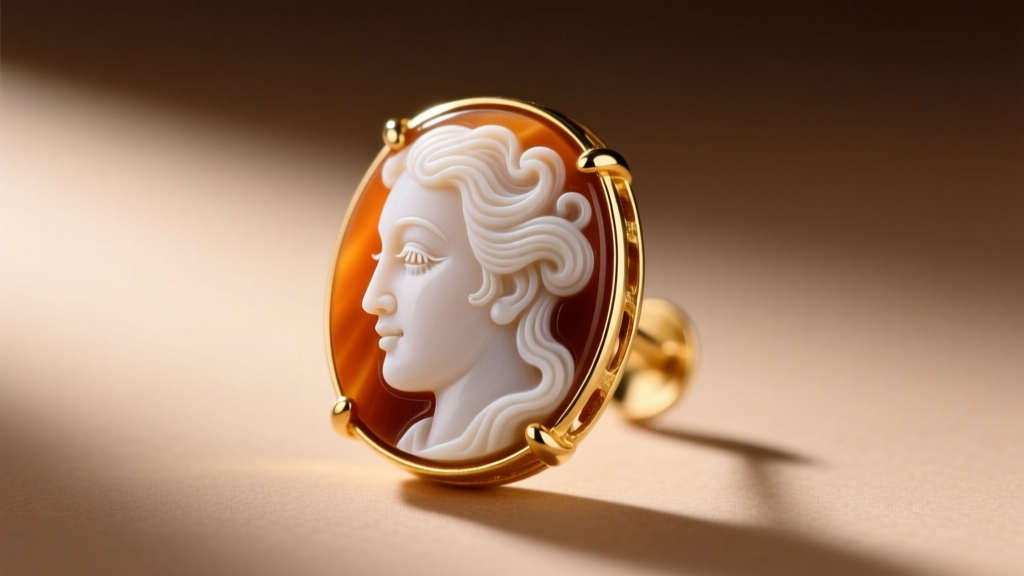
The Anatomy of a True Vintage Cameo
Vintage cameo earrings represent a unique intersection of micro-sculpture and wearable metallurgy. Unlike mass-produced modern jewelry, authentic antique and vintage cameos were carved by hand using a sequence of steel gravers and diamond-tipped burrs. For the serious collector or jewelry appraiser, distinguishing a genuine 19th or early 20th-century hand-carved cameo from a molded imitation requires a deep understanding of material science, historical manufacturing techniques, and the specific failure modes of organic and cryptocrystalline substrates.
The most critical technical differentiator between a hand-carved cameo and a molded replica (whether celluloid, Bakelite, or modern resin) is the presence of undercutting. Because hand-carvers work subtractively with small burrs, they can carve beneath the surface plane of the subject's profile to create deep shadows, particularly around the chin, nose, and hair curls. Molded materials, however, are bound by the physics of mold release; they require a "draft angle" (a slight outward taper) to be extracted from the mold without tearing. Consequently, molded cameos possess soft, rounded edges and completely lack the sharp, undercut shadows found on genuine vintage pieces.
Material Composition & Carving Substrates
The value and authentication pathway of vintage cameo earrings begin with identifying the substrate. Carvers historically selected materials with distinct banding or contrasting layers to create the relief effect. Below is a technical breakdown of the primary substrates encountered in the antique market.
| Substrate | Mohs Hardness | Specific Gravity (SG) | Primary Era & Characteristics |
|---|---|---|---|
| Sardonyx (Agate) | 6.5 - 7.0 | 2.60 - 2.64 | Victorian to Art Deco. Banded chalcedony. Extremely durable, holds sharp detail. Often features a white relief against a deep orange-brown or black background. |
| Conch Shell | 2.5 - 3.0 | 2.70 - 2.85 | Mid-19th Century to present. Carved from Cassis rufa or Queen Conch. Exhibits a subtle "flame structure" or growth lines under 10x magnification. |
| Vesuvian Lava | 5.0 - 6.0 | 2.40 (variable) | 18th to 19th Century (Grand Tour). Porous, matte finish. Usually carved in Italy and set in pinchbeck or low-karat gold. |
| Celluloid / Resin | 2.0 - 2.5 | 1.35 - 1.40 | 1870s to Mid-Century. Molded imitations. Lacks undercutting. Often exhibits seam lines along the edges. |
Advanced Non-Destructive Testing (NDT)
When visual inspection of tool marks is inconclusive, gemologists rely on non-destructive testing. According to the Gemological Institute of America (GIA), ultraviolet (UV) fluorescence is a powerful tool for identifying molded imitations. Celluloid typically fluoresces a milky yellow-green under long-wave UV light, while early Bakelite does not fluoresce but will yield a positive result (turning yellow) when tested with a mild alkaline solution. Modern resins often exhibit a chalky blue or bright white UV reaction. For shell cameos, a 10x triplet loupe is sufficient to identify the microscopic cross-hatched "flame structure" inherent to the Queen Conch, a feature impossible to replicate in glass or resin.
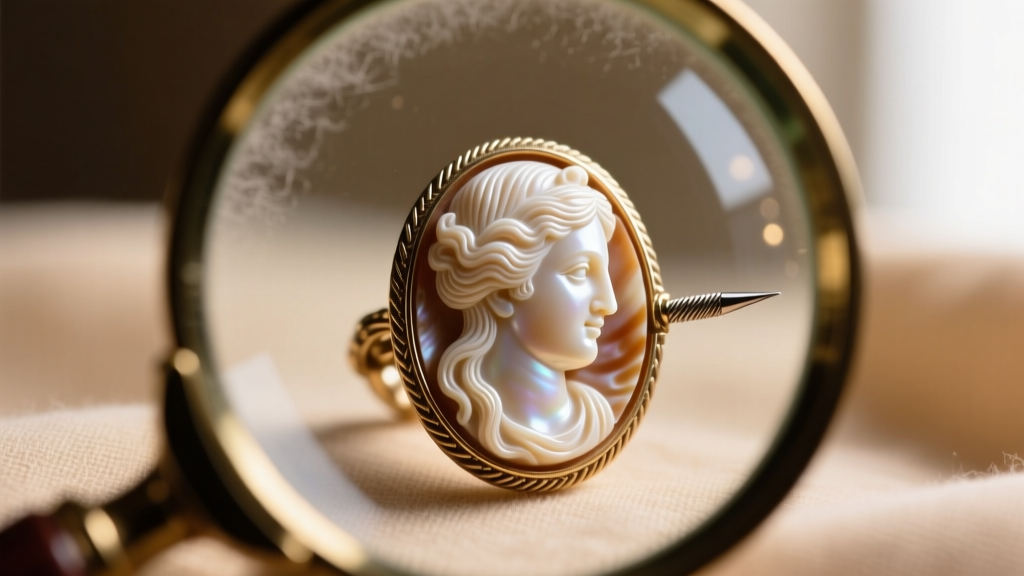
Analyzing the Mountings and Findings
The earring findings (the mechanical components that attach the jewelry to the ear) are vital chronological markers. Because cameos were originally carved as brooches or pendants, many vintage cameo earrings on the market today are later conversions. Identifying the metallurgy and mechanics of the mounting can confirm or refute the purported age of the piece.
Chronology of Earring Findings
- Pre-1890s (Converted Brooches): True Victorian cameo earrings are exceptionally rare, as pierced ears were largely out of fashion for high-society women during the mid-to-late 19th century. Most "Victorian" cameo earrings are actually brooches with post-and-clutch backs soldered on in the 1950s or later. Look for modern solder flux residue or a mismatch in gold karat between the bezel and the post.
- 1894 - 1940s (Screw-Backs): The screw-back earring was patented in 1894. If your cameo earrings feature threaded posts with screw-on nuts, they likely date to the Edwardian or early Art Deco period. These posts are typically thicker (around 18-gauge) than modern standard 20-gauge posts.
- 1930s - 1950s (Early Clip-Ons): The paddle-style clip-on mechanism was introduced in the 1930s for women with unpierced ears. Heavy agate cameos were frequently mounted this way, though the tension springs often failed over time.
- Post-1950s (Post and Clutch): The modern butterfly clutch became the standard after World War II. If a heavy sardonyx cameo features a thin, modern friction post, it is almost certainly a later conversion or a mid-century reproduction.
Metallurgy and Hallmarks
The metal composition provides further technical clues. In the UK, 15k gold (stamped "15" and ".625") was a standard alloy used extensively during the Victorian and Edwardian eras. It was officially replaced by 14k gold in 1932. Finding a genuine 15k hallmark on a cameo earring mounting is a strong indicator of an early 20th-century or late 19th-century origin. Additionally, look for rolled gold (RG) or gold-filled (GF) stamps, which were heavily utilized during the Art Deco period to make intricate cameo settings more affordable. For a deeper dive into historical jewelry hallmarks, the Victoria and Albert Museum's jewelry archives offer extensive visual databases of British assay marks.
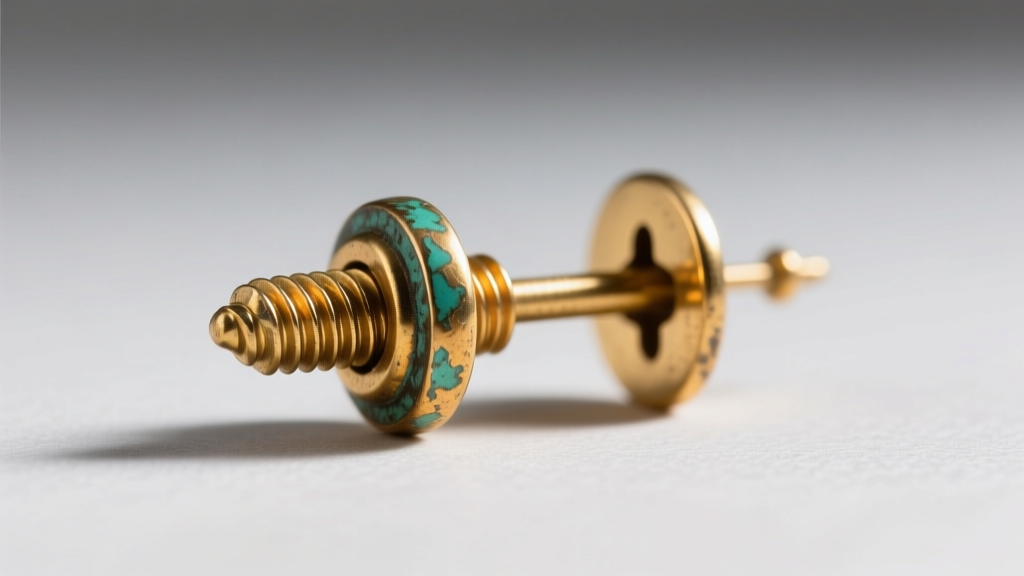
Common Failure Modes and Restoration Limits
Assessing the condition of vintage cameo earrings requires an understanding of how different substrates degrade over a century of wear. Restoration is not always possible, and certain damage types severely impact valuation.
Substrate-Specific Degradation
Shell Desiccation and Micro-Fractures: Shell is an organic material composed of calcium carbonate and conchiolin. Over decades, exposure to low humidity, perfumes, and skin acids can cause the conchiolin to break down, leading to desiccation. This manifests as a network of microscopic surface crazing or, in severe cases, structural delamination where the white relief layer separates from the orange background. Once a shell cameo delaminates, conservation is limited to stabilizing the piece with specialized archival adhesives; it cannot be "re-fused."
Agate Chipping: While sardonyx is highly durable (Mohs 7), the extreme relief of the nose, chin, and hair curls makes these areas susceptible to impact chipping. A chipped nose on a Victorian agate cameo is a common failure mode. Re-carving the agate to hide the chip alters the original proportions and destroys the historical tool marks, which most serious collectors consider worse than the chip itself.
Prong Fatigue and Bezel Wear: Many cameos are held in place by a rub-over bezel or delicate prongs. Repeated removal of the earrings can cause metal fatigue at the base of the prongs. If the gold or silver has worn thin, the cameo is at high risk of falling out and shattering. Re-tipping prongs on antique gold requires a skilled jeweler who can use low-heat laser welding to avoid thermally shocking the agate or shell.
Sourcing and Valuation Framework
When evaluating vintage cameo earrings for acquisition, technical condition is only half the equation. The subject matter, carving quality, and provenance dictate the premium tiers of the market.
"The direction the profile faces is a primary chronological indicator. Right-facing profiles are typical of ancient Roman and Neoclassical revivals, while left-facing profiles became the dominant standard during the Victorian era."
- Carver Signatures: The most valuable cameos bear the microscopic signature of master carvers. Tommaso Saulini, a prominent 19th-century Roman carver, often signed his work on the shoulder truncation. Identifying a genuine Saulini signature under magnification can increase the value of a pair of earrings by 300% to 500%.
- Provenance and Original Fittings: Earrings that remain in their original, unaltered Victorian or Edwardian fitted boxes (often leather with velvet and silk linings) command a significant premium. Originality of the mounting—meaning the earrings were conceived as earrings from the start, rather than converted from brooches—is exceptionally rare and highly sought after by museum curators and advanced collectors.
- Subject Matter: While the classical female profile is the most common, mythological scenes (such as Medusa, Athena, or Dionysus) or animal motifs require vastly more technical skill to carve in miniature and sit at the top of the valuation hierarchy.
Mastering the authentication of vintage cameo earrings requires moving beyond superficial aesthetics. By applying rigorous material testing, analyzing the mechanics of the findings, and understanding the structural vulnerabilities of organic and cryptocrystalline substrates, collectors can confidently navigate a market heavily saturated with modern reproductions.


