How to Choose, Style, and Safely Wear Pentagram Earrings
Learn how to choose, style, and safely wear pentagram earrings. Discover gauge sizes, hypoallergenic metals, and weight limits for healthy piercings.

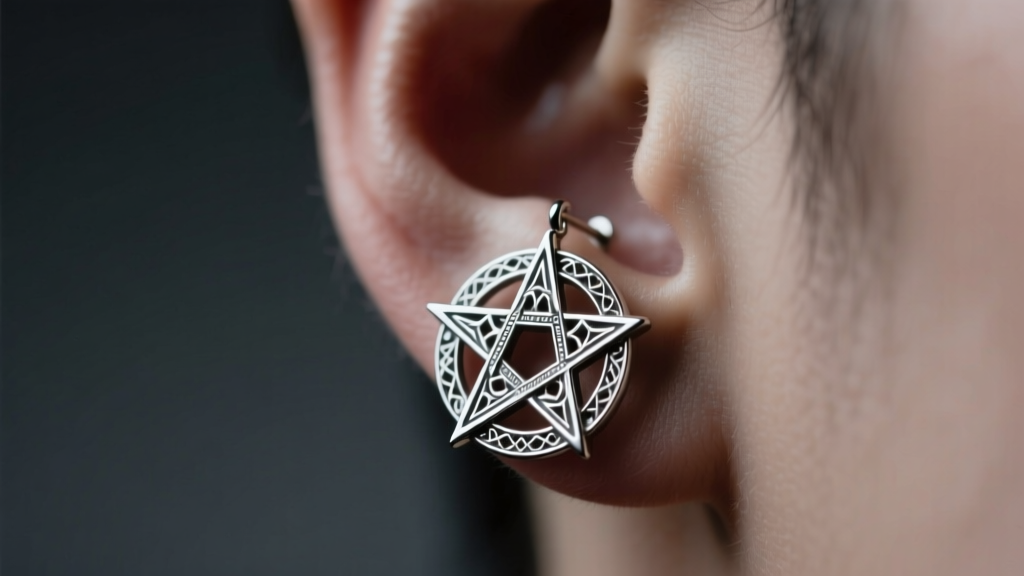
The Modern Appeal of Pentagram Earrings
Pentagram earrings have transcended their niche gothic and occult roots to become a staple in alternative, grunge, and even high-fashion wardrobes. The five-pointed star, historically representing the five elements (earth, air, fire, water, and spirit), offers a striking geometric silhouette that catches the eye. However, wearing symbolic, often intricate jewelry requires more than just an eye for aesthetics. It demands a solid understanding of metallurgy, ear anatomy, and weight distribution. Whether you are opting for a subtle 8mm titanium stud or an elaborate, oxidized silver dangle, this step-by-step guide will ensure your pentagram earrings look incredible while keeping your piercings healthy and irritation-free.
Step 1: Selecting Hypoallergenic Metals for Sensitive Skin
The most common failure mode when wearing alternative jewelry is contact dermatitis caused by cheap alloy blends. Many mass-produced gothic accessories are cast from 'Tibetan Silver' or mystery pot metals that contain high levels of nickel and lead. According to the American Academy of Dermatology, nickel allergy is the leading cause of allergic contact dermatitis, affecting up to 18% of adults. To avoid weeping, itchy lobes, you must verify the exact material grade before purchasing.
| Material Grade | Nickel Content | Price Range | Best Application |
|---|---|---|---|
| ASTM F136 Titanium | 0% (Nickel-Free) | $25 - $60 | Fresh piercings, highly sensitive skin, cartilage |
| Niobium | 0% (Nickel-Free) | $20 - $50 | Anodized color pieces, standard lobe studs |
| 316L Surgical Steel | Trace (Contains Nickel) | $10 - $30 | Fully healed lobes only (avoid if allergic) |
| Oxidized 925 Sterling | 0% (Usually Copper alloy) | $35 - $120 | Healed lobes, intricate gothic dangles |
For the safest experience, the Association of Professional Piercers (APP) strongly recommends ASTM F136 implant-grade titanium for any jewelry that sits in the body long-term. If you prefer the dark, antique look of gothic jewelry, look for solid 925 sterling silver that has been intentionally oxidized, but ensure the piercing is fully healed first, as the sulfur compounds used in oxidation can irritate open wounds.
Step 2: Matching Styles to Piercing Anatomy
Pentagram designs are versatile, but the backing mechanism and gauge thickness must match your specific piercing type to prevent migration, tearing, or embedding.
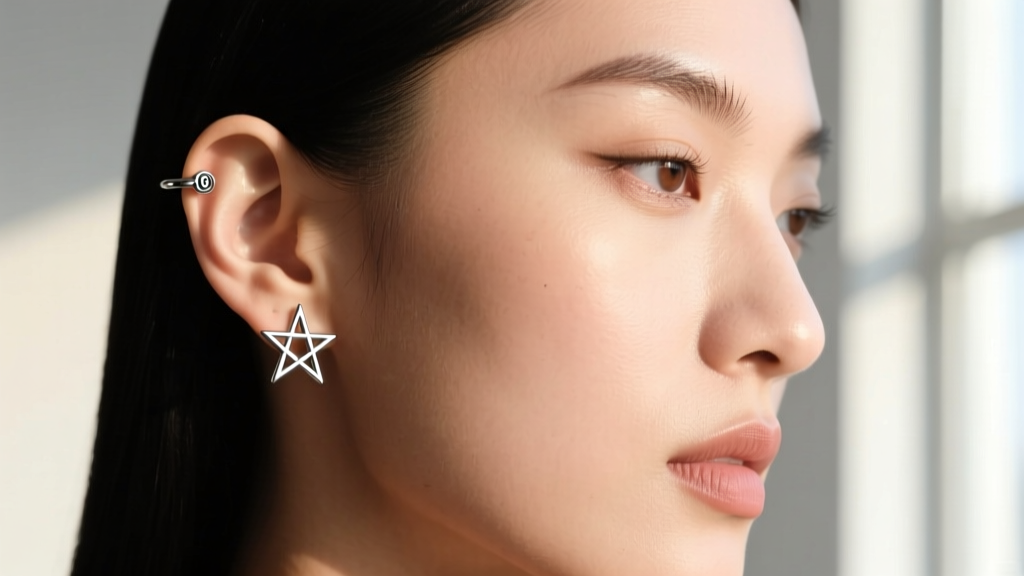
Standard Lobe Piercings (20G to 18G)
Standard lobe piercings typically sit at 20-gauge (0.8mm) or 18-gauge (1.0mm). For pentagram studs, opt for push-pin or internally threaded labret backs. Externally threaded posts (where the screw is on the post itself) act like a cheese grater on the delicate fistula tissue when inserted. Always choose a post length that allows for 1-2mm of clearance behind the lobe to accommodate natural swelling and airflow.
Cartilage and Helix Piercings (16G to 14G)
Cartilage is denser and less vascular than lobe tissue, making it prone to prolonged swelling and irritation bumps. A 16-gauge (1.2mm) or 14-gauge (1.6mm) pentagram clicker ring or flat-back labret is ideal. If choosing a pentagram hoop for the helix, ensure the inner diameter is at least 8mm to 10mm. A hoop that is too tight will put upward pressure on the piercing channel, leading to rejection or angled healing.
Stretched Lobes and Gauges (14G to 00G)
For stretched earlobes, pentagram ear weights and saddle tapers are incredibly popular. However, never use heavy brass or steel pentagram weights for the actual stretching process. Stretching should only be done with lightweight PTFE, glass, or surgical steel tapers. Once stretched to your desired size (e.g., 0-gauge or 8mm), you can safely wear decorative pentagram weights for temporary periods.
Step 3: Managing Weight and Preventing Lobe Damage
One of the most critical aspects of wearing ornate pentagram dangle earrings is weight management. The human earlobe is composed of loose areolar connective tissue and adipose (fat) tissue, lacking the structural cartilage found in the upper ear.
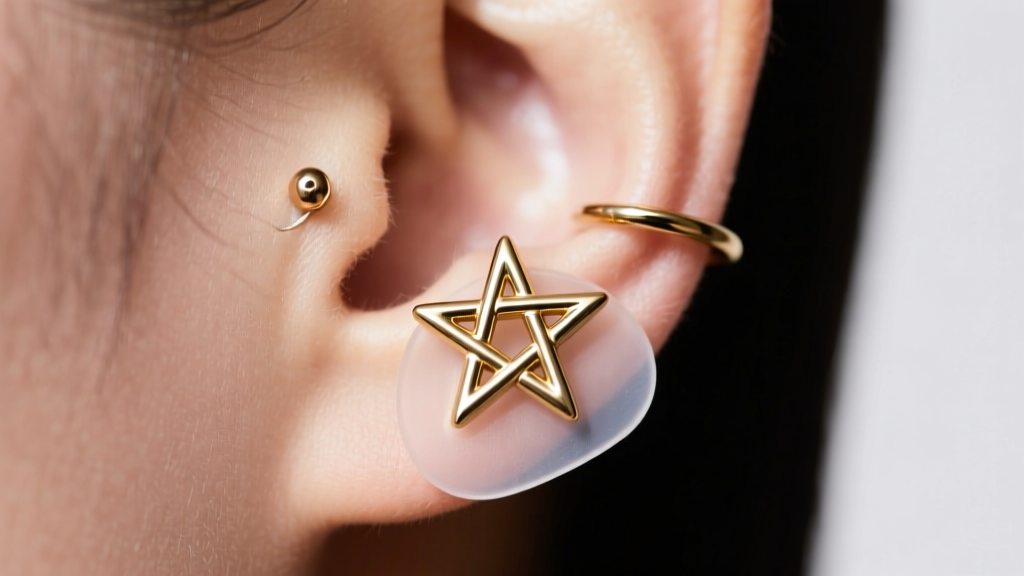
A standard, healthy lobe can comfortably support about 7 to 10 grams of jewelry indefinitely. However, elaborate gothic pentagram dangles, especially those featuring gemstones or solid brass construction, can easily exceed 20 to 30 grams per earring. Wearing heavy dangles for more than a few hours can cause the 'cheese-cutter effect,' where the thin wire or post slowly slices downward through the tissue, permanently elongating the piercing hole.
Expert Troubleshooting Tip: If you want to wear heavy pentagram dangles to a festival or concert, invest in silicone earring support patches (often branded as 'Ear Armor' or 'Lobe Wonder'). These adhesive patches distribute the downward force across a wider surface area of the earlobe, virtually eliminating the risk of acute tearing and reducing post-wear soreness.
Step 4: Styling and Stacking Pentagram Earrings
Styling a pentagram earring requires balancing its bold, angular geometry with the rest of your ear stack. Here is a practical framework for curating an alternative ear aesthetic:
- The Focal Point Rule: Let the pentagram be the star. If you are wearing a large, intricate pentagram dangle in your primary lobe piercing, keep your secondary and tertiary lobe piercings minimal with small, flush-fitting titanium or black opal studs.
- Metal Cohesion: While mixing metals is a popular trend, mixing oxidized silver with polished gold in the same ear can create a visually cluttered look. Stick to a unified metal palette—such as all matte black titanium or all oxidized silver—to maintain a cohesive, intentional aesthetic.
- Asymmetry for Edge: Pentagrams carry a naturally rebellious energy. Lean into this by wearing a heavy pentagram piece on one ear, and a curated stack of delicate, minimalist chains or huggies on the opposite ear. This asymmetrical approach feels modern and high-fashion rather than costumey.
Step 5: Cleaning and Maintaining Gothic Jewelry
Maintaining the intricate details of a pentagram earring requires specific cleaning protocols, especially if the piece features oxidation (the dark, antique finish applied to the recessed areas of sterling silver).
Never place oxidized sterling silver pentagram earrings in an ultrasonic jewelry cleaner. The high-frequency sound waves and chemical baths will strip the oxidation right out of the crevices, leaving you with a flat, overly bright silver piece that loses its gothic depth. Instead, clean oxidized silver using a soft-bristled baby toothbrush, warm water, and a drop of mild, phosphate-free dish soap. Gently brush the surface, avoiding aggressive scrubbing in the recessed star points.
For plain ASTM F136 titanium or 316L steel pentagram pieces without gemstones, ultrasonic cleaners are perfectly safe and highly effective at removing sebum and dead skin cells that accumulate around the post and backing. For pieces featuring porous stones like turquoise or opal set into the pentagram points, stick to wiping them down with a damp microfiber cloth, as prolonged water exposure can fracture or discolor the gems.
Conclusion
Pentagram earrings are a powerful form of self-expression, blending ancient symbolism with modern alternative style. By prioritizing implant-grade metals, respecting the anatomical limits of your earlobes, and utilizing proper weight-distribution techniques, you can wear your favorite occult designs safely and comfortably. Treat your piercings with the same respect you give your aesthetic, and your jewelry will remain a staple in your collection for years to come.


