Fixing Broken Hoop Earrings: Repair Costs & Value Guide
Assess the true value of fixing broken hoop earrings. Compare repair costs, material grades, and soldering methods to decide whether to mend or replace.

The Financial Reality of Broken Hoop Earrings
There is a distinct, sinking feeling when you pull your favorite hoops from your jewelry box only to find the wire snapped or the hinge mangled. Hoop earrings endure more mechanical stress than almost any other earring style. They catch on hair, get crushed in travel cases, and suffer from repetitive metal fatigue at the clasp junction. But when you are staring at broken hoop earrings, the immediate question is rarely just about sentimentality—it is about budget and value. Is it financially sound to pay a jeweler's bench fee to fix a $60 pair of silver hoops? Does the current 2026 precious metals market make repairing solid gold hoops a no-brainer compared to buying new?
As a budget-conscious jewelry collector, you must evaluate the intersection of material value, structural integrity, and repair costs. This guide provides a comprehensive value assessment to help you decide whether to send your broken hoops to the bench jeweler or retire them to the scrap metal bin.
Diagnosing the Break: Where and Why Hoops Fail
Before assessing the cost of a repair, you must identify the exact failure point. The anatomy of a hoop dictates its repairability. The vast majority of hoop failures occur in one of three areas:
- The Post/Wire Junction: Found on French wire or latch-back hoops, this is where the thin wire meets the thicker decorative body. Repeated bending causes metal fatigue, leading to a clean snap.
- The Hinge Barrel: Huggies and clicker hoops rely on microscopic steel or gold pins inside a barrel hinge. If the barrel crushes or the pin shears, the repair requires specialized micro-welding.
- The Tubing Body: Large-diameter hoops are often made of hollow tubing to keep them lightweight. These do not snap cleanly; they crimp, kink, and tear, making traditional soldering nearly impossible without visible scarring.
Understanding how your earring broke is the first step in determining if the repair cost will justify the earring's replacement value.
Material Value Assessment: Is It Worth the Bench Fee?
The most critical factor in your budget assessment is the base metal. As of 2026, the spot price of gold and platinum has significantly shifted the calculus of jewelry repair. A bench fee that once seemed steep now often represents a fraction of the cost of replacing a solid karat gold item. Below is a comparative breakdown of repair viability based on material grades.
| Material Grade | Typical Repair Cost | Soldering Method | Value Verdict |
|---|---|---|---|
| Sterling Silver (925) | $25 - $45 | Torch (Medium Solder) | Replace (Unless sentimental or heavy gauge) |
| 14k Solid Gold | $45 - $75 | Torch or Laser | Repair (Highly cost-effective vs. replacement) |
| 18k Solid Gold | $55 - $85 | Laser Preferred | Repair (Softer metal requires careful heat) |
| Platinum (950) | $80 - $130 | Laser Welding Only | Repair (Extreme durability, high replacement cost) |
| Gold Vermeil / Plated | $0 (Not repairable) | N/A (Heat burns plating) | Replace (Soldering destroys the finish) |
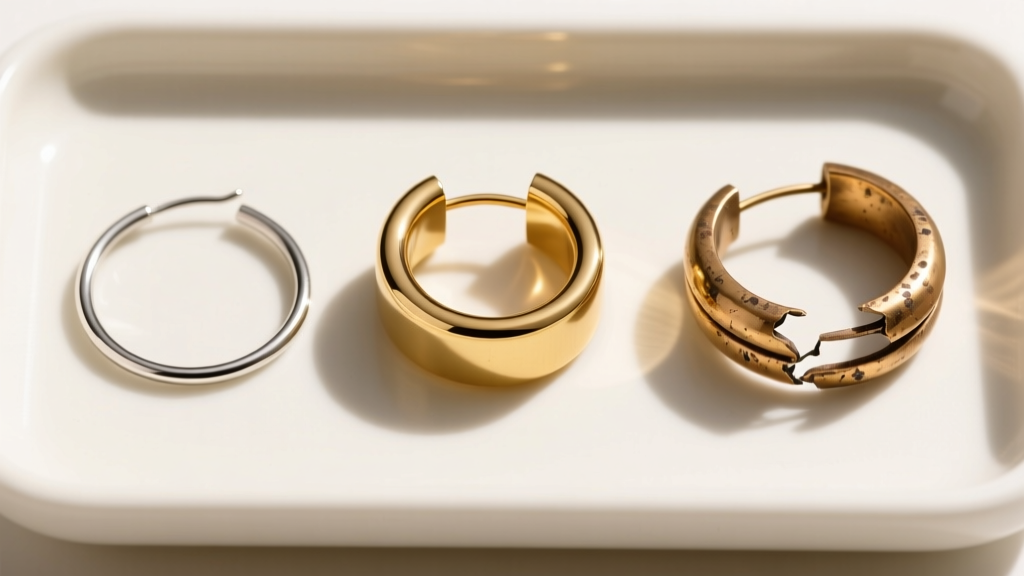
If your broken hoop earrings are gold-plated brass or vermeil, do not attempt to have them soldered. The intense heat required to melt solder will instantly vaporize or blacken the microscopic layer of gold on the surface, leaving you with an unwearable, discolored mess. For plated jewelry, the budget assessment always leans toward replacement.
Soldering Methods: Torch vs. Laser Welding
When you take solid metal hoops to a professional, the repair method will dictate the price and the structural integrity of the mend. According to the Gemological Institute of America (GIA), understanding the thermal properties of your jewelry is essential for proper care and repair.
Traditional Torch Soldering
Torch soldering uses a localized flame and a filler metal (solder) that melts at a slightly lower temperature than the earring itself. It is highly effective for solid wire hoops (like a classic 14k gold continuous hoop) and is the most budget-friendly option. However, torch soldering is dangerous for hollow hoops or hoops set with heat-sensitive gemstones like opals, emeralds, or turquoise, as the ambient heat can shatter the stones or melt the internal resin of hollow tubes.
Laser Welding
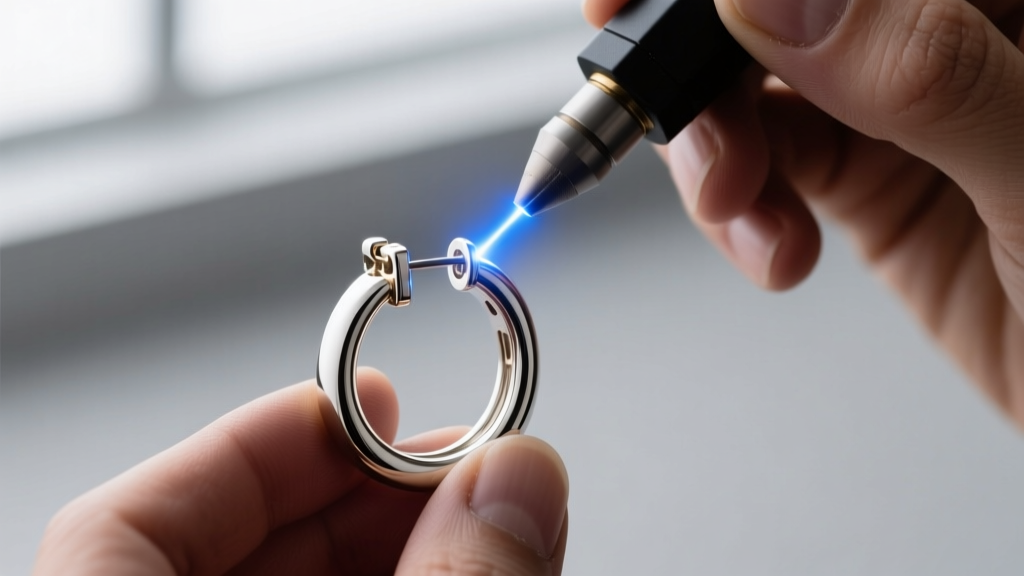
Laser welding uses concentrated light pulses to fuse metal at a microscopic level without transferring ambient heat to the surrounding area. If your broken hoop earrings feature a delicate 18-gauge hinge near a diamond pave setting, or if they are constructed from thin-walled hollow tubing, laser welding is mandatory. Expect to pay a 30% to 50% premium for laser welding, but it is the only way to preserve the structural and aesthetic value of complex designs.
The Gauge Factor: Thickness and Structural Integrity
The thickness of the earring wire, measured in gauges, heavily influences both the breakage rate and the repair cost. Standard hoop earrings typically range from 20-gauge (0.81mm) to 14-gauge (1.63mm).
Expert Insight: Hoops thinner than 20-gauge are highly prone to snapping under the weight of their own diameter. While a jeweler can solder a 22-gauge wire, the heat sink is so small that the wire often melts into a ball before the solder flows. For long-term value, always invest in hoops that are at least 18-gauge (1.02mm) for standard lobes, or 16-gauge (1.29mm) for cartilage and daith piercings.
If your broken hoops are a fragile 22-gauge, a reputable jeweler may actually refuse the repair, advising you that the metal is simply too thin to hold a solder joint under daily tension.
Decision Matrix: When to Mend and When to Let Go
To streamline your budget assessment, use this practical decision framework recommended by industry professionals affiliated with Jewelers of America when evaluating damaged goods:
- The 50% Rule: If the quoted repair cost exceeds 50% of the price to buy the exact same hoop new, replace it. (Exception: The item is discontinued or holds irreplaceable sentimental value).
- The Scrap Value Offset: For heavy solid 14k or 18k gold hoops, factor in the scrap gold value. In 2026, a pair of broken, unrepairable 8-gram 14k gold hoops still holds significant melt value, which can be traded in at the bench to offset the cost of a new pair.
- The Hardware Upgrade: If the hoop body is fine but the latch-back clasp keeps failing, ask your jeweler to upgrade the hardware to a more secure "clicker" or "omega" back. Spending $40 to upgrade the closure mechanism on a $300 pair of gold hoops is an excellent investment in longevity.
Ultimately, assessing broken hoop earrings requires looking past the initial frustration and evaluating the cold, hard data of material science and current market economics. By understanding your metal grade, gauge thickness, and the appropriate welding technique, you can make a financially sound decision that keeps your jewelry collection both beautiful and budget-smart.


