How to Style a Hoop Earring Set: 2026 Trend Guide
Discover how to style a hoop earring set in 2026. Expert tips on gauge sizes, mixed-metal stacking, and cartilage curation for the perfect ear stack.

The Evolution of the Hoop Earring Set in 2026
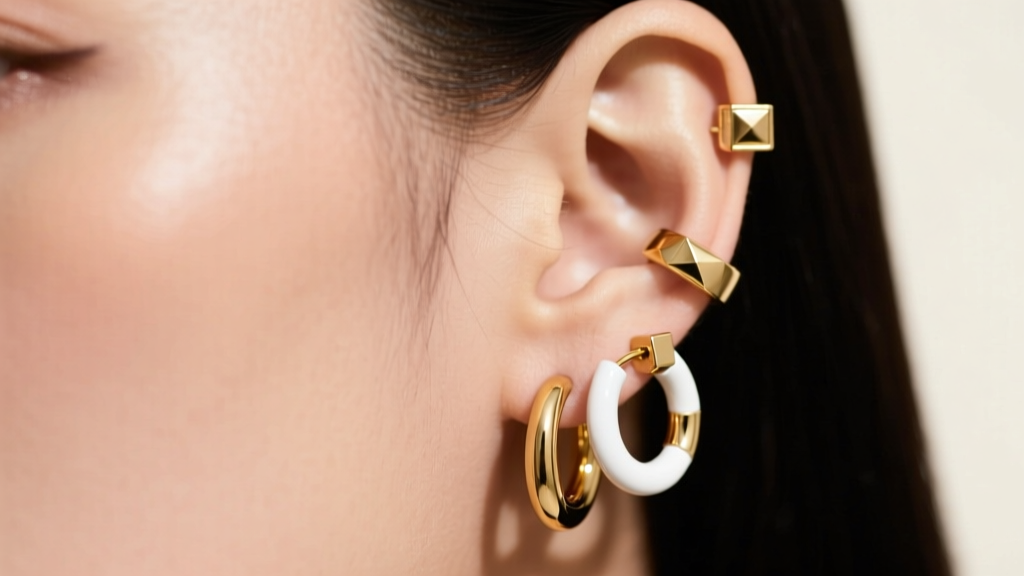
The concept of a traditional, uniform jewelry set has undergone a radical transformation. In 2026, a 'hoop earring set' no longer refers to three identical circles of metal packaged in a velvet box. Instead, it defines a meticulously curated collection of varying diameters, textures, and gauges designed to create a cohesive, asymmetrical ear stack. This shift reflects a broader movement toward hyper-personalized styling, where the ear is treated as a canvas rather than a simple accessory point.
Today's trend analysis reveals that consumers are moving away from symmetrical, matched pairs. The modern hoop earring set is built around the 'anchor and accent' framework. You anchor the primary lobe piercing with a statement piece—perhaps a 15mm hammered gold hoop—and then utilize smaller, complementary huggies and clickers to climb the helix and tragus. This approach requires a deep understanding of spatial geometry, metal behavior, and piercing anatomy to execute flawlessly.
Anatomy of the Perfect Ear Stack: Gauge and Sizing
The most common failure point when building a curated ear stack is ignoring the relationship between wire gauge and hoop diameter. A hoop that is too thin for its diameter will warp when you attempt to snap the clicker hinge shut, while a hoop that is too thick for a delicate cartilage piercing will cause migration and discomfort.
According to the Association of Professional Piercers (APP), understanding standard jewelry dimensions is critical for both healing and long-term wear. Below is the definitive sizing matrix for building your 2026 hoop earring set.
| Piercing Location | Ideal Hoop Diameter | Standard Wire Gauge | Recommended Closure Type |
|---|---|---|---|
| Standard Lobe | 12mm - 20mm | 18g (1.0mm) or 16g (1.2mm) | Hinge / Clicker |
| Upper Lobe / Lobe 2 | 10mm - 12mm | 18g (1.0mm) | Seamless / Clicker |
| Helix / Cartilage | 8mm - 10mm | 16g (1.2mm) or 14g (1.6mm) | Segment Ring / Clicker |
| Tragus | 6mm - 7mm | 16g (1.2mm) | Captive Bead / Tiny Clicker |
| Daith | 10mm - 12mm | 16g (1.2mm) | Clicker with Decorative Shield |
The Geometry of the Stack
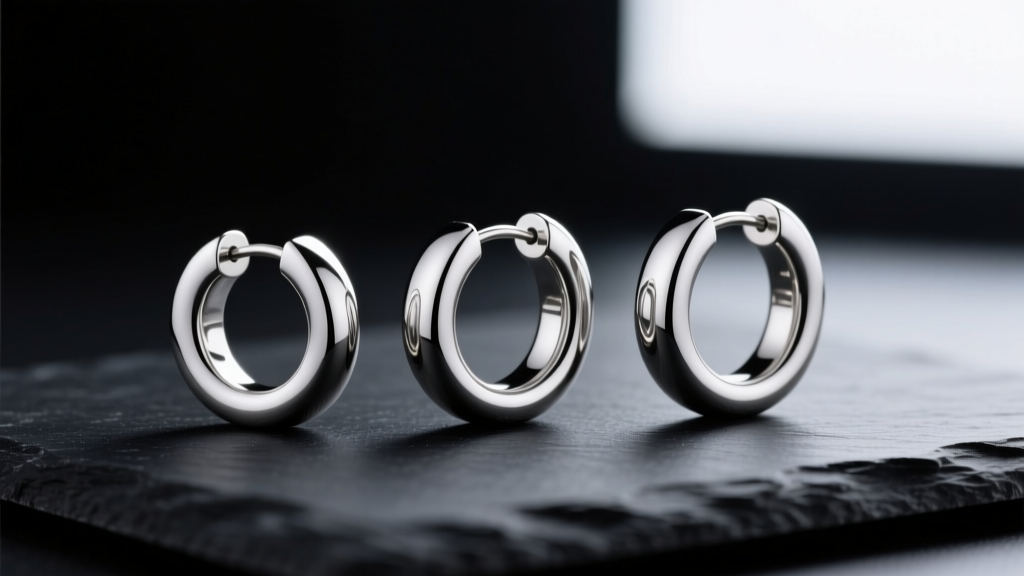
When planning your layout, maintain a 'negative space' rule. If your lobe features a chunky 14mm textured hoop, your upper lobe should feature a sleek, minimalist 10mm huggie. This contrast in texture and visual weight is what separates a chaotic ear full of metal from a professionally styled hoop earring set.
Material Science: What to Buy for Longevity
The structural integrity of your hoops relies entirely on metallurgy. Because hoops are subjected to constant tension, pulling, and friction at the closure point, material choice dictates the lifespan of the piece.
Solid Gold vs. Implant-Grade Titanium
For daily-wear cartilage hoops, 14k solid gold is the industry gold standard. As noted by the Gemological Institute of America (GIA), 14k gold contains 58.5% pure gold mixed with alloy metals like copper and zinc. This specific alloy blend provides the necessary tensile strength for clicker hinges to snap securely without bending. 18k gold, while richer in color, is softer and more prone to warping if used in thin 18g wires.
For those with nickel sensitivities or those building a set for newly healed piercings, ASTM F-136 implant-grade titanium is non-negotiable. It is completely nickel-free, highly resistant to corrosion, and significantly lighter than gold, reducing the gravitational pull on delicate helix piercings.
The Vermeil and Plating Trap
A major trend trap in 2026 is the proliferation of 'gold vermeil' hoop sets marketed as affordable luxury. Vermeil requires a base of sterling silver coated with at least 2.5 microns of gold. However, the mechanical action of a clicker hinge creates immense friction. Within three to six months of daily wear, the gold layer at the closure point will wear away, exposing the silver or brass core. This leads to oxidation, green skin discoloration, and eventual hinge failure. When investing in a hoop earring set intended for continuous wear, always bypass plated options in favor of solid 14k gold or PVD-coated titanium.
Curation Framework: Building Your Hoop Earring Set
Building a cohesive set requires a strategic approach to purchasing. Rather than buying random singles, follow this three-step curation framework to ensure your pieces harmonize.
- Step 1: The Lobe Anchor (The Statement)
Start with a 15mm to 18mm hoop for your primary lobe piercing. In 2026, the trend leans toward organic textures—think hammered finishes, rope twists, or molten metal effects. This piece dictates the color temperature (yellow, white, or rose gold) for the rest of the stack. - Step 2: The Helix Bridge (The Sparkle)
Move to the mid-helix with an 8mm or 9mm clicker. To contrast the textured lobe anchor, choose a high-polish or pavé diamond hoop. The introduction of gemstones breaks up the monotony of solid metal and catches the light from a different angle. - Step 3: The Tragus Accent (The Minimalist)
Finish the vertical climb with a 6mm seamless huggie in the tragus. This piece should be entirely unembellished—a simple, high-polish wire that acts as a visual period at the end of your ear stack's sentence.
Maintenance and Troubleshooting Clicker Hinges
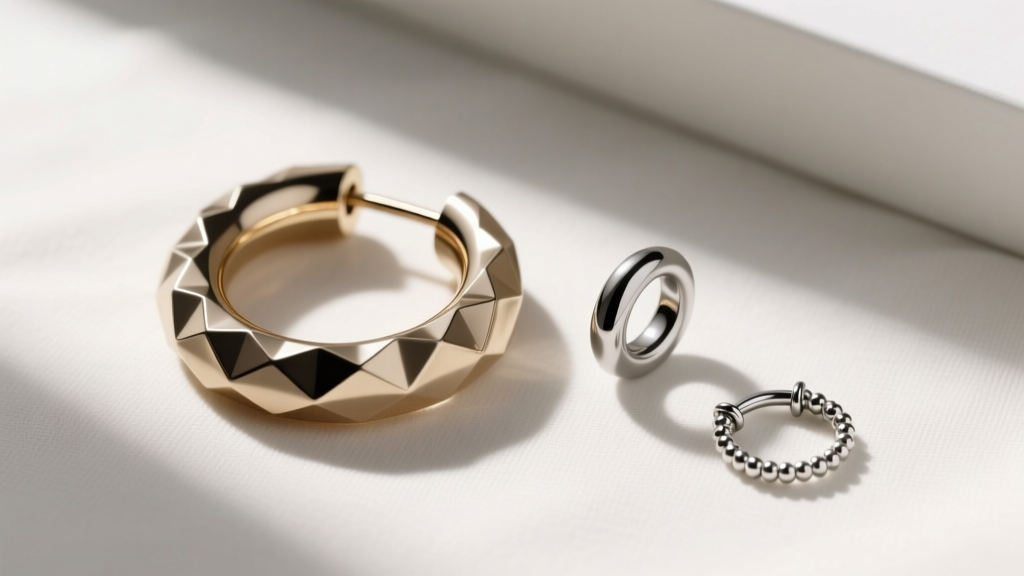
Even the highest quality 14k gold clicker hinges can loosen over time due to the repetitive stress of opening and closing the segment. A loose clicker will fail to produce that satisfying 'snap' and risks falling out during sleep or while changing clothes.
How to Fix a Loose Hinge
Do not attempt to bend the wire itself. Instead, you need to compress the hinge barrel. Using a pair of nylon-jaw jewelry pliers (never bare metal pliers, which will mar the gold finish), gently grip the hinge mechanism on either side of the pin. Apply a very slight squeezing pressure. Test the closure. If it still feels loose, repeat with micro-adjustments. This simple maintenance step can extend the life of your hoop earring set by years.
Proper Cleaning Protocols
Avoid harsh chemical dips or ultrasonic cleaners for hoops featuring pavé diamonds or opal inlays. The high-frequency vibrations of ultrasonic cleaners can shake micro-prongs loose, resulting in lost stones. Instead, use a soft-bristled baby toothbrush, warm water, and a drop of mild, phosphate-free dish soap. Gently scrub the interior of the hoop and the hinge mechanism to remove sebum and dead skin cells that can cause the clicker to stick.
Final Thoughts on 2026 Ear Curation
The modern hoop earring set is an exercise in intentional design. By prioritizing correct gauge sizing, investing in solid metallurgy, and applying a structured curation framework, you elevate your ear stack from a mere collection of jewelry to a masterclass in personal style. As 2026 trends continue to favor individuality and mixed-metal asymmetry, your carefully curated set will remain both timeless and distinctly on-trend.


