Converting Earrings to Clip Ons: Troubleshooting Fit and Grip
Learn the mechanics of converting earrings to clip ons. Troubleshoot pinching, slipping, and weight issues with expert DIY and jeweler-backed solutions.

The Mechanics of Conversion: Why Standard Adapters Fail
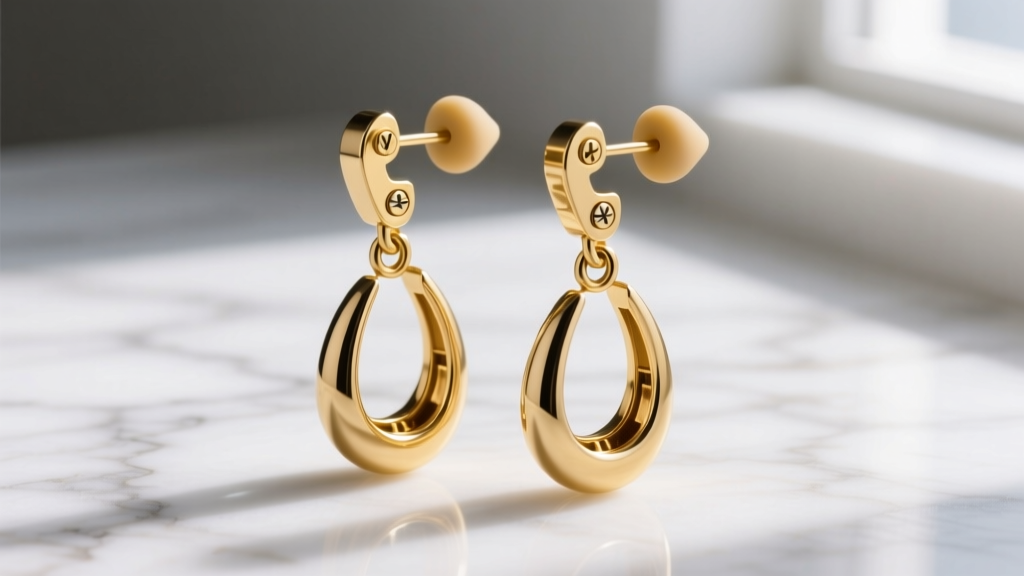
The desire to wear high-end pierced jewelry without the commitment of a needle is common, but converting earrings to clip ons is rarely as simple as snapping on a generic paddle back. The fundamental issue lies in physics. A standard pierced earring relies on the earlobe piercing as a central fulcrum, allowing the jewelry to hang naturally with gravity. When you convert that same piece to a clip-on, the fulcrum shifts to the front edge of the earlobe, and the clamping force must now counteract both the weight of the jewelry and the rotational torque it generates.
Standard friction-fit adapters (often made of stamped brass or plated base metals) typically fail when the earring exceeds 6 grams. The rotational torque causes the paddle to pivot forward, resulting in the earring facing downward or slipping off entirely. To successfully troubleshoot this, we must move beyond basic adapters and address tension, surface friction, and weight distribution.
Troubleshooting the "Pinch": Padding and Tension Adjustments
The most common complaint when converting earrings is the painful "pinch" that occurs after 30 minutes of wear. This is usually caused by a mismatch between the clip’s spring tension and the durometer (hardness) of the padding. Most mass-produced clip-on converters use PVC or hard rubber pads with a Shore A durometer of 70 or higher. These do not compress adequately, forcing the metal spring to do all the work, which restricts blood flow to the earlobe capillaries.
The Silicone Solution
For a painless conversion, replace standard pads with medical-grade silicone pads rated between Shore 30A and 40A. This specific density provides enough structural integrity to prevent "bottoming out" (where the metal clip touches through the pad) while dispersing clamping pressure evenly across the lobe. Brands like Shapely Clips or custom-cut silicone sheets from jewelry supply houses offer ideal replacements.
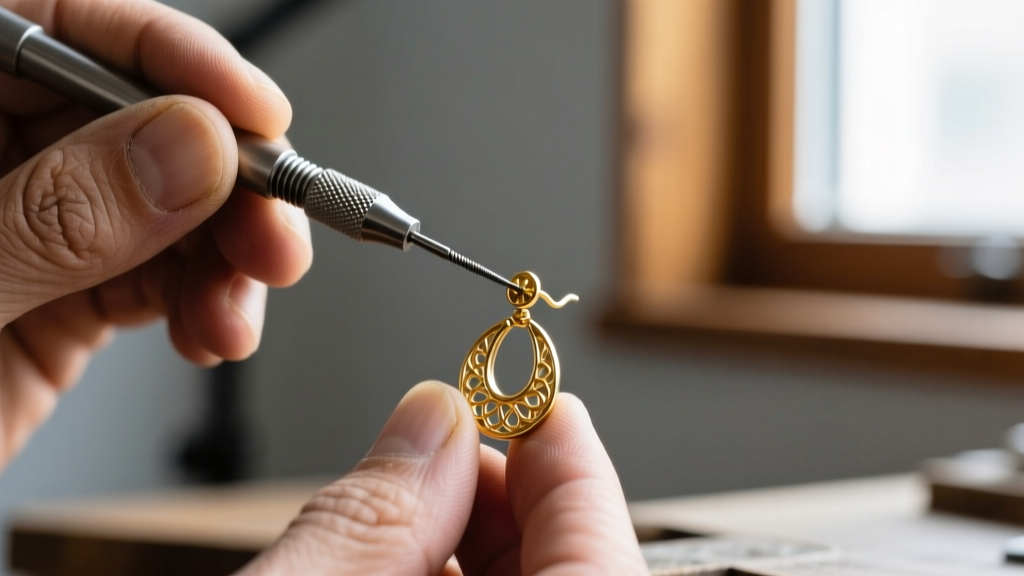
If you are working with vintage screw-back converters, the tension is often overtightened at the factory. Using a micro-jeweler’s screwdriver (typically 1.2mm flathead), back the tension screw out by exactly one-quarter turn. Test the fit; the clip should hold firm when gently tugged but should not leave a deep indentation on the skin after 10 seconds of wear.
Solving the "Slip": Grip Enhancements for Heavy Drops
When converting heavy drop earrings (8 to 15 grams), the smooth metal surface of the clip paddle slides against the natural oils of the skin. Increasing the clamping force to compensate only leads to the pinching issue mentioned above. Instead, you must increase the coefficient of friction.
- Temporary Grip (Museum Wax): For occasional wear, applying a microscopic layer of conservation-grade microcrystalline wax (like Renaissance Wax) to the inside of the clip paddle creates a tacky, non-slip surface that won’t irritate the skin or damage the jewelry’s plating.
- Semi-Permanent Grip (Friction Sleeves): If the pierced earring still has its post attached, sliding a 2mm silicone friction back onto the post before inserting it into the clip-on adapter creates a high-friction rubber barrier between the post and the metal paddle, virtually eliminating slippage.
- Permanent Grip (Epoxy Bonding): For a dedicated clip-on conversion, a bench jeweler will snip the post and bond the earring directly to a heavy-duty paddle using a two-part jeweler’s epoxy (such as G-S Hypo Cement or JB Weld ClearWeld). This removes the play of the adapter sleeve entirely.
Weight Distribution: Converting Dangles Without Earlobe Fatigue
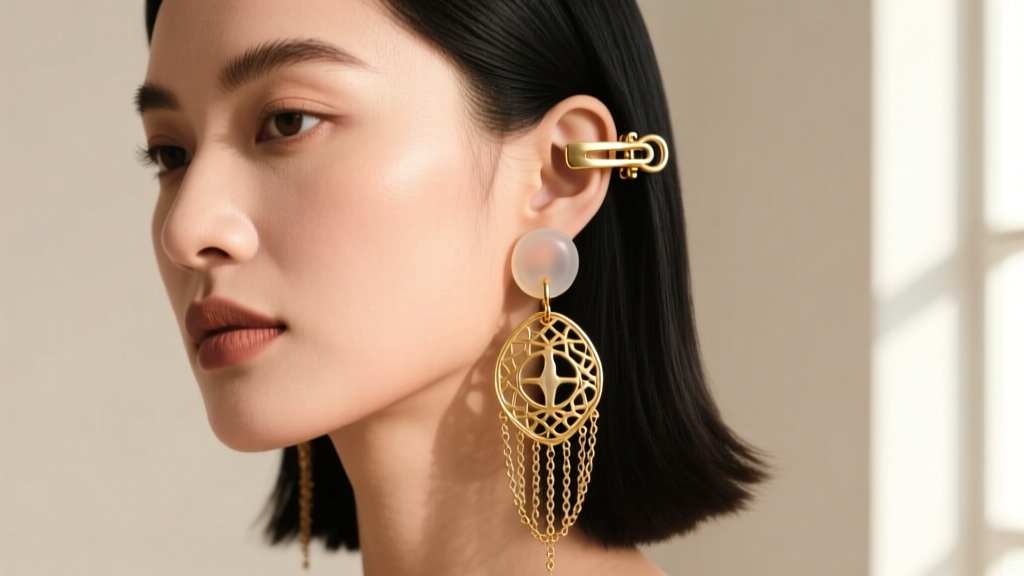
Dangle earrings over 12 grams create a severe pendulum effect. No lobe clip can comfortably support this dynamic weight. The troubleshooting solution is to introduce a secondary anchor point. By pairing the converted lobe clip with a transparent silicone ear cuff that grips the upper cartilage, you distribute the static and dynamic load across two distinct anatomical zones. The cartilage cuff acts as a shock absorber, reducing the torque on the lobe by up to 60% during movement.
Material Compatibility: What Can and Cannot Be Converted
Not all metals play well together. When permanently bonding a pierced earring to a clip-on finding, you must consider galvanic corrosion. If you bond a sterling silver earring post to a raw copper or brass clip paddle using conductive adhesives or certain soldering techniques, moisture from the skin will create a galvanic cell, rapidly corroding the base metal and staining the skin green. Always ensure the clip finding is either the same metal alloy as the earring or heavily rhodium-plated to act as an inert barrier.
| Earring Material | Recommended Clip Finding | Best Bonding Method | Failure Risk |
|---|---|---|---|
| 14k / 18k Gold | Gold-filled or Solid Gold Paddle | Laser Welding or Hard Solder | Low (if flux is properly cleaned) |
| Sterling Silver | Rhodium-Plated Brass or Silver | Two-Part Jeweler’s Epoxy | Medium (galvanic corrosion if unsealed) |
| Titanium / Niobium | Titanium Huggie-Style Clip | Cold Connection (Riveting) | High (cannot be traditionally soldered) |
| Plated Base Metal | Plated Brass Paddle | Cyanoacrylate (Super Glue) + Primer | High (plating peels under torque) |
Professional vs. DIY: When to See a Bench Jeweler
While friction adapters and silicone pads are excellent DIY solutions, certain conversions require professional equipment. According to Ganoksin’s soldering guidelines, attempting to torch-solder a clip-on finding to a delicate or gemstone-set earring will often result in thermal shock, shattering stones like opals or emeralds.
A professional bench jeweler will use a laser welder for these delicate jobs. Laser welding concentrates heat into a microscopic point (often less than 1mm), allowing the jeweler to fuse a titanium or platinum clip finding directly to the earring’s gallery without heating the surrounding gemstones. Expect to pay between $45 and $85 per pair for professional laser conversion, which includes the cost of the high-quality clip findings. For a comprehensive look at professional findings, Rio Grande’s earring findings catalog remains the industry standard for sourcing durable, ergonomic clip mechanisms.
"The biggest mistake people make with DIY conversions is ignoring metal fatigue. Every time you open and close a stamped brass clip-on, you are work-hardening the hinge. Without proper annealing or using a sprung stainless steel hinge, a DIY clip will inevitably snap at the joint after a few months of daily use." — Master Bench Jeweler
Final Checklist for a Secure Fit
Before wearing your newly converted earrings out, run through this quick troubleshooting checklist to ensure security and comfort:
- The Shake Test: Hold the earring by the clip and give it a vigorous shake. If the dangle element rattles excessively against the adapter sleeve, apply a tiny drop of clear nail polish to the adapter joint to stiffen the articulation.
- The Skin Prep: Always wipe the earlobe with a 70% isopropyl alcohol pad before putting on clip-ons. Removing natural sebum increases the friction coefficient of the skin by up to 30%, drastically reducing slip.
- The 2-Hour Check: Wear the earrings at home for two hours. If you feel a throbbing sensation, the tension is too high. If the earrings feel "heavy" on the bottom of the lobe, the center of gravity is off, and you need to add a secondary cartilage cuff for support.
By understanding the biomechanics of the ear and the metallurgy of the findings, converting earrings to clip ons transforms from a frustrating compromise into a secure, comfortable, and stylish reality.


