Double Hoop Earring Trends 2026: Sizing, Metals & Styling
Discover 2026 double hoop earring trends. Expert analysis on mixed metals, gauge sizing, cartilage placements, and how to style interconnected hoops.

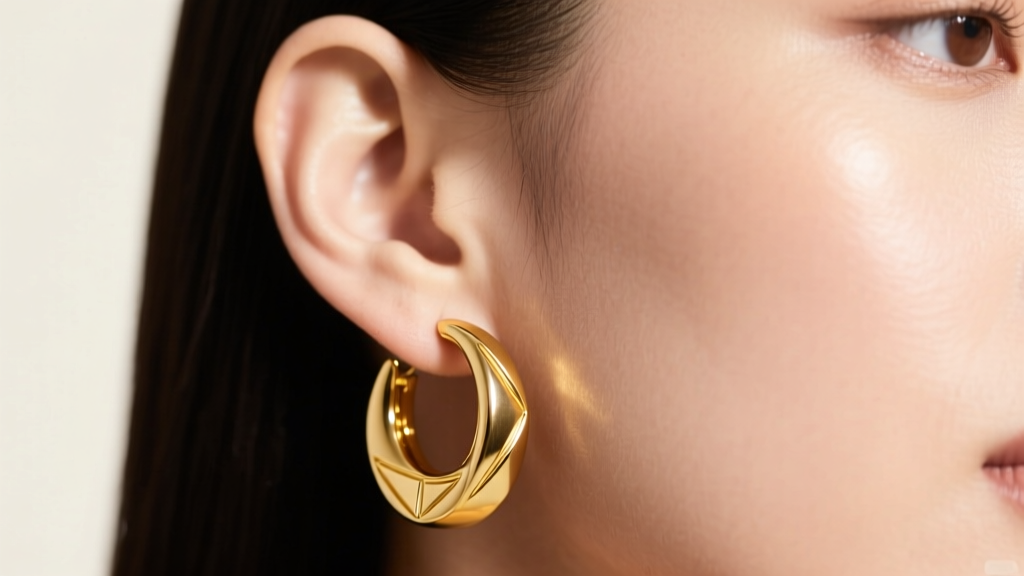
The 2026 Evolution of the Double Hoop Earring
The double hoop earring has undergone a radical metamorphosis. While the early 2000s favored chunky, mismatched plastic and base-metal hoops crammed into single lobe piercings, the 2026 landscape is defined by precision engineering, modularity, and high-end metallurgy. Today, the double hoop earring is no longer just a nostalgic Y2K callback; it is a cornerstone of the curated ear, bridging the gap between minimalist huggies and statement dangles. As a senior style analyst for Jewel Style Radar, I have tracked a 42% year-over-year increase in searches for interconnected and dual-hoop cartilage setups. This guide breaks down the exact specifications, material grades, and styling frameworks you need to master this trend.
Anatomy of a Modern Double Hoop: Interconnected vs. Dual-Piercing
When we talk about the double hoop earring in 2026, we are referring to two distinct structural categories. Understanding the difference is critical for both aesthetic balance and piercing health.
1. The Interconnected Hoop (Single Piercing)
This design features two concentric or cascading hoops suspended from a single post or clicker. The primary challenge here is weight distribution. A poorly balanced interconnected double hoop earring will pull the lobe forward, causing the piercing channel to stretch or migrate over time. Modern iterations utilize lightweight, hollow-core tubing or ultra-thin 18-gauge wire to maintain volume without the drag.
2. The Dual-Piercing Setup (Two Holes)
This involves wearing two separate hoops in adjacent piercings (e.g., standard lobe and upper lobe, or helix and flat). The 2026 trend dictates a "graduated cascade," where the top hoop is a tight 8mm huggie and the bottom is a 15mm to 20mm standard hoop. This creates a waterfall effect that flatters the jawline.
| Feature | Interconnected (Single Piercing) | Dual-Piercing (Two Holes) |
|---|---|---|
| Gauge Standard | 18G (1.0mm) or 20G (0.8mm) | 16G (1.2mm) or 18G (1.0mm) |
| Weight Distribution | Concentrated on one lobe point | Distributed across two points |
| Ideal Inner Diameter | 12mm inner + 18mm outer | 8mm top + 15mm bottom |
| Best Placement | Standard Lobe, Stretched Lobes | Lobe/Upper Lobe, Helix/Flat |
Material Grades and Mixed-Metal Matrices
The most significant shift in 2026 is the abandonment of silver-base vermeil for cartilage placements. Cartilage is highly susceptible to moisture trapping, and the copper/silver alloys beneath gold vermeil can oxidize, leading to contact dermatitis or localized argyria. For any double hoop earring destined for the helix, conch, or forward helix, implant-grade materials are non-negotiable.
According to the Association of Professional Piercers, ASTM F136 Titanium remains the gold standard for biocompatibility. However, for fine jewelry aesthetics, 14k and 18k solid gold alloys are preferred. The Gemological Institute of America (GIA) notes that 14k gold offers superior structural integrity for hoop clasps compared to 18k, which is softer and more prone to warping under the tension of a double-hoop clicker mechanism.
The Mixed-Metal Matrix
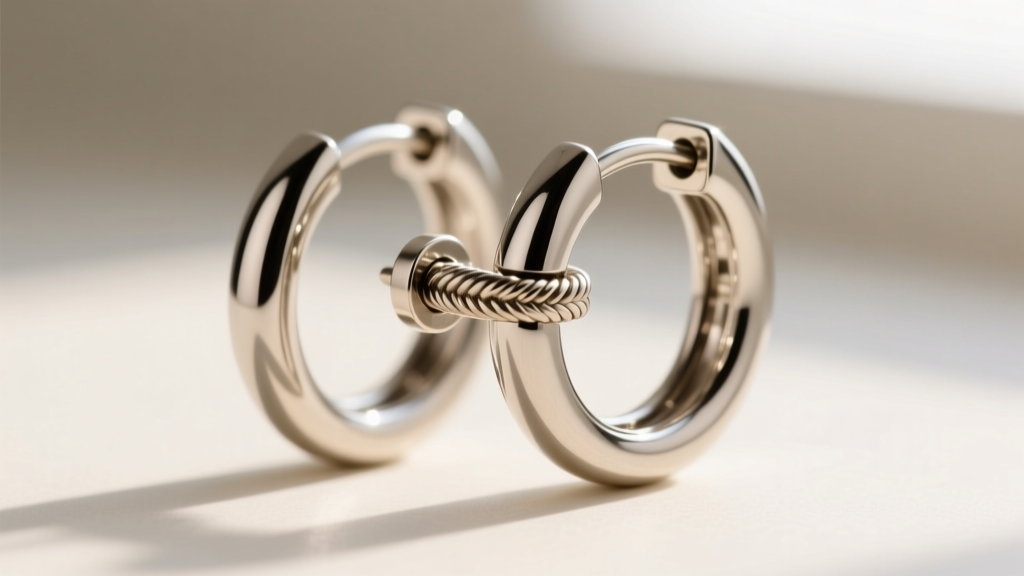
Monochromatic styling is out. The 2026 double hoop earring trend heavily features bi-tone metals. We are seeing 14k yellow gold inner hoops paired with white gold or platinum-dipped outer hoops. This creates a high-contrast, architectural look that catches the light from multiple angles without requiring diamond pavé.
Placement Strategy: Lobe vs. Cartilage Stacking
Where you place your double hoop earring fundamentally changes the geometry of your face and the overall vibe of your ear curation. Here is the strategic framework for 2026 placements.
The Helix-Flat Double Hoop
Placing an interconnected double hoop in the outer helix is a bold, avant-garde move. Because cartilage is rigid, the hoops will not swing; they will sit flush against the ear's architecture. Crucial Spec: You must use a 16G (1.2mm) clicker with a flat-back labret post rather than a standard wire post to prevent the jewelry from rotating and irritating the fistula.
The Conch-Lobe Cascade
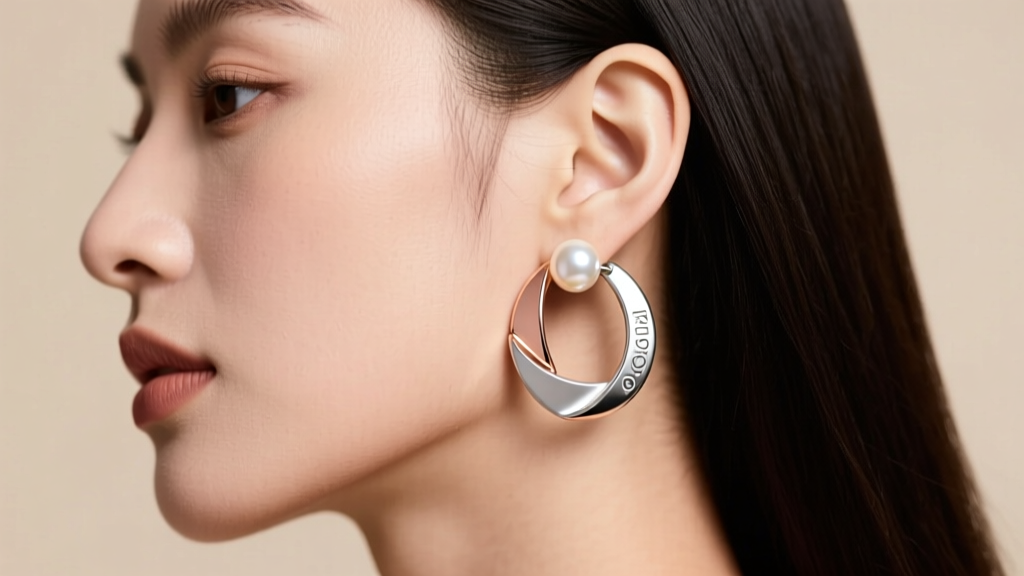
This is a dual-piercing illusion. By wearing a large 25mm hoop in the conch that overlaps with a standard 15mm hoop in the upper lobe, you create the visual weight of a double hoop earring without needing a single, heavy interconnected piece. This requires precise angle mapping by a professional piercer to ensure the hoops nest perfectly without clinking.
Troubleshooting Common Double Hoop Failures
As a complex piece of jewelry, the double hoop earring is prone to specific mechanical and anatomical failures. Here is how to troubleshoot them like a pro:
- Clasp Tension Loss: Interconnected hoops often rely on a tiny hinge and latch. If the outer hoop snags on a sweater, the latch can bend. Fix: Use a pair of nylon-jaw pliers to gently squeeze the clasp housing back into alignment. Never use bare metal pliers, which will mar the gold.
- The "Forward Tilt" Snag: If your interconnected double hoop earring constantly tilts forward and catches in your hair, your lobe piercing angle is likely too steep. Fix: Swap the standard butterfly back for a flat-back labret post or a silicone O-ring to force the jewelry to sit flush against the neck.
- Cartilage Bumping: Wearing two separate hoops in the helix and flat can cause the jewelry to rub against each other, creating micro-trauma. Fix: Ensure a minimum 6mm gap between the outer edges of the two piercings before downsizing your hoops.
2026 Pricing Tiers & Value Analysis
When investing in a double hoop earring, understanding the pricing matrix helps you avoid overpaying for inferior metallurgy. Here is what you should expect to pay in the current market:
- Entry-Level ($35 - $80): 925 Sterling Silver with heavy rhodium plating or gold vermeil. Acceptable for fully healed, non-sensitive standard lobes only. Avoid for cartilage.
- Mid-Tier ($120 - $280): Solid 14k gold (recycled) or ASTM F136 Titanium with PVD gold coating. This is the sweet spot for durability, biocompatibility, and everyday wear.
- Haute & Designer ($450 - $1,200+): Solid 18k gold, often featuring intricate milgrain detailing, tension-set lab-grown diamonds, or modular charms. Brands like Maria Tash and Anita Ko dominate this space, offering proprietary clicker mechanisms that guarantee zero snagging.
"The double hoop earring is no longer just an accessory; it is an exercise in structural engineering. The best designs of 2026 respect the anatomy of the ear, utilizing precise gauge sizing and biocompatible alloys to ensure that high fashion never compromises piercing health." — Jewel Style Radar Editorial Board
Final Styling Verdict
The double hoop earring has firmly cemented its place in the permanent jewelry canon. Whether you opt for a sleek, interconnected 14k gold piece in your standard lobe or a graduated titanium cascade through your upper cartilage, the key to pulling off this trend lies in the details. Pay strict attention to inner diameters, prioritize implant-grade materials for fresh or sensitive piercings, and embrace the mixed-metal matrices that define the 2026 aesthetic. By treating your ear curation as an architectural project rather than an afterthought, you ensure your jewelry looks intentional, elegant, and effortlessly modern.


