Expert Care and Cleaning for Scalloped Hoop Earrings
Learn expert techniques to clean, polish, and store scalloped hoop earrings. Protect intricate metalwork and gemstones from daily buildup.

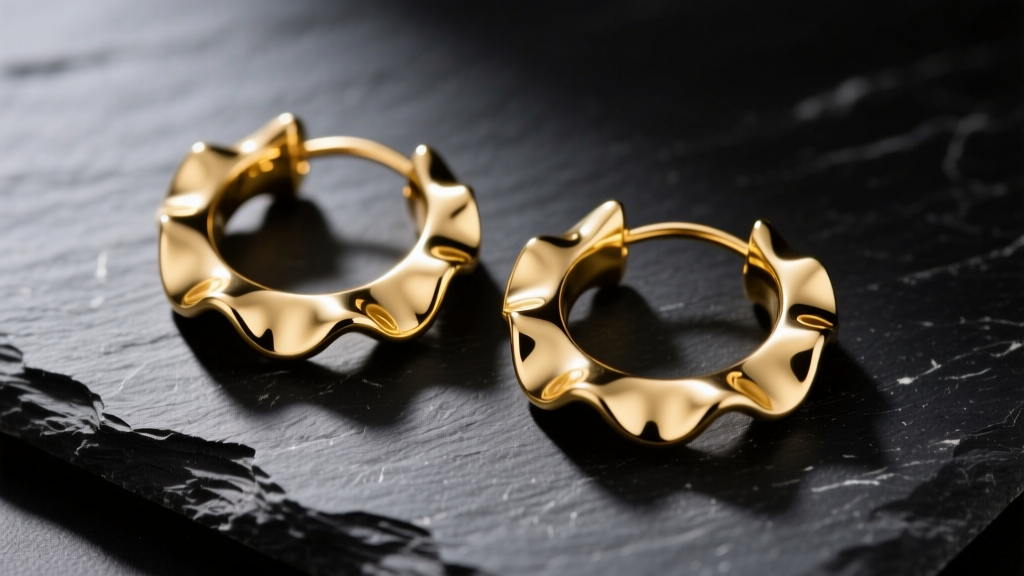
Scalloped hoop earrings are a masterclass in textural jewelry design. Their undulating, wave-like edges catch the light beautifully and offer a vintage-inspired alternative to traditional smooth hoops. However, this intricate geometry introduces unique maintenance challenges. The continuous series of peaks and valleys along the scalloped edge creates micro-crevices that eagerly trap sebum, cosmetic powders, hairspray, and environmental pollutants. Over time, this buildup not only dulls the metal's luster but can also accelerate tarnishing and compromise the structural integrity of the earring.
Whether you own solid 14k gold, sterling silver, or gemstone-encrusted pave styles, maintaining scalloped hoop earrings requires a specialized approach. Standard wiping techniques simply push debris deeper into the scallops. In this comprehensive guide, we break down the exact metallurgical and mechanical care protocols required to keep your textured hoops pristine, drawing on guidelines from the Gemological Institute of America (GIA) and industry best practices.
The Unique Maintenance Challenges of Scalloped Edges
Unlike a standard 18-gauge smooth wire hoop, a scalloped hoop features a highly increased surface area. This aesthetic choice comes with functional consequences for daily wear. The "valleys" of the scallops act as natural collection points for dead skin cells and lotions. Furthermore, the scalloped edges are inherently more prone to mechanical snagging. When a scalloped hoop catches on a wool sweater or towel, the lateral force can easily warp the hoop out of its circular axis, especially if the earring is crafted from a softer, high-purity metal like 22k gold or if it utilizes a thin 20-gauge wire.
Expert Insight: Never attempt to bend a warped scalloped hoop back into shape with your bare hands. The uneven distribution of metal along the scalloped edge creates weak points where the metal can easily snap or crease if subjected to uneven manual pressure.
Step-by-Step Cleaning Protocol for Scalloped Hoops
To properly clean scalloped hoop earrings without damaging the finish or loosening any solder joints at the hinge and clasp, you must follow a two-tiered approach: dry extraction followed by targeted wet cleaning.
Phase 1: Dry Extraction
Before introducing any moisture, which can turn trapped cosmetic powders into a stubborn paste, you must remove loose debris.
- Compressed Air: Use a can of compressed air (held at least four inches away) to blow out the crevices of the scallops. This is particularly effective for removing dried setting powder and dust.
- Dry Micro-Bristle Brushing: Use a clean, dry, extra-soft baby toothbrush or a specialized jewelry detailing brush with 0.05mm nylon bristles. Brush in the direction of the scallop's curve, never against it, to dislodge particles trapped in the metal's valleys.
Phase 2: Targeted Wet Cleaning
For the wet cleaning phase, avoid harsh commercial dips. According to Jewelers of America, mild surfactants are the safest option for breaking down lipid-based buildup (like skin oils and moisturizers) without stripping metal finishes.
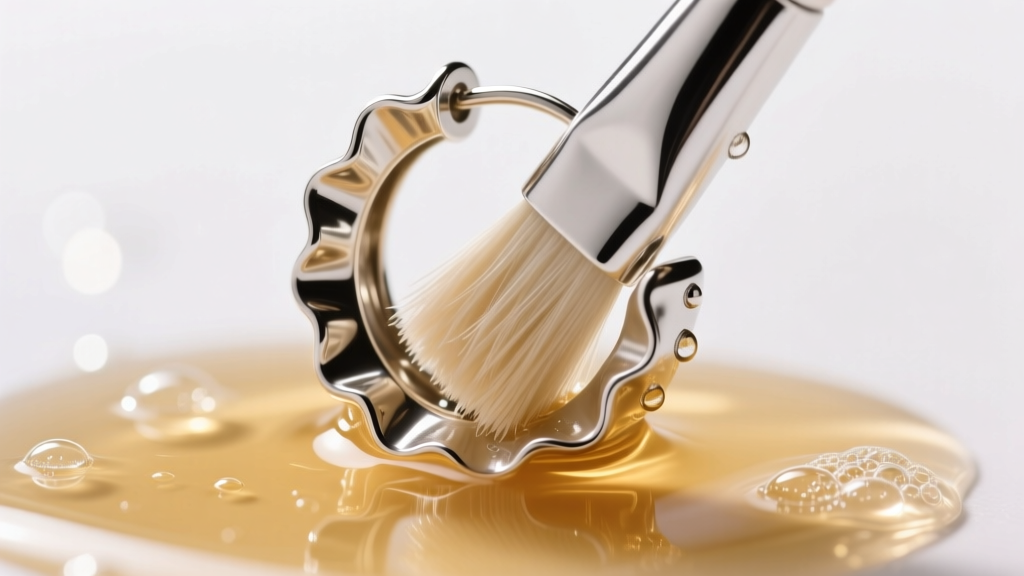
- Prepare the Solution: Mix three drops of phosphate-free, non-bleach dish soap (such as original Dawn) into a bowl of lukewarm distilled water. Avoid tap water, as the chlorine and dissolved minerals can leave microscopic water spots on polished scalloped edges.
- Soak Briefly: Submerge the earrings for exactly 3 to 5 minutes. Do not exceed this time, especially if your hoops feature a tension-set clasp or any adhesive-backed gemstone accents, as prolonged water exposure can weaken adhesives.
- Agitate the Crevices: Using your wet, extra-soft brush, gently massage the soapy solution into the scalloped valleys. Use a circular motion that follows the contour of the wave.
- Rinse and Dry: Rinse under a gentle stream of lukewarm distilled water. Immediately pat dry with a lint-free microfiber cloth. To remove moisture trapped deep in the scallops, use a hair dryer on the "cool" setting, keeping it at a safe distance to evaporate residual water without applying heat.
What to Avoid: Ultrasonic and Steam Cleaning Risks
While ultrasonic cleaners are highly effective for smooth diamond solitaires, they pose a severe risk to certain types of scalloped hoop earrings. If your scalloped hoops feature pave-set diamonds or gemstones along the wavy edge, the high-frequency acoustic cavitation bubbles generated by an ultrasonic machine can vibrate the micro-prongs loose. The scalloped design already subjects the metal to uneven stress during manufacturing; adding ultrasonic vibrations can lead to catastrophic stone loss.
Similarly, steam cleaners should be avoided for hollow-tube scalloped hoops. Many lightweight, oversized scalloped hoops are made from hollow 14k gold tubing to maintain a comfortable weight. If there is a microscopic breach in the solder seam, steam can enter the hollow chamber and become trapped, leading to internal oxidation or blistering of the metal over time.
Material-Specific Care Chart
The chemical composition of your scalloped hoops dictates the polishing and storage methods you should employ. Below is a decision matrix for the most common materials used in scalloped hoop designs.
| Material | Primary Vulnerability | Recommended Polish/Cleaner | Chemicals to Avoid |
|---|---|---|---|
| Solid 14k/18k Gold | Surface scratching in the scallop valleys | Untreated, soft flannel polishing cloth | Abrasive pastes, chlorine bleach |
| Sterling Silver (925) | Rapid sulfide tarnishing in crevices | Anti-tarnish treated cloth, mild soap | Thiourea-based silver dips, rubber bands |
| White Gold (Rhodium Plated) | Wearing through the thin rhodium flash | Microfiber cloth, distilled water rinse | Silver polish, ultrasonic cleaners |
| Gold Vermeil (Silver base) | Galvanic corrosion if base metal is exposed | Dry microfiber only, minimal moisture | Ammonia, liquid silver cleaners |
Note on Sterling Silver: If your sterling silver scalloped hoops feature an intentional oxidized (blackened) finish in the valleys to highlight the wavy texture, never use chemical silver dips. These solutions will strip the oxidation, completely ruining the contrasting design intent of the scalloped edge.
Proper Storage to Prevent Snagging and Warping
Because of their undulating edges, scalloped hoop earrings are notorious for tangling with other jewelry. When a scalloped edge hooks onto a delicate chain necklace or the post of another earring, the subsequent pulling can easily bend the hoop or snap the earring post at the solder joint.
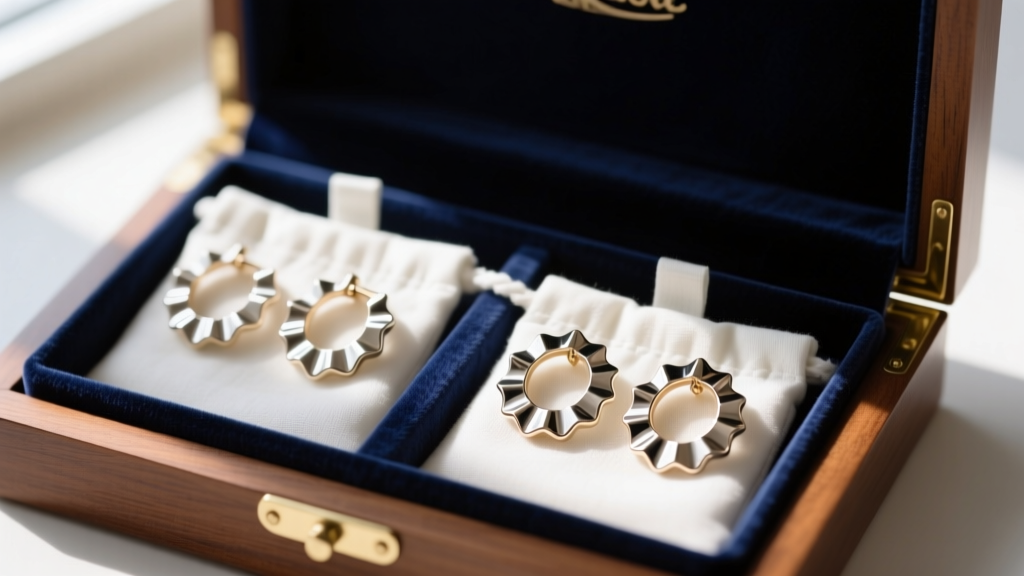
To preserve the structural geometry of your hoops, implement the following storage protocols:
- Individual Pouching: Store each pair of scalloped hoops in its own soft microfiber or anti-tarnish flannel pouch. Never toss them loosely into a communal jewelry dish.
- Rigid Compartmentalization: If using a jewelry box, ensure the compartment is wide enough that the hoops lay completely flat. If a hoop is forced to rest at an angle against a rigid divider, the continuous pressure can slowly warp the circular shape over several months.
- Clasp Security: Always fasten the hinge and clasp before storage. An open scalloped hoop acts like a fishhook in a jewelry box, virtually guaranteeing a tangle that will require professional jeweler intervention to untangle without damaging the metal.
When to Seek Professional Jeweler Maintenance
While routine home cleaning will keep your scalloped hoop earrings looking brilliant, certain maintenance tasks require professional equipment. If you notice that the scalloped edges feel rough to the touch, or if the hoop no longer closes flush at the clasp, it is time to visit a bench jeweler.
A professional can use a low-speed flex shaft with a specialized rouge wheel to polish the tight valleys of the scallops without altering the metal's profile—a task impossible to achieve with a flat polishing cloth. Additionally, a jeweler can use a laser welder to reinforce the hinge and post solder joints, which endure significant mechanical stress every time the earring is opened and closed. By combining mindful daily wear with this meticulous cleaning protocol, your scalloped hoops will retain their intricate, light-catching beauty for decades.


